Servi
Servi is an AI-driven hospitality service robot developed by Bear Robotics, a U.S.-based robotics company headquartered in Redwood City, California. Designed to assist restaurant and hospitality staff, Servi autonomously navigates dining floors to handle food running and table bussing, freeing human workers for higher-value guest interactions. The robot uses LiDAR-based autonomous navigation to move safely through dynamic, crowded environments and features Bear Robotics' patented Stabilizing Trays, which are engineered to disperse momentum and reduce the risk of spills during delivery. Servi has been deployed across a range of restaurant chains and hospitality venues, primarily in the United States and select international markets.
Overview and Use Cases
Servi is Bear Robotics' flagship hospitality robot, purpose-built for the food service and hospitality industry. Its primary roles include:
- Food running: Autonomously transporting dishes from the kitchen pass to designated tables, reducing the burden on servers during peak hours.
- Table bussing: Collecting used dishes, glasses, and trays from tables and returning them to a designated drop-off point.
- Staff augmentation: Acting as a force multiplier so that human staff can focus on guest engagement, upselling, and complex service tasks rather than repetitive transport work.
Servi is designed for deployment in full-service restaurants, casual dining chains, hotel dining rooms, and similar hospitality environments where floor traffic is high and layouts are semi-structured.
Key Technical Features
Servi's design centers on reliable, safe autonomous navigation in environments shared with guests and staff:
- LiDAR-based navigation: The robot uses LiDAR sensors alongside additional perception systems to map its environment and avoid obstacles in real time, without requiring fixed floor markers or extensive infrastructure changes.
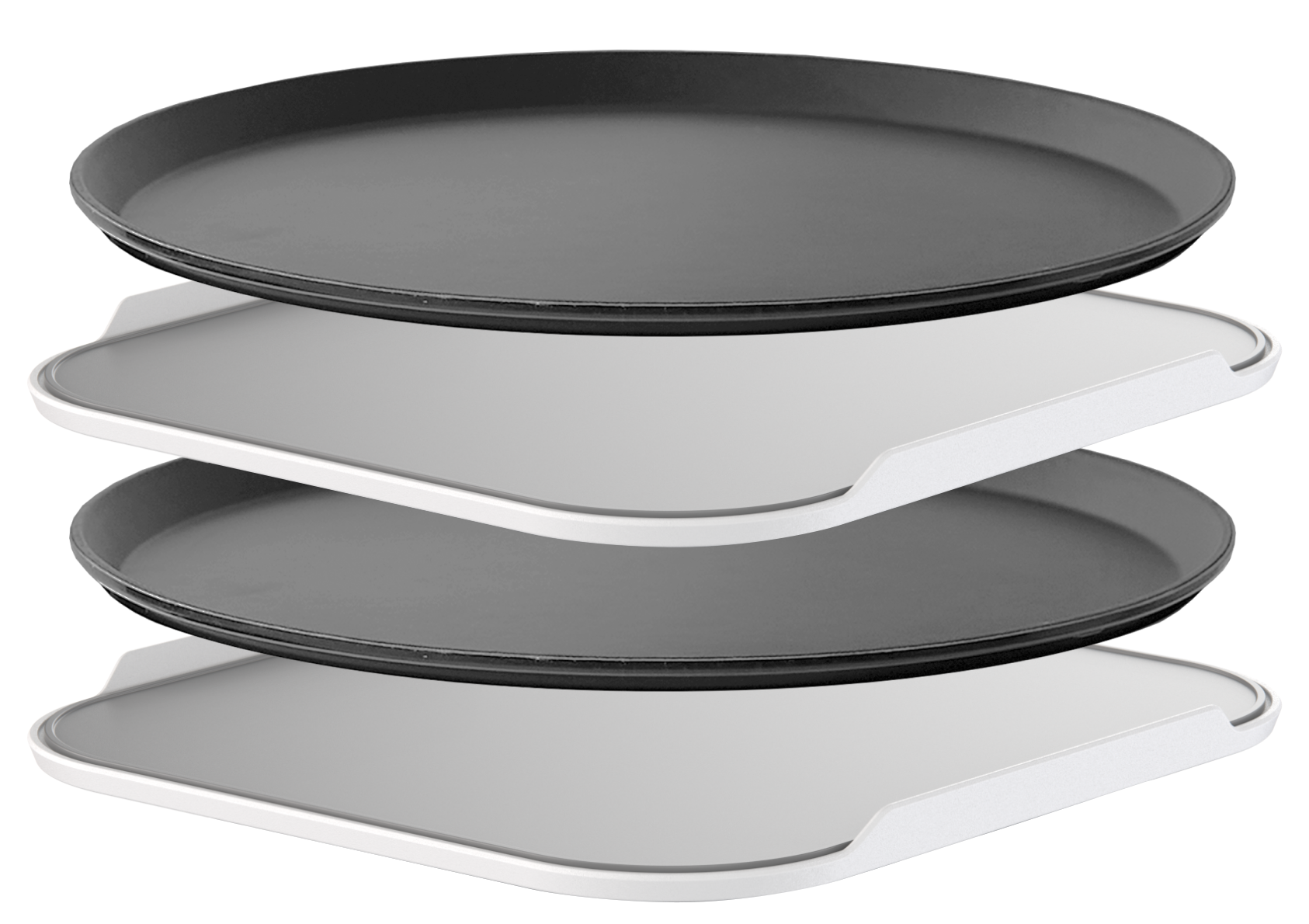
- Patented Stabilizing Trays: Bear Robotics holds patents on tray designs that are engineered to absorb and disperse momentum, helping to prevent spills when the robot accelerates, decelerates, or navigates turns.
- Multi-tray configuration: Servi typically features multiple shelf levels, allowing it to carry several orders or a mix of food delivery and bussing loads in a single trip.
- Autonomous fleet management: When deployed in multiples, Servi units can be managed through Bear Robotics' software platform, coordinating routes and tasks across the dining floor.
Specific payload capacity, battery runtime, and maximum speed figures have not been consistently disclosed in public documentation; prospective buyers are advised to consult Bear Robotics directly for current specifications.
Comparison to Similar Robots
Within Bear Robotics' own lineup, Servi is the company's primary and, as of public reporting, best-known model in the hospitality segment.
In the broader competitive landscape, Servi competes with robots such as:
- Keenon Robotics' T series and W series (China-origin, widely deployed globally in restaurants)
- Pudu Robotics' BellaBot and HolaBot (also China-origin, with strong international restaurant presence)
- Richtech Robotics' ADAM (U.S.-market focused, with a dual-arm beverage-making variant)
Servi differentiates itself through its U.S.-based engineering and support, its patented tray stabilization technology, and its focus on integration with existing restaurant workflows rather than novelty or entertainment value.
Market Context and Target Buyers
Servi is positioned in the mid-to-premium tier of the restaurant robot market. It is primarily targeted at:
- Chain restaurants and franchises seeking scalable labor augmentation solutions across multiple locations
- Hotel and resort dining operations with consistent, high-volume service needs
- Operators facing labor shortages who need to maintain service quality with reduced headcount
Bear Robotics has pursued a robot-as-a-service (RaaS) model for some deployments, allowing operators to access Servi through subscription arrangements rather than outright purchase, lowering the barrier to adoption. Specific pricing has not been publicly disclosed.
Notable Deployments
Servi has been deployed in partnership with several well-known restaurant brands. Bear Robotics has publicly referenced collaborations with chains including Chili's Grill & Bar (operated by Brinker International), which conducted notable trials and rollouts of Servi in U.S. locations. The robot has also reportedly been used in various independent and chain restaurant settings across the United States, South Korea, and other markets.
SoftBank has been reported as an investor in Bear Robotics, which has contributed to the company's ability to scale its deployments.
Future Outlook
As labor costs in the hospitality sector continue to rise and operator interest in automation grows, demand for robots like Servi is expected to remain strong. Bear Robotics has indicated ongoing development of its software platform and robot capabilities. The broader restaurant robotics market is becoming increasingly competitive, with both established Asian manufacturers and new U.S. entrants vying for market share. Servi's continued success is likely to depend on software reliability, ease of integration, and the quality of after-sales support — areas where its U.S.-based operations may provide an advantage for domestic customers.
Related videos

DRONES + FARMING = THE FUTURE #droneasaservice #farming #agritech
Drone as a Service

Intelligent Ripper Robot Service In Construction Efficiency
Satisfying Work

Restaurant Robot Pilot at Jolloff Etcetera | Smart Dining Automation #RestaurantRobot #ServiceRobot
OpenBot Solutions - Hospitality Service Robots

Inside Amazon's drone delivery service
CBS Detroit

Will AI robots on the frontline mark the end of human soldiers? - BBC World Service
BBC World Service

Amazon Prime drone delivery service launches in Kansas City metro
FOX4 News Kansas City
Recent news
Service Robotics Market Size to Surpass USD 233.8 Bn by 2035
Precedence Research · 7/13/2026
South Korean Embodied Robots Deployed, Hyundai Motor Sets the Example
autonews.gasgoo.com · 7/12/2026
TECOM Establishes Marine Corps Robotics Integration Group and Counter Drone Team
Soldiersystems.net · 7/10/2026
AWS DMS Schema Conversion now supports AI agent automation
Amazon.com · 7/10/2026
ws-bom-robot-app 0.0.130
Pypi.org · 7/9/2026
Related entries
 Robot
RobotRelay Delivery Robot
The Relay Delivery Robot is an autonomous indoor delivery robot developed by Relay Robotics (formerly known as Savioke), designed primarily for hospitality and healthcare environments. It navigates hotel corridors and hospital hallways independently, rides elevators without human assistance, and delivers guest amenities, medications, linens, and other supplies directly to rooms or designated drop-off points. Relay is one of the most widely deployed service robots in its category, reportedly completing over one million lifetime deliveries with a publicly cited success rate of approximately 99.8%. With a cargo capacity of around 10 gallons, the robot is compact enough to operate in busy public spaces while carrying a meaningful payload of everyday supplies.
2,760 views
 Robot
RobotSpot
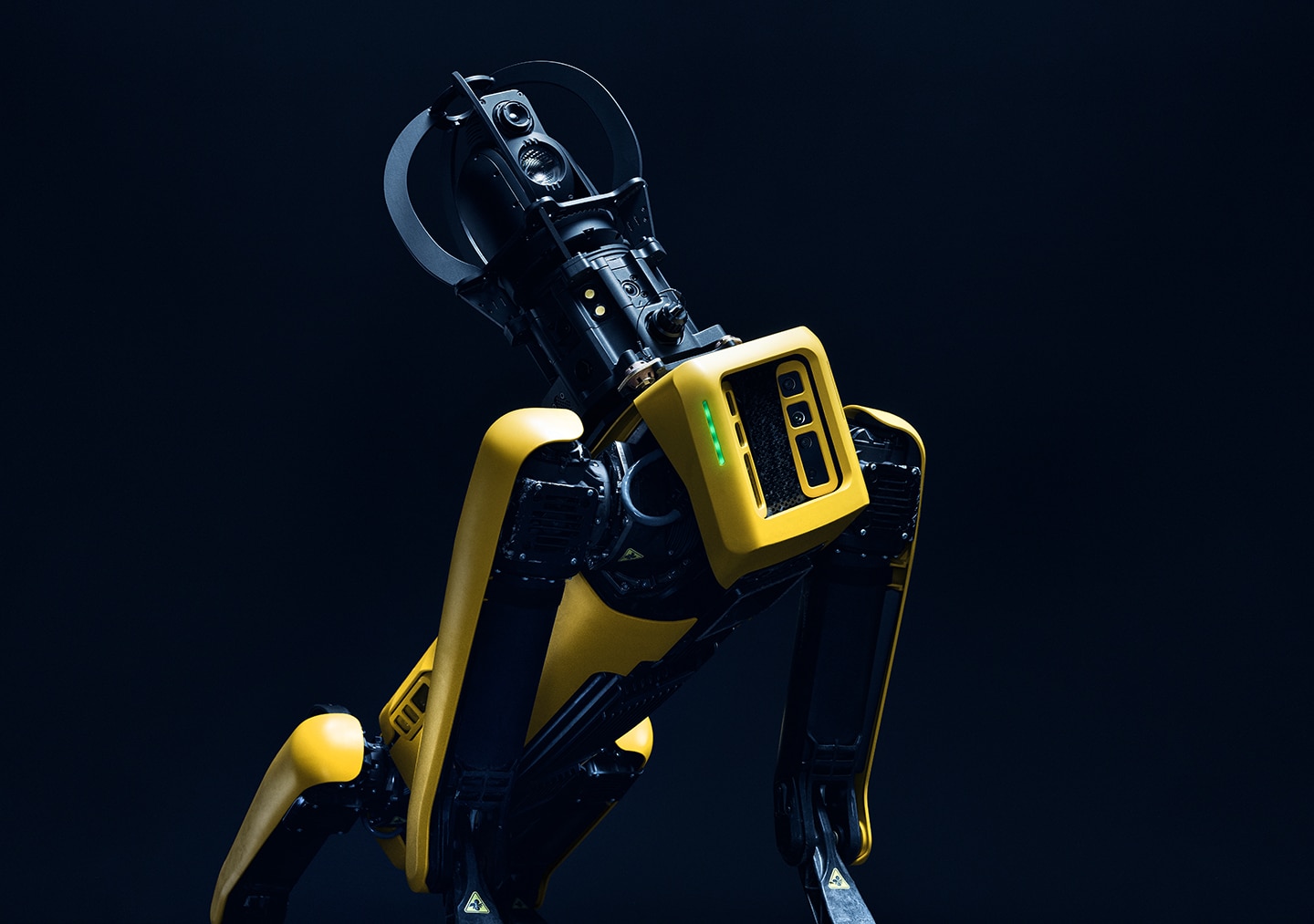
Spot is a four-legged autonomous robot developed by Boston Dynamics, a robotics company headquartered in Waltham, Massachusetts. Designed for inspection, security, and data collection in complex or hazardous environments, Spot can navigate stairs, rough terrain, and confined spaces that are inaccessible to wheeled robots. It is commercially available and has been deployed across industries including utilities, oil and gas, construction, and public safety. Spot supports a modular payload system that accommodates thermal cameras, pan-tilt-zoom (PTZ) cameras, lidar units, methane sensors, and other mission-specific hardware. Boston Dynamics also offers the Orbit fleet-management software platform, enabling operators to schedule autonomous inspection routes, aggregate sensor data, and manage multiple Spot units from a central interface. The robot is widely regarded as one of the most capable and commercially mature legged robots on the market.
1,244 views
 Robot
RobotRealSense Depth Camera D455
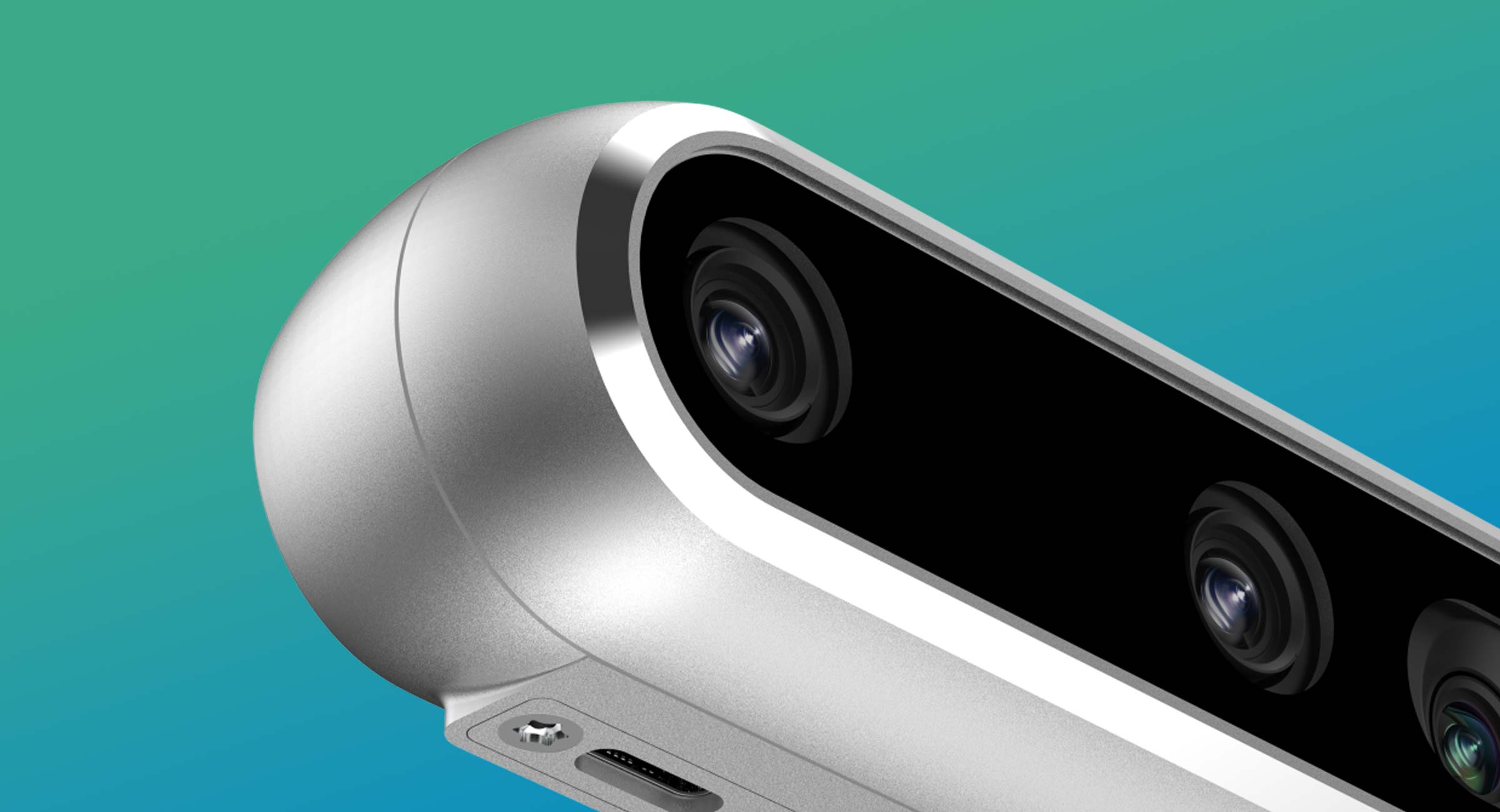
The RealSense Depth Camera D455 is a stereoscopic active-infrared depth camera belonging to Intel's D400 series, designed to capture high-fidelity depth data for robotics, autonomous mobile robots (AMRs), drones, and computer-vision applications. It features a 95 mm stereo baseline — the widest in the D400 lineup at the time of its introduction — which reportedly enables depth error of under 2% at ranges up to approximately 4 metres. Originally developed under the Intel RealSense brand, the D455 and related products were later spun off as part of an independent RealSense business unit following Intel's restructuring of the division around 2021–2022. The camera is widely adopted in research, industrial automation, and humanoid-robot development owing to its compact USB-powered form factor, open SDK support, and relatively accessible price point.
743 views
Rosie 2.0
The Rosie 2.0 is a commercial-grade autonomous robot vacuum developed by Tailos, designed to handle large-scale floor cleaning in business and institutional environments. It is offered in a two-pack configuration, allowing facilities to deploy multiple units simultaneously for broader coverage and more efficient cleaning cycles. Built to commercial durability standards, the Rosie 2.0 combines intelligent navigation with powerful suction technology to reduce reliance on manual labor and improve facility maintenance consistency. It targets businesses, hospitality venues, retail spaces, and other high-traffic environments where reliable, automated cleaning is a priority.
521 views