Bear Robotics
Company wikiUnited States · bearrobotics.ai
SnapshotCompany claim
Bear Robotics pursues ambitious goals in automation technology. The company excels through continuous growth, industry expertise, and commitment to excellence, fostering innovation and employee development.
- Founded
- Not disclosed
- HQ
- United States
- Models
- 1
- Categories
- 1
ContactCompany claim
- Address
- Not disclosed
Product families
Is this your company? Claim this profile to add verified data, respond to our analysis, and upgrade claims to Verified.
Claim this profile1. Executive Overview {#executive-overview}
Bear Robotics is a Redwood City, California-based robotics company pursuing automation across both service and industrial environments. The company has demonstrated meaningful commercial traction, closing an $81 million Series B funding round as reported by The Robot Report, and has expanded its product line from service robotics into industrial-grade autonomous mobile robots (AMRs). Bear Robotics has also been recognized on a Forbes/Statista list of top U.S. employers — evaluated across employer reputation, employee satisfaction, and growth — appearing on the list multiple times, a signal of organizational health alongside its technical ambitions.
The company's public positioning centers on infrastructure-agnostic deployment, multi-robot orchestration, and a commitment to pushing automation into environments where rivals have struggled to gain footholds. A February 2026 report via Yahoo Finance described Bear Robotics and logistics partner FASSTO initiating mass production preparations for a next-generation physical AI logistics robot, indicating the company is moving beyond prototype and pilot phases into volume manufacturing. Coverage in Morningstar of the Servi Q — a compact service robot designed for constrained spaces — further illustrates a product strategy that addresses real-world deployment friction, not just idealized environments.
Not yet disclosed: founding year, total headcount, and cumulative revenue figures. The company is invited to claim or correct these details.
Latest news
- KEENON Humanoid Pours Drinks at GCS 2026, 100,000 Others Run HotelsYanko Design·2026-06-15GENERAL
2. The Company Story {#the-company-story}
Bear Robotics is headquartered at 785 Broadway St, Redwood City, CA 94063, and operates under the domain bearrobotics.ai. Its founding date is not publicly disclosed on its site. The company's contact infrastructure includes a U.S. phone line (+1-844-729-2327) and a Korea-facing sales address ([email protected]), suggesting early and sustained commercial activity in South Korea alongside its U.S. base — a notable geographic footprint for a company of its stage.
The company's self-described mission is the pursuit of "ambitious goals in automation technology," with an internal culture built around what it characterizes as achieving "seemingly impossible goals." This language, while aspirational, is grounded in observable milestones: a multi-round funding trajectory that includes a disclosed $81 million Series B (per The Robot Report), recognition on Forbes/Statista employer lists on multiple occasions, and a product roadmap that has expanded from food-service robotics — evidenced by the Servi Q compact service robot covered by Morningstar — into heavy-payload industrial AMRs with the Carti 100.
The Korea sales contact and the February 2026 FASSTO partnership announcement (via Yahoo Finance) together suggest that South Korea has become a significant commercial and manufacturing geography for Bear Robotics, with FASSTO described as a partner in mass production preparations for a next-generation physical AI logistics robot. This positions Bear Robotics as a company with genuine cross-Pacific operational reach, not merely a Silicon Valley pilot project.
Not yet disclosed: specific founding year, individual funding round dates prior to Series B, and the names of early institutional investors. The company is invited to claim or correct these details.
3. Product Portfolio {#product-portfolio}
Products & versions
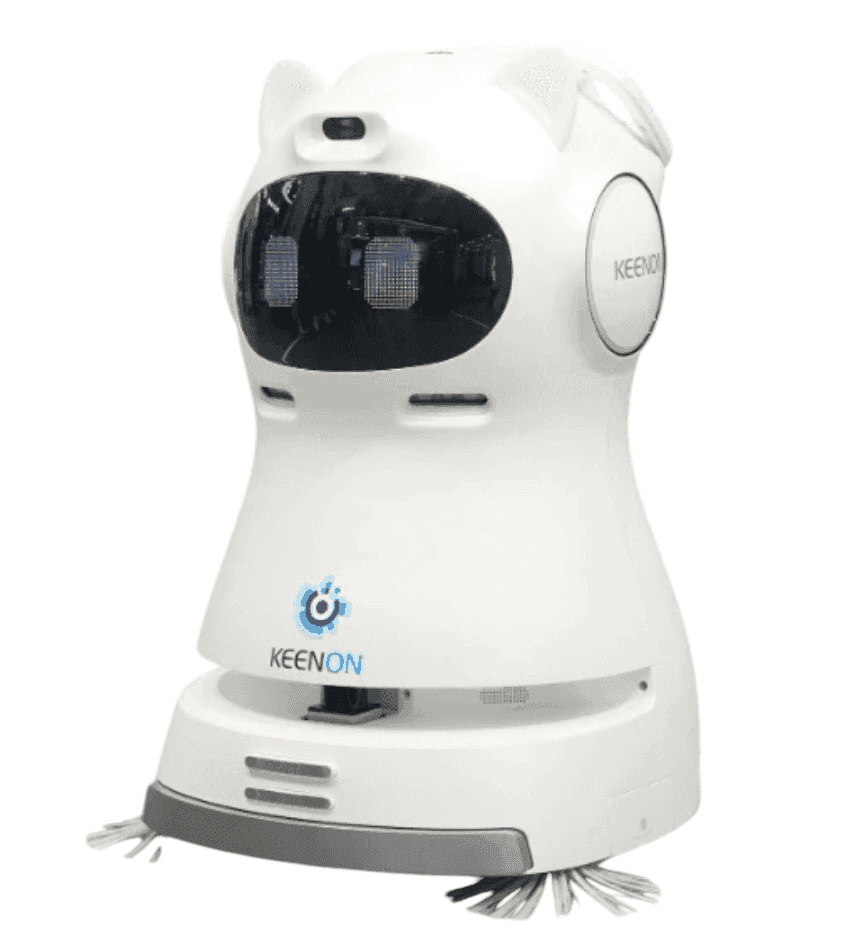
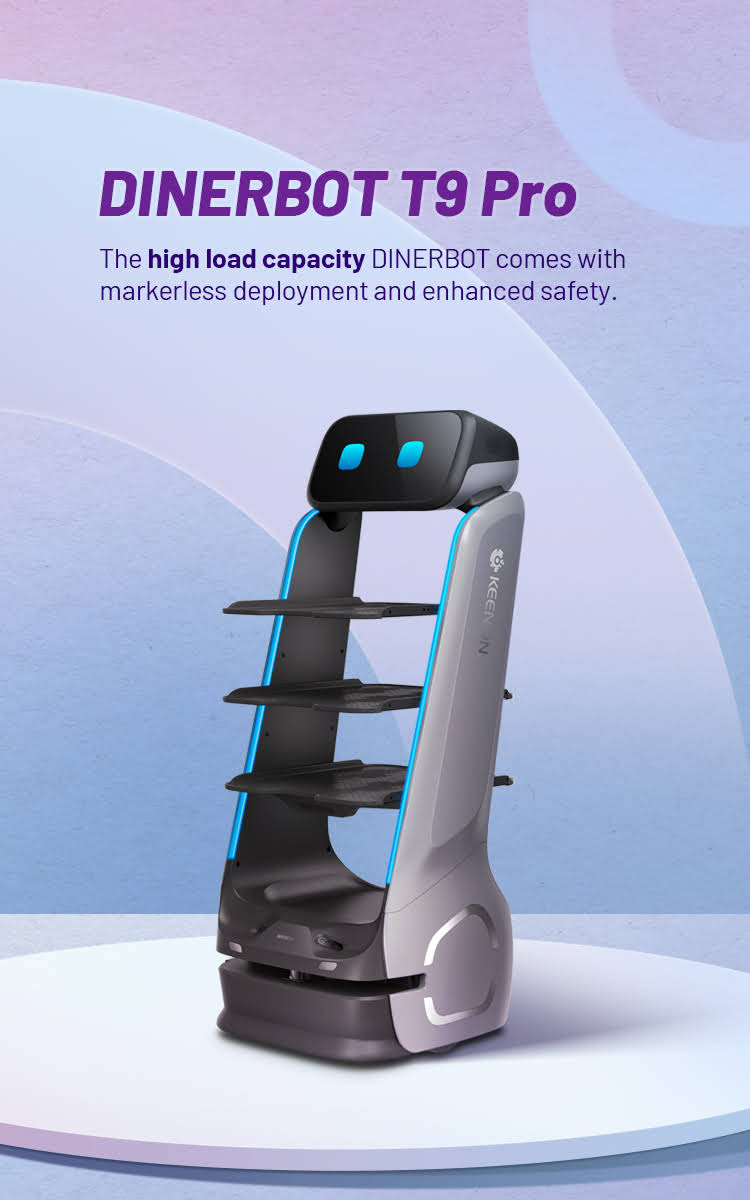
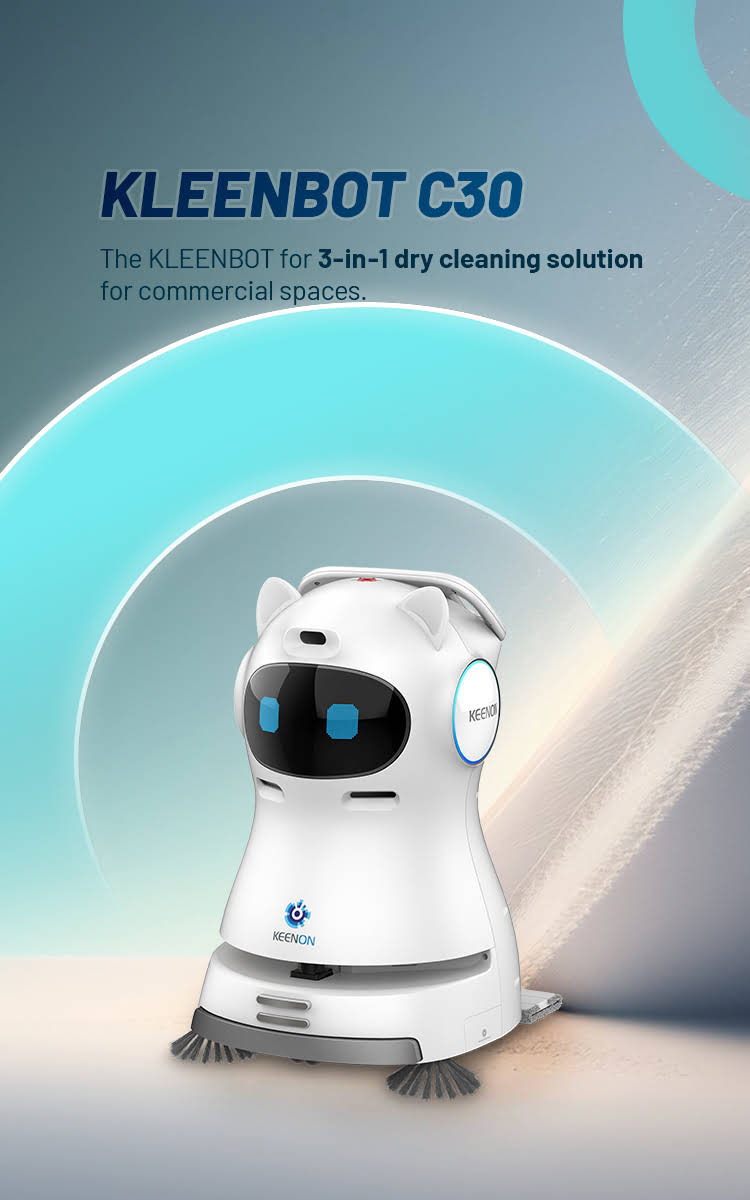




Bear Robotics' publicly documented lineup spans at least two distinct robot categories: service robotics (exemplified by the Servi Q, a compact robot engineered for tight or unconventional spaces in hospitality and food-service environments, as covered by Morningstar) and industrial AMRs (exemplified by the Carti 100, designed for warehouses, factories, and logistics operations).
The Carti 100 is the most fully specified product in the public record. It is an industrial-grade autonomous mobile robot with a 100 kg payload capacity, a three-shelf expandable configuration, and a footprint of 537 mm (W) × 570 mm (D) × 1,507 mm (H) at 55 kg gross weight. Battery endurance is rated at 9–11 hours, supported by both auto-charging and wired charger options. Navigation relies on 360-degree LiDAR combined with camera-based obstacle detection, enabling safe operation alongside human workers. Critically, the Carti 100 is described as infrastructure-agnostic — deployable without facility modifications — and supports integration with elevators, WMS systems, and smart charging stations. Fleet-level coordination is handled through multi-robot orchestration, enabling synchronized scaling across a deployment site.
The Servi Q represents the company's service-robotics heritage and addresses a specific deployment problem: reaching spaces that standard service robots cannot navigate. Together, the two product families suggest a deliberate portfolio strategy: capture hospitality and food-service environments with compact, people-friendly robots, while addressing the higher-payload, higher-throughput demands of industrial logistics with the Carti 100. The February 2026 FASSTO partnership points to a forthcoming third product — described as a "next-generation physical AI logistics robot" — currently in mass production preparation.
Not yet disclosed: full Servi Q specifications, pricing tiers, or a complete historical product roster. The company is invited to claim or correct these details.
4. Technology Stack {#technology-stack}
The Carti 100 specification sheet provides the clearest window into Bear Robotics' technical approach for its industrial AMR line. The robot employs 360-degree LiDAR combined with camera-based obstacle detection, a sensor fusion approach common in AMRs operating in dynamic, human-occupied environments. This combination typically enables simultaneous localization and mapping (SLAM) for navigation without fixed infrastructure — consistent with the company's "infrastructure-agnostic deployment" claim.
Our read: The auto-charging capability, WMS integration, and elevator interfacing described for the Carti 100 imply a software orchestration layer — likely a fleet management system — sitting above individual robot firmware. Multi-robot orchestration for "fleet synchronization and scaling" further suggests the existence of a cloud or edge coordination platform, though the architecture (cloud-hosted, on-premise, or hybrid) is not publicly specified.
Our read: The FASSTO partnership announcement referencing "physical AI" in the context of a next-generation logistics robot suggests Bear Robotics is incorporating or planning to incorporate learned behaviors or AI-driven decision-making beyond classical path planning — but the specific models, frameworks, or proprietary IP involved are not publicly disclosed.
The Servi Q's technical underpinnings are not detailed in available public data. Its design emphasis on navigating constrained spaces implies advanced local obstacle avoidance and potentially narrower physical tolerances than standard service robots, but specifications are not publicly confirmed.
Not yet disclosed: navigation software architecture, AI/ML frameworks, proprietary sensor IP, or cloud platform details. The company is invited to claim or correct these details.
5. Research, Papers, Authors, Labs {#research-papers}
Company-linked papers
Bear Robotics does not appear to be an academic research-publishing organization. No peer-reviewed papers, preprints, or named research lab affiliations are present in the available public data. This is consistent with the profile of a commercial service-robotics and industrial AMR company focused on product development and deployment rather than foundational research publication — the majority of firms in this segment operate this way.
Not yet disclosed: any internal research teams, university partnerships, or publication activity. The company is invited to claim or correct these details.
6. Media Evidence {#media-evidence}
Media library
Bear Robotics has generated coverage across multiple independent outlets. The Robot Report reported on the company's $81 million Series B funding round. Morningstar covered the launch of the Servi Q compact service robot. Yahoo Finance (sourcing a February 2, 2026 release) reported on the Bear Robotics–FASSTO partnership and mass production preparations for a next-generation physical AI logistics robot. These three independent placements across financial, trade, and technology media represent a meaningful external validation footprint for a company of this stage.
7. Commercial Reality {#commercial-reality}
Customers & deployments
Bear Robotics has secured at least one disclosed institutional funding milestone — an $81 million Series B as reported by The Robot Report — indicating investor conviction at a meaningful scale. The Korea-facing sales infrastructure ([email protected]) and the FASSTO mass production partnership (Yahoo Finance, February 2026) suggest active commercial relationships in at least two geographies (United States and South Korea).
Revenue: Not disclosed. The company is invited to share or correct this figure.
Named customer deployments: Not disclosed in available public data. The company is invited to claim or correct this.
ROI / efficiency metrics from deployments: Not disclosed. The company is invited to share verified customer outcome data.
Headcount: Not disclosed, though the company notes it employs at least 50 people (the minimum threshold for the Forbes/Statista employer list). The company is invited to claim or correct precise headcount.
The price range listed in structured data as $$$ suggests the company targets mid-to-enterprise customers rather than SMB buyers, consistent with the Carti 100's industrial positioning.
8. Markets and Use Cases {#markets-use-cases}
Bear Robotics' documented product use-cases and industry tags define a clear two-track market strategy.
Industrial / Logistics Track: The Carti 100 is explicitly targeted at warehouses, factories, and logistics spaces, with a primary use-case of heavy material transport (up to 100 kg per cycle). The robot's WMS integration capability positions it for environments that already run warehouse management software — meaning it is designed to slot into existing operational stacks rather than require customers to rebuild around a new platform. The infrastructure-agnostic deployment model lowers the adoption barrier in brownfield facilities, a significant commercial advantage in industrial settings where facility modification is costly or operationally disruptive.
Service / Hospitality Track: The Servi Q targets environments where conventional service robots cannot operate — tight restaurant layouts, compact hotel corridors, or similar constrained commercial spaces. This addresses a known friction point in food-service automation: standard platforms are often too large or insufficiently maneuverable for real-world hospitality floor plans.
Emerging Track: The forthcoming physical AI logistics robot being developed in partnership with FASSTO suggests Bear Robotics is positioning for a higher-intelligence tier of logistics automation — potentially autonomous decision-making in complex, variable warehouse environments — though the specific market segment and deployment context for this product are not yet fully public.
The Korea sales channel ([email protected]) and the FASSTO partnership indicate that South Korea is an active target market, likely in logistics and e-commerce fulfillment given FASSTO's domain.
9. Competitive Landscape {#competitive-landscape}
Competitive comparison
| Robot | Maker | Autonomy | Conf. |
|---|---|---|---|
| iRobot Roomba Combo 10 Max | iRobot | Autonomous | 0.90 |
| Mobile ALOHA (Stanford) | Stanford University | Teleoperated | 0.90 |
| 1X NEO | 1X Technologies | Remote-Assisted | 0.90 |
Bear Robotics operates in two overlapping competitive arenas: the service robotics segment (compact, people-facing robots for hospitality and food service) and the industrial AMR segment (payload-capable autonomous mobile robots for warehouse and factory environments). Both segments have attracted well-funded entrants and established players, making differentiation on deployment friction, payload range, and software orchestration increasingly important.
Bear Robotics' stated differentiation — infrastructure-agnostic deployment, multi-robot orchestration, and a portfolio that spans both service and industrial use-cases — positions it as a cross-segment player rather than a single-vertical specialist. The $81 million Series B and the FASSTO mass production partnership suggest the company has the capital and manufacturing relationships to compete at scale, though commercial deployment data sufficient to benchmark market share is not publicly available. The module above contextualizes the peer set.
10. Country Advantage / Geopolitical {#geopolitical}
Bear Robotics is headquartered in the United States (Redwood City, California) and maintains an active commercial presence in South Korea, evidenced by a dedicated Korea sales contact and the FASSTO partnership. South Korea is an independent, technologically advanced market with a strong robotics adoption rate in manufacturing and logistics — a strategically valuable geography for an AMR company.
Our read: Operating across the U.S. and South Korea gives Bear Robotics dual-market exposure in two of the world's most robotics-forward economies, and the FASSTO mass production partnership may confer manufacturing scale advantages that are harder to replicate for purely U.S.-domestic competitors. Supply chain diversification across these two geographies may also provide some insulation against component-sourcing disruptions, though the company's specific supply chain configuration is not publicly disclosed.
No material sanctions, export-control, or geopolitical risk factors are evident from the public data at this time.
11. Hype vs Real vs Ugly {#hype-real-ugly}
Claim tracker
Verified / Externally Corroborated:
- $81 million Series B funding round — reported by The Robot Report (independent source).
- Servi Q product launch — covered by Morningstar (independent source).
- FASSTO partnership and mass production preparation for a next-generation physical AI logistics robot — reported by Yahoo Finance, February 2, 2026 (independent source).
- Forbes/Statista employer list recognition, multiple appearances — cited on company site; the list methodology (2,500 U.S. businesses, 50+ employees, three evaluation criteria) is described and independently administered.
Company Claims (not independently verified in available data):
- "Infrastructure-agnostic deployment without altering existing facilities" — company claim for the Carti 100; plausible given LiDAR-based navigation but not independently validated at scale.
- "Multi-robot orchestration for fleet synchronization and scaling" — company claim; the existence of a fleet management software layer is architecturally implied but not independently benchmarked.
- "360-degree LiDAR and camera obstacle detection for safe human collaboration" — company claim; sensor types are specified but collision-avoidance performance in real deployments is not independently published.
- "Physical AI" characterization of the forthcoming FASSTO robot — company/partner claim; specific AI capabilities are not yet publicly detailed.
Gaps (fixable):
- Not yet disclosed: customer deployment case studies, throughput benchmarks, uptime statistics, or independent ROI data. The company is invited to publish or share these.
- Not yet disclosed: full Servi Q specifications, pricing, or deployment scale. The company is invited to claim or correct.
12. Future Scenarios {#future-scenarios}
Bull Case — Our read: Bear Robotics successfully brings the FASSTO-partnered next-generation physical AI logistics robot to mass market, establishing a credible industrial AMR platform with AI-native orchestration. Combined with continued expansion in South Korea and growth in U.S. warehouse automation demand, the company could achieve a position as a multi-category robotics platform provider. Repeat recognition on employer quality lists suggests the organizational culture needed to sustain rapid scaling is developing.
Base Case — Our read: Bear Robotics grows steadily in the warehouse and logistics AMR segment with the Carti 100, expands the Servi Q's footprint in hospitality, and uses the FASSTO partnership to validate next-generation capabilities before a broader commercial rollout. The Korea-U.S. dual-market structure provides revenue diversification, and Series B capital funds the runway to reach meaningful deployment density. The company remains a specialized player rather than a broad platform.
Bear Case — Our read: Industrial AMR markets are competitive and capital-intensive; if Bear Robotics is unable to disclose meaningful deployment metrics or customer references in the near term, enterprise procurement cycles may slow adoption. If the next-generation physical AI logistics robot faces hardware or software development delays, mass production preparations with FASSTO may not translate to revenue on the expected timeline. The absence of publicly disclosed revenue, customer names, or deployment scale makes it difficult to independently assess financial resilience.
13. What to Watch {#what-to-watch}
- FASSTO mass production launch: When and whether the next-generation physical AI logistics robot moves from preparation to commercial availability — and what specifications, pricing, and initial customers are announced.
- Customer reference disclosures: The first named enterprise customers for the Carti 100 in warehouse or factory deployments would materially de-risk the commercial narrative.
- Servi Q deployment scale: Any data on the number of units deployed, geographies served, or operator feedback for the compact service robot.
- Series C or follow-on funding: Timing and size of the next funding round will signal investor confidence in the physical AI roadmap.
- Korea market expansion: Any additional partnerships, distributor agreements, or customer announcements in South Korea beyond FASSTO.
- Fleet management software disclosure: Whether Bear Robotics publicly details its orchestration platform — pricing model, integration APIs, or third-party WMS certifications — as this layer is increasingly a competitive differentiator in industrial AMR markets.
- Employer list retention: Continued appearance on Forbes/Statista employer rankings would indicate organizational stability during a growth phase.
14. Sources & Methodology {#sources-methodology}
Primary Data Source: All factual claims in this report are grounded exclusively in (a) content extracted from Bear Robotics' own website (bearrobotics.ai), treated throughout as company-claim provenance, or (b) third-party press coverage from named independent outlets.
Independent Press Sources Cited:
- The Robot Report (
therobotreport.com) — Series B funding coverage. - Yahoo Finance (
finance.yahoo.com) — FASSTO partnership and mass production announcement, dated February 2, 2026. - Morningstar (
morningstar.com) — Servi Q product launch coverage.
Methodology Rubric (applied uniformly to every company on this platform):
- Company-site content is extracted and tagged as company-claim; it is cited as evidence of positioning and product specification, not as independently verified fact.
- Third-party press is cited by outlet name and treated as external corroboration where it independently reports the same claims.
- Inferences drawn by the analyst are labeled "Our read:" and are not presented as established fact.
- Gaps in the public record are presented as "Not yet disclosed" with an invitation to the company to claim or correct — never as negative assertions.
- No revenue figures, customer names, deployment counts, or technical benchmarks are asserted without a named source.
- Live data modules (products, news, competitors, customers, papers, media, claim-tracker) are placeholders populated dynamically by the platform and are not authored by the analyst.

Carti 100 is an industrial-grade autonomous mobile robot built for scalable material handling and transport automation in warehouses, factories, and industrial spaces. It features 100 kg payload capacity, 9-11 hour battery life, and infrastructure-agnostic deployment with multi-robot orchestration capabilities.
- •Industrial-grade AMR for warehouses, factories, and logistics spaces
- •Payload capacity 100 kg with expandable 3-shelf configuration
- •9-11 hour battery life with auto-charging capability
- •Multi-robot orchestration for fleet synchronization and scaling
- •360-degree LiDAR and camera obstacle detection for safe human collaboration
- •Infrastructure-agnostic deployment without altering existing facilities
- •Fully customizable with adjustable shelves, conveyor belts, and signal lighting
- •Integrates with elevators, smart charging stations, and WMS systems
- •Smart navigation with real-time obstacle avoidance and rerouting
| Depth | 570 mm |
| Width | 537 mm |
| Height | 1507 mm |
| Weight | 55 kg |
| Payload | 100 kg |
| Battery | 9-11 h |
| Shelf (count) | 3 |
| Charging type | Auto-charge or wired charger |
Technology stackOur read
Inferred from product specs — click through to the technology wiki:
ResearchComputed
Product comparisonComputed
Each row leads with this company's product, side-by-side with similar ones · click a row to expand full specs, click again to collapse
Carti 100

LuckiBot Pro

KettyBot
Pudu CC1

R3
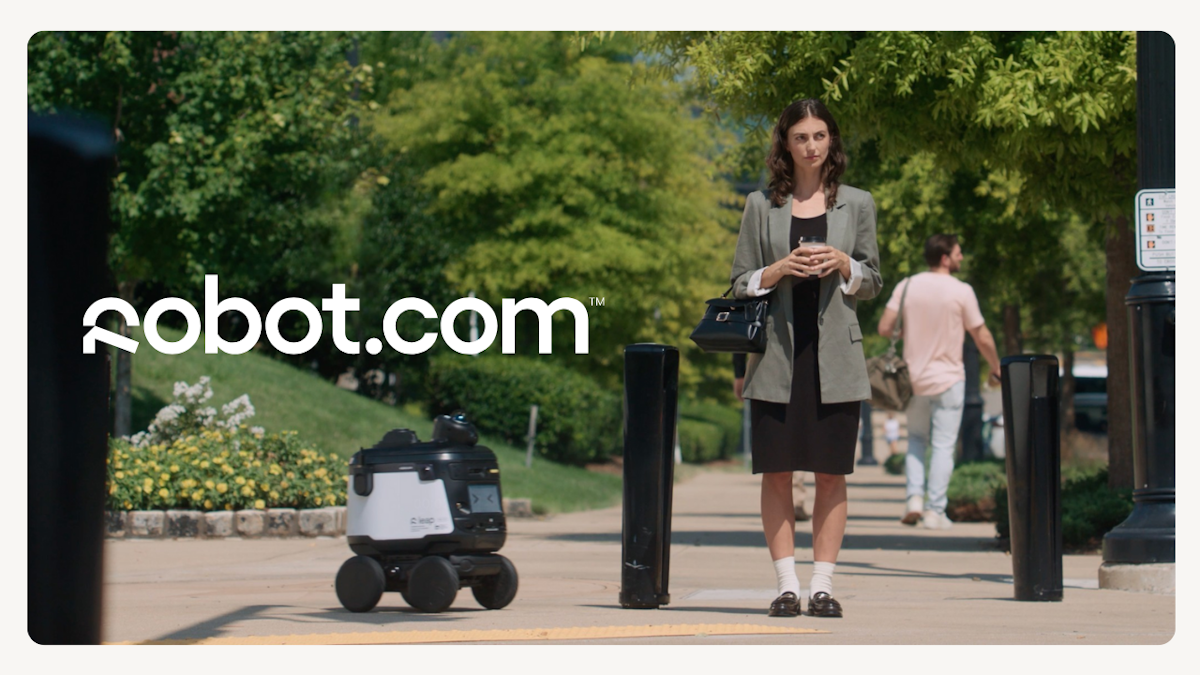
Kiwi Delivery Robot
Company announcement
News and Media
The company's official social & video channels · external links


Today we signed a definitive agreement to acquire @KinisiRobotics, completing Bear's end-to-end #PhysicalAI platform. 16,000+ robots shipped
2026-06-23

Carti 100 glides, pivots, and rolls smoothly without scuffing floors or disrupting workflows. Discover the design behind its performance. #c
2025-10-28
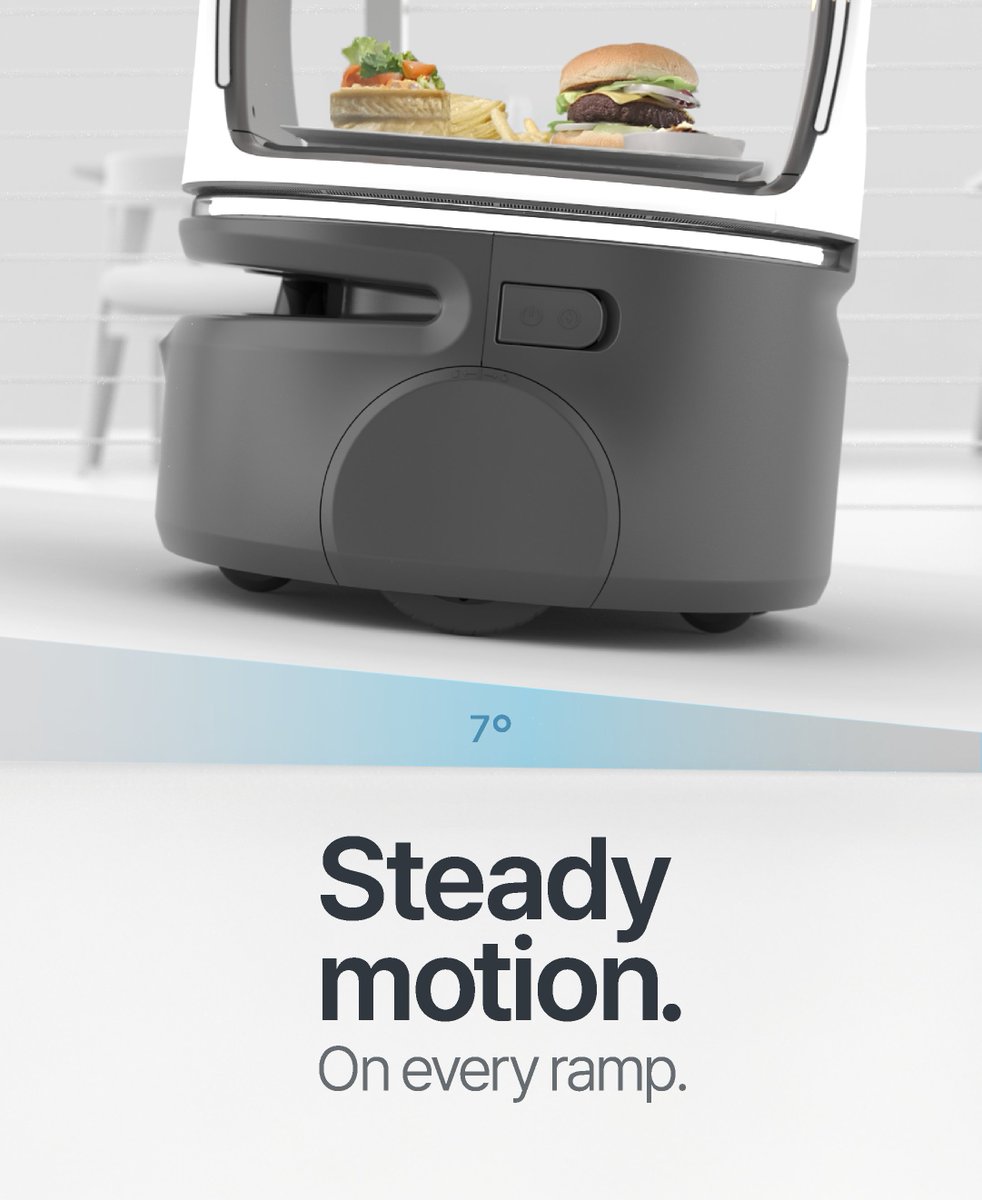
Designed for real-world scenarios, Servi Plus maintains smooth motion on ADA ramps up to 7°. #serviplus #bearrobotics #restaurantautomation
2025-10-23

When things get busy, Servi Plus stays cool. From quick chats to quick turns, it keeps the shift flowing; no stress, just service. #serviplu
2025-09-06
News
From third-party news outlets (China & abroad) · external links