Rosie 2.0
The Rosie 2.0 is a commercial-grade autonomous robot vacuum developed by Tailos, designed to handle large-scale floor cleaning in business and institutional environments. It is offered in a two-pack configuration, allowing facilities to deploy multiple units simultaneously for broader coverage and more efficient cleaning cycles. Built to commercial durability standards, the Rosie 2.0 combines intelligent navigation with powerful suction technology to reduce reliance on manual labor and improve facility maintenance consistency. It targets businesses, hospitality venues, retail spaces, and other high-traffic environments where reliable, automated cleaning is a priority.
Overview and Use Cases
The Rosie 2.0 is an autonomous commercial cleaning robot produced by Tailos. It is positioned as a labor-saving solution for facilities that require consistent, large-area floor maintenance. Typical deployment environments reportedly include:
- Hospitality and hotels — maintaining lobbies, corridors, and event spaces overnight or between guest activity
- Retail and shopping centers — covering expansive hard-floor or low-pile carpet areas during off-hours
- Corporate offices and campuses — automating routine vacuuming to free janitorial staff for higher-complexity tasks
- Healthcare and institutional facilities — supporting hygiene standards with scheduled, repeatable cleaning runs
The two-pack bundle configuration is a notable commercial differentiator, enabling buyers to cover larger floor plans without purchasing and managing units individually.
Key Technical Features
While Tailos has not publicly disclosed exhaustive technical specifications for the Rosie 2.0 as of available reporting, the robot is described as incorporating:
- Intelligent navigation — onboard sensors and mapping capabilities that allow the unit to plan efficient cleaning paths and avoid obstacles
- Powerful suction technology — commercial-grade suction designed to handle the debris loads typical of high-traffic environments
- Autonomous operation — the ability to execute cleaning cycles with minimal human supervision
- Commercial-grade durability — construction standards intended for repeated daily use in demanding settings
Specific figures for battery runtime, dustbin capacity, suction power (Pa), or sensor suite have not been independently confirmed and should be verified directly with Tailos before purchase decisions.
Comparison to Similar Robots
Within the commercial autonomous floor-care segment, the Rosie 2.0 competes broadly with products such as the iRobot Roomba i7+ (consumer-leaning but used commercially), Ecovacs DEEBOT commercial lines, and dedicated commercial units from brands like Tennant and Nilfisk. The Rosie 2.0's two-pack offering is a packaging approach less commonly seen among direct competitors, potentially lowering the per-unit cost of entry for multi-unit deployments.
Tailos's own product portfolio, based on publicly available information, appears focused on the cleaning robotics niche rather than spanning surgical, industrial, or underwater categories — unlike some larger robotics conglomerates. This specialization may translate to more tailored software and support for cleaning-specific workflows.
Market Context and Target Buyers
The Rosie 2.0 is positioned in the commercial and light-enterprise price tier, above consumer robot vacuums but below heavy industrial floor-scrubbing platforms. Target buyers are likely:
- Facility management companies
- Hotel and hospitality operators
- Property management firms
- Retail chain operators seeking scalable cleaning automation
Pricing has not been publicly listed in widely available sources; prospective buyers are advised to contact Tailos directly for current pricing and volume discount structures.
Deployments and Notable Customers
As of publicly available reporting, specific named customer deployments or case studies for the Rosie 2.0 have not been widely documented. Tailos has marketed the product toward commercial facility operators, but independently verified reference accounts are not confirmed at this time.
Future Outlook
The commercial cleaning robotics market is experiencing sustained growth, driven by labor cost pressures, hygiene awareness, and advances in autonomous navigation. Products like the Rosie 2.0 are well-positioned to benefit from these trends if Tailos continues to invest in software updates, fleet management capabilities, and integration with building management systems. Expanded connectivity features — such as remote monitoring dashboards and scheduling APIs — are increasingly expected by enterprise buyers and may represent areas of future development for the platform.
Related videos

Related entries
 Robot
RobotG1
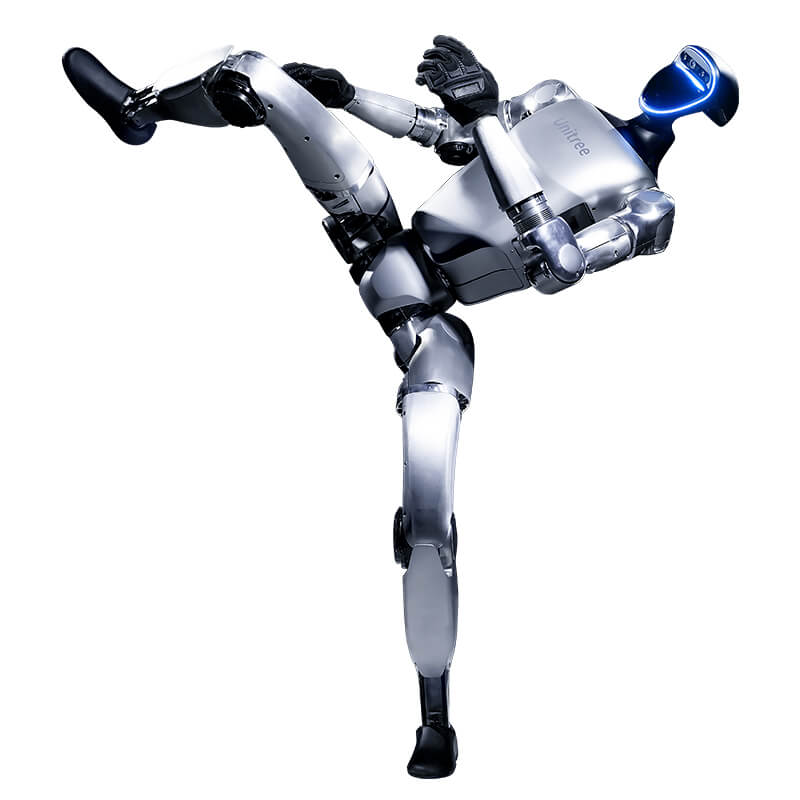
The Unitree G1 is a general-purpose humanoid robot developed by Unitree Robotics, a Chinese robotics company headquartered in Hangzhou. Standing approximately 1.32 meters tall and weighing around 35 kilograms, the G1 features 23 degrees of freedom and is capable of walking, running, recovering from falls, and performing dexterous manipulation tasks. It ships with SDK access, making it accessible to researchers and small-business operators seeking an affordable entry point into humanoid robotics. The G1 is widely regarded as one of the most competitively priced serious humanoid platforms available as of public reporting, positioning Unitree as a disruptive force in a market historically dominated by far more expensive systems. Its combination of mobility, recoverability, and open software access has attracted attention from academic institutions, robotics developers, and automation-focused startups worldwide.
999 views
 Robot
RobotUniversal Robots UR5e
The Universal Robots UR5e is a six-axis collaborative robot arm (cobot) belonging to Universal Robots' e-Series product line. Designed for light-to-medium industrial and laboratory tasks, it is widely used in assembly, pick-and-place, machine tending, quality inspection, and lab automation workflows. Universal Robots, a Danish company and a subsidiary of Teradyne, is one of the most recognized names in the collaborative robotics market. The UR5e is programmed using Universal Robots' PolyScope graphical interface on a teach pendant, making it accessible to operators without deep robotics expertise. Its built-in force/torque sensing, tool-center-point control, and a broad ecosystem of certified end-effectors and accessories (the UR+ platform) have made it a popular mid-range cobot choice across manufacturing, electronics, food handling, and research sectors.
896 views
 Robot
RobotQuicktron M100
The Quicktron M100 is a heavy-duty autonomous mobile robot (AMR) belonging to Quicktron Robotics' M-Series product line. It is designed for demanding material handling tasks in warehouses, distribution centers, and manufacturing environments, using an integrated lift mechanism to transport shelves and pallets autonomously across facility floors. Quicktron Robotics, a company with roots in China and a global commercial presence, positions the M100 as a high-capacity solution for operations that require moving heavier loads than lighter AMR models can accommodate. The M100 targets logistics operators and manufacturers seeking to automate goods-to-person or pallet-movement workflows at scale.
201 views
 Robot
RobotNVIDIA Jetson Orin NX
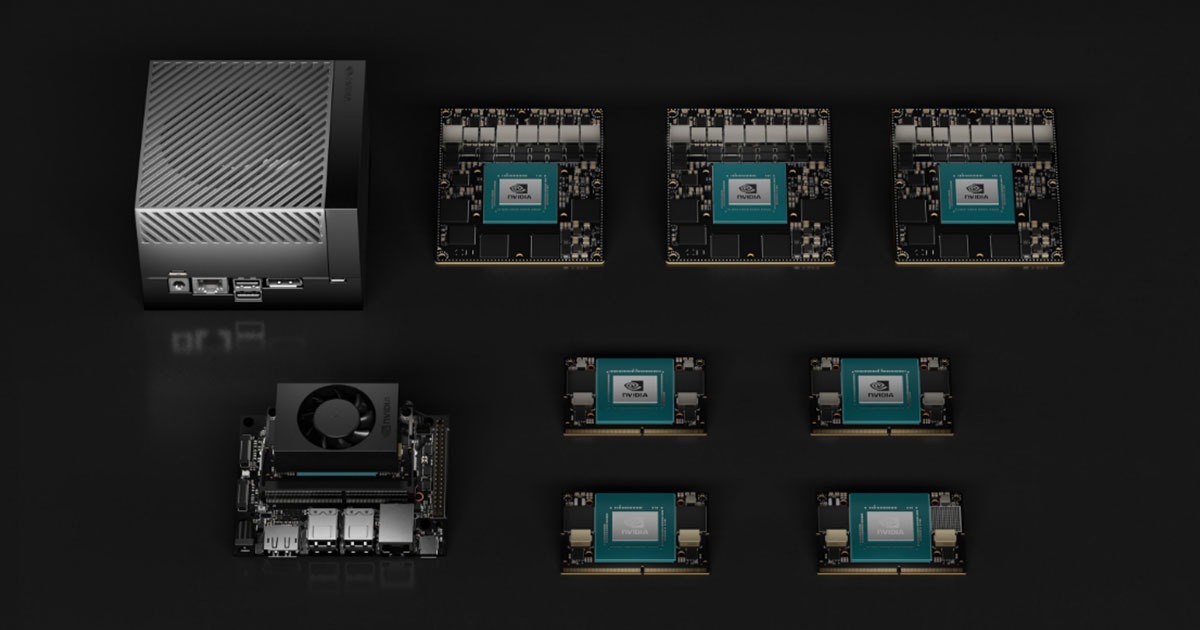
The NVIDIA Jetson Orin NX is a compact, SO-DIMM form-factor edge AI compute module designed for robotics, autonomous machines, and embedded vision applications. Manufactured by NVIDIA, it is available in 8 GB and 16 GB memory configurations and pairs an Ampere-architecture GPU with an 8-core Arm Cortex-A78AE CPU to deliver high-throughput on-device inference without relying on cloud connectivity. Positioned within NVIDIA's broader Jetson Orin family, the Orin NX targets developers and system integrators who need a balance of performance and power efficiency in a small footprint. It is commonly used in applications such as industrial inspection, autonomous mobile robots (AMRs), drone navigation, and smart edge devices where real-time AI inference is critical.
198 views