Atlas Robotics
US · atlas-robotics.com
SnapshotCompany claim
Atlas Robotics builds Physical AI for autonomous robots that see, think, and act in complex physical environments, deployed in real warehouses today. One brain, many bodies: the same AI powers every robot it builds, from autonomous transport to vertical storage to dexterous manipulation.
- Founded
- Not disclosed
- HQ
- US
- Models
- 4
- Categories
- 2
Product families
Is this your company? Claim this profile to add verified data, respond to our analysis, and upgrade claims to Verified.
Claim this profile1. Executive Overview {#executive-overview}
Atlas Robotics (full legal name: Atlas Robotics and Automation, Inc.) is a Pittsburgh, Pennsylvania-based Physical AI company building autonomous robots for warehouse and distribution environments. The company's core thesis — "one brain, many bodies" — holds that a single, unified AI platform can power a family of physically distinct robots, from autonomous pallet jacks to dexterous manipulation systems. By the company's own account, its flagship product, the LeVO autonomous pallet jack, has been in continuous commercial production for more than 17 months and is deployed with Fortune 500 customers, giving Atlas a rare claim in the warehouse robotics space: genuine, sustained revenue-generating operations rather than pilot-stage deployments.
The leadership team is anchored by Dr. Çetin Meriçli (CEO, Ph.D., Boğaziçi University) and Tekin Meriçli (CTO), a pairing that signals deep academic roots in robotics alongside commercial ambition. The company is headquartered at 400 N Lexington St, Pittsburgh, PA 15208 — a city with a well-established robotics and AI research ecosystem, notably Carnegie Mellon University. Atlas operates with a full vertical integration model, owning hardware, software, and cloud layers, which it presents as a structural advantage for compounding warehouse intelligence across its fleet.
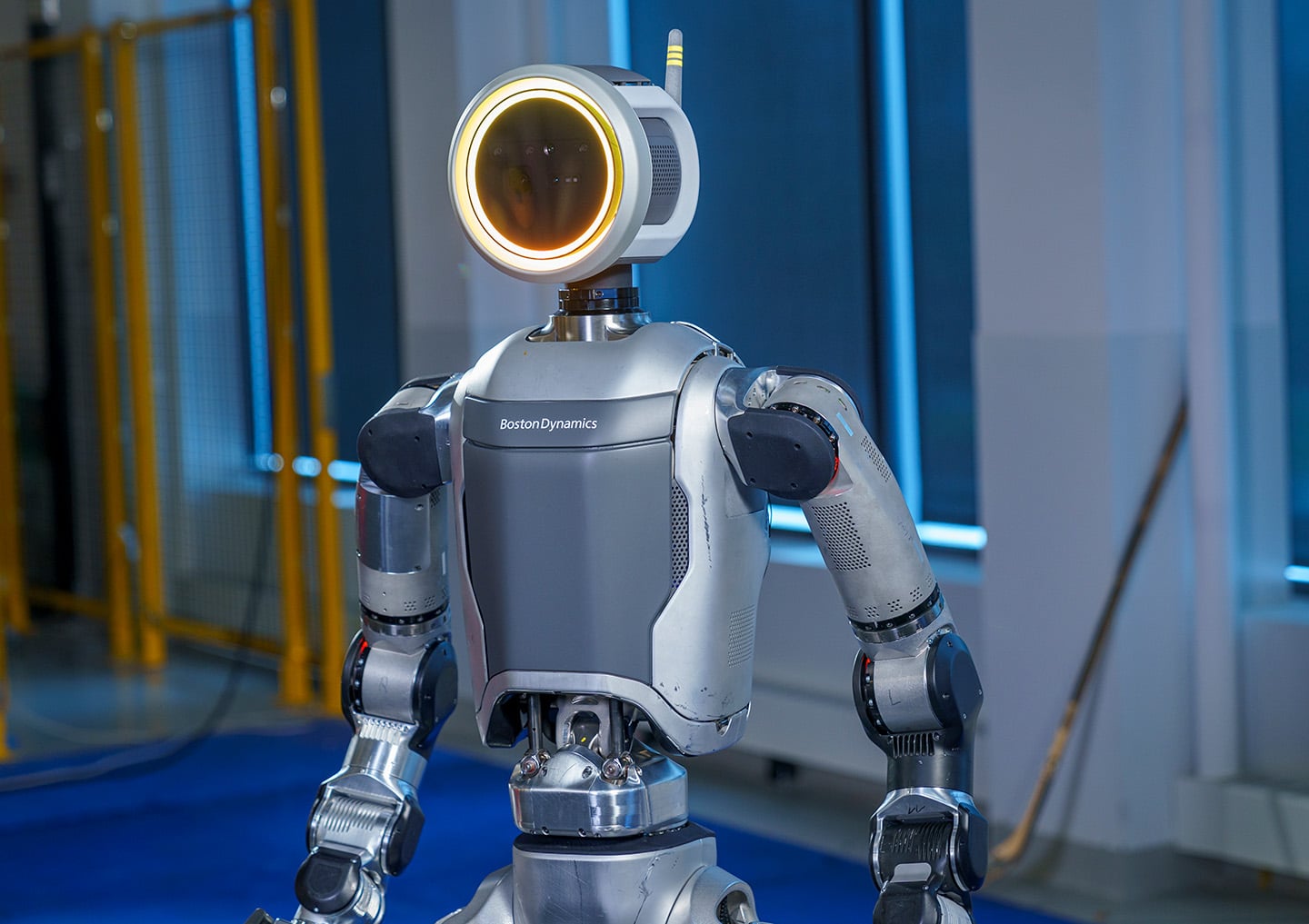
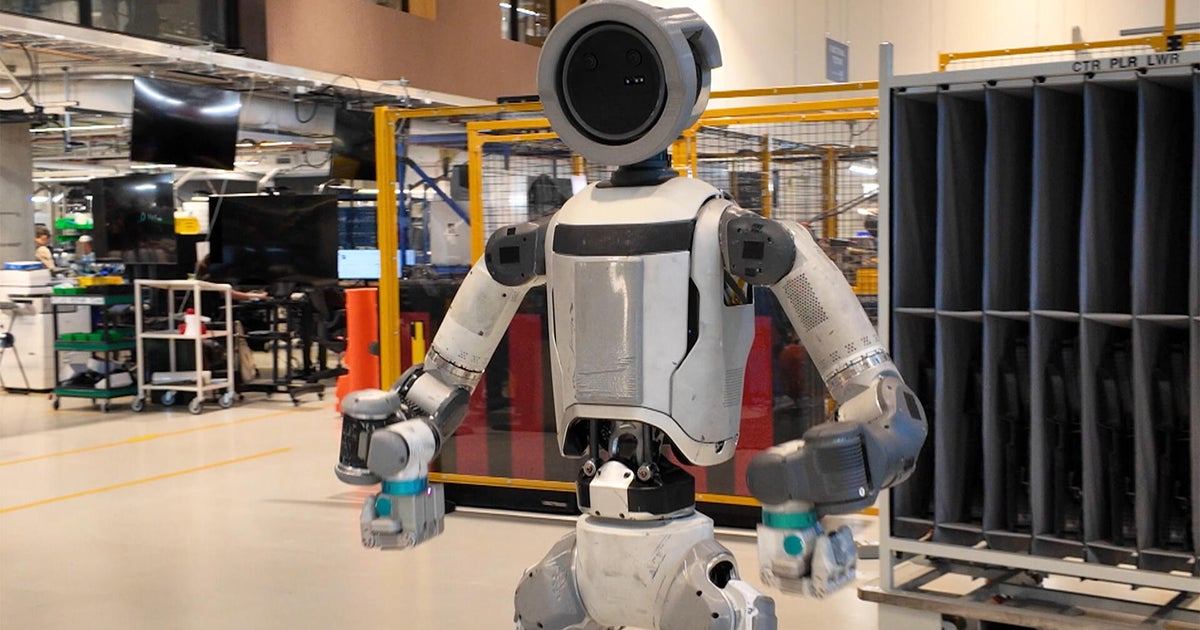
One important disambiguation the company itself flags: Atlas Robotics is entirely distinct from Boston Dynamics, whose humanoid robot carries the same "Atlas" name. The two companies share no ownership, technology, or affiliation.
Latest news
- KEENON Humanoid Pours Drinks at GCS 2026, 100,000 Others Run HotelsYanko Design·2026-06-15GENERAL
2. The Company Story {#the-company-story}
Atlas Robotics and Automation, Inc. was founded in Pittsburgh, Pennsylvania, a city whose robotics heritage — rooted in decades of Carnegie Mellon University research — provides a natural talent pool and credibility backdrop for a Physical AI venture. The founding year is not publicly disclosed on the company's site; this represents a gap in the public record. The company was founded by Dr. Çetin Meriçli, who serves as CEO, and Tekin Meriçli, who serves as CTO. Both founders share a surname and academic lineage traceable to Boğaziçi University, suggesting a co-founding partnership with deep shared research history.
The company's positioning is deliberate and precise. Rather than building a general-purpose robot or a single-product AMR, Atlas framed its mission around a platform architecture from the outset: one AI system, multiple robot bodies, all learning from shared real-world warehouse experience. This "fleet intelligence" model — where operational data from deployed units feeds back into the AI for every robot in the lineup — is the strategic logic behind its vertical integration across hardware, software, and cloud.
The most significant disclosed milestone is the LeVO autonomous pallet jack reaching 17-plus months of continuous production deployment, with Fortune 500 companies named (without specific identification) as customers. This is a meaningful commercial milestone for a startup-era company: it moves Atlas from the "promising demo" category into the "operating revenue" category. The pipeline disclosed on the company site lists the LeVO Double Fork, LeVO3D, and Mantis as follow-on products, with Mantis having reached commercial status. The company's stated business model includes zero upfront cost and Day 1 ROI — indicative of a robotics-as-a-service (RaaS) pricing structure, though the specific contractual terms are not publicly disclosed.
3. Product Portfolio {#product-portfolio}
Products & versions



Atlas Robotics currently discloses four products spanning two primary categories: autonomous mobile pallet handling and dexterous manipulation. The lineup is structured as a deliberate family, not a collection of standalone SKUs.
The LeVO is the company's production-proven anchor product — an autonomous pallet jack designed for unstructured warehouse environments. Its key differentiators, per company claims, include learned behaviors for navigating tight spaces and debris, multi-angle barcode scanning in any orientation, self-charging with autonomous redeployment, and ERP integration with real-time fleet monitoring. It supports a broad sweep of warehouse workflows: truck unloading and loading, put-away, replenishment, order picking, staging, and cross-docking. The LeVO Double Fork extends this platform by adding dual-fork capability, enabling simultaneous two-pallet handling and doubling throughput per mission while sharing all navigation, safety, and fleet intelligence with the base LeVO.
The LeVO3D pushes the platform into the vertical dimension, targeting high-bay warehouses with autonomous stacking, reach truck operations, 3D navigation, and precision placement for high-density storage. Supported workflows include high-bay put-away, vertical replenishment, pallet stacking, and deep-reach storage — a meaningful capability expansion for customers running multi-level racking systems.
The Mantis is the most technically ambitious product in the lineup. Rated at 2.5 tons of payload capacity, it combines autonomous pallet jack transport with dexterous robotic arms capable of adaptive grasping, mixed-SKU palletizing, depalletizing, case/each/bin picking, and case sorting. It is listed as commercially available and is driven by what Atlas describes as its "full proprietary AI stack with a neuro-symbolic backbone." Together, the four products form a coherent progression: transport, high-throughput transport, vertical storage, and dexterous manipulation — all on a shared AI platform.
4. Technology Stack {#technology-stack}
Atlas describes its technical foundation as a "Physical AI platform" with a "full proprietary AI stack" and a neuro-symbolic backbone — the latter disclosed specifically in connection with the Mantis robot. The company claims full vertical integration across hardware, software, and cloud layers. The "one brain, many bodies" architecture implies a shared model that is trained on fleet-wide operational data and deployed across physically distinct robot form factors.
Our read: The term "neuro-symbolic backbone" suggests an architecture that combines neural network-based perception and behavior learning with symbolic reasoning or structured rule systems. This kind of hybrid approach is theoretically well-suited to warehouse environments, where robots must generalize learned behaviors (handling debris, operating in tight spaces) while also following deterministic business logic (ERP integration, barcode scanning, workflow routing). It is a plausible and increasingly discussed direction in applied robotics AI, though independent verification of Atlas's specific implementation is not available from public sources.
Our read: The LeVO's "learned behaviors" for unstructured navigation, combined with multi-angle barcode scanning and self-charging, point to a sensor suite that likely includes depth cameras or lidar for environmental perception, computer vision for barcode reading regardless of pallet orientation, and autonomous docking systems for charging. No specific sensor vendors, compute hardware, or model architectures are disclosed publicly.
The LeVO3D's "3D navigation and positioning" for vertical reach operations represents a meaningful extension of the base perception stack — Our read: vertical autonomy in high-bay environments requires accurate pose estimation in the Z-axis, often demanding higher-precision localization than floor-level AMR navigation. The fact that Atlas claims this as a distinct product suggests non-trivial additional engineering was required.
The Mantis's "foundation models for grasping and manipulation" language aligns with the broader industry shift toward large, generalist manipulation models trained on diverse grasp data. Our read: if Mantis genuinely uses foundation-model-scale grasping, it would be among the more ambitious manipulation deployments in commercial warehouse robotics — though this remains a company claim without independent technical validation.
Limited public technical detail is available on specific compute hardware, sensor vendors, model sizes, or cloud infrastructure.
5. Research, Papers, Authors, Labs {#research-papers}
Company-linked papers
Atlas Robotics does not present itself as a research-publishing organization. No academic papers, preprints, or lab affiliations are listed on the company's public site. This is consistent with the profile of a commercially focused robotics deployment company — the large majority of warehouse robotics firms in this category do not publish peer-reviewed research. The founders' academic backgrounds (Boğaziçi University; Pittsburgh's robotics ecosystem) suggest research-informed origins, but no specific publications are attributed to Atlas Robotics or its founders in the company's disclosed materials.
6. Media Evidence {#media-evidence}
Media library
Three press items appear in the indexed coverage associated with Atlas Robotics. Notably, all three — an April 2024 piece on bostondynamics.com titled "An Electric New Era for Atlas," a contemporaneous entry on robotsguide.com, and a June 2026 CBS News piece on Boston Dynamics' Atlas robot upgrades — pertain to Boston Dynamics' humanoid robot named Atlas, not to Atlas Robotics and Automation, Inc. This is a direct consequence of the naming collision the company itself flags in its FAQ and disambiguating description. No independent third-party press coverage of Atlas Robotics (the Pittsburgh warehouse robotics company) is present in the extracted data. This is a material gap in the public profile and likely a commercial challenge: search results and press archives for "Atlas robot" are heavily dominated by Boston Dynamics content.
7. Commercial Reality {#commercial-reality}
Customers & deployments
Atlas Robotics states, on its own site (company-claim), that its robots are "in continuous commercial operation, trusted by Fortune 500 companies" and that the LeVO has been in production deployment for 17-plus months. This is a substantive claim of commercial traction — Fortune 500 designation implies large, sophisticated enterprise customers, and 17-plus months of continuous operation goes beyond a pilot program.
Revenue figures, customer names, fleet sizes, deployment counts, and specific ROI metrics are not disclosed in any public materials reviewed. The company's stated "zero upfront cost and Day 1 ROI" model strongly implies a RaaS or subscription-based commercial structure, but contract terms, pricing tiers, and margin profiles are not publicly available.
We invite Atlas Robotics to claim this profile and disclose commercial metrics, customer references, or case study data that would allow analysts and prospective customers to evaluate commercial scale independently.
8. Markets and Use Cases {#markets-use-cases}
Atlas Robotics targets the warehouse and logistics sector as its primary and stated initial market, with factory/manufacturing listed as a secondary industry tag for the LeVO Double Fork and Mantis products. The use-case coverage disclosed across the product line is notably broad for a four-product company:
Horizontal transport: Truck unloading, truck loading, put-away, replenishment, order picking, staging, and cross-docking — covered by both LeVO variants. These represent the highest-frequency, most labor-intensive workflows in a conventional warehouse or distribution center.
Vertical storage: High-bay put-away, vertical replenishment, pallet stacking, and deep-reach storage — addressed by the LeVO3D. This positions Atlas in the dense-storage segment, where square footage costs make vertical utilization a direct financial lever.
Dexterous manipulation: Case picking, each picking, bin picking, mixed-SKU palletizing, depalletizing, and case sorting — addressed by Mantis. This is the hardest and most valuable segment of warehouse automation, historically resistant to robotic solutions due to the variability of SKU shapes, weights, and packaging.
Our read: The combination of transport, vertical storage, and dexterous manipulation under a single AI platform is a credible attempt to address the full automation stack of a modern distribution center. A customer deploying LeVO for transport today would face low switching costs to add LeVO3D for storage and Mantis for picking as those products mature — a deliberate land-and-expand architecture. The initial market focus on warehouses and distribution is well-matched to sustained demand: e-commerce fulfillment pressure, labor cost inflation, and supply chain resilience investments are all structural tailwinds for this segment.
9. Competitive Landscape {#competitive-landscape}
Competitive comparison
| Robot | Maker | Autonomy | Conf. |
|---|---|---|---|
| iRobot Roomba Combo 10 Max | iRobot | Autonomous | 0.90 |
| Mobile ALOHA (Stanford) | Stanford University | Teleoperated | 0.90 |
| 1X NEO | 1X Technologies | Remote-Assisted | 0.90 |
The autonomous warehouse robotics space is active and well-funded, with multiple companies pursuing autonomous pallet handling, AMR navigation, and robotic manipulation across overlapping customer segments. Atlas Robotics occupies a specific position within this landscape: a vertically integrated Physical AI platform company targeting heavy logistics workflows (pallet-scale, multi-ton payloads) with a unified AI brain across multiple robot bodies. This distinguishes it from pure-play AMR companies focused on lighter goods transport, and from single-product manipulation vendors.
The naming collision with Boston Dynamics' "Atlas" humanoid robot is a persistent competitive disadvantage in brand recognition and search visibility — not a technology or product shortcoming, but a real friction point in sales and marketing that the company actively manages through explicit disambiguation language. The module above maps the relevant competitive peer set; Atlas's differentiated claims rest on its neuro-symbolic AI architecture, its fleet intelligence compounding model, its RaaS commercial structure, and its verifiable production deployment tenure with Fortune 500 operators.
10. Country Advantage / Geopolitical {#geopolitical}
Section not material for this company.
11. Hype vs Real vs Ugly {#hype-real-ugly}
Claim tracker
What appears verified by evidence:
- LeVO is in production commercial deployment. The company claims 17-plus months of continuous operation with Fortune 500 customers — a specific, falsifiable, and meaningful claim. No contradicting evidence appears in the reviewed data.
- Four products are publicly disclosed with detailed workflow and feature descriptions, indicating genuine product development rather than vaporware.
- Mantis carries a commercial designation in the product data, suggesting it has moved beyond concept stage.
Company claims requiring independent validation:
- "Zero upfront cost and Day 1 ROI" (company-claim): The zero-upfront-cost model is a common RaaS framing; Day 1 ROI is an extraordinary claim that implies immediate productivity displacement exceeding all deployment costs from the first day of operation. This is a marketing formulation that prospective customers should probe with contractual and operational specifics.
- "Foundation models for grasping and manipulation" (company-claim for Mantis): This language implies large-scale, generalist model training for robotic manipulation — a technically ambitious claim that has not been independently validated.
- "Neuro-symbolic backbone" (company-claim): Plausible and technically coherent, but unverified by external parties.
- "Fortune 500 companies" as customers (company-claim): Named customers are not disclosed; the claim cannot be independently confirmed from public data.
Gaps (not negatives — invitations to disclose):
- Not yet disclosed: founding year, total funding raised, investor names, number of units deployed, fleet size, named customer references, or specific ROI data. Atlas Robotics is invited to claim this profile and provide additional context.
Our read: The overall picture is of a company with genuine commercial traction making aggressive but not implausible marketing claims. The 17-month production deployment figure is the strongest independent signal of real-world viability. The manipulation and AI architecture claims are the areas where independent validation would most meaningfully shift analyst confidence.
12. Future Scenarios {#future-scenarios}
Our read — Bull case: Atlas's "one brain, many bodies" architecture proves to be a genuine compounding advantage. Fleet intelligence accumulated across LeVO deployments accelerates Mantis's manipulation capabilities faster than competitors building manipulation in isolation. Fortune 500 customers expand from single-product pilots to full-stack deployments (transport + vertical storage + manipulation), driving high-value, multi-year RaaS contracts. The neuro-symbolic backbone provides robustness advantages in real-world messiness that pure neural approaches struggle with. Atlas becomes a platform company, not just a robotics vendor, with switching costs that rise as customers integrate fleet data into their WMS and ERP systems.
Our read — Base case: LeVO continues to grow steadily within its installed Fortune 500 base. LeVO3D and Mantis achieve commercial deployments within 12–24 months of the report date, validating the multi-product platform story. The Boston Dynamics naming overlap remains a persistent nuisance in marketing but does not materially impede enterprise sales. Atlas raises additional capital on the strength of its production deployment record, expanding its Pittsburgh engineering team and geographic sales reach. Growth is real but measured, constrained by the capital intensity of hardware-plus-software sales and the long enterprise procurement cycles typical of Fortune 500 warehouse operators.
Our read — Bear case: The manipulation claims embedded in Mantis prove harder to realize in production than in controlled environments, extending the timeline for commercial scale and straining the "one brain, many bodies" narrative. Larger, better-capitalized competitors in autonomous pallet handling accelerate, eroding the window in which Atlas's production head start translates to a durable lead. The naming collision with Boston Dynamics continues to suppress organic brand building. RaaS unit economics prove thinner than projected under a zero-upfront-cost model, creating cash flow pressure before the company reaches the fleet scale needed for AI compounding to materialize.
13. What to Watch {#what-to-watch}
- Mantis commercial deployments: First verified third-party references for Mantis in production will be the strongest signal that the manipulation platform is real at scale. Watch for customer announcements, trade press coverage, or case studies.
- LeVO3D commercial launch: The product is disclosed in the pipeline; watch for a commercial availability announcement and first deployment references in high-bay warehouse environments.
- Funding announcements: No investment rounds are publicly disclosed. A Series A or B announcement would reveal investor conviction, capital runway, and implied valuation — all material to competitive positioning.
- Named customer disclosure: The Fortune 500 claim is compelling but unverifiable without named references. Any public customer case study would meaningfully upgrade analyst confidence in commercial traction.
- Boston Dynamics naming overlap: Monitor whether the naming collision creates legal, brand, or SEO challenges as Atlas Robotics scales its public presence.
- AI architecture publications or demos: Any technical disclosure — white papers, conference presentations, or third-party evaluations of the neuro-symbolic backbone or foundation grasping models — would allow independent assessment of the technology differentiation claims.
- Headcount and hiring signals: LinkedIn and job board signals on engineering and sales hiring in Pittsburgh (and potentially new geographies) will indicate growth trajectory before financial disclosures become available.
- Press coverage independent of Boston Dynamics: Current indexed press is dominated by the naming collision. Emergence of genuine third-party warehouse robotics coverage of Atlas Robotics would signal improving brand presence.
14. Sources & Methodology {#sources-methodology}
Primary source: All factual claims in this report are grounded exclusively in data extracted from Atlas Robotics' own website (atlas-robotics.com), including the About page, FAQ, and product descriptions. All such claims are designated company-claim and represent the company's own representations, not independently verified facts.
Third-party press: Three press items were identified in the indexed coverage. All three were determined to reference Boston Dynamics' humanoid robot (also named "Atlas") rather than Atlas Robotics and Automation, Inc. They are noted as context for the naming-collision phenomenon but provide no independent validation of Atlas Robotics' products or operations.
Inferences: Analytical inferences drawn from product descriptions, feature sets, and positioning language are labeled "Our read:" throughout the report. They represent reasoned interpretation, not sourced fact.
What this report does not contain: Invented revenue figures, fabricated customer names, unattributed competitor claims, or any factual assertions not traceable to the above sources.
Rubric applied uniformly: This methodology — company site as primary source (company-claim), labeled inferences, gaps treated as invitations to disclose rather than unsourced negatives — is applied consistently across all company intelligence reports in this series. Readers should weight company-claim sections accordingly and seek independent validation for commercially material decisions.
The LeVO is an autonomous pallet jack built for real warehouse chaos. It uses learned behaviors to operate in tight spaces, handle rough patches and debris, and work safely alongside teams. It offers zero upfront cost with Day 1 ROI. Capabilities include autonomous navigation in unstructured environments, multi-angle barcode scanning, self-charging, and ERP integration.
- •Autonomous navigation in unstructured environments
- •Multi-angle barcode scanning in any orientation
- •Self-charging with autonomous redeployment
- •ERP integration and real-time fleet monitoring
- •Supports Truck Unloading, Loading, Put-Away, Replenishment, Order Picking, Staging, Cross-Docking
Detailed specs not disclosed.
Technology stackOur read
Inferred from product specs — click through to the technology wiki:
ResearchComputed
Product comparisonComputed
Each row leads with this company's product, side-by-side with similar ones · click a row to expand full specs, click again to collapse
LeVO

LuckiBot Pro

KettyBot
Pudu CC1

R3

Kiwi Delivery Robot
LeVO Double Fork
KettyBot
Pudu CC1
R3
LuckiBot
Kiwi Delivery Robot
Mantis
Pudu CC1
R3
LuckiBot
Kiwi Delivery Robot

Relay Delivery Robot
LeVO3D
R3
LuckiBot
Kiwi Delivery Robot
Relay Delivery Robot
BellaBot
Company announcement
News and Media
The company's official social & video channels · external links
News
From third-party news outlets (China & abroad) · external links