K5 Autonomous Security Robot
The K5 Autonomous Security Robot is an outdoor-rated, fully autonomous patrol robot developed by Knightscope, a Silicon Valley-based public safety technology company. Designed for continuous 24/7 operation, the K5 navigates parking lots, corporate campuses, and other open environments while collecting real-time security data including 360-degree video, license plate information, and environmental sensor readings. The K5 is among Knightscope's most recognized products and is distinguished by its tall, egg-shaped form factor and suite of onboard sensors including four high-resolution cameras, automatic license plate recognition (ALPR), and two-way audio communication. The robot is capable of self-docking to recharge, enabling near-continuous autonomous deployment without human intervention.

Overview and Use Cases
The K5 Autonomous Security Robot is purpose-built for outdoor physical security applications. Its primary use cases include:
- Parking lot and garage patrol: Monitoring vehicles, detecting anomalies, and logging license plates.
- Corporate and university campus security: Providing a visible deterrent and real-time situational awareness across large open areas.
- Retail and commercial property monitoring: Supplementing or partially replacing traditional human guard patrols.
- Event venue perimeter security: Offering mobile surveillance coverage during and after events.
The robot is intended to augment—rather than replace—human security personnel, feeding data to a remote monitoring center operated by Knightscope or the client organization.
Key Technical Features
The K5 stands approximately 5 feet tall and weighs around 400 pounds, giving it a stable, hard-to-tip profile suited to outdoor terrain. Reported and publicly documented features include:
- 360-degree video: Four high-resolution cameras positioned to provide eye-level, all-around coverage with no blind spots.
- Automatic License Plate Recognition (ALPR): Onboard readers that can log and cross-reference plate data in real time.
- Two-way audio: Speakers and microphones enabling remote operators to communicate with individuals near the robot.
- Environmental sensors: Reportedly includes sensors for detecting air quality, temperature, and other ambient conditions, though specific sensor models are not publicly detailed.
- Autonomous navigation and obstacle avoidance: Uses a combination of lidar, ultrasonic sensors, and cameras to navigate and avoid obstacles.
- Self-recharging: The K5 autonomously returns to its charging dock when battery levels are low, enabling near-continuous patrol cycles.
Runtime between charges and precise battery specifications have not been officially published in detail as of public reporting.
Comparison to Knightscope's Other Models
Within the Knightscope lineup, the K5 is the outdoor-focused counterpart to the K3, which is designed for indoor environments such as malls and office buildings. The K5's rugged, weatherproof construction and larger footprint distinguish it from the more compact K3. Knightscope has also developed the K1, a stationary kiosk-style unit, and the K7, a four-wheeled model designed for rougher outdoor terrain. The K5 occupies the middle ground: fully mobile and outdoor-capable, but optimized for relatively flat, paved surfaces rather than uneven ground.
Market Context and Target Buyers
Knightscope offers its robots primarily through a Robot-as-a-Service (RaaS) subscription model rather than outright sale, which lowers the upfront cost barrier for clients. Reported subscription pricing has historically been positioned as competitive with the fully-loaded cost of a human security guard shift, though exact current rates are subject to change and should be confirmed directly with Knightscope.
Target buyers include:
- Large commercial real estate operators
- Hospital and healthcare campuses
- Universities and school districts
- Retail chains and shopping centers
- Municipal and government facilities
Notable Deployments
The K5 has been deployed at a variety of high-profile locations. Publicly reported customers and deployment sites have included shopping malls, technology company campuses in Silicon Valley, hospitals, and sports venues. The robot gained significant media attention following an incident in 2017 at a Washington, D.C. shopping center, which highlighted both the capabilities and limitations of autonomous security platforms. As of public reporting, Knightscope has deployed its robots across numerous U.S. states.
Future Outlook
As autonomous security robotics matures, the K5 faces growing competition from other vendors entering the outdoor patrol segment. Knightscope, which became a publicly traded company on Nasdaq (ticker: KSCP) reportedly in early 2022, has continued to invest in expanding its fleet and software capabilities, including its KSOC (Knightscope Security Operations Center) cloud platform. The broader trend toward AI-enhanced video analytics and integration with existing security infrastructure is likely to shape future iterations of the K5 and its successors.
Related videos

Related entries
 Robot
RobotRelay Delivery Robot
The Relay Delivery Robot is an autonomous indoor delivery robot developed by Relay Robotics (formerly known as Savioke), designed primarily for hospitality and healthcare environments. It navigates hotel corridors and hospital hallways independently, rides elevators without human assistance, and delivers guest amenities, medications, linens, and other supplies directly to rooms or designated drop-off points. Relay is one of the most widely deployed service robots in its category, reportedly completing over one million lifetime deliveries with a publicly cited success rate of approximately 99.8%. With a cargo capacity of around 10 gallons, the robot is compact enough to operate in busy public spaces while carrying a meaningful payload of everyday supplies.
2,760 views
 Robot
RobotSpot
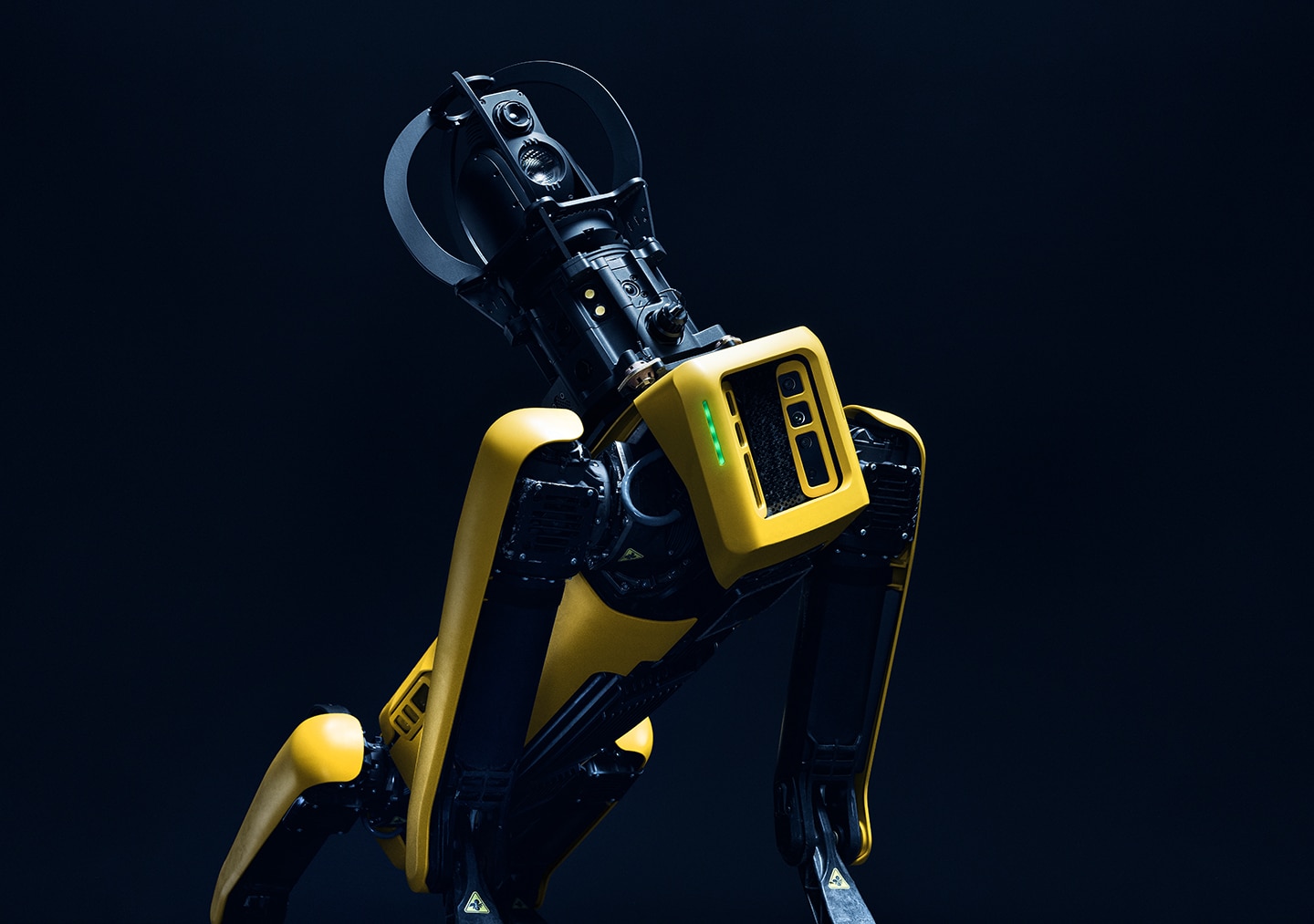
Spot is a four-legged autonomous robot developed by Boston Dynamics, a robotics company headquartered in Waltham, Massachusetts. Designed for inspection, security, and data collection in complex or hazardous environments, Spot can navigate stairs, rough terrain, and confined spaces that are inaccessible to wheeled robots. It is commercially available and has been deployed across industries including utilities, oil and gas, construction, and public safety. Spot supports a modular payload system that accommodates thermal cameras, pan-tilt-zoom (PTZ) cameras, lidar units, methane sensors, and other mission-specific hardware. Boston Dynamics also offers the Orbit fleet-management software platform, enabling operators to schedule autonomous inspection routes, aggregate sensor data, and manage multiple Spot units from a central interface. The robot is widely regarded as one of the most capable and commercially mature legged robots on the market.
1,244 views
 Robot
RobotRealSense Depth Camera D455
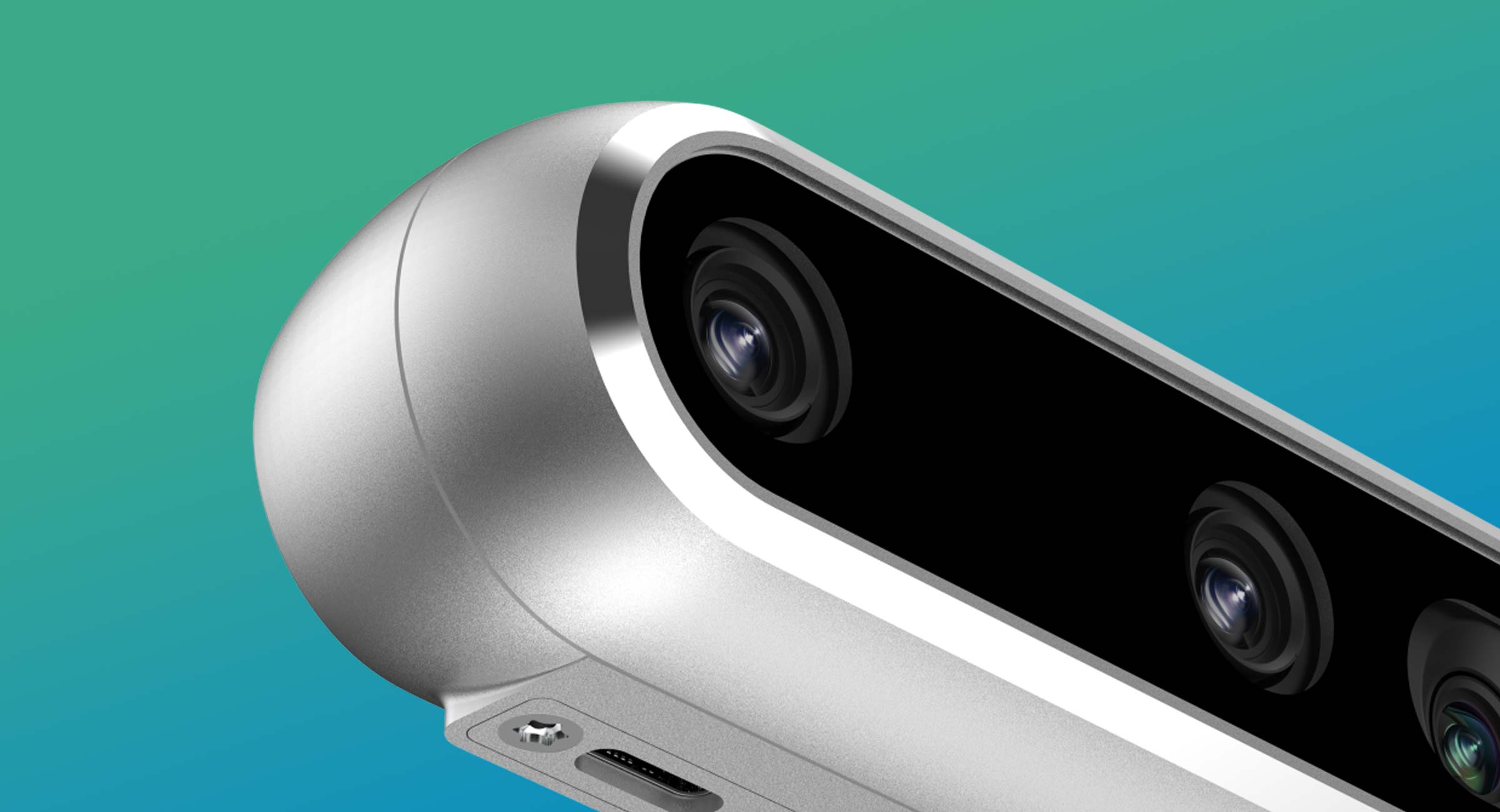
The RealSense Depth Camera D455 is a stereoscopic active-infrared depth camera belonging to Intel's D400 series, designed to capture high-fidelity depth data for robotics, autonomous mobile robots (AMRs), drones, and computer-vision applications. It features a 95 mm stereo baseline — the widest in the D400 lineup at the time of its introduction — which reportedly enables depth error of under 2% at ranges up to approximately 4 metres. Originally developed under the Intel RealSense brand, the D455 and related products were later spun off as part of an independent RealSense business unit following Intel's restructuring of the division around 2021–2022. The camera is widely adopted in research, industrial automation, and humanoid-robot development owing to its compact USB-powered form factor, open SDK support, and relatively accessible price point.
743 views
Rosie 2.0
The Rosie 2.0 is a commercial-grade autonomous robot vacuum developed by Tailos, designed to handle large-scale floor cleaning in business and institutional environments. It is offered in a two-pack configuration, allowing facilities to deploy multiple units simultaneously for broader coverage and more efficient cleaning cycles. Built to commercial durability standards, the Rosie 2.0 combines intelligent navigation with powerful suction technology to reduce reliance on manual labor and improve facility maintenance consistency. It targets businesses, hospitality venues, retail spaces, and other high-traffic environments where reliable, automated cleaning is a priority.
521 views