Knightscope
Company wikiFounded 2013 · United States · knightscope.com
SnapshotCompany claim
Knightscope transforms public safety through autonomous machines, AI-driven software, and licensed security agents. Founded in response to Sandy Hook, Boston bombings, and 9/11, the company builds an Autonomous Security Force to deter, detect, and respond to threats.
- Founded
- 2013
- HQ
- United States
- Models
- 10
- Categories
- 2
ContactCompany claim
- Address
- Not disclosed
Product families
Is this your company? Claim this profile to add verified data, respond to our analysis, and upgrade claims to Verified.
Claim this profile1. Executive Overview {#executive-overview}
Knightscope is a U.S.-based public safety technology company founded on April 4, 2013, and headquartered in the United States. The company has built what it describes as the nation's first Autonomous Security Force — an integrated platform combining autonomous mobile robots, stationary AI-sensing hardware, emergency communications infrastructure, and a cloud-based software operations layer. Its product lineup spans ten distinct offerings, from the K5 Autonomous Security Robot (ASR) to the K1 Blue Light Tower and a gunshot detection system (AGD), serving industries including retail, logistics, healthcare, office campuses, and warehousing. Knightscope trades on the Nasdaq exchange, having completed its public listing in 2022 with CFO Apoorv Dwivedi leading that capital markets process.
The company's founding narrative is explicitly tied to national tragedies — Sandy Hook, the Boston Marathon bombings, and 9/11 — and its stated long-term mission is to make the United States the safest country in the world. Leadership includes Chairman and CEO William Santana Li, a 30-year veteran of the global automotive sector and serial entrepreneur, alongside co-founder Mercedes Soria (Chief Intelligence Officer, with the company since inception) and Chief Design Officer Aaron Lehnhardt. A number of team members, per the company's own description, come from law enforcement and military backgrounds, giving Knightscope a distinctive public-safety-first organizational identity.
Knightscope operates as a managed service provider, pricing its robots and devices on a subscription basis (the K1 Hemisphere starts at $916/month; the K1 Blue Light Tower Retrofit Kit is priced at under $5,000 average all-in cost per tower). This recurring-revenue model differentiates it from hardware-only security vendors and positions the KSOC software platform as a durable, long-term customer relationship asset.
Latest news
- KEENON Humanoid Pours Drinks at GCS 2026, 100,000 Others Run HotelsYanko Design·2026-06-15GENERAL
- Knightscope exceeds another $1 million sales milestonewww.businesswire.com·2026-05-16GENERAL
2. The Company Story {#the-company-story}
Knightscope was incorporated on April 4, 2013, founded explicitly in response to mass-casualty events on American soil. That founding context is not incidental marketing — it shapes the company's product philosophy (deterrence, detection, and real-time response), its hiring culture (veterans, law enforcement professionals, and technologists), and its stated ambition to build infrastructure-scale public safety technology for the entire United States.
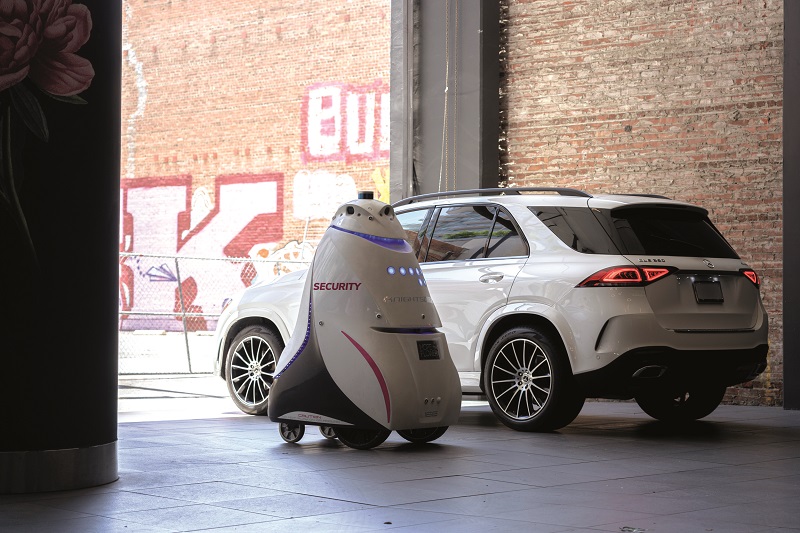
The company's early years were focused on developing the K5 Autonomous Security Robot, a 420-pound, 64.6-inch-tall outdoor patrol platform that became Knightscope's flagship product and its most publicly visible asset. The K5 garnered broad media attention as one of the first commercially deployed autonomous security robots in the United States. Coverage by outlets including Uncrewed Systems (January 2025) confirms the K5 remains an active, recognized platform in the uncrewed systems industry. A partnership or operational tour with Allied Universal — one of the largest physical security firms in North America — noted on aus.com represents a significant channel validation, demonstrating that Knightscope's robots have been integrated into traditional manned security operations rather than simply positioned as replacements.
A pivotal milestone came in 2022 when Knightscope completed its Nasdaq IPO under CFO Apoorv Dwivedi's leadership, providing public capital markets access and increased visibility with institutional and retail investors. The company maintains an investor relations web presence at knightscope.gcs-web.com. Over the subsequent years, Knightscope expanded its product portfolio well beyond the K5, adding stationary AI sensing (K1 Hemisphere, K1 Laser), emergency communications hardware (K1 Blue Light Tower, K1 Blue Light Emergency Phone, K1 Call Box), a gunshot detection system (AGD), and a modernization retrofit kit for legacy blue light towers — broadening its addressable market from mobile robot patrols to the full physical security and emergency communications stack.
The company's current positioning as a managed service provider — bundling hardware, AI software (KSOC), and licensed Augmented Security Agents into a single subscription — reflects a deliberate strategic evolution from robot manufacturer toward an end-to-end accountable security operation.
3. Product Portfolio {#product-portfolio}
Products & versions
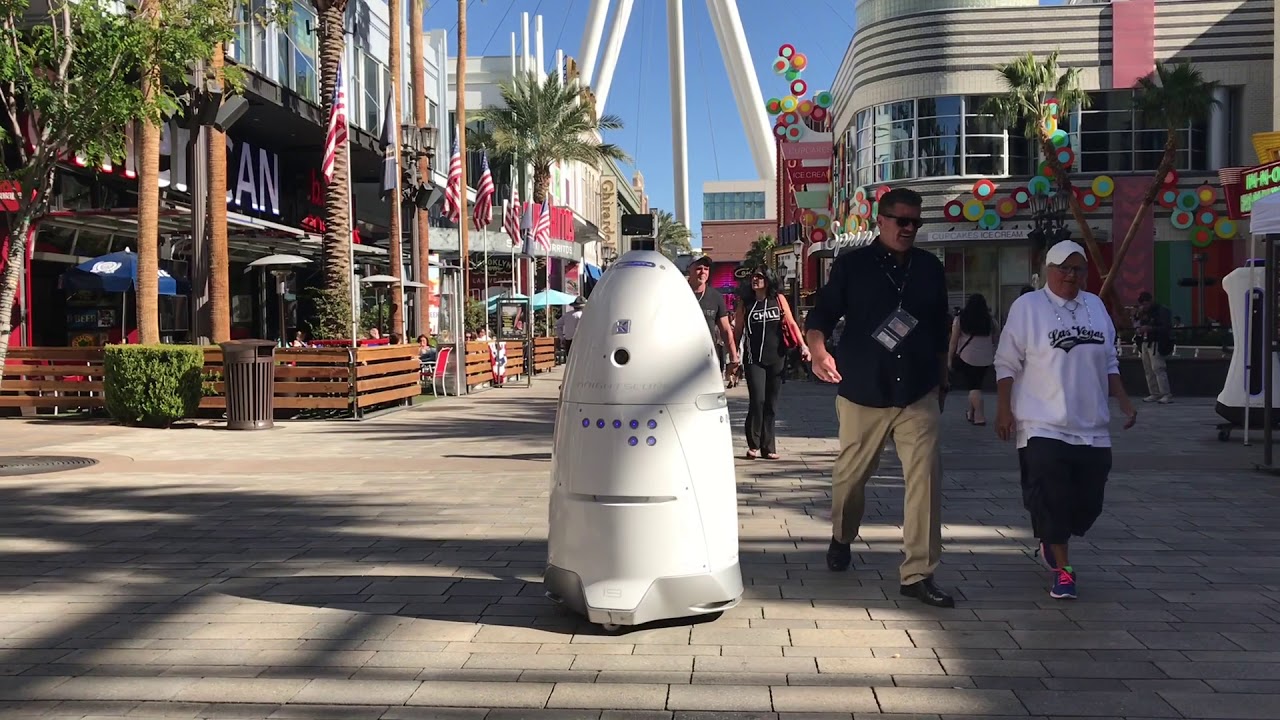
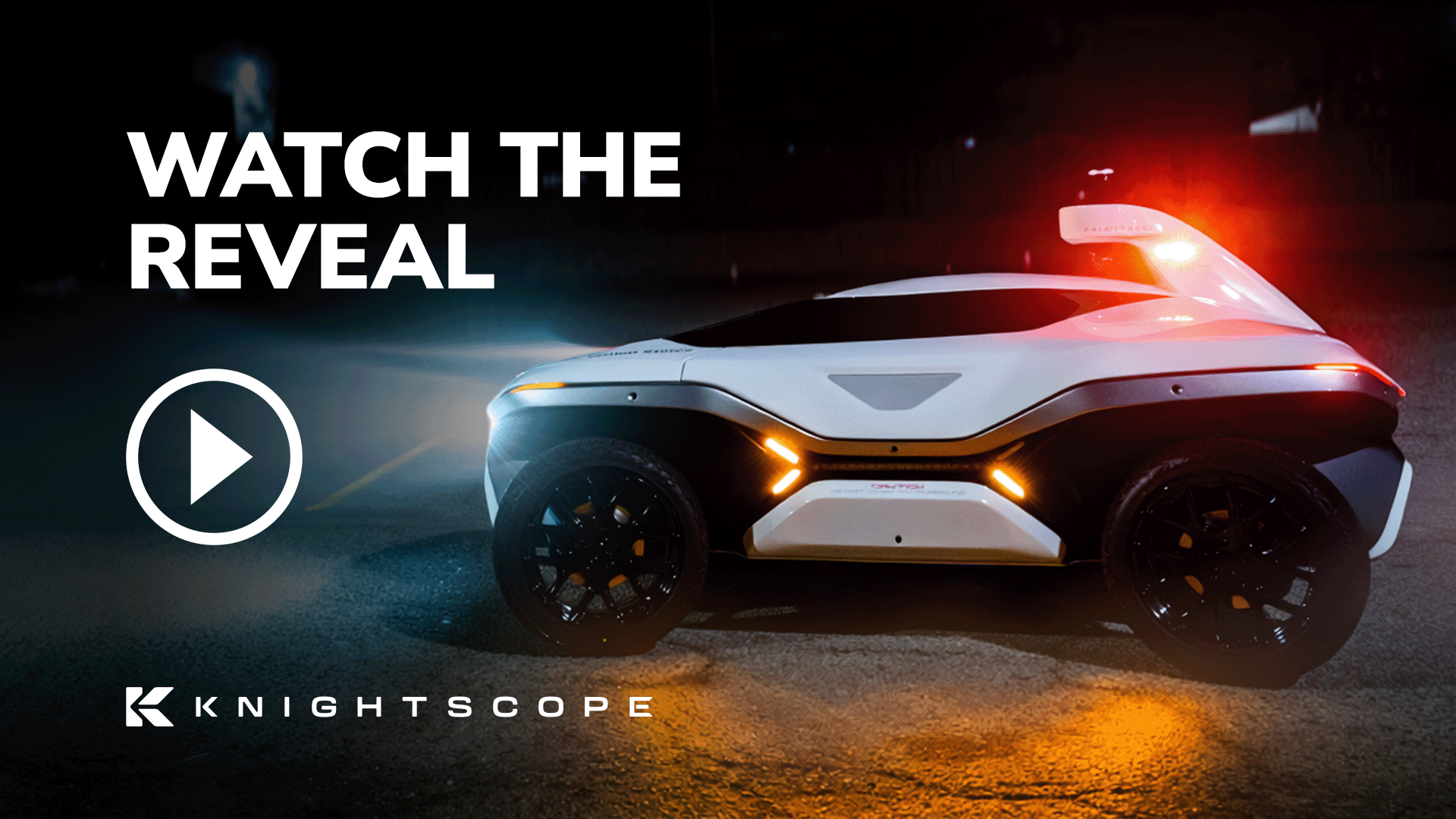


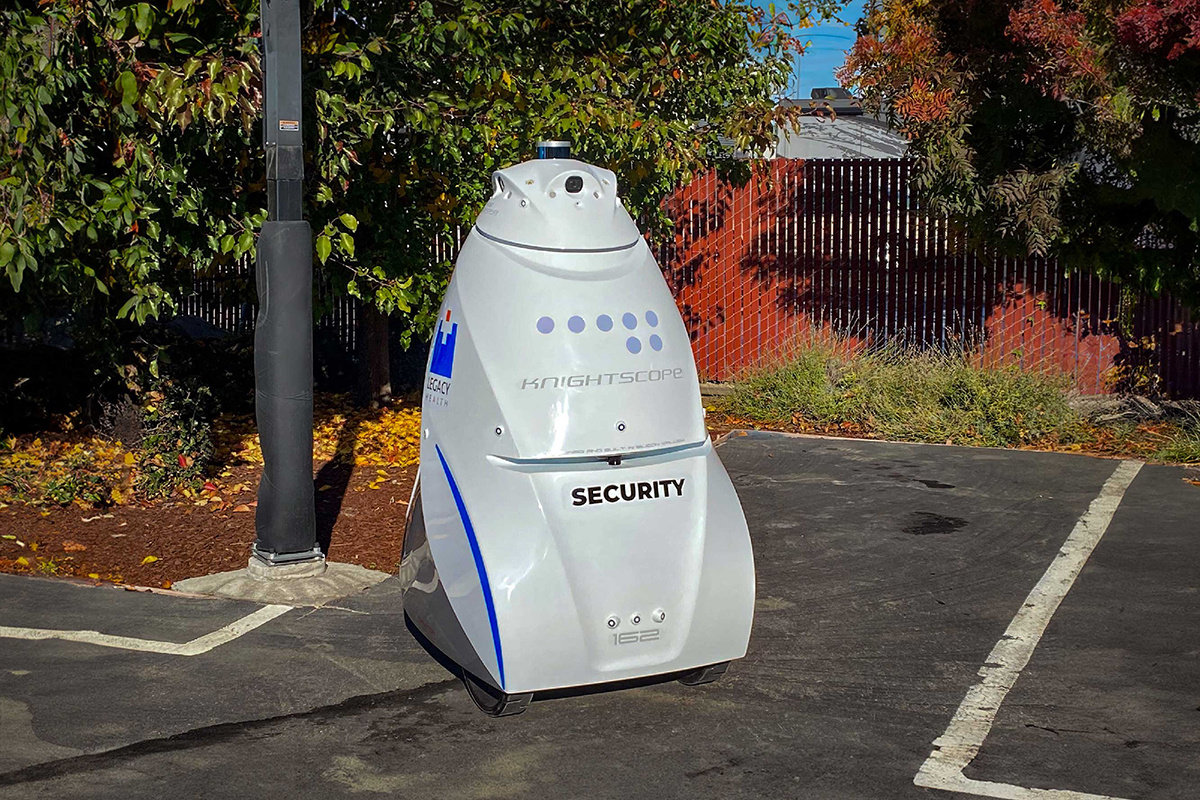

Knightscope's ten-product lineup divides into four coherent categories. Mobile autonomous platforms are anchored by the K5 ASR — a 420-lb, weatherproof outdoor patrol robot operating at up to 3 mph with 24/7 autonomous capability and remote oversight via KSOC. Stationary AI sensing includes the K1 Hemisphere (AI-powered surveillance dome starting at $916/month, deployable indoors and outdoors across retail, office, warehouse, and factory settings) and the K1 Laser (a LiDAR-based people and object detection system with 360-degree coverage, near-zero false alarm rate, and privacy-preserving operation — no facial or identifying data captured — suited to retail, logistics, and hospital environments).
Emergency communications hardware forms the largest single product cluster: the K1 Blue Light Tower (an 11'8" wireless emergency phone tower with strobe and area illumination, supporting Verizon, AT&T, and Iridium Satellite), the K1 Blue Light Emergency Phone (a compact 31.5-inch variant for space-constrained locations), the K1 Call Box (a ruggedized roadside emergency system for highways, bridges, parks, and metro stations), and the K1 Blue Light Tower Retrofit Kit (a sub-$5,000 modernization package that installs wireless cellular connectivity, optional solar power, and battery backup into existing tower housings without trenching). Software and detection systems round out the portfolio: KSOC (the browser-based fleet management and security operations platform), KEMS-2025 (the cloud monitoring system for K1B emergency phones across North America, providing remote health monitoring and automated reporting without in-person device testing), and the AGD (Automated Gunshot Detection system, which localizes shooter origin within feet, traces bullet paths, and delivers automated notifications to first responders via web and mobile app).
The portfolio's shape is notable: Knightscope has constructed a vertically integrated public safety stack in which a single operator can deploy mobile robot patrols, stationary sensing, emergency communications, gunshot detection, and centralized software management under one subscription relationship. The retrofit kit is particularly strategic — it converts the installed base of legacy blue light infrastructure across North American campuses and highways into Knightscope-connected endpoints, expanding the company's addressable market without requiring greenfield construction.
4. Technology Stack {#technology-stack}
Knightscope's public-facing product specifications and feature descriptions reveal a multi-layered technology stack, though deep engineering documentation is not publicly disclosed. What can be assessed from available data is summarized below.
Sensing and perception: The K5 ASR and the company's About page explicitly reference LiDAR, ultrasonic sensors, GPS, wheel odometry, and an inertial measurement unit (IMU) as components of the robot platform. The K1 Laser extends LiDAR to a standalone perception product, claiming 3D precision scanning with calibrated reflectivity, 360-degree coverage, and the ability to detect objects as small as a hand or phone in any weather or lighting. Our read: the use of multi-modal sensing (LiDAR + ultrasonic + GPS + IMU) on the K5 is consistent with standard autonomous mobile robot (AMR) architecture for outdoor navigation, providing redundancy against individual sensor failure in variable environments.
AI and software: KSOC delivers facial recognition with user-generated watchlists, Automatic License Plate Recognition (ALPR), thermal imaging for fire and concealed-person detection, people detection with restricted-area alerts, and workplace violence prevention capabilities — all via a browser-based interface. Our read: the breadth of KSOC's detection modalities suggests Knightscope has assembled or integrated multiple computer vision and machine learning inference pipelines into a unified platform, though whether these models are proprietary or built on third-party frameworks is not publicly disclosed.
Communications infrastructure: The emergency communications product family supports Verizon, AT&T, and Iridium Satellite connectivity across its Blue Light Tower, Emergency Phone, and Call Box lines. The Retrofit Kit operates on 4G cellular with optional solar power and a 17Ah battery backup, self-monitoring via cloud software. Our read: multi-carrier and satellite fallback capability is a meaningful differentiator for deployments in remote or infrastructure-constrained locations.
Gunshot detection: The AGD system claims real-time localization within feet, bullet-path tracing, and integration with the K1 Blue Light Tower and existing security systems, with 2D map and 3D environment visualization. It is described as field-proven and tested to industry standards. Not yet disclosed: the specific acoustic or sensor modality underlying AGD (acoustic triangulation, optical, or hybrid) — Knightscope is invited to provide technical detail to correct or expand this characterization.
Limited public technical detail is available on model training data, software update cadence, cybersecurity architecture, or edge vs. cloud inference distribution.
5. Research, Papers, Authors, Labs {#research-papers}
Company-linked papers
Knightscope does not present itself as a research-publishing organization, and no academic papers, lab affiliations, or named research authors appear in the available public data. This is consistent with its identity as a commercial managed-service security technology provider rather than an academic or deep-tech research institution. The company's innovation appears to be expressed through deployed products and iterative hardware/software development rather than through the academic publication pipeline.
Not yet disclosed: any research collaborations with universities, national labs, or government R&D programs. Knightscope is invited to surface any such affiliations for inclusion.
6. Media Evidence {#media-evidence}
Media library
Three independent third-party sources are present in the available data. Uncrewed Systems (uncrewed-systems.com) published coverage of the Knightscope K5 robot dated January 7, 2025, representing recent trade-press validation of the platform's continued relevance in the autonomous systems industry. Allied Universal (aus.com) documented a joint city tour of Knightscope security robots — a notable third-party endorsement given Allied Universal's scale as one of North America's largest physical security providers. Knightscope's investor relations activity is indexed at knightscope.gcs-web.com, indicating active engagement with public markets and financial press. Additional media coverage beyond these three sources is not present in the provided data.
7. Commercial Reality {#commercial-reality}
Customers & deployments
Knightscope operates on a subscription-based managed service model. Published pricing confirms the K1 Hemisphere starts at $916 per month and the K1 Blue Light Tower Retrofit Kit carries an average all-in cost of under $5,000 per tower — providing two public pricing anchors. The company's deployment with Allied Universal, documented by aus.com, provides independent evidence of at least one significant channel or operational relationship with a major physical security firm. KSOC is described as included with every robot subscription, indicating it is a platform component rather than an upsell.
Revenue, total customer count, contract values, and client-specific ROI data are not disclosed in the available data. These figures should be treated as Not disclosed. Knightscope is a public company (Nasdaq-listed), and financial results are available through its investor relations channel (knightscope.gcs-web.com); analysts and prospective customers are encouraged to consult those filings directly. Knightscope is also invited to submit verified deployment counts, customer testimonials, or ROI case studies for inclusion in this profile.
8. Markets and Use Cases {#markets-use-cases}
Knightscope's product industry tags and deployment descriptions paint a clear picture of its target markets. Commercial real estate and corporate campuses (office environments) appear across nearly every product in the portfolio — from the K5 ASR to the K1 Hemisphere, K1 Laser, AGD, and both Blue Light Tower variants. Retail is tagged across the K5, K1 Hemisphere, K1 Laser, KSOC, AGD, and K1 Blue Light Emergency Phone, suggesting applicability across both large-format retail (malls, big-box) and high-shrink environments. Warehousing, logistics, and industrial environments are addressed by the K5, K1 Hemisphere, K1 Laser, KSOC, and K1 Blue Light Tower — use cases likely including perimeter patrol, unauthorized-access detection, and worker safety communication in large distribution facilities.
Healthcare (hospitals) appears in the K1 Laser, AGD, and K1 Blue Light Emergency Phone product tags — a market where both workplace violence prevention and rapid emergency response are acute and growing concerns. Public infrastructure and transportation is addressed by the K1 Call Box (explicitly described for bridges, highways, parks, beaches, and metro stations) and the K1 Blue Light Tower, pointing to municipal, state, and federal infrastructure contracts. Residential is listed for the Blue Light Tower Retrofit Kit, suggesting applicability to gated communities, university campuses, and multi-family properties. Remote and harsh environments are addressed by the multi-carrier and Iridium Satellite connectivity in the emergency communications line, extending addressable geography well beyond urban deployments.
Taken together, Knightscope is not targeting a single vertical — it is building toward broad U.S. public safety infrastructure coverage, with a product for nearly every point in a physical security and emergency response system.
9. Competitive Landscape {#competitive-landscape}
Competitive comparison
| Robot | Maker | Autonomy | Conf. |
|---|---|---|---|
| iRobot Roomba Combo 10 Max | iRobot | Autonomous | 0.90 |
| Mobile ALOHA (Stanford) | Stanford University | Teleoperated | 0.90 |
| 1X NEO | 1X Technologies | Remote-Assisted | 0.90 |
Knightscope operates at the intersection of at least three distinct competitive categories: autonomous mobile security robots, stationary AI surveillance hardware, and emergency communications infrastructure. Each category carries its own set of incumbent vendors and emerging challengers. In the autonomous security robot space, the company differentiates through its managed service model, multi-sensor platform maturity (the K5 has been commercially deployed for over a decade), and the integration of KSOC as a unifying software layer. In emergency communications, the Retrofit Kit strategy — converting legacy infrastructure rather than replacing it — positions Knightscope as an upgrade path rather than a displacement risk, which may lower procurement friction in public sector and campus environments.
The Allied Universal relationship noted in available press suggests Knightscope has navigated a common challenge for robotics firms: integration with, rather than displacement of, existing human security workforces. How the company positions its Augmented Security Agent layer alongside traditional guarding services is a key competitive question. Not yet disclosed: win/loss data, competitive displacement rates, or head-to-head performance benchmarking. Knightscope is invited to provide validated comparative data.
10. Country Advantage / Geopolitical {#geopolitical}
Knightscope is a U.S.-incorporated, Nasdaq-listed company with an explicitly domestic mission — making the United States the safest country in the world. Its products are designed for the North American market, its emergency communications hardware supports U.S. carriers (Verizon, AT&T) as primary networks, and its KEMS-2025 platform is described as serving K1B emergency phones across North America. Several dimensions of the current geopolitical environment are materially relevant.
Domestic procurement advantage: As scrutiny of foreign-manufactured security and surveillance technology intensifies in U.S. federal, state, and municipal procurement, Knightscope's American origin is a structural advantage. Buyers in government, critical infrastructure, and defense-adjacent sectors increasingly require domestic or allied-nation supply chains for security technology. Knightscope's founding narrative and veteran/law enforcement team composition align well with this procurement environment.
AI and robotics policy tailwinds: U.S. federal and state investment in public safety technology, smart city infrastructure, and campus security modernization represents a policy environment broadly favorable to Knightscope's product categories. The Retrofit Kit, in particular, addresses a funded public infrastructure modernization need without requiring new capital construction.
Not yet disclosed: Knightscope's supply chain geography for components (sensors, processors, communications modules). Given the sensitivity of security hardware to foreign component dependencies, this is a disclosure that sophisticated buyers and investors may increasingly require. Knightscope is invited to clarify.
11. Hype vs. Real vs. Ugly {#hype-real-ugly}
Claim tracker
Verified and grounded: Knightscope has a publicly traded equity (Nasdaq), a ten-product commercial portfolio with published pricing on at least two items, documented deployment activity alongside Allied Universal (per aus.com), and trade press coverage as recently as January 2025 (Uncrewed Systems). The K5 ASR's physical specifications (420 lbs, 64.6 inches, 3 mph, multi-sensor) are publicly stated. KSOC's feature set (ALPR, facial recognition, thermal imaging, people detection) is described in product documentation. These are company claims that are at least partially corroborated by third-party press.
Company claims requiring independent validation: Knightscope claims its AGD system provides real-time gunshot localization "within feet," is "field-proven," and "tested to industry standards" — these are company claims; independent certification bodies or third-party test results are not cited in available data. The K1 Laser claims a "near zero false alarm rate" — a strong performance claim that, while commercially meaningful, is unverified by available independent data. The company's description of itself as building "the nation's first Autonomous Security Force" is a positioning claim, not a verified regulatory or standards designation.
Fixable gaps: Not yet disclosed: verified customer count, annual recurring revenue, geographic deployment density, third-party audit results for AI accuracy or cybersecurity, or independent ROI case studies. Knightscope is invited to submit this data for inclusion. Not yet disclosed: component supply chain origins, which are increasingly relevant for security-sector procurement decisions.
Our read: Knightscope is a genuine commercial operator with real products, a real public listing, and real deployments — it is not a pre-revenue concept company. The gap between its ambitious mission framing ("safest country in the world") and its publicly disclosed commercial scale is the core tension that investors and buyers should probe.
12. Future Scenarios {#future-scenarios}
Our read — Bull case: Knightscope successfully converts its ten-product platform into a dominant managed service contract base across U.S. campuses, retail chains, hospitals, and public infrastructure. The Retrofit Kit drives rapid expansion of connected endpoints at low friction and cost. The Allied Universal relationship scales into a national channel distribution arrangement. U.S. procurement preferences for domestic security technology create a durable structural moat. KSOC becomes a sticky, multi-year software subscription platform as customers layer on additional sensors and robots. The company achieves recurring revenue scale that supports profitability and positions it as an acquisition target or category-defining public company.
Our read — Base case: Knightscope maintains its position as a recognized pioneer in autonomous security robots, grows its emergency communications and sensing hardware business steadily, and continues to serve a mix of enterprise, campus, and public sector customers. Expansion is gradual, constrained by the sales cycle complexity of security procurement and the need to educate buyers on the managed service model. The Retrofit Kit opens new municipal and university channels. Revenue growth is visible but profitability timeline remains extended, consistent with the early-stage public company profile.
Our read — Bear case: The managed service model faces pricing pressure from lower-cost stationary surveillance alternatives or international robot vendors entering the U.S. market. High-profile incidents involving deployed units — a persistent reputational risk for any visible public-space robot operator — create negative press that slows enterprise sales cycles. Public market funding conditions tighten, limiting capital availability for a company that has not yet disclosed profitability. The breadth of the product portfolio, while strategically logical, strains engineering and sales resources across too many simultaneous market segments.
13. What to Watch {#what-to-watch}
- Recurring revenue and contract count disclosures: Any public filing or earnings release quantifying total subscriptions, annual recurring revenue (ARR), or customer count will be the single most important commercial signal to track.
- Allied Universal relationship development: Whether the documented city tour expands into a formal channel agreement or national deployment program is a key indicator of Knightscope's ability to scale through established security industry distributors.
- AGD adoption and certification: Third-party certification or government procurement of the Automated Gunshot Detection system would validate both the technology claim and open a high-value public sector revenue stream.
- Retrofit Kit municipal pipeline: Government and university infrastructure modernization contracts citing the K1 Blue Light Tower Retrofit Kit would confirm the low-friction expansion thesis for the emergency communications segment.
- KSOC feature expansion and cybersecurity posture: Any disclosed security audits, FedRAMP-equivalent certifications, or AI accuracy benchmarks for KSOC would address a key enterprise and public sector procurement requirement.
- Supply chain transparency: Component sourcing disclosures, particularly for LiDAR sensors, communications modules, and AI processors, will matter increasingly in security-sensitive procurement.
- New product or platform announcements: Given the portfolio's breadth, any expansion into new sensing modalities, integration with law enforcement dispatch systems, or international deployment announcements would signal strategic direction.
14. Sources & Methodology {#sources-methodology}
Primary source: All factual claims in this report are grounded exclusively in data extracted from Knightscope's own public-facing website (knightscope.com), including About page copy, product descriptions, specifications, key features, and pricing — all treated as company claims and labeled accordingly where material. No facts have been invented, inferred without labeling, or sourced from undisclosed databases.
Third-party press: Three independent sources were available and cited by name: Uncrewed Systems (uncrewed-systems.com, January 7, 2025), Allied Universal (aus.com), and Knightscope's investor relations platform (knightscope.gcs-web.com). These are cited as external validation where relevant but are not treated as comprehensive coverage.
Inferences: All analytical inferences are explicitly labeled "Our read:" and represent the analyst's interpretation of available data, not independently verified facts.
Gaps: Where data was absent, this report uses the formulation "Not yet disclosed:" followed by an invitation to Knightscope to submit verified information for correction or expansion.
Rubric (applied uniformly to every company in this series):
- Ground all claims in provided data only.
- Lead with verified strengths; address gaps as fixable disclosures.
- Label company claims, inferences, and independent validations distinctly.
- Maintain measured analyst tone; apply identical standards regardless of company size or profile.
- Live data modules are noted with HTML comments; surrounding prose is intentionally brief where a module carries the data load.
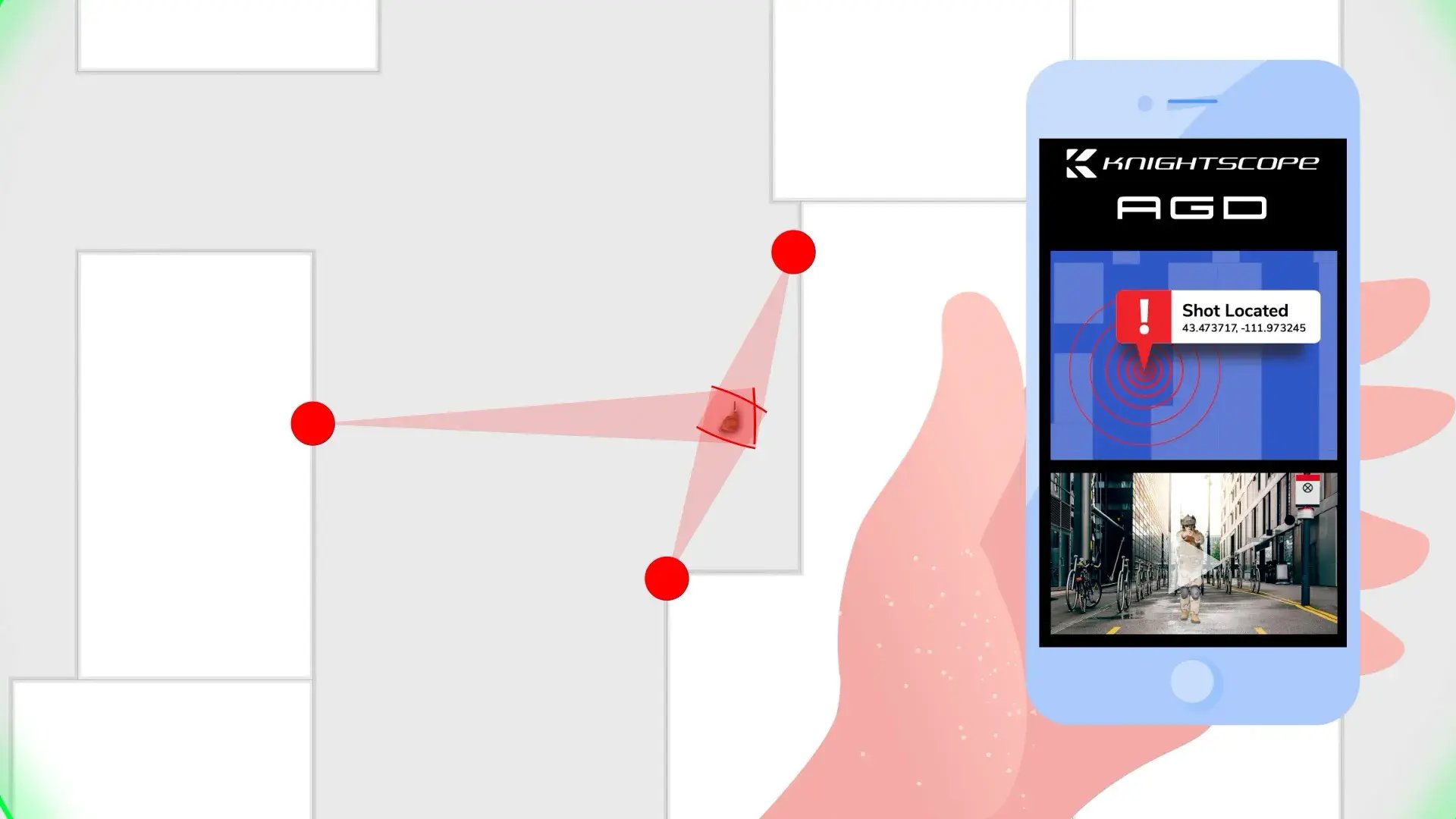
Knightscope's AGD is an automated gunshot detection system that locates shooters in real time and delivers precise localization data to first responders. It traces bullet paths, works indoors and outdoors, and integrates with existing security infrastructure to enable faster response and enhanced safety.
- •Real-time gunshot detection and localization within feet
- •Traces bullet path to shooter origin
- •Works for elevated and external shooter positions
- •Indicates specific structure and approximate floor level
- •Integrates with K1 Blue Light Tower and existing security systems
- •2D map and 3D environment visualization
- •Automated notifications to first responders via web app and mobile
- •Field-proven, tested to industry standards
- •Designed for schools, offices, churches, retail, stadiums, venues
Detailed specs not disclosed.
Technology stackOur read
Inferred from product specs — click through to the technology wiki:
ResearchComputed
Product comparisonComputed
Company announcement
News and Media
The company's official social & video channels · external links
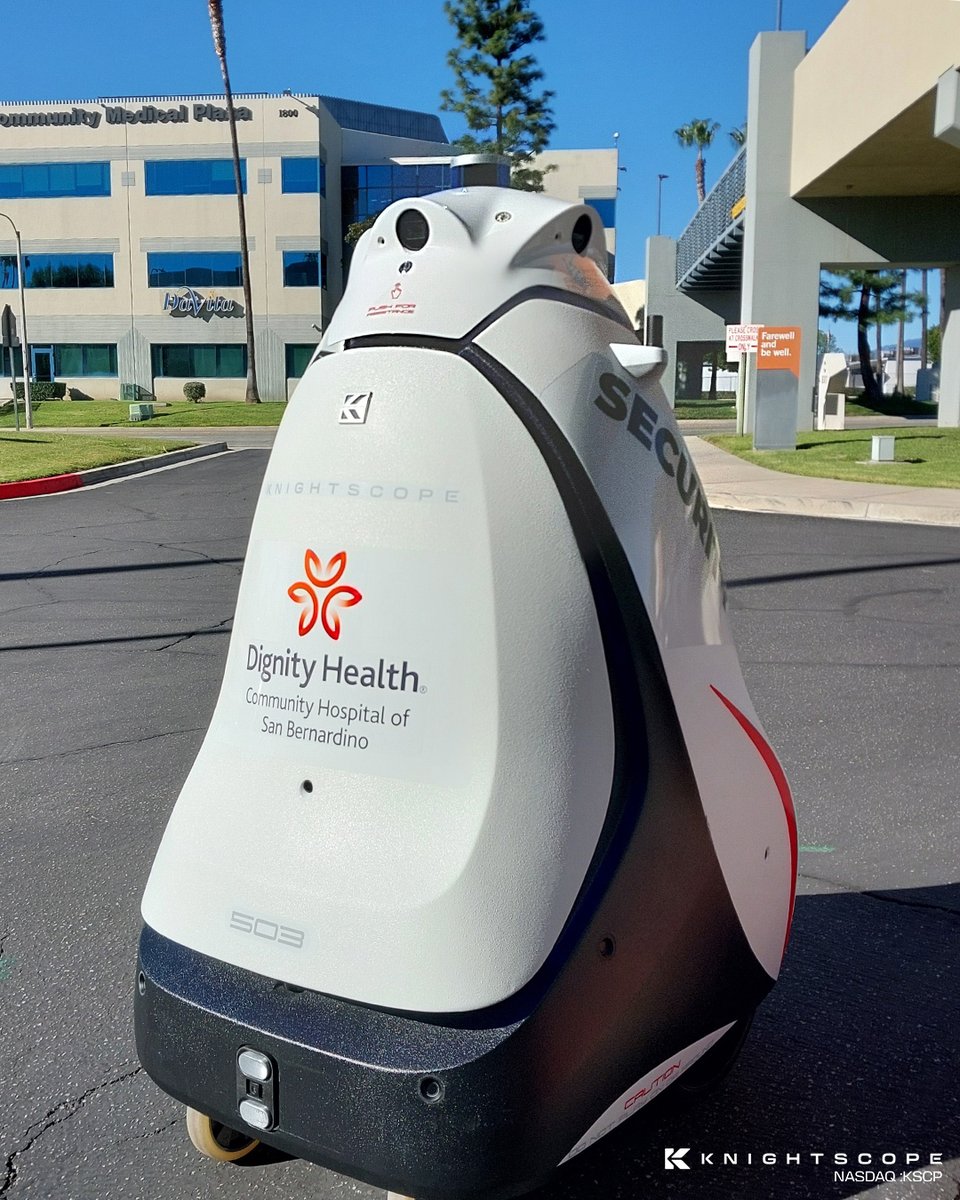
Autonomous Security Robots generate more than just visibility. The Knightscope K5 doesn't just patrol—it creates a continuous stream of secu
2026-07-03

A familiar sight. A smarter future. Blue light towers are more than campus landmarks, they're a visible reminder that help is always within
2026-07-01
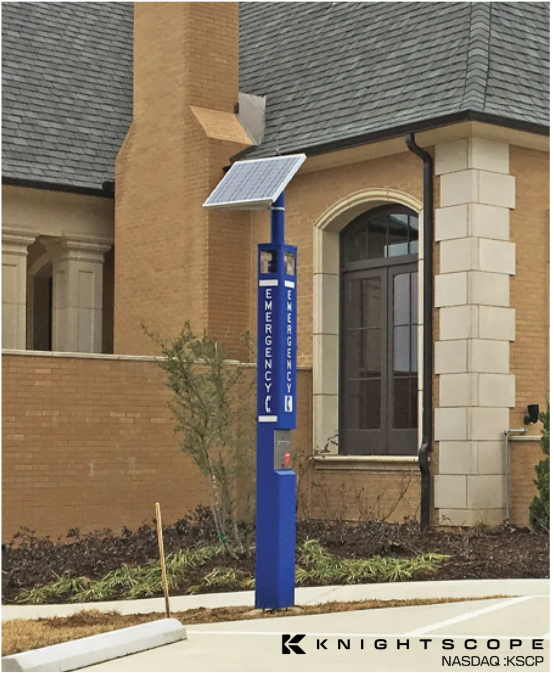
Did you know? You don't have to replace your aging emergency call boxes or blue light towers to bring them into the modern era. The Knightsc
2026-06-29

Industry Spotlight: Casinos When the lights stay on 24/7, security needs to keep pace. The Knightscope K5 Autonomous Security Robot helps ca
2026-06-28


News
From third-party news outlets (China & abroad) · external links