Figure 02
Figure 02 is the second-generation general-purpose humanoid robot developed by Figure, a US-based robotics startup. Designed for warehouse and manufacturing environments, it features an onboard vision-language-action (VLA) model, a six-camera perception system, and custom-designed hands equipped with tactile fingertips, enabling it to perform dexterous manipulation tasks alongside human workers. Figure 02 represents a significant advancement over its predecessor, Figure 01, with improvements reportedly spanning AI integration, hardware refinement, and operational endurance. As of public reporting, the robot is being deployed in paid pilot programs with automotive manufacturer BMW and potentially other industrial partners, positioning Figure among a small group of companies actively commercializing humanoid robots at scale.

Overview and Use Cases
Figure 02 is a full-sized humanoid robot built to operate in unstructured industrial environments that were historically designed for human workers. Its primary target verticals include automotive manufacturing, general warehousing, and logistics. By matching the approximate dimensions and mobility of a human, Figure 02 can use existing workstations, tools, and conveyor systems without requiring costly facility modifications.
The robot is intended to address labor shortages in repetitive or physically demanding roles, performing tasks such as parts handling, bin picking, assembly assistance, and material transport. Its tactile fingertip sensors allow it to detect grip force and object properties, which is critical for handling components of varying fragility and weight.
Key Technical Features
- Onboard VLA Model: Figure 02 runs a vision-language-action model directly on the robot, enabling it to interpret natural-language instructions and translate them into physical actions without relying solely on cloud inference.
- Six-Camera Vision System: A multi-camera array provides wide-field and close-range perception, supporting navigation, obstacle avoidance, and precise manipulation.
- Custom Dexterous Hands: The hands feature multiple fingers with tactile sensors at the fingertips, reportedly allowing finer manipulation than many competing humanoid platforms.
- Humanoid Form Factor: Standing at approximately human height and weight, the robot is designed to integrate into standard human workspaces.
Specific figures for payload capacity, battery runtime, and joint torque have not been definitively confirmed in public documentation as of this writing, and readers should treat any circulating estimates with caution.
Comparison to Figure 01 and Competitors
Figure 02 succeeds Figure 01, the company's first prototype, which was used primarily for internal development and early demonstrations. Figure 02 is described by the company as a more refined and production-oriented platform, with improved AI capabilities and hardware durability suited for sustained commercial pilots.
In the broader humanoid robot landscape, Figure 02 competes with platforms such as:
- Tesla Optimus – Tesla's in-house humanoid, focused initially on internal factory use.
- Boston Dynamics Atlas – A highly capable research and demonstration platform transitioning toward commercial applications.
- Agility Robotics Digit – A bipedal robot with a strong focus on warehouse logistics, already in commercial deployment with Amazon.
- 1X Neo / EVE – Platforms from Norwegian-American startup 1X Technologies targeting similar industrial use cases.
Figure 02 differentiates itself through its emphasis on onboard AI inference and hand dexterity, which the company positions as key enablers for complex manipulation tasks.
Market Context and Target Buyers
Figure is targeting large enterprise customers in manufacturing and logistics, particularly those facing persistent labor shortages in physically demanding roles. The company has not publicly disclosed a per-unit price for Figure 02, and the current commercial model appears to center on pilot agreements and service contracts rather than outright hardware sales.
The robot sits in the premium tier of the emerging humanoid market, alongside other venture-backed platforms that are not yet mass-produced. Figure has raised substantial funding from investors including Microsoft, OpenAI, and major venture capital firms, which has supported its rapid development cycle.
Deployments and Notable Customers
As of public reporting, Figure 02's most prominent deployment is a paid pilot program with BMW at one of the automaker's manufacturing facilities in the United States. This partnership is notable as one of the first confirmed revenue-generating deployments of a humanoid robot in an active automotive production environment. Figure has indicated that additional industrial partners are involved in pilot programs, though not all have been publicly named.
Future Outlook
Figure has signaled intentions to scale production of Figure 02 and expand its pilot programs into broader commercial deployments. The integration of increasingly capable onboard AI models is expected to expand the range of tasks the robot can perform autonomously over time. The company's trajectory suggests a focus on iterative hardware-software co-development, with future generations likely to address current limitations in runtime, manipulation speed, and task generalization. The humanoid robotics sector as a whole is under close observation by industry analysts, and Figure 02's performance in real-world pilots will be a significant data point for the field.
Related videos
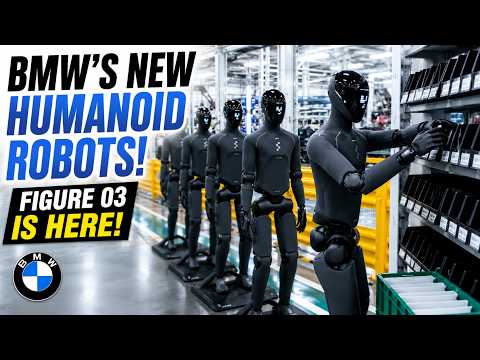
BMW Figure 03 Is Here! The Next Generation Factory Robot Revealed
DPCcars

TOP 4 Humanoid Robot in 2026? Tesla vs Boston Dynamics vs Figure vs Unitree
Darkwave Tech

Inside Figure AI's Most Important Robot Test
DPCcars

Robot Stocks: Tesla, Figure, Apptronik
Brighter with Herbert
New AI Robots 2026: Figure, Atlas, China Expo and Human-Level Hands
PRO ROBOTS

Figure AI Appears To Be Faking Its Demos
Wall Street Millennial
Recent news
Related entries
 Robot
RobotRelay Delivery Robot
The Relay Delivery Robot is an autonomous indoor delivery robot developed by Relay Robotics (formerly known as Savioke), designed primarily for hospitality and healthcare environments. It navigates hotel corridors and hospital hallways independently, rides elevators without human assistance, and delivers guest amenities, medications, linens, and other supplies directly to rooms or designated drop-off points. Relay is one of the most widely deployed service robots in its category, reportedly completing over one million lifetime deliveries with a publicly cited success rate of approximately 99.8%. With a cargo capacity of around 10 gallons, the robot is compact enough to operate in busy public spaces while carrying a meaningful payload of everyday supplies.
2,760 views
 Robot
RobotSpot
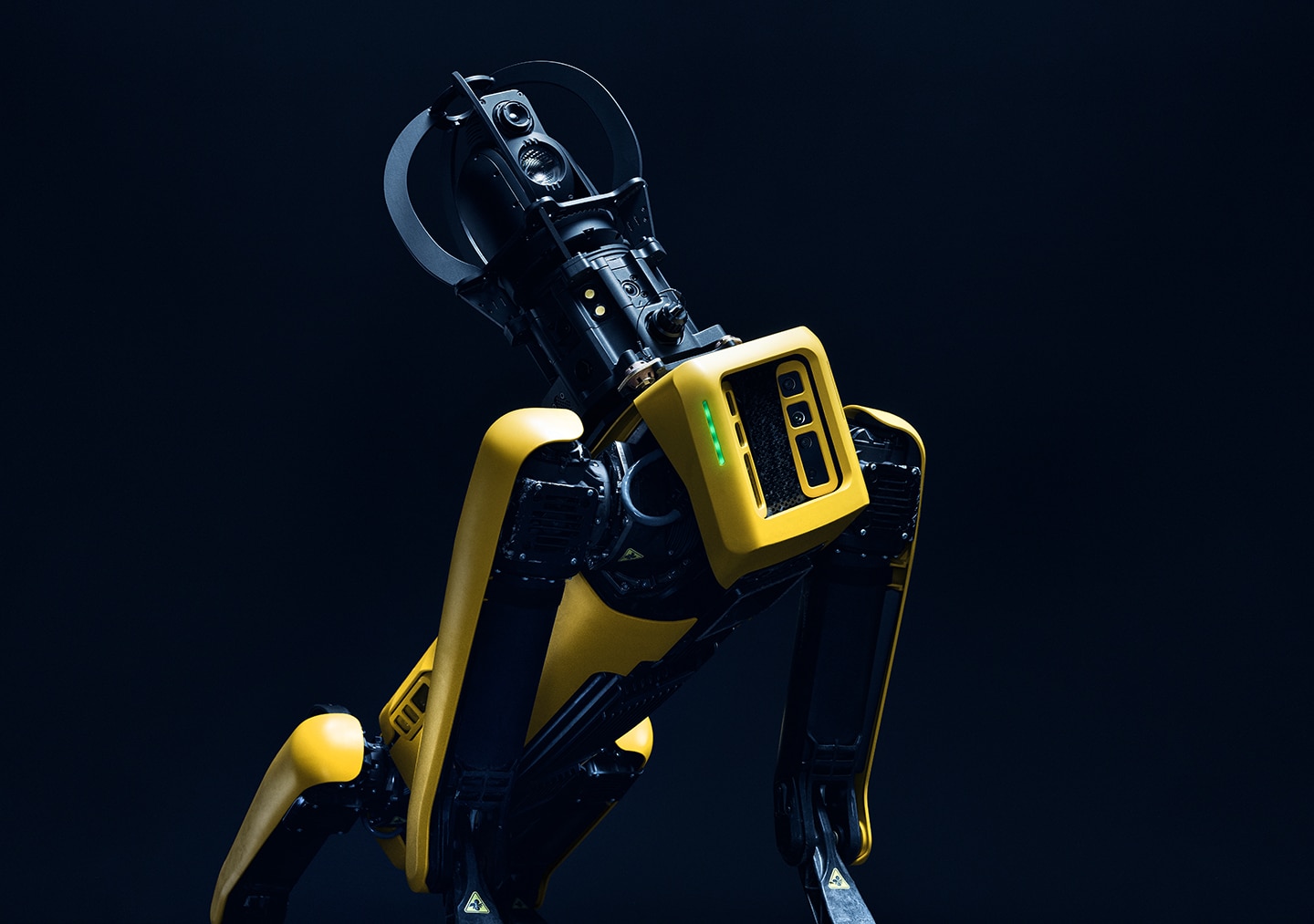
Spot is a four-legged autonomous robot developed by Boston Dynamics, a robotics company headquartered in Waltham, Massachusetts. Designed for inspection, security, and data collection in complex or hazardous environments, Spot can navigate stairs, rough terrain, and confined spaces that are inaccessible to wheeled robots. It is commercially available and has been deployed across industries including utilities, oil and gas, construction, and public safety. Spot supports a modular payload system that accommodates thermal cameras, pan-tilt-zoom (PTZ) cameras, lidar units, methane sensors, and other mission-specific hardware. Boston Dynamics also offers the Orbit fleet-management software platform, enabling operators to schedule autonomous inspection routes, aggregate sensor data, and manage multiple Spot units from a central interface. The robot is widely regarded as one of the most capable and commercially mature legged robots on the market.
1,244 views
 Robot
RobotRealSense Depth Camera D455
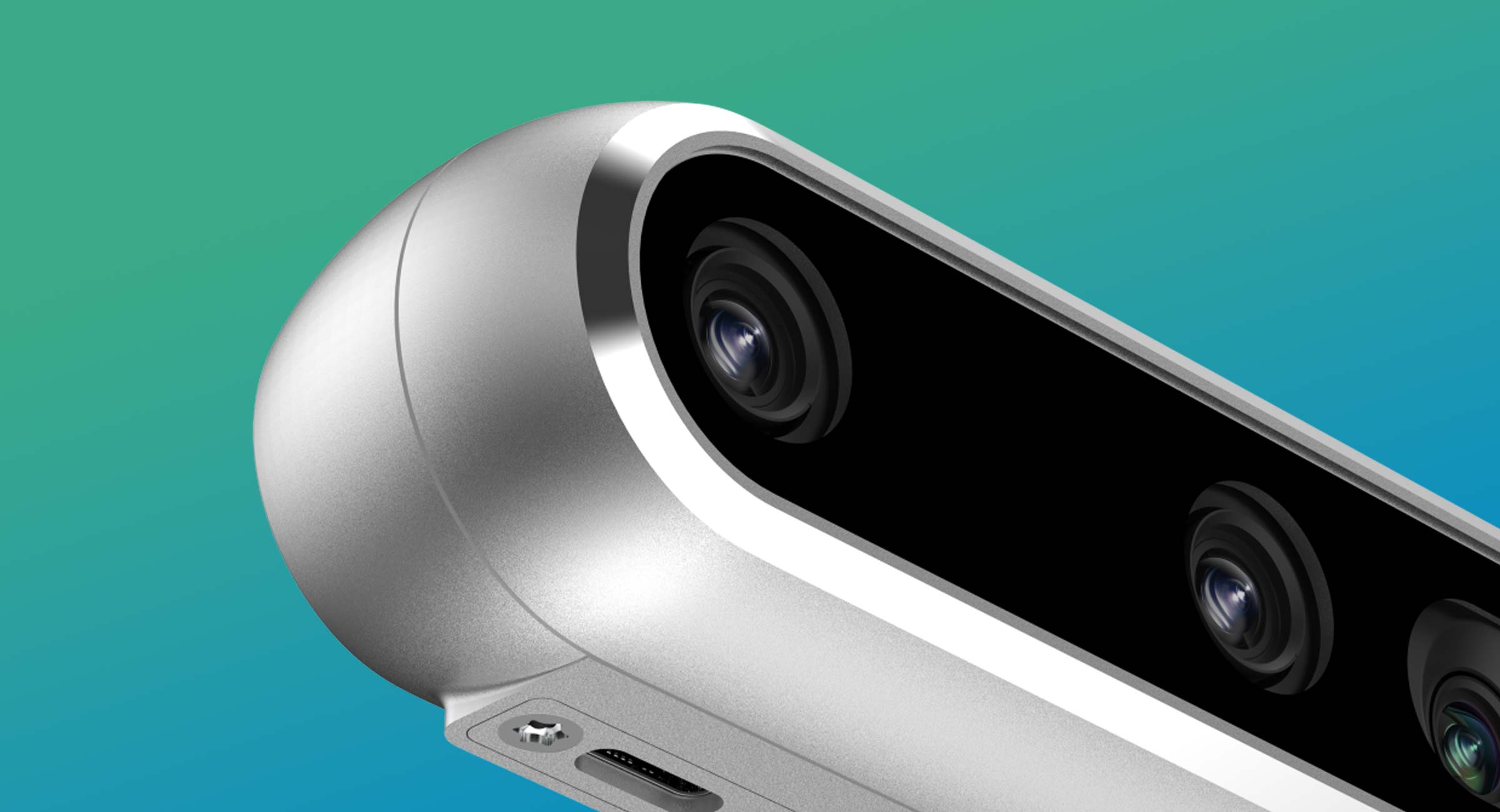
The RealSense Depth Camera D455 is a stereoscopic active-infrared depth camera belonging to Intel's D400 series, designed to capture high-fidelity depth data for robotics, autonomous mobile robots (AMRs), drones, and computer-vision applications. It features a 95 mm stereo baseline — the widest in the D400 lineup at the time of its introduction — which reportedly enables depth error of under 2% at ranges up to approximately 4 metres. Originally developed under the Intel RealSense brand, the D455 and related products were later spun off as part of an independent RealSense business unit following Intel's restructuring of the division around 2021–2022. The camera is widely adopted in research, industrial automation, and humanoid-robot development owing to its compact USB-powered form factor, open SDK support, and relatively accessible price point.
743 views
Rosie 2.0
The Rosie 2.0 is a commercial-grade autonomous robot vacuum developed by Tailos, designed to handle large-scale floor cleaning in business and institutional environments. It is offered in a two-pack configuration, allowing facilities to deploy multiple units simultaneously for broader coverage and more efficient cleaning cycles. Built to commercial durability standards, the Rosie 2.0 combines intelligent navigation with powerful suction technology to reduce reliance on manual labor and improve facility maintenance consistency. It targets businesses, hospitality venues, retail spaces, and other high-traffic environments where reliable, automated cleaning is a priority.
521 views