HAL (Hybrid Assistive Limb)
The HAL (Hybrid Assistive Limb) is a wearable cyborg-type robotic exoskeleton developed by CYBERDYNE INC. of Japan. It works by detecting faint bio-electrical signals on the wearer's skin surface — signals that travel from the brain through the nervous system to the muscles — and using those signals to anticipate and assist voluntary movement in real time. The system is available in several configurations, including a full lower-limb suit, single-joint units targeting the knee or hip, and a lumbar-support version designed for workers performing physically demanding tasks. HAL is used across three broad domains: medical rehabilitation (helping patients with neurological or musculoskeletal conditions regain mobility), labour support (reducing physical strain on workers in manufacturing, logistics, and care settings), and general well-being. CYBERDYNE markets the device to hospitals, rehabilitation centres, and industrial employers, and it has received regulatory clearance in multiple jurisdictions for specific therapeutic indications.

Overview and Use Cases
HAL is widely regarded as one of the pioneering commercial exoskeletons to use bioelectrical signal detection as its primary control mechanism. Rather than relying solely on pre-programmed motion patterns or mechanical triggers, HAL reads the wearer's own neural intent and amplifies it, creating a feedback loop between the human nervous system and the robotic suit.
Key application areas include:
- Medical rehabilitation: Assisting stroke survivors, patients with spinal cord injuries, and individuals with neurodegenerative conditions such as ALS or muscular dystrophy to perform gait training and limb exercises.
- Labour support: Reducing cumulative musculoskeletal strain for workers in physically intensive roles — including nursing staff who perform frequent patient transfers, and factory or logistics workers who lift heavy loads repeatedly.
- Well-being and preventive care: Supporting elderly users or those recovering from orthopaedic surgery to maintain or rebuild physical function.
Key Technical Details
HAL's defining technology is its Cybernic Voluntary Control (CVC) system, which detects bio-electrical signals (sometimes called surface electromyography, or sEMG, signals) on the skin before visible muscle contraction occurs. The suit's onboard computer interprets these signals and drives motorised joints to move in synchrony with the wearer's intended motion.
- Configurations: Lower-limb (bilateral), single-joint (unilateral knee or hip), and lumbar-type variants are available, allowing clinical and industrial buyers to select the appropriate form factor.
- Control modes: In addition to voluntary control, HAL also offers a Cybernic Autonomous Control (CAC) mode that generates rhythmic motion patterns based on sensor feedback when voluntary signals are insufficient.
- Weight and wearability: The suit is designed to be donned and doffed without extensive assistance, though specific weight figures vary by configuration and are best confirmed with CYBERDYNE directly.
- Battery runtime: Reportedly sufficient for typical clinical or shift-work sessions, though exact figures depend on configuration and usage intensity.
Comparison to Similar Products
Within CYBERDYNE's own portfolio, HAL stands apart as the company's flagship and most technically distinctive product. The sibling robots listed under the same manufacturer — including mobile fulfilment platforms such as the GreyOrange Ranger GTP, Locus Origin, Quicktron M100, and Geek+ P800 — are autonomous mobile robots (AMRs) for warehouse logistics and are unrelated in function or technology to HAL. The Artly barista robot similarly serves a hospitality niche. HAL is therefore CYBERDYNE's sole exoskeleton product line as of public reporting.
In the broader exoskeleton market, HAL competes with devices such as the Ekso Bionics EksoGT, ReWalk Robotics' ReWalk, and Hocoma's Lokomat (a treadmill-based system). HAL's bioelectrical signal approach is considered a differentiator, as many competing systems rely more heavily on pre-set gait patterns or physical triggers rather than real-time neural intent detection.
Market Context and Target Buyers
HAL is positioned as a premium medical and industrial device. Target buyers include:
- Hospitals and rehabilitation clinics seeking technology-assisted gait training tools.
- Long-term care facilities looking to reduce physical burden on nursing staff.
- Industrial employers in sectors with high rates of musculoskeletal workplace injury.
Pricing is not publicly listed and is typically negotiated on a per-unit or leasing basis. In some markets, HAL sessions are reportedly reimbursable under specific healthcare schemes, which has helped drive clinical adoption.
Deployments and Notable Milestones
HAL has received regulatory clearance in Japan and the European Union for specific medical indications, and has been used in clinical trials and rehabilitation programmes across multiple countries. CYBERDYNE has established partnerships with hospitals and research institutions, particularly in Japan and Germany. The device has been the subject of peer-reviewed clinical studies examining its efficacy in neurological rehabilitation.
Future Outlook
As global populations age and demand for rehabilitation technology grows, wearable exoskeletons like HAL are expected to see expanding clinical and industrial adoption. CYBERDYNE has indicated ongoing development of HAL's capabilities, and the broader exoskeleton sector continues to attract regulatory attention and research investment. Wider insurance reimbursement coverage and further miniaturisation of components are likely to be key factors shaping HAL's commercial trajectory in the coming years.
Related videos

Insane Robot Balance Challenge 🤯 | Circus Performance Like Never Before #Shorts
JH CURCUS KING
Drawing Robot Challenge Gone Wrong! #shorts #stationery
FACTER ZISHAN

Cut your waiting time in half with sushi robots
ROBOTS 4 SUSHI

Canada Cup of Robotics 2026 – Day 2 – FIRST LEGO League Challenge
FLL Ontario

Canada Cup of Robotics 2026 – Day 1 – FIRST LEGO League Challenge
FLL Ontario

Me vs Robot Cooking Challenge | Funny Situations and Fails
KiKaDo USA
Related entries
 Robot
RobotRelay Delivery Robot
The Relay Delivery Robot is an autonomous indoor delivery robot developed by Relay Robotics (formerly known as Savioke), designed primarily for hospitality and healthcare environments. It navigates hotel corridors and hospital hallways independently, rides elevators without human assistance, and delivers guest amenities, medications, linens, and other supplies directly to rooms or designated drop-off points. Relay is one of the most widely deployed service robots in its category, reportedly completing over one million lifetime deliveries with a publicly cited success rate of approximately 99.8%. With a cargo capacity of around 10 gallons, the robot is compact enough to operate in busy public spaces while carrying a meaningful payload of everyday supplies.
2,760 views
 Robot
RobotSpot
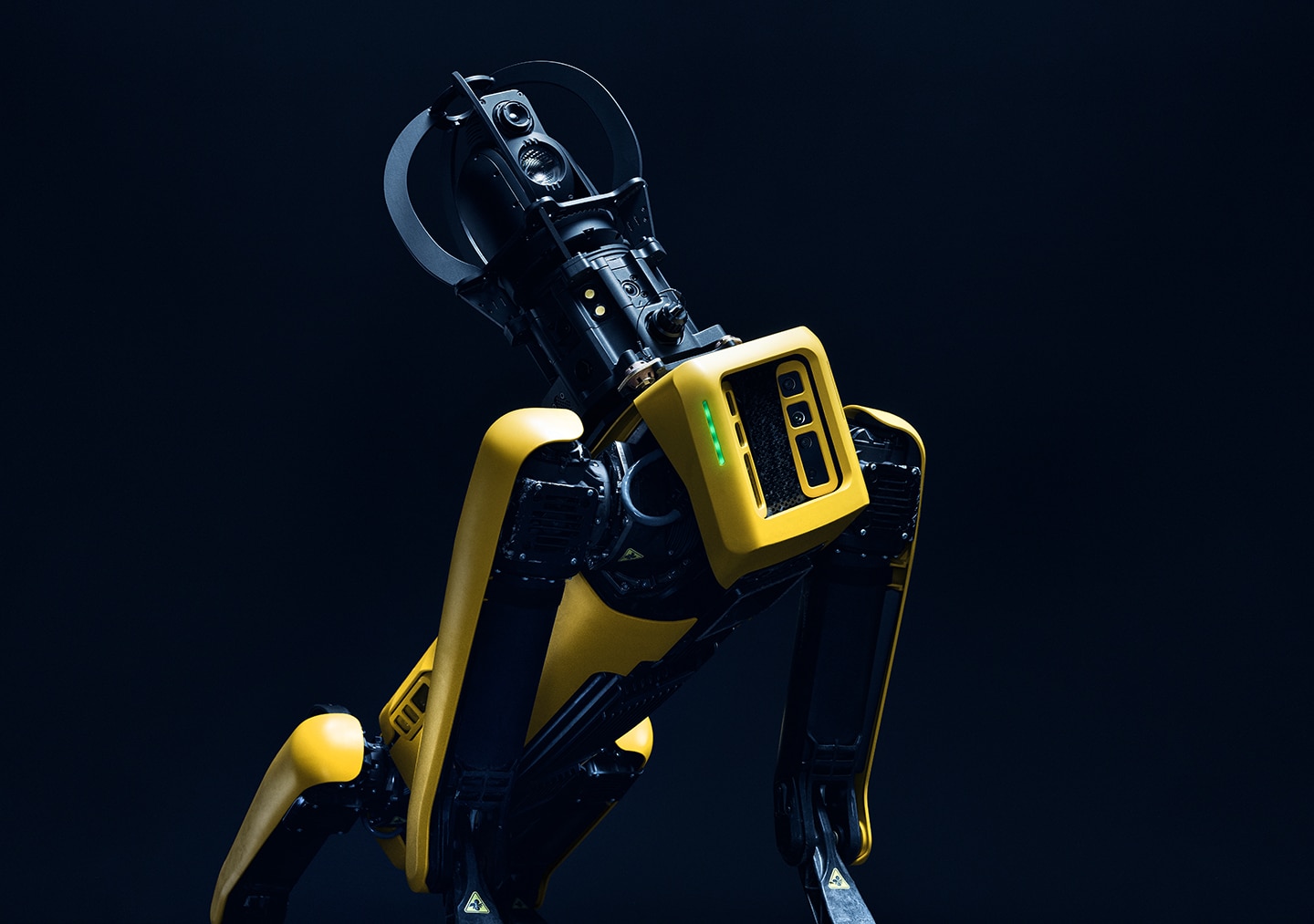
Spot is a four-legged autonomous robot developed by Boston Dynamics, a robotics company headquartered in Waltham, Massachusetts. Designed for inspection, security, and data collection in complex or hazardous environments, Spot can navigate stairs, rough terrain, and confined spaces that are inaccessible to wheeled robots. It is commercially available and has been deployed across industries including utilities, oil and gas, construction, and public safety. Spot supports a modular payload system that accommodates thermal cameras, pan-tilt-zoom (PTZ) cameras, lidar units, methane sensors, and other mission-specific hardware. Boston Dynamics also offers the Orbit fleet-management software platform, enabling operators to schedule autonomous inspection routes, aggregate sensor data, and manage multiple Spot units from a central interface. The robot is widely regarded as one of the most capable and commercially mature legged robots on the market.
1,244 views
 Robot
RobotRealSense Depth Camera D455
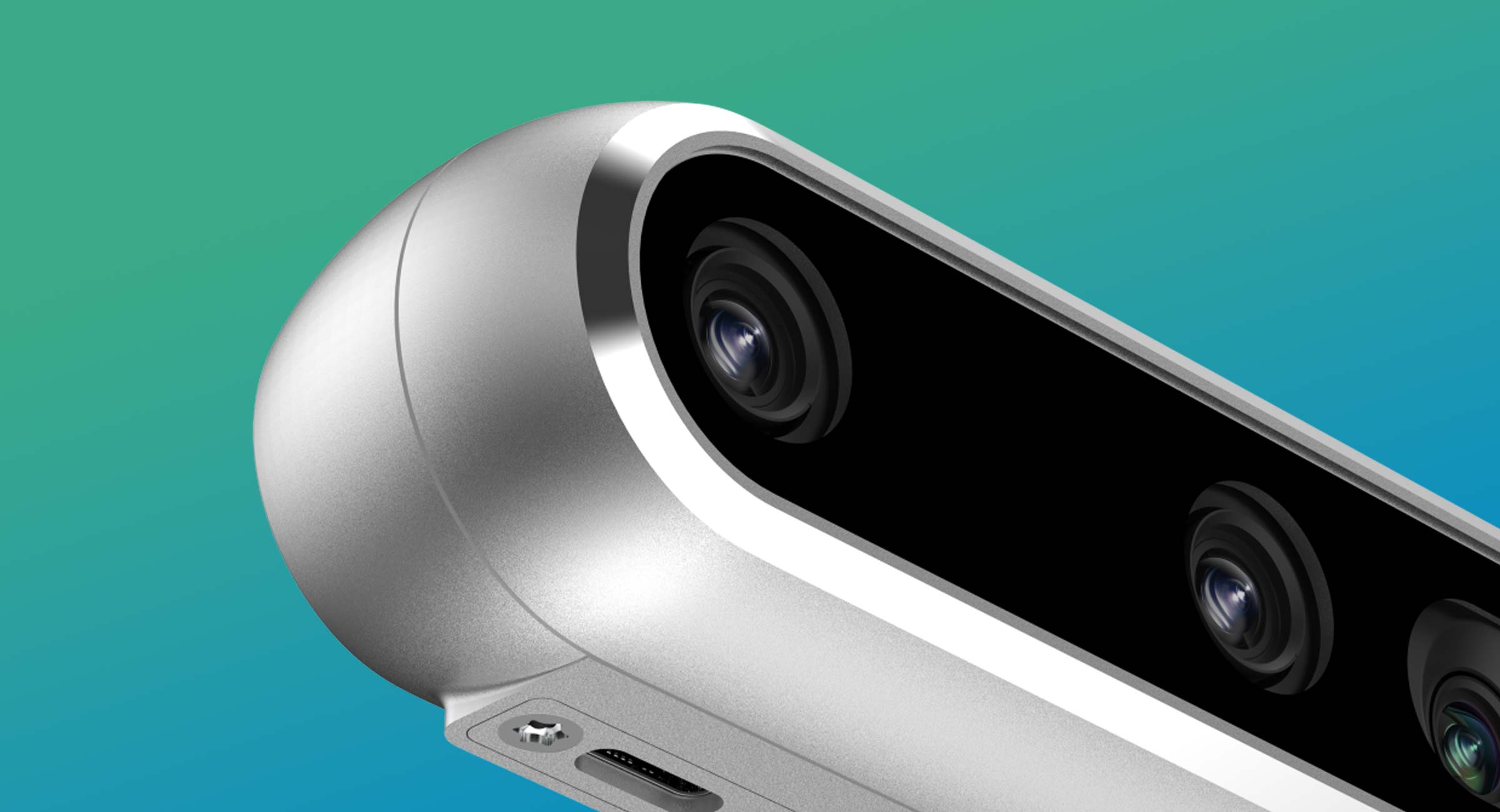
The RealSense Depth Camera D455 is a stereoscopic active-infrared depth camera belonging to Intel's D400 series, designed to capture high-fidelity depth data for robotics, autonomous mobile robots (AMRs), drones, and computer-vision applications. It features a 95 mm stereo baseline — the widest in the D400 lineup at the time of its introduction — which reportedly enables depth error of under 2% at ranges up to approximately 4 metres. Originally developed under the Intel RealSense brand, the D455 and related products were later spun off as part of an independent RealSense business unit following Intel's restructuring of the division around 2021–2022. The camera is widely adopted in research, industrial automation, and humanoid-robot development owing to its compact USB-powered form factor, open SDK support, and relatively accessible price point.
743 views
Rosie 2.0
The Rosie 2.0 is a commercial-grade autonomous robot vacuum developed by Tailos, designed to handle large-scale floor cleaning in business and institutional environments. It is offered in a two-pack configuration, allowing facilities to deploy multiple units simultaneously for broader coverage and more efficient cleaning cycles. Built to commercial durability standards, the Rosie 2.0 combines intelligent navigation with powerful suction technology to reduce reliance on manual labor and improve facility maintenance consistency. It targets businesses, hospitality venues, retail spaces, and other high-traffic environments where reliable, automated cleaning is a priority.
521 views