Angel Robotics
South Korea · angel-robotics.com
SnapshotCompany claim
Angel Robotics recreates human abilities with wearable robots. It focuses on healthcare, industrial safety, and military/defense. The company internalizes key components like actuators. Milestones include medical device certifications and awards.
- Founded
- Not disclosed
- HQ
- South Korea
- Models
- 4
- Categories
- 1
ContactCompany claim
- Address
- Not disclosed
Product families
Is this your company? Claim this profile to add verified data, respond to our analysis, and upgrade claims to Verified.
Claim this profile1. Executive Overview {#executive-overview}
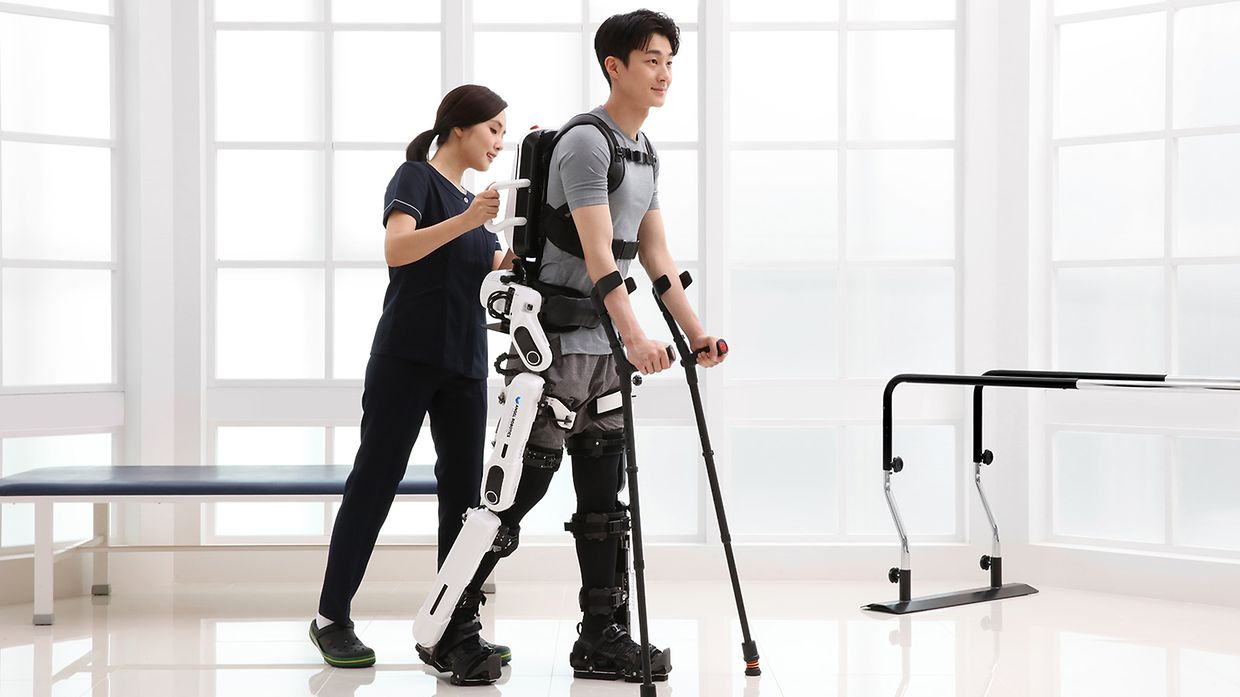
Angel Robotics is a South Korea-based wearable robotics company operating at the intersection of healthcare, industrial safety, and military/defense. The company's defining strategic posture — stated as company mission — is to "recreate human abilities through technology," with an explicit focus on human augmentation rather than autonomous robots. Its commercial anchor is the medical exoskeleton space, where it has secured real regulatory milestones: the ANGEL LEGS M20 has obtained medical device certifications in Thailand and Vietnam (July 2025), and the company has received the iF Design Award 2025 for the Angel Suit product line. These are independently verifiable third-party recognitions that distinguish Angel Robotics from purely pre-commercial peers.
The company's vertical integration strategy is a notable differentiator. Rather than sourcing actuators, motor drivers, and inertial measurement units from external suppliers, Angel Robotics internalizes these components through its ANGEL KIT platform — a decision that, if sustained, supports tighter control over performance, cost, and IP. The milestone timeline on its site dates back to 2017, indicating at least eight years of development history, with progressively maturing commercialization events including a 2025 MOU with Hana Financial Group for "robot–medical–financial convergence services" and a headquarters relocation to Planet Seoul in Gwangjin-gu, Seoul. The company's CTO, Kyungchul Kong, received the "KAIST Person of the Year" award in February 2025, underscoring an academic-grade technical leadership foundation.
The public profile remains lean on revenue, customer counts, and deployment scale — gaps that are common for exoskeleton-sector companies at this stage but are nonetheless areas where further disclosure would strengthen investor and partner confidence.
Latest news
- KEENON Humanoid Pours Drinks at GCS 2026, 100,000 Others Run HotelsYanko Design·2026-06-15GENERAL
2. The Company Story {#the-company-story}
Angel Robotics' milestone timeline begins in 2017, making it a company with nearly a decade of wearable robotics development by 2025. While a precise founding date is not disclosed publicly, the company's public-facing history covers at least eight annual milestone clusters (2017–2025), suggesting a trajectory from research-and-development origins toward increasing commercial and regulatory maturity.
The company's strategic framing is deliberate: it positions itself not as a robotics company in the conventional autonomous-systems sense, but as a human-ability company — a distinction with real product consequences. This mission shapes its three declared business areas: healthcare (gait rehabilitation and assistive devices), industrial safety (musculoskeletal protection for workers), and military/defense (future-facing, not yet detailed in public product documentation). The company explicitly states that healthcare commercialization is its primary beachhead, with industrial and defense as planned extensions built on that foundation.
Key milestones indicate a company that has moved from prototype to certified medical device. The ANGEL LEGS M20 — a lower-limb exoskeleton for gait rehabilitation — achieving medical device certification in two Southeast Asian markets (Thailand and Vietnam) in mid-2025 reflects a real regulatory pathway, not merely a domestic proof of concept. The iF Design Award 2025 for the Angel Suit product line signals recognition from an internationally respected design evaluation body. The MOU signed with Hana Financial Group in September 2025 for "robot–medical–financial convergence services" is an unusual partnership that may indicate an emerging bundled-service model combining device financing or insurance with device deployment — though the precise structure is not yet disclosed. The company's headquarters is located at Planet Seoul, Gwangjin-gu, Seoul, and it maintains a global contact address ([email protected]), indicating active international engagement.
The "Next-Generation World-Class Product & Manufacturer" designation received in November 2025 is a South Korean government or government-affiliated recognition, adding a national-policy validation layer to the company's commercial positioning.
3. Product Portfolio {#product-portfolio}
Products & versions


Angel Robotics' current disclosed product lineup spans four distinct offerings organized across two strategic layers: end-user wearable systems and enabling component technology.
The end-user layer comprises three products. The ANGEL SUIT H10, launched in June 2025, is a hip joint assistive wearable robot weighing 2.8 kg, designed for rehabilitation and daily-life return. It provides up to 15 Nm of assistive torque per hip joint (independently adjustable per side), operates for approximately 120 minutes per charge (90-minute full charge time), and accommodates a wide waist range (24–55 inches across standard and large variants). Its companion app, angel'a PRO, provides real-time monitoring and training record-keeping — indicating a data-connected care model rather than a standalone device approach. The ANGEL GEAR line addresses industrial safety, offering wearable suits designed to reduce musculoskeletal strain in high-fatigue work environments, with ergonomic adaptability and unrestricted mobility as design priorities; detailed specifications are not yet publicly disclosed. The MW10 is a suspension walker — a clinical support frame weighing 40 kg, capable of supporting users up to 135 kg — designed to be used in combination with the ANGEL LEGS M20 for in-clinic gait training of patients with weakened lower limb or core strength. Its inclusion in the portfolio signals that Angel Robotics is building a clinical ecosystem around its rehabilitation exoskeleton, not selling isolated devices.
The component layer is represented by ANGEL KIT, a specialized brand offering motor drivers, smart actuators (integrating motor, reducer, and motor driver), and inertial measurement modules. This is not an incidental offering: it reflects the company's stated internalization strategy and may also represent a B2B revenue stream or partnership vehicle with other robotics developers.
4. Technology Stack {#technology-stack}
The most concrete technical data in Angel Robotics' public disclosure relates to the ANGEL SUIT H10: a 2.8 kg device delivering 15 Nm of hip assistive torque with real-time motion intent detection, 120-minute runtime, and 90-minute charge time. These figures place it in a competitive range for lightweight hip exoskeletons, though direct benchmarking requires disclosed competitor specifications.
The ANGEL KIT descriptions provide the clearest window into the company's underlying engineering capabilities. The platform includes a force mode control experiment device for wearable robots, an advanced motor driver with real-time responsiveness, a high-precision actuator minimizing backlash, and a smart actuator integrating motor, reducer, and motor driver into a single unit with high torque and power density. An inertial measurement module with "advanced motion estimation algorithms and high versatility" is also listed, suggesting onboard state estimation capability relevant to gait phase detection and balance control.
Our read: The internalization of actuators, motor drivers, and IMUs into a single component platform is a meaningful engineering investment. Companies that control their actuator stack can iterate on force control algorithms more tightly than those dependent on third-party hardware — a structural advantage in a field where torque fidelity and compliance are central to safety and comfort. The real-time motion intent detection described for the H10 implies some form of electromyography (EMG), joint angle sensing, or force/torque sensing at the hip — but the specific sensing modality is not publicly disclosed.
Our read: The MW10's suspension walker format, combined with the M20 tablet mount provision, suggests the ANGEL LEGS M20 (the lower-limb rehabilitation exoskeleton referenced in multiple product descriptions and milestones, though not itself listed as a current product page) is a central platform around which accessories and clinical workflows are being built. This is consistent with a "clinical ecosystem" go-to-market approach.
Limited public technical detail exists regarding the software architecture, control algorithms beyond force mode, cloud connectivity, or AI/ML components — areas where an invite to disclose would strengthen the technical record.
5. Research, Papers, Authors, Labs {#research-papers}
Company-linked papers
Angel Robotics does not present itself as a research-publishing entity in the academic sense, and no peer-reviewed publications are listed on its public website. This is consistent with the profile of a commercial wearable-robotics firm that has transitioned from development into product certification and market deployment.
That said, the company's leadership has documented academic roots: CTO Kyungchul Kong's recognition as "KAIST Person of the Year" (February 2025) links the company's technical leadership to KAIST (Korea Advanced Institute of Science and Technology), one of South Korea's premier engineering research institutions. A third-party press item indexed from eurekalert.org references KAIST's work on brain-to-robot technology — though the direct relationship between that specific research and Angel Robotics' current products is not established in available data and should not be assumed.
Companies seeking to evaluate Angel Robotics' research lineage would benefit from reviewing KAIST publication records associated with its robotics and biomechatronics labs independently. Angel Robotics is invited to disclose any affiliated academic publications, clinical trial registrations, or research partnerships that would enrich this section.
6. Media Evidence {#media-evidence}
Media library
Angel Robotics has generated coverage from at least three identified third-party outlets. Maxon Group (maxongroup.com), a precision drive systems manufacturer, published a feature titled "A next step in wearable robotics" in January 2024 — notable because Maxon is itself a technically sophisticated actor in the robotics supply chain, and its editorial attention to Angel Robotics suggests industry-peer recognition of technical credibility. Exoskeleton Report (exoskeletonreport.com), a specialist publication tracking the exoskeleton industry globally, has indexed Angel Robotics — appearing in a sector outlet that monitors product launches, certifications, and commercial developments across the field. EurekAlert (eurekalert.org) has referenced KAIST's brain-to-robot research in proximity to the company's technical leadership connections, though the direct editorial link to Angel Robotics specifically should be interpreted with care.
These three outlets span trade/industry press and scientific newswire coverage, indicating a media footprint that, while not yet broad, touches technically credible channels. Angel Robotics is invited to share additional earned media, clinical publications, or broadcast coverage that would expand this record.
7. Commercial Reality {#commercial-reality}
Customers & deployments
Revenue, customer count, deployment volume, and ROI metrics for Angel Robotics are not publicly disclosed. This is common across the wearable exoskeleton sector, where many companies remain privately held and do not publish financial results. Angel Robotics is invited to share verified commercial data — including number of units deployed, hospital or rehabilitation center partnerships, or independent ROI studies — so that this section can be updated with confirmed figures.
What can be stated from available evidence: the company has obtained medical device certifications in Thailand and Vietnam for the ANGEL LEGS M20 (July 2025), which are prerequisites for legal commercial sale in those markets, indicating at minimum that regulatory commercialization pathways have been opened. The company's About page describes wearable robots as being "actively used in gait rehabilitation and widely adopted across hospitals, welfare facilities, and rehab centers" — this is a company claim and has not been independently quantified. The MOU with Hana Financial Group (September 2025) for "robot–medical–financial convergence services" may indicate a structured deployment or financing program is in development, though the terms and scale are not disclosed.
Not yet disclosed: Unit economics, pricing, reimbursement status in any market, hospital or enterprise client names, and aggregate deployment numbers. Angel Robotics is invited to claim or correct this record via [email protected].
8. Markets and Use Cases {#markets-use-cases}
Angel Robotics' disclosed product line maps to three primary market segments, each at a different stage of commercial maturity based on available evidence.
Healthcare / Gait Rehabilitation is the company's most developed market. The ANGEL LEGS M20 (referenced across multiple product descriptions and milestones) targets inpatient and outpatient rehabilitation settings — hospitals, welfare facilities, and rehab centers, per company description. The MW10 suspension walker is a clinical support accessory that extends this offering into structured therapy environments where fall prevention and weight offloading are required. The ANGEL SUIT H10, launched June 2025 with hip joint assistive functionality, bridges clinical and home/community use, targeting users seeking to return to daily life. Medical device certifications in Thailand and Vietnam are concrete indicators of Southeast Asian market entry in the healthcare segment. South Korea remains the implied home market, though domestic deployment figures are not public.
Industrial Safety is addressed by the ANGEL GEAR product line, targeting workers in physically demanding environments where musculoskeletal strain is a chronic risk. The product emphasizes assistive force, ergonomic adaptability, and unrestricted mobility. Specific industries (manufacturing, logistics, construction) are not named in available product copy, but these are the conventional deployment contexts for industrial exosuits globally. This segment is described by the company as an extension of its healthcare foundation, suggesting it may be earlier in commercial maturity relative to the medical line.
Military and Defense is declared as a third business area but is not yet represented by a disclosed product in the public portfolio. The company frames it as a future direction. Not yet disclosed: any defense product specifications, program affiliations, or government contracts.
A fourth implicit market is robotics component supply via ANGEL KIT, which could serve other robotics developers, research institutions, or system integrators as a B2B channel — though this positioning is not explicitly stated as a revenue segment in public materials.
9. Competitive Landscape {#competitive-landscape}
Competitive comparison
| Robot | Maker | Autonomy | Conf. |
|---|---|---|---|
| iRobot Roomba Combo 10 Max | iRobot | Autonomous | 0.90 |
| Mobile ALOHA (Stanford) | Stanford University | Teleoperated | 0.90 |
| 1X NEO | 1X Technologies | Remote-Assisted | 0.90 |
The wearable exoskeleton market is a globally active segment with players operating across rehabilitation, industrial, and defense verticals — the same three domains Angel Robotics targets. The competitive field includes companies from the United States, Europe, Japan, and South Korea, spanning both pure-play exoskeleton firms and larger robotics conglomerates with wearable divisions.
Angel Robotics' distinguishing profile within this landscape rests on three elements visible from public data: its vertical integration through ANGEL KIT (component internalization), its dual focus spanning clinical rehabilitation and industrial safety from a single technology base, and its Southeast Asian regulatory footprint (Thailand and Vietnam certifications) which positions it differently from competitors concentrated on U.S. FDA or EU MDR pathways. South Korea's manufacturing ecosystem and government recognition ("Next-Generation World-Class Product & Manufacturer") may also provide structural support not available to non-Korean peers. The competitive module below provides peer context.
10. Country Advantage / Geopolitical {#geopolitical}
South Korea is a materially relevant manufacturing and innovation context for Angel Robotics. The country maintains a strong government interest in robotics as a strategic industry, and the company's receipt of a "Next-Generation World-Class Product & Manufacturer" designation in November 2025 reflects active state-level support for domestically developed robotics firms. South Korea's healthcare system and aging demographic profile also create a substantial domestic demand signal for rehabilitation exoskeletons — a structural tailwind that is policy-relevant, not merely demographic.
The CTO's affiliation with KAIST (Korea Advanced Institute of Science and Technology) connects the company to South Korea's primary government-funded engineering research ecosystem, which has historically supported technology transfer from academia to commercial robotics firms.
The company's Southeast Asian medical device certifications (Thailand, Vietnam) are geopolitically coherent with South Korea's broader export positioning in the ASEAN healthcare technology market — a region with growing healthcare infrastructure investment and relatively accessible regulatory pathways compared to the U.S. or EU. Our read: This Southeast Asian entry strategy may be a deliberate sequencing choice — building international regulatory track record and deployment references before pursuing more resource-intensive FDA or CE marking processes.
The declared military and defense business area is noted but carries no further public detail. Given South Korea's defense technology environment and government interest in next-generation soldier systems, this vertical is geopolitically plausible — but no contracts, programs, or government relationships are confirmed in available data.
11. Hype vs Real vs Ugly {#hype-real-ugly}
Claim tracker
Real (independently supported):
- ANGEL LEGS M20 received medical device certifications in Thailand and Vietnam — July 2025. This is a verifiable regulatory event.
- iF Design Award 2025 for Angel Suit — the iF Design Award is an internationally recognized design competition; this is a real third-party validation.
- CTO Kyungchul Kong named "KAIST Person of the Year" (February 2025) — independently verifiable recognition from a named institution.
- Coverage by Maxon Group and Exoskeleton Report — these are real publications with editorial standards, not paid placements based on available evidence.
- "Next-Generation World-Class Product & Manufacturer" designation (November 2025) — a named government or government-affiliated recognition.
- ANGEL SUIT H10 specifications (2.8 kg, 15 Nm torque, 120 min runtime, 90 min charge) — company-disclosed specs; independently testable but not yet externally verified in available sources.
Company Claims (stated but not independently quantified):
- Wearable robots are "actively used in gait rehabilitation and widely adopted across hospitals, welfare facilities, and rehab centers" — company claim; no deployment numbers, institution names, or independent audits are available to quantify "widely adopted."
- The mission to "recreate human abilities through technology" — aspirational framing, not a product specification.
- The MOU with Hana Financial Group for "robot–medical–financial convergence services" — a real event (company-disclosed milestone) but terms, scope, and commercial impact are not disclosed.
Not Yet Disclosed / Gaps (invitations to correct):
- Revenue, unit sales, or customer count at any level of granularity.
- Clinical outcome data or peer-reviewed efficacy studies for any product.
- Military/defense product details, program affiliations, or contracts.
- ANGEL GEAR specifications or deployment data.
- Specific sensing modalities used for motion intent detection in the H10.
Our read: Angel Robotics presents a credible commercialization narrative supported by real regulatory and design milestones. The gap between the "widely adopted" language and the absence of quantified deployment data is the most notable tension in the public record — not a disqualifying fact, but a disclosure gap worth monitoring.
12. Future Scenarios {#future-scenarios}
Bull Case Our read: Angel Robotics executes on its three-vertical strategy in sequence. Healthcare certification expands from Southeast Asia into EU or additional Asian markets, generating reference deployments and clinical outcome data. ANGEL KIT evolves into a meaningful B2B component revenue stream for the broader robotics industry. The Hana Financial Group MOU results in a bundled device-finance-service model that lowers adoption barriers in hospital procurement. The military/defense vertical, backed by South Korean government interest in augmented soldier systems, generates a program contract. The iF Design Award and regulatory milestones attract international distribution partnerships, scaling commercial reach without proportional internal cost.
Base Case Our read: The company consolidates its position in the South Korean and Southeast Asian rehabilitation market, growing steadily with the ANGEL LEGS M20 ecosystem (including the MW10 and ANGEL SUIT H10). Industrial safety (ANGEL GEAR) develops more slowly, requiring sustained field validation before enterprise customers commit at scale. Military/defense remains a long-horizon vertical. Revenue remains undisclosed but the company sustains operations through a combination of device sales, component (ANGEL KIT) licensing or sales, and potential government grants. International expansion is incremental rather than rapid.
Bear Case Our read: Medical device reimbursement barriers — common in rehabilitation exoskeletons globally — slow hospital adoption even in certified markets. The industrial safety segment faces competition from lower-cost passive exosuits. Component internalization (ANGEL KIT) proves more costly to maintain than anticipated if market scale doesn't materialize. Without disclosed revenue or customer metrics, the company faces challenges in attracting growth-stage capital in a competitive funding environment for hardware robotics. The "widely adopted" positioning in the healthcare description is not validated by independent data, creating a credibility risk if deployment numbers remain opaque.
13. What to Watch {#what-to-watch}
- Medical device certifications: Track expansion of ANGEL LEGS M20 (and future products) into additional markets — particularly EU CE marking or U.S. FDA clearance, which would signal access to higher-value healthcare markets.
- ANGEL SUIT H10 clinical data: Watch for peer-reviewed outcome studies, clinical trial registrations, or hospital adoption announcements for the June 2025-launched hip exoskeleton.
- Hana Financial Group MOU outcomes: Monitor for announced deployment programs, financing structures, or named hospital/welfare facility partners resulting from the September 2025 agreement.
- Military/defense product announcement: Any disclosed product, government program, or defense ministry relationship in this declared business area would be a material development.
- ANGEL KIT B2B traction: Watch for disclosed partnerships, licensing agreements, or named customers using the component platform — this would validate the vertical integration strategy as a dual revenue source.
- Revenue or funding disclosure: Any fundraising round, IPO filing, or government grant announcement would provide the first quantified signal of commercial scale.
- ANGEL GEAR specifications and deployment: Detailed specs and named industrial customers or pilots would sharpen the industrial safety narrative.
- Academic publications: Papers co-authored by Kyungchul Kong or affiliated KAIST researchers citing Angel Robotics technology would strengthen the technical credibility record.
14. Sources & Methodology {#sources-methodology}
Primary data source: All factual claims in this report are grounded exclusively in content extracted from Angel Robotics' own website (angel-robotics.com), including the About page, product descriptions, key feature lists, specification tables, and the company milestone timeline. All such content is labeled company-claim and has not been independently audited for accuracy.
Third-party press: Three external sources are identified — Maxon Group (maxongroup.com, January 2024), Exoskeleton Report (exoskeletonreport.com), and EurekAlert (eurekalert.org). These are cited as evidence of external editorial attention, not as independent verification of product performance claims or commercial metrics.
Inferences: All analyst interpretations are labeled "Our read:" and are distinguished from stated facts. No revenue figures, customer counts, deployment numbers, product specifications, or partnership terms have been invented or extrapolated beyond available data.
Gaps: Where data is absent, this report uses the formulation "Not yet disclosed" and invites the company to claim or correct the record via [email protected]. Negative characterizations are not stated as fact; they are framed as gaps or labeled inferences.
Rubric (applied uniformly to every company assessed under this methodology):
- Ground claims only in supplied data.
- Label company statements as company-claims.
- Label analyst interpretations as "Our read."
- Treat absences as disclosure gaps, not confirmed negatives.
- Name third-party outlets when citing press coverage.
- Do not invent competitors, customers, products, or financial metrics.
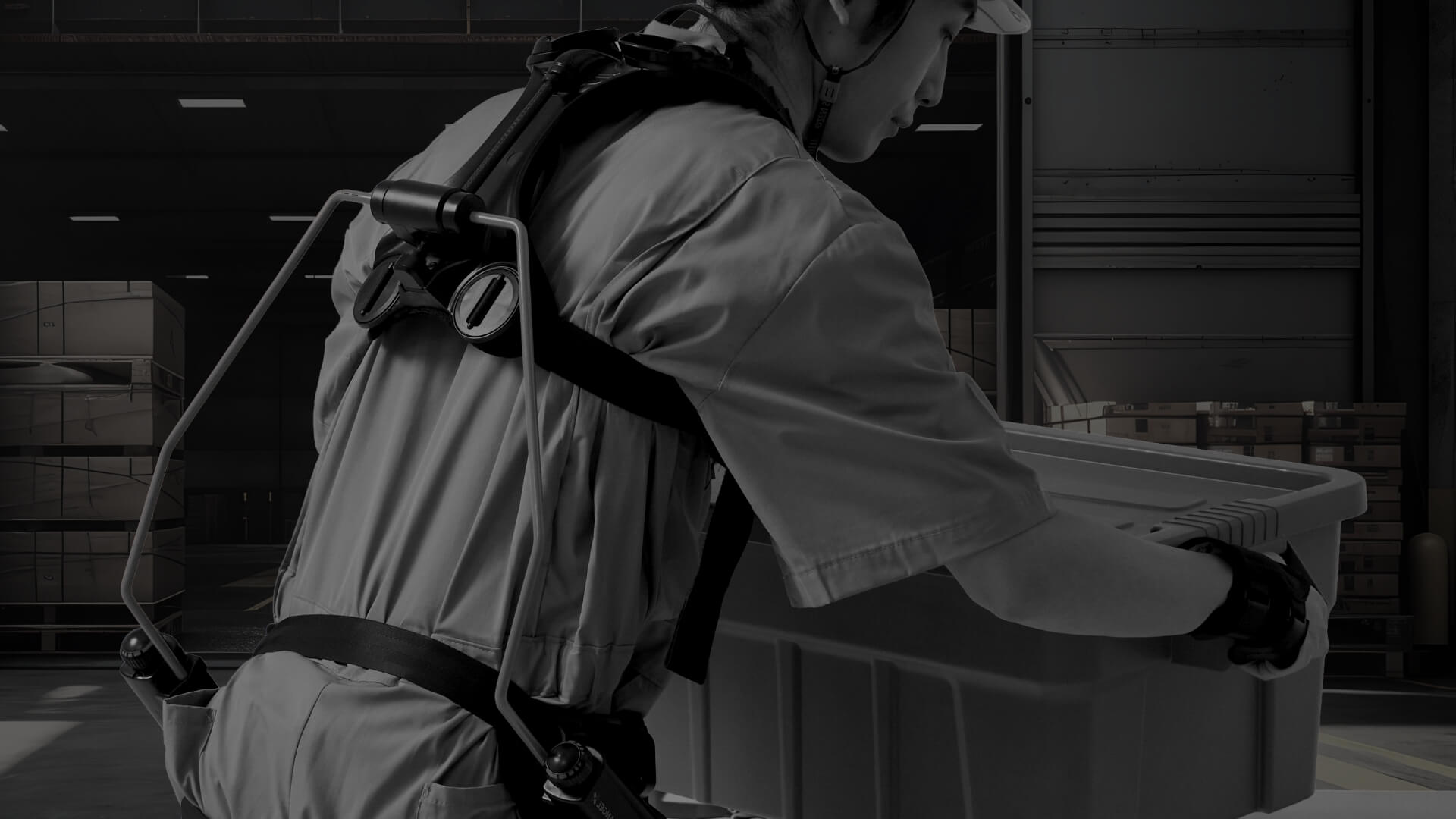
ANGEL GEAR is a wearable suit product line for industrial safety, developed in response to real-world field demands. Designed with a human-centered approach, each solution is tailored to specific work environments. Angel Robotics prioritizes safety and efficiency through assistive force technology, enhanced efficiency, improved safety, ergonomic adaptability, and unrestricted mobility.
- •Wearable suit for industrial safety
- •Human-centered design tailored to work environments
- •Assistive force technology for optimized support
- •Reduces strain on high-fatigue body areas
- •Minimizes risk of pain and chronic conditions
- •Ergonomic adaptability for various body types
- •Unrestricted mobility mechanism
Detailed specs not disclosed.
Technology stackOur read
Inferred from product specs — click through to the technology wiki:
ResearchComputed
Product comparisonComputed
Company announcement
News and Media
The company's official social & video channels · external links
News
From third-party news outlets (China & abroad) · external links