Luba 2 AWD
The Luba 2 AWD is a wire-free, all-wheel-drive robotic lawn mower developed by Mammotion, a Chinese robotics company. It uses RTK-GNSS satellite positioning to map and navigate mowing zones without requiring the installation of boundary wires, and is designed to handle multi-acre residential and light commercial properties with minimal human intervention. The robot is notable for its reported ability to climb slopes of up to 75% gradient, dual-vision obstacle avoidance, and support for multi-zone scheduling managed through a companion smartphone application. As of public reporting, the Luba 2 AWD is positioned as a premium autonomous outdoor mowing solution targeting homeowners and property managers who need reliable, unattended lawn care on challenging terrain.

Overview and Use Cases
The Luba 2 AWD is Mammotion's flagship robotic mower, designed to address the limitations of traditional boundary-wire-dependent robotic mowers. By leveraging RTK-GNSS (Real-Time Kinematic Global Navigation Satellite System) technology, the robot can establish precise virtual boundaries and mowing paths without any physical wire installation, reportedly mapping a new property in a matter of minutes.
Primary use cases include:
- Large residential lawns and estates covering multiple acres
- Properties with complex layouts, slopes, or multiple separated zones
- Light commercial applications such as golf course surrounds, parks, and managed green spaces
- Situations where wire installation is impractical or undesirable
Key Technical Features
The Luba 2 AWD's headline specifications, as publicly reported by Mammotion, include:
- RTK-GNSS Navigation: Provides centimeter-level positioning accuracy, enabling reliable boundary-free operation and repeatable mowing patterns.
- All-Wheel Drive (AWD): Four-wheel drive configuration reportedly allows the robot to handle slopes of up to 75% gradient, a figure that distinguishes it from many competitors.
- Dual-Vision Obstacle Avoidance: A combination of camera-based vision systems allows the robot to detect and avoid obstacles such as furniture, toys, and animals in its path.
- Multi-Zone Support: Users can define and schedule multiple distinct mowing areas through the Mammotion smartphone application.
- Wireless Connectivity: The robot connects via Wi-Fi and, in some configurations, cellular networks, enabling remote monitoring and control.
Specific details such as battery runtime per charge, cutting width, and motor torque figures should be verified against Mammotion's current official product documentation, as these specifications may vary by regional variant.
Comparison to Similar Robots
Within Mammotion's own lineup, the Luba 2 AWD sits above entry-level models and is differentiated by its AWD drivetrain and enhanced slope capability. Earlier Luba series models established the brand's wire-free RTK-GNSS approach, and the Luba 2 generation reportedly refined obstacle avoidance and navigation reliability.
In the broader competitive landscape, the Luba 2 AWD competes with wire-free robotic mowers from brands such as:
- Husqvarna EPOS / Automower NERA series – established European competitors using similar RTK-GNSS approaches, typically at higher price points
- Segway Navimow – another wire-free mower using a hybrid RTK and vision approach
- Worx Landroid Vision – uses camera-based boundary detection rather than RTK
Mammotion's positioning generally emphasizes competitive pricing relative to European incumbents while offering comparable or superior slope performance.
Market Context and Target Buyers
The Luba 2 AWD is positioned in the premium segment of the consumer robotic mower market, though Mammotion has reportedly priced it to undercut established European brands at equivalent capability tiers. Target buyers include:
- Homeowners with large or topographically challenging properties
- Property managers seeking to reduce manual lawn maintenance labor
- Early adopters interested in satellite-guided autonomous outdoor robotics
The robot is sold through Mammotion's direct online channels and select retail partners, with availability reported in North America, Europe, and the Asia-Pacific region as of recent public reporting.
Deployments and Notable Adoption
As of public reporting, the Luba 2 AWD has been adopted primarily by residential users and has received coverage in consumer technology and outdoor power equipment media. Mammotion has showcased the robot at international trade events. Specific large-scale commercial deployments or named institutional customers have not been prominently disclosed in available public sources.
Future Outlook
The wire-free RTK-GNSS robotic mower segment is growing rapidly as consumers seek alternatives to labor-intensive lawn care. Mammotion is expected to continue iterating on the Luba platform, with potential improvements in obstacle avoidance intelligence, battery efficiency, and integration with smart home ecosystems. Broader adoption may also depend on continued reductions in RTK hardware costs and improvements in GNSS signal reliability across diverse geographic environments.
Related entries
 Robot
RobotRelay Delivery Robot
The Relay Delivery Robot is an autonomous indoor delivery robot developed by Relay Robotics (formerly known as Savioke), designed primarily for hospitality and healthcare environments. It navigates hotel corridors and hospital hallways independently, rides elevators without human assistance, and delivers guest amenities, medications, linens, and other supplies directly to rooms or designated drop-off points. Relay is one of the most widely deployed service robots in its category, reportedly completing over one million lifetime deliveries with a publicly cited success rate of approximately 99.8%. With a cargo capacity of around 10 gallons, the robot is compact enough to operate in busy public spaces while carrying a meaningful payload of everyday supplies.
2,760 views
 Robot
RobotSpot
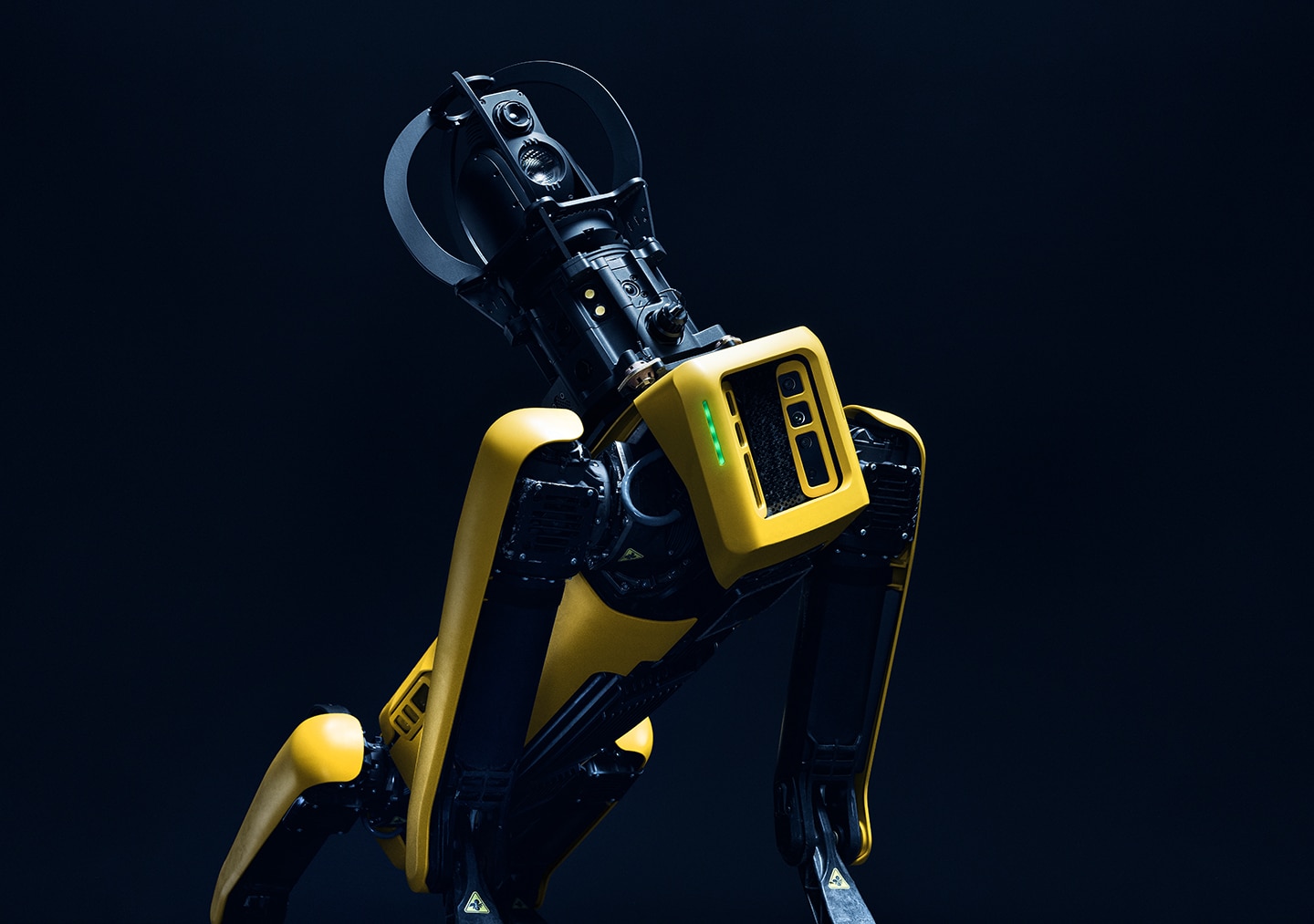
Spot is a four-legged autonomous robot developed by Boston Dynamics, a robotics company headquartered in Waltham, Massachusetts. Designed for inspection, security, and data collection in complex or hazardous environments, Spot can navigate stairs, rough terrain, and confined spaces that are inaccessible to wheeled robots. It is commercially available and has been deployed across industries including utilities, oil and gas, construction, and public safety. Spot supports a modular payload system that accommodates thermal cameras, pan-tilt-zoom (PTZ) cameras, lidar units, methane sensors, and other mission-specific hardware. Boston Dynamics also offers the Orbit fleet-management software platform, enabling operators to schedule autonomous inspection routes, aggregate sensor data, and manage multiple Spot units from a central interface. The robot is widely regarded as one of the most capable and commercially mature legged robots on the market.
1,244 views
 Robot
RobotRealSense Depth Camera D455
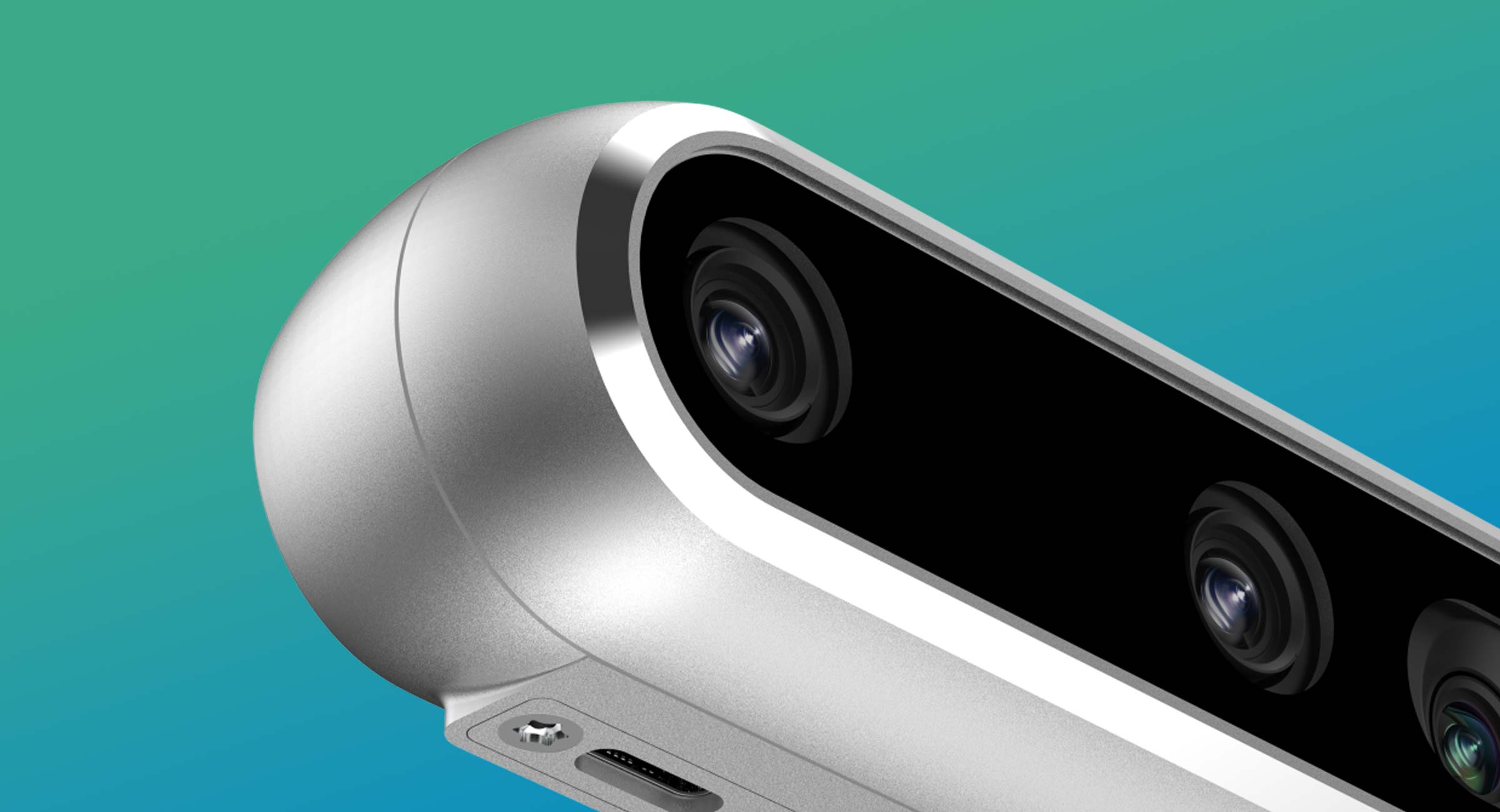
The RealSense Depth Camera D455 is a stereoscopic active-infrared depth camera belonging to Intel's D400 series, designed to capture high-fidelity depth data for robotics, autonomous mobile robots (AMRs), drones, and computer-vision applications. It features a 95 mm stereo baseline — the widest in the D400 lineup at the time of its introduction — which reportedly enables depth error of under 2% at ranges up to approximately 4 metres. Originally developed under the Intel RealSense brand, the D455 and related products were later spun off as part of an independent RealSense business unit following Intel's restructuring of the division around 2021–2022. The camera is widely adopted in research, industrial automation, and humanoid-robot development owing to its compact USB-powered form factor, open SDK support, and relatively accessible price point.
743 views
Rosie 2.0
The Rosie 2.0 is a commercial-grade autonomous robot vacuum developed by Tailos, designed to handle large-scale floor cleaning in business and institutional environments. It is offered in a two-pack configuration, allowing facilities to deploy multiple units simultaneously for broader coverage and more efficient cleaning cycles. Built to commercial durability standards, the Rosie 2.0 combines intelligent navigation with powerful suction technology to reduce reliance on manual labor and improve facility maintenance consistency. It targets businesses, hospitality venues, retail spaces, and other high-traffic environments where reliable, automated cleaning is a priority.
521 views