Lokomat
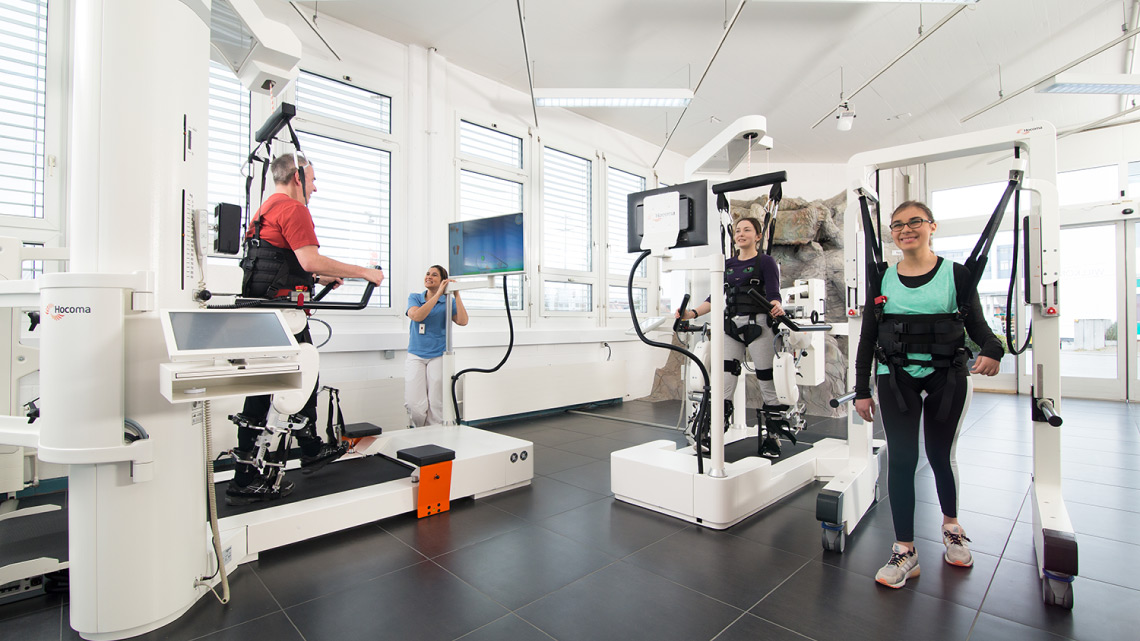
The Lokomat is a robot-assisted gait rehabilitation device developed by Hocoma, a Swiss medical robotics company now operating under the DIH (Digital Innovation in Healthcare) group. Designed for use in clinical settings, it combines a powered lower-limb exoskeleton with a body-weight support system and a treadmill to deliver intensive, physiologically accurate walking therapy to patients with neurological gait impairments—such as those caused by stroke, spinal cord injury, or multiple sclerosis. The system incorporates augmented performance feedback tools that allow therapists to monitor patient effort and adjust assistance levels in real time, aiming to promote neuroplasticity and motor recovery. The Lokomat is widely regarded as one of the most clinically studied robotic gait rehabilitation platforms in the world, with deployments reported across rehabilitation hospitals and research institutions globally.
Overview and Use Cases
The Lokomat is a powered robotic exoskeleton system designed to automate and standardize treadmill-based gait therapy. It is primarily indicated for patients with neurological conditions that impair walking ability, including:
- Stroke (hemiplegia or hemiparesis)
- Spinal cord injury (incomplete lesions)
- Multiple sclerosis
- Traumatic brain injury
- Cerebral palsy (addressed by a pediatric variant, the Lokomat Pro with pediatric orthoses)
By guiding the legs through a physiologically correct gait pattern while partially unloading the patient's body weight, the Lokomat enables high-repetition stepping practice that would be difficult to achieve through manual therapy alone. Therapists can titrate the level of robotic guidance—from fully guided to largely patient-driven—to match the patient's recovery stage.
Key Technical Features
The Lokomat system integrates several subsystems:
- Powered leg orthoses: Motorized hip and knee joints guide each leg through a programmed gait trajectory. Ankle guidance is addressed through passive components or optional add-ons depending on the configuration.
- Body-weight support (BWS) system: A dynamic unloading harness reduces the effective weight the patient must bear, allowing stepping practice even in early rehabilitation phases.
- Treadmill: A medical-grade treadmill provides the walking surface, with speed synchronized to the exoskeleton's gait cycle.
- Augmented feedback (LokomatPro FreeD module): Later versions introduced lateral and rotational pelvis movement to allow a more natural gait pattern, moving beyond purely sagittal-plane motion.
- Real-time biofeedback: Screens display patient effort metrics, encouraging active participation through visual feedback and gamified therapy modules.
Specific torque ratings and motor specifications are not consistently disclosed in public documentation; clinicians are advised to consult Hocoma directly for detailed technical datasheets.
Comparison to Similar Systems
Within Hocoma's broader rehabilitation robotics portfolio, the Lokomat focuses specifically on overground-style treadmill gait retraining, complementing other Hocoma products targeting upper-limb or balance rehabilitation.
In the competitive landscape, the Lokomat is often compared to:
- Ekso Bionics EksoGT: An overground wearable exoskeleton that allows untethered walking, contrasting with the Lokomat's treadmill-based approach.
- ReWalk Robotics ReWalk: Another overground exoskeleton system targeting spinal cord injury patients.
- Tyromotion Pablo / Amadeo: Focused on upper-limb rehabilitation, representing a different therapeutic domain.
The Lokomat's tethered, treadmill-based design offers high repeatability and precise data capture, which is valued in research settings, while overground systems may offer different functional training advantages.
Market Context and Target Buyers
The Lokomat is positioned as a premium clinical rehabilitation device. It is typically acquired by:
- Inpatient rehabilitation hospitals and neurological rehabilitation centers
- University hospitals and academic medical centers with research programs
- Specialized spinal cord injury or stroke rehabilitation units
As a capital medical equipment purchase, the Lokomat is generally not priced for individual consumer use. Exact pricing is not publicly listed and is understood to vary by configuration, region, and institutional agreements. The system competes in a market segment where clinical evidence, reimbursement pathways, and long-term service contracts are significant purchasing considerations.
Deployments and Clinical Evidence
The Lokomat has reportedly been installed in hundreds of rehabilitation facilities across Europe, North America, Asia, and beyond. It has been the subject of numerous peer-reviewed clinical studies examining its efficacy for stroke and spinal cord injury rehabilitation. While meta-analyses have shown mixed results regarding superiority over conventional therapy in some patient populations, the platform remains a reference standard in robotic gait rehabilitation research.
Notable adopters have included major academic rehabilitation centers, though Hocoma does not maintain a comprehensive public list of all installations.
Future Outlook
As of public reporting, Hocoma continues to develop the Lokomat platform with iterative software and hardware updates, including expanded biofeedback capabilities and integration with digital therapy management systems. Broader trends in rehabilitation robotics—such as AI-driven adaptive assistance, telerehabilitation integration, and outcome data analytics—are likely to influence future versions. The growing global burden of stroke and neurological disease is expected to sustain demand for high-intensity robotic gait therapy systems in the medium to long term.
Related entries
 Robot
RobotRelay Delivery Robot
The Relay Delivery Robot is an autonomous indoor delivery robot developed by Relay Robotics (formerly known as Savioke), designed primarily for hospitality and healthcare environments. It navigates hotel corridors and hospital hallways independently, rides elevators without human assistance, and delivers guest amenities, medications, linens, and other supplies directly to rooms or designated drop-off points. Relay is one of the most widely deployed service robots in its category, reportedly completing over one million lifetime deliveries with a publicly cited success rate of approximately 99.8%. With a cargo capacity of around 10 gallons, the robot is compact enough to operate in busy public spaces while carrying a meaningful payload of everyday supplies.
2,760 views
 Robot
RobotSpot
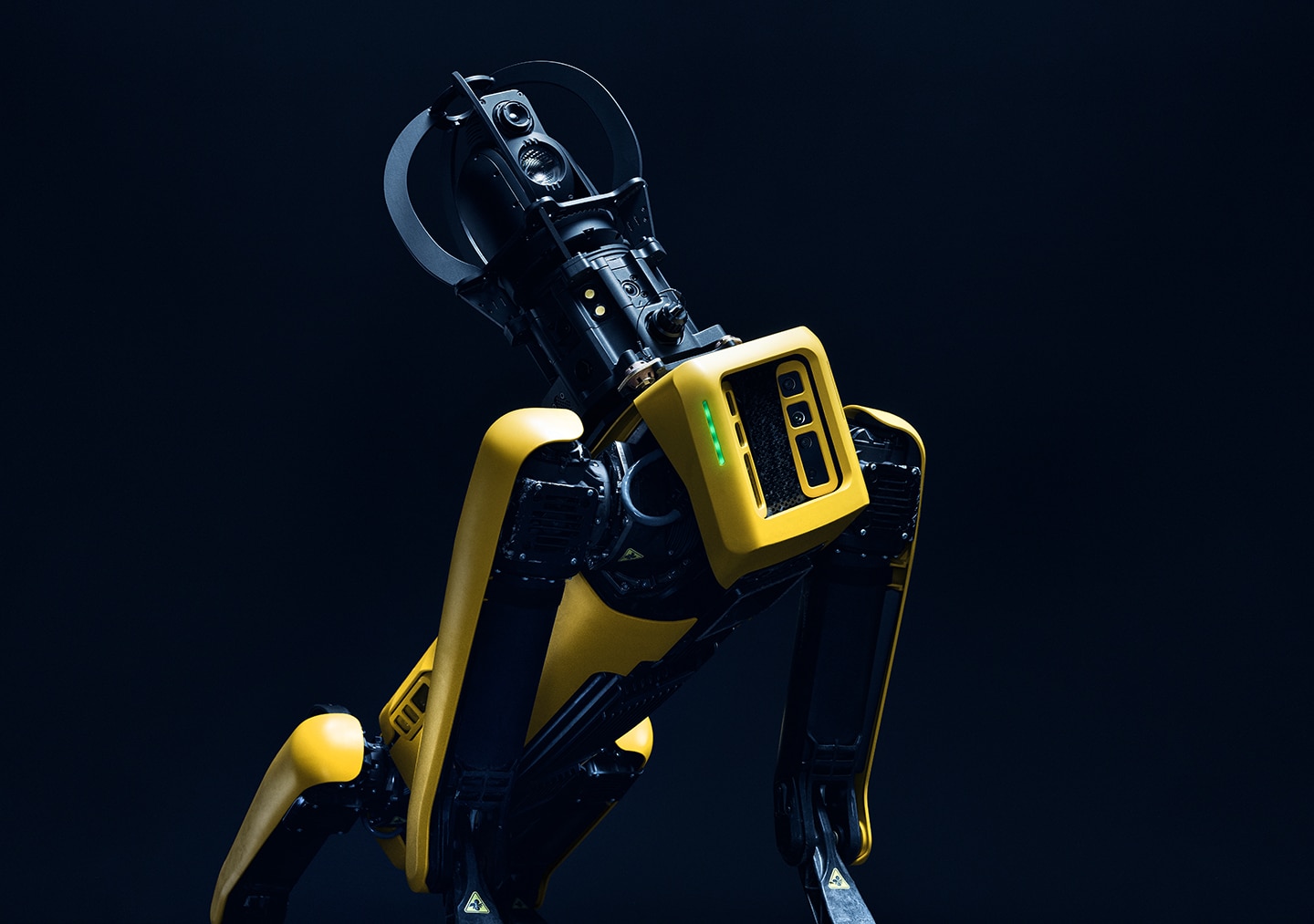
Spot is a four-legged autonomous robot developed by Boston Dynamics, a robotics company headquartered in Waltham, Massachusetts. Designed for inspection, security, and data collection in complex or hazardous environments, Spot can navigate stairs, rough terrain, and confined spaces that are inaccessible to wheeled robots. It is commercially available and has been deployed across industries including utilities, oil and gas, construction, and public safety. Spot supports a modular payload system that accommodates thermal cameras, pan-tilt-zoom (PTZ) cameras, lidar units, methane sensors, and other mission-specific hardware. Boston Dynamics also offers the Orbit fleet-management software platform, enabling operators to schedule autonomous inspection routes, aggregate sensor data, and manage multiple Spot units from a central interface. The robot is widely regarded as one of the most capable and commercially mature legged robots on the market.
1,244 views
 Robot
RobotRealSense Depth Camera D455
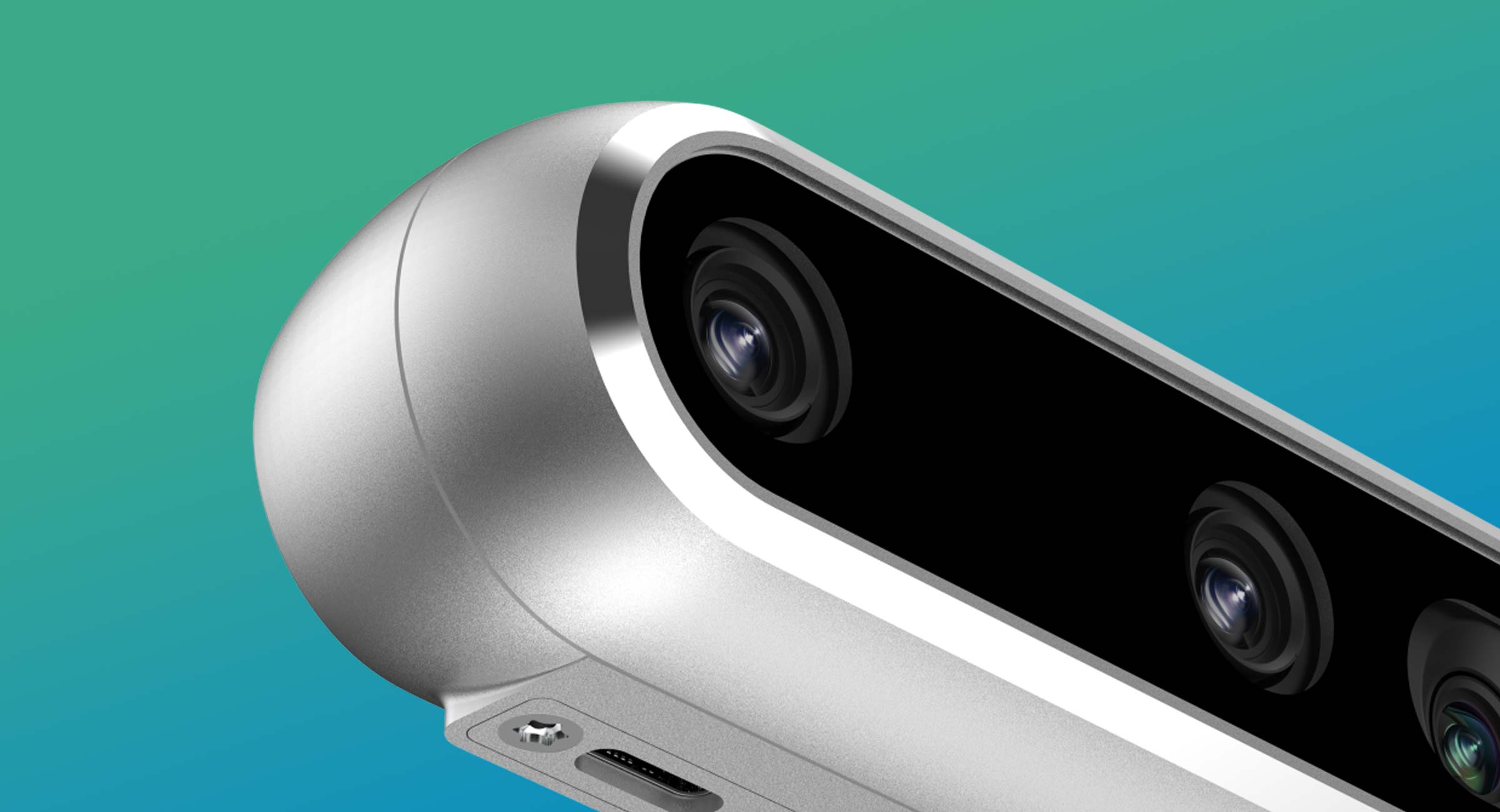
The RealSense Depth Camera D455 is a stereoscopic active-infrared depth camera belonging to Intel's D400 series, designed to capture high-fidelity depth data for robotics, autonomous mobile robots (AMRs), drones, and computer-vision applications. It features a 95 mm stereo baseline — the widest in the D400 lineup at the time of its introduction — which reportedly enables depth error of under 2% at ranges up to approximately 4 metres. Originally developed under the Intel RealSense brand, the D455 and related products were later spun off as part of an independent RealSense business unit following Intel's restructuring of the division around 2021–2022. The camera is widely adopted in research, industrial automation, and humanoid-robot development owing to its compact USB-powered form factor, open SDK support, and relatively accessible price point.
743 views
Rosie 2.0
The Rosie 2.0 is a commercial-grade autonomous robot vacuum developed by Tailos, designed to handle large-scale floor cleaning in business and institutional environments. It is offered in a two-pack configuration, allowing facilities to deploy multiple units simultaneously for broader coverage and more efficient cleaning cycles. Built to commercial durability standards, the Rosie 2.0 combines intelligent navigation with powerful suction technology to reduce reliance on manual labor and improve facility maintenance consistency. It targets businesses, hospitality venues, retail spaces, and other high-traffic environments where reliable, automated cleaning is a priority.
521 views