Underwater ROVs for Ship Hull Inspections | Blueye Robotics
Blueye Robotics produces a line of compact, remotely operated underwater vehicles (ROVs) engineered for ship hull inspections and other subsea survey tasks. Founded in Norway, Blueye Robotics has positioned its drones as accessible, professional-grade tools that allow maritime operators to visually assess hull condition, detect corrosion, inspect propellers, and monitor marine biofouling — all without the cost and downtime of drydocking a vessel. The Blueye ROV lineup, which includes models such as the Blueye Pioneer and Blueye Pro, is designed for ease of deployment by a small crew and integrates high-definition cameras, depth sensors, and stable thrusters to navigate challenging underwater environments. These vehicles serve commercial shipping companies, port authorities, offshore operators, and inspection service providers seeking efficient, regulation-compliant hull condition monitoring.
Overview and Use Cases
Blueye Robotics, headquartered in Trondheim, Norway, develops professional underwater ROVs aimed at democratizing subsea inspection. Their hull-inspection ROVs are deployed to evaluate the structural and coating integrity of ship hulls while vessels remain in port or at anchor, eliminating the need for costly drydock procedures. Key use cases include:
- Hull condition surveys: Detecting paint degradation, corrosion, dents, and structural anomalies.
- Propeller and rudder inspection: Identifying blade damage, fouling, or shaft seal issues.
- Marine growth assessment: Monitoring biofouling levels to inform cleaning schedules and optimize fuel efficiency.
- Pre- and post-voyage checks: Rapid inspections before departure or after incidents such as groundings.
- Regulatory compliance: Supporting documentation requirements from classification societies and port state control authorities.
Key Technical Features
Blueye ROV models are built around a philosophy of portability and ease of use. Reported and publicly documented features include:
- High-definition cameras: Integrated HD or 4K-capable cameras providing clear underwater imagery even in low-visibility conditions, often supplemented by adjustable LED lighting arrays.
- Depth rating: Models such as the Blueye Pro are reportedly rated to depths suitable for most commercial vessel hull work, with the Pro variant advertised for deeper operational ranges than the Pioneer.
- Thruster configuration: Multi-thruster layouts enabling six-degrees-of-freedom (6-DOF) or near-6-DOF maneuverability for precise positioning along hull surfaces.
- Tether-based communication: A neutrally buoyant tether transmits live video and telemetry to a surface tablet or laptop, enabling real-time operator control.
- Software integration: The Blueye app ecosystem allows recording, playback, and sharing of inspection footage, with reported compatibility with third-party reporting platforms.
- Payload options: Some models support optional sonar modules or additional sensors, though specific payload capacities should be confirmed with the manufacturer.
Comparison to Similar Robots
Within the Blueye lineup, the Pioneer is generally positioned as an entry-level professional model, while the Pro targets more demanding commercial and offshore applications with enhanced depth rating and imaging options.
Among competitors, Deep Trekker (a Canadian manufacturer) offers a comparable range of portable inspection ROVs — including the DTG3 and REVOLUTION models — that similarly target ship hull and infrastructure inspection markets. Deep Trekker systems are noted for their rotating camera heads, whereas Blueye emphasizes a streamlined, app-driven user experience. Other competitors in the professional inspection ROV space include VideoRay and Saab Seaeye, which tend to target heavier-duty or deeper-water applications at higher price points.
Market Context and Target Buyers
Blueye ROVs are generally positioned in the mid-tier professional segment — more capable and ruggedized than consumer underwater drones, but more accessible in cost and operation than large work-class ROVs. Target buyers include:
- Ship management and crewing companies seeking in-house inspection capability.
- Port and harbor authorities conducting routine underwater surveys.
- Marine inspection and survey firms offering hull inspection as a service.
- Offshore energy operators requiring flexible subsea inspection tools.
As of public reporting, Blueye has pursued distribution partnerships across Europe, Asia, and the Americas to expand market reach.
Deployments and Notable Customers
Blueye Robotics has reportedly supplied ROVs to maritime operators, port authorities, and inspection service companies across multiple countries, particularly in Northern Europe where the company has strong regional ties. Specific named customers and deployment contracts are not consistently disclosed in public sources, so individual case studies should be verified through Blueye's official communications.
Future Outlook
The market for underwater inspection ROVs is expanding as shipping companies face increasing regulatory pressure to demonstrate hull maintenance compliance and as environmental regulations tighten around biofouling management. Advances in AI-assisted image analysis — enabling automated detection of corrosion or coating damage — are expected to enhance the value proposition of platforms like Blueye's. The company has reportedly continued iterating on its hardware and software ecosystem, and the broader trend toward digitized vessel maintenance suggests sustained demand for accessible, portable inspection ROV solutions.
Related videos

What is an Underwater Drone? | CHASING GLADIUS MINI S
Marusya Shiklina

An Underwater Drone Entered Jacob’s Well — The Footage Left Scientists Terrified
Curious Explorer

EyeROV Sagara | A Closer Look at Our Underwater ROV Operations
EyeROV (IROV Technologies Pvt. Ltd)
Ukraine’s Massive New Underwater Drone: Sea Trident ST-1000
Naval News

I Found a Van at the Bottom of Flat Bridge! (Underwater Drone Exploration)
YowNoel

This Underwater Camera Can Livestream from 1,600 Feet Deep
Great Lakes Now
Related entries
 Robot
RobotRelay Delivery Robot
The Relay Delivery Robot is an autonomous indoor delivery robot developed by Relay Robotics (formerly known as Savioke), designed primarily for hospitality and healthcare environments. It navigates hotel corridors and hospital hallways independently, rides elevators without human assistance, and delivers guest amenities, medications, linens, and other supplies directly to rooms or designated drop-off points. Relay is one of the most widely deployed service robots in its category, reportedly completing over one million lifetime deliveries with a publicly cited success rate of approximately 99.8%. With a cargo capacity of around 10 gallons, the robot is compact enough to operate in busy public spaces while carrying a meaningful payload of everyday supplies.
2,747 views
 Robot
RobotSpot
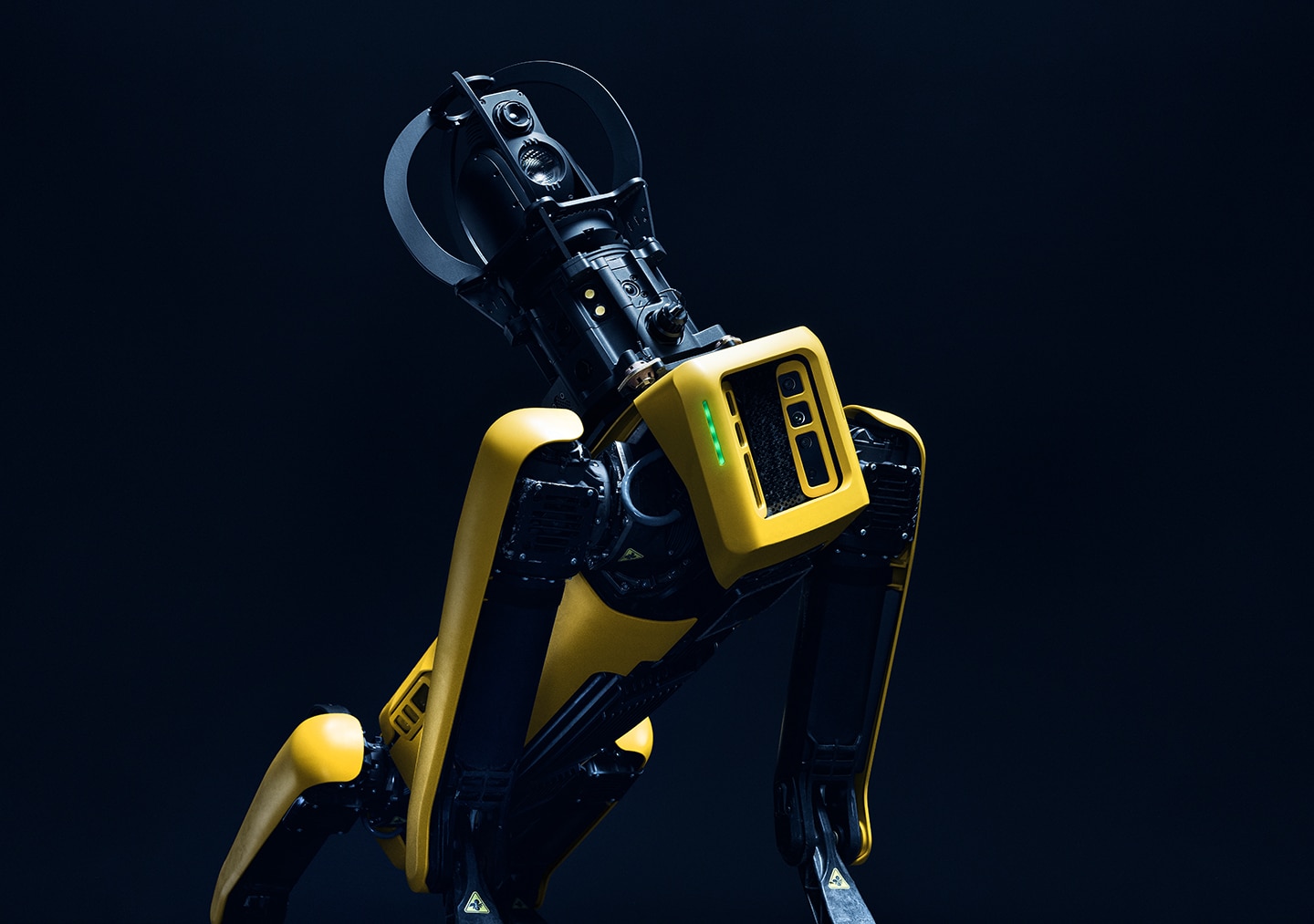
Spot is a four-legged autonomous robot developed by Boston Dynamics, a robotics company headquartered in Waltham, Massachusetts. Designed for inspection, security, and data collection in complex or hazardous environments, Spot can navigate stairs, rough terrain, and confined spaces that are inaccessible to wheeled robots. It is commercially available and has been deployed across industries including utilities, oil and gas, construction, and public safety. Spot supports a modular payload system that accommodates thermal cameras, pan-tilt-zoom (PTZ) cameras, lidar units, methane sensors, and other mission-specific hardware. Boston Dynamics also offers the Orbit fleet-management software platform, enabling operators to schedule autonomous inspection routes, aggregate sensor data, and manage multiple Spot units from a central interface. The robot is widely regarded as one of the most capable and commercially mature legged robots on the market.
1,230 views
 Robot
RobotRealSense Depth Camera D455
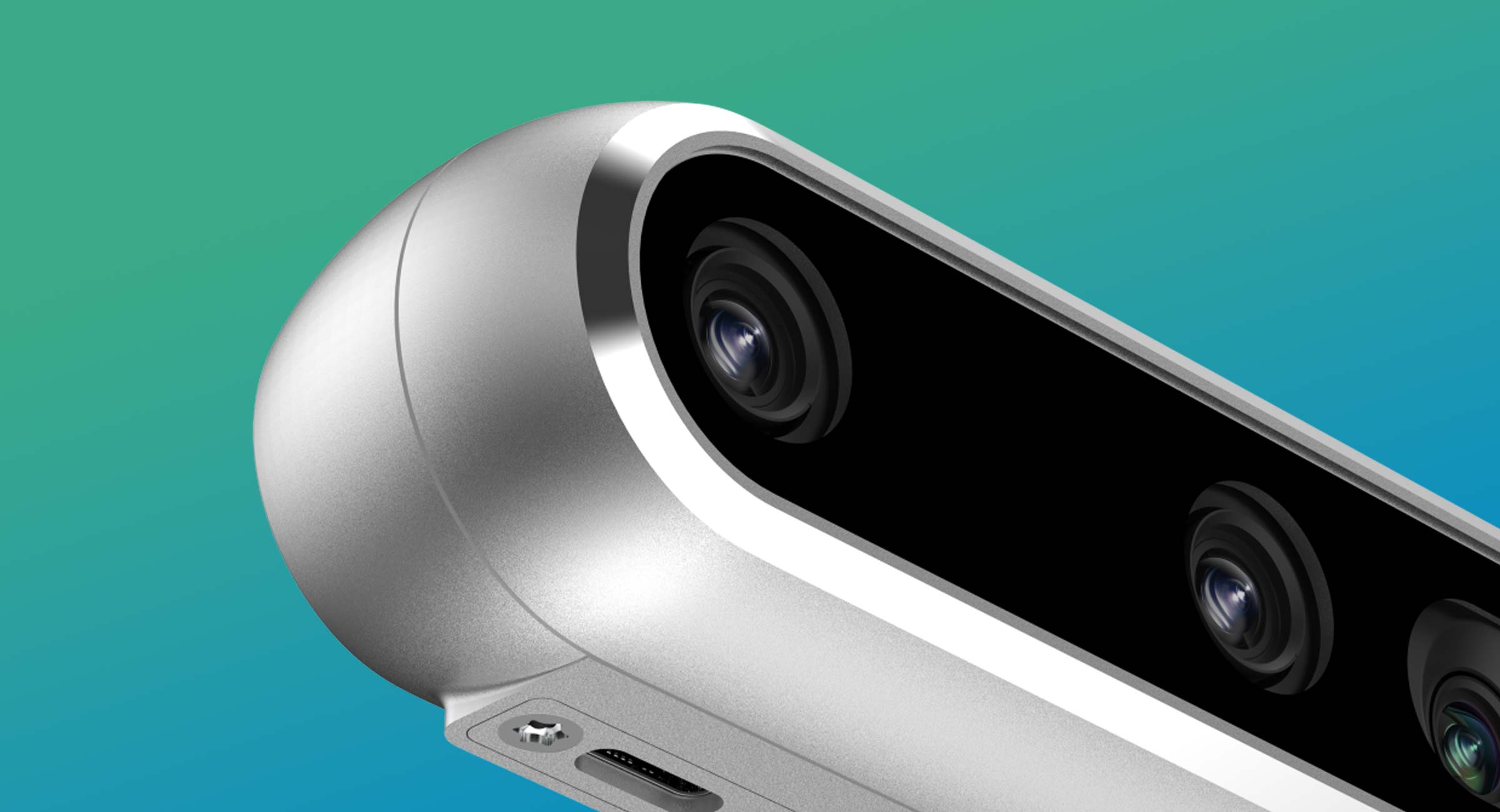
The RealSense Depth Camera D455 is a stereoscopic active-infrared depth camera belonging to Intel's D400 series, designed to capture high-fidelity depth data for robotics, autonomous mobile robots (AMRs), drones, and computer-vision applications. It features a 95 mm stereo baseline — the widest in the D400 lineup at the time of its introduction — which reportedly enables depth error of under 2% at ranges up to approximately 4 metres. Originally developed under the Intel RealSense brand, the D455 and related products were later spun off as part of an independent RealSense business unit following Intel's restructuring of the division around 2021–2022. The camera is widely adopted in research, industrial automation, and humanoid-robot development owing to its compact USB-powered form factor, open SDK support, and relatively accessible price point.
680 views
Rosie 2.0
The Rosie 2.0 is a commercial-grade autonomous robot vacuum developed by Tailos, designed to handle large-scale floor cleaning in business and institutional environments. It is offered in a two-pack configuration, allowing facilities to deploy multiple units simultaneously for broader coverage and more efficient cleaning cycles. Built to commercial durability standards, the Rosie 2.0 combines intelligent navigation with powerful suction technology to reduce reliance on manual labor and improve facility maintenance consistency. It targets businesses, hospitality venues, retail spaces, and other high-traffic environments where reliable, automated cleaning is a priority.
516 views