Stevie
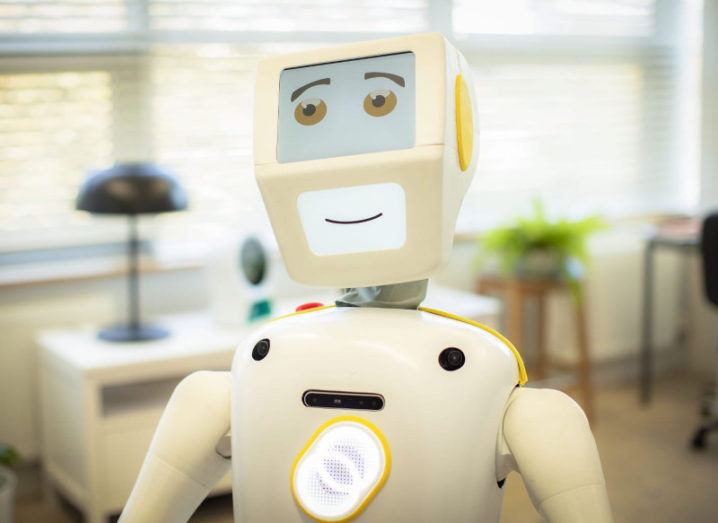
Stevie is a socially assistive humanoid robot developed by Akara Robotics, an Irish robotics company with research ties to Trinity College Dublin's Robotics & Innovation Lab. Designed specifically for older adults living in residential care settings, Stevie is intended to support both residents and care staff by leading group activities such as bingo, music sessions, and light exercise, while also providing conversational companionship and fall-detection capabilities. As of public reporting, Stevie is offered on a pre-order basis, positioning it as an emerging product rather than a widely deployed commercial platform. Akara Robotics has framed the robot as a tool to augment—rather than replace—human caregivers, addressing growing demand for scalable social and wellness support in aged-care facilities across Ireland and potentially beyond.
Overview and Use Cases
Stevie is a socially assistive robot purpose-built for residential aged-care environments. Its core mission is to enhance the quality of life of older adults by delivering structured group engagement and one-on-one interaction. Reported use cases include:
- Group activity facilitation: Leading sessions of bingo, music appreciation, trivia, and guided exercise routines.
- Conversational companionship: Engaging residents in dialogue to reduce social isolation, a recognized risk factor for cognitive and physical decline in older adults.
- Fall detection: Monitoring residents and alerting care staff when a fall is detected, supporting safety oversight in busy care settings.
- Staff augmentation: Freeing human caregivers to focus on higher-complexity clinical and personal care tasks by handling routine social programming.
The robot's humanoid form factor is a deliberate design choice intended to make interactions feel more natural and approachable for elderly users who may be unfamiliar with robotic technology.
Design and Development Background
Stevie was developed by Akara Robotics, a company founded in Ireland and closely affiliated with the Robotics & Innovation Lab at Trinity College Dublin. This academic partnership has reportedly shaped the robot's human-centered design philosophy, emphasizing user acceptance, ethical deployment, and iterative co-design with care staff and residents.
The collaboration with Trinity College Dublin reflects a broader trend of university spin-outs and research partnerships driving innovation in social robotics, particularly in countries with aging populations and strained public health systems.
Technical Features
Specific technical specifications for Stevie have not been comprehensively published in open sources as of the time of writing. Based on available public information, the robot is understood to incorporate:
- Sensors capable of detecting falls and monitoring the immediate environment.
- Speech and dialogue systems enabling natural-language conversation with residents.
- A humanoid physical form designed to be non-threatening and socially legible to older adults.
- Activity-delivery software for structured programming such as games and exercise guidance.
Detailed figures for battery runtime, payload, locomotion speed, or sensor specifications have not been confirmed in public reporting and are therefore not listed here.
Market Context and Target Buyers
Stevie is positioned within the emerging socially assistive robot (SAR) market, which targets healthcare providers, residential care operators, and senior living communities. As of public reporting, the robot is available on a pre-order basis, suggesting it is in a late-development or early-commercialization phase rather than volume production.
Target buyers are likely to include:
- Nursing homes and residential care facilities in Ireland and potentially the broader European market.
- Healthcare organizations seeking scalable solutions to staff shortages and resident engagement challenges.
Pricing has not been publicly disclosed. The pre-order model is consistent with other social robotics platforms that require customization and pilot deployment before full commercial rollout.
Competitive Landscape
Stevie operates in a niche but growing segment alongside other socially assistive robots. Comparable platforms include:
- PARO (AIBA, Japan): A therapeutic robotic seal widely used in dementia care, focused on tactile comfort rather than activity facilitation.
- Pepper (SoftBank Robotics, Japan/France): A humanoid social robot deployed in some care settings, though not exclusively designed for aged care.
- Stevie's differentiator appears to be its specific co-design with aged-care stakeholders and its integrated fall-detection capability alongside social programming.
Akara Robotics has no other robot models on public record as of this writing, making Stevie the company's flagship and sole known product.
Future Outlook
The aged-care robotics sector is expected to grow significantly as populations in Europe, North America, and East Asia continue to age and care workforce shortages intensify. Stevie's Ireland-based origin positions Akara Robotics to benefit from EU research funding streams and regulatory frameworks supportive of assistive technology innovation.
Key factors that will shape Stevie's trajectory include successful pilot deployments, evidence of measurable resident wellbeing outcomes, regulatory clearance in target markets, and the company's ability to scale manufacturing and support operations beyond the pre-order phase.
Related entries
 Robot
RobotRelay Delivery Robot
The Relay Delivery Robot is an autonomous indoor delivery robot developed by Relay Robotics (formerly known as Savioke), designed primarily for hospitality and healthcare environments. It navigates hotel corridors and hospital hallways independently, rides elevators without human assistance, and delivers guest amenities, medications, linens, and other supplies directly to rooms or designated drop-off points. Relay is one of the most widely deployed service robots in its category, reportedly completing over one million lifetime deliveries with a publicly cited success rate of approximately 99.8%. With a cargo capacity of around 10 gallons, the robot is compact enough to operate in busy public spaces while carrying a meaningful payload of everyday supplies.
2,760 views
 Robot
RobotSpot
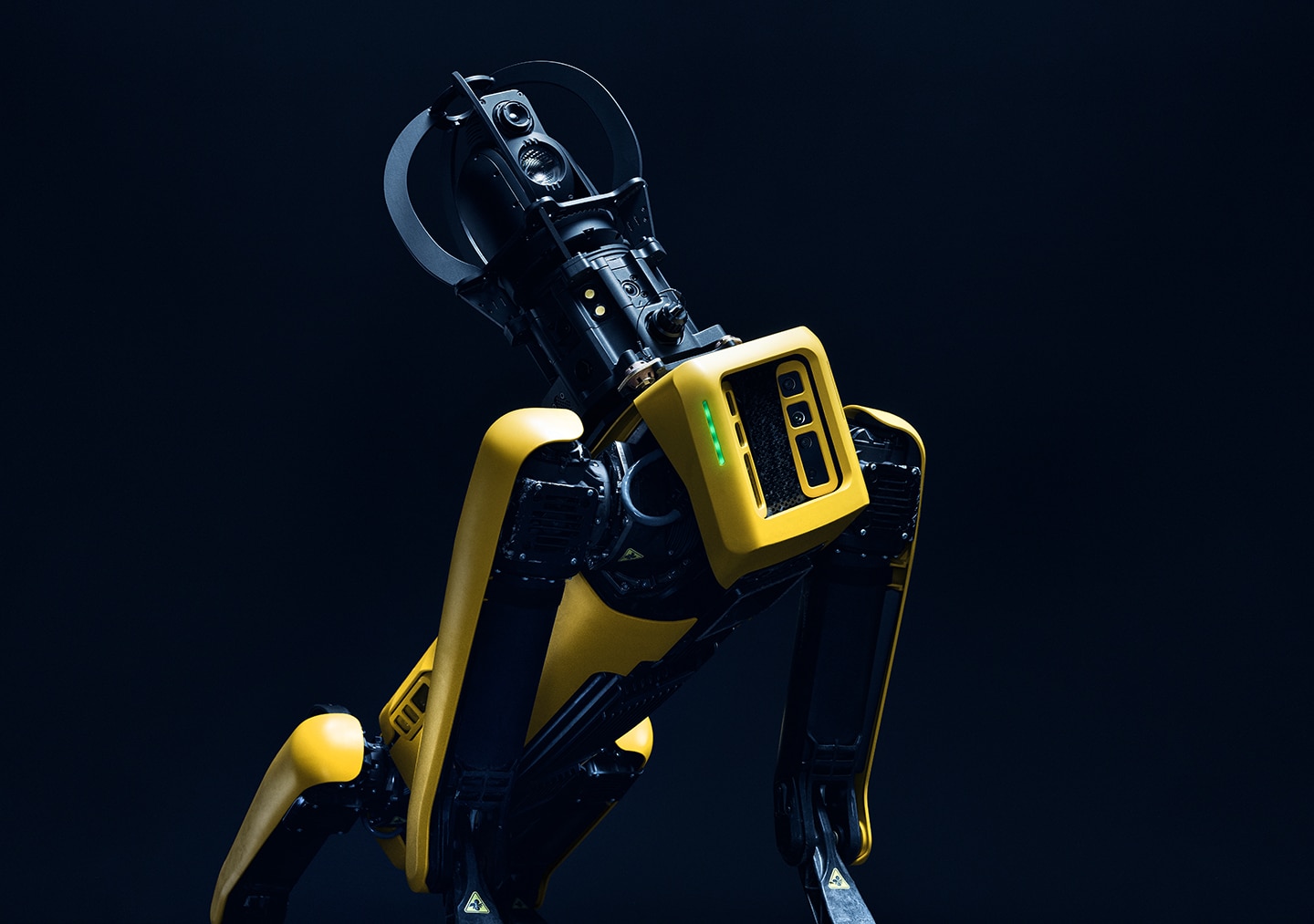
Spot is a four-legged autonomous robot developed by Boston Dynamics, a robotics company headquartered in Waltham, Massachusetts. Designed for inspection, security, and data collection in complex or hazardous environments, Spot can navigate stairs, rough terrain, and confined spaces that are inaccessible to wheeled robots. It is commercially available and has been deployed across industries including utilities, oil and gas, construction, and public safety. Spot supports a modular payload system that accommodates thermal cameras, pan-tilt-zoom (PTZ) cameras, lidar units, methane sensors, and other mission-specific hardware. Boston Dynamics also offers the Orbit fleet-management software platform, enabling operators to schedule autonomous inspection routes, aggregate sensor data, and manage multiple Spot units from a central interface. The robot is widely regarded as one of the most capable and commercially mature legged robots on the market.
1,244 views
 Robot
RobotRealSense Depth Camera D455
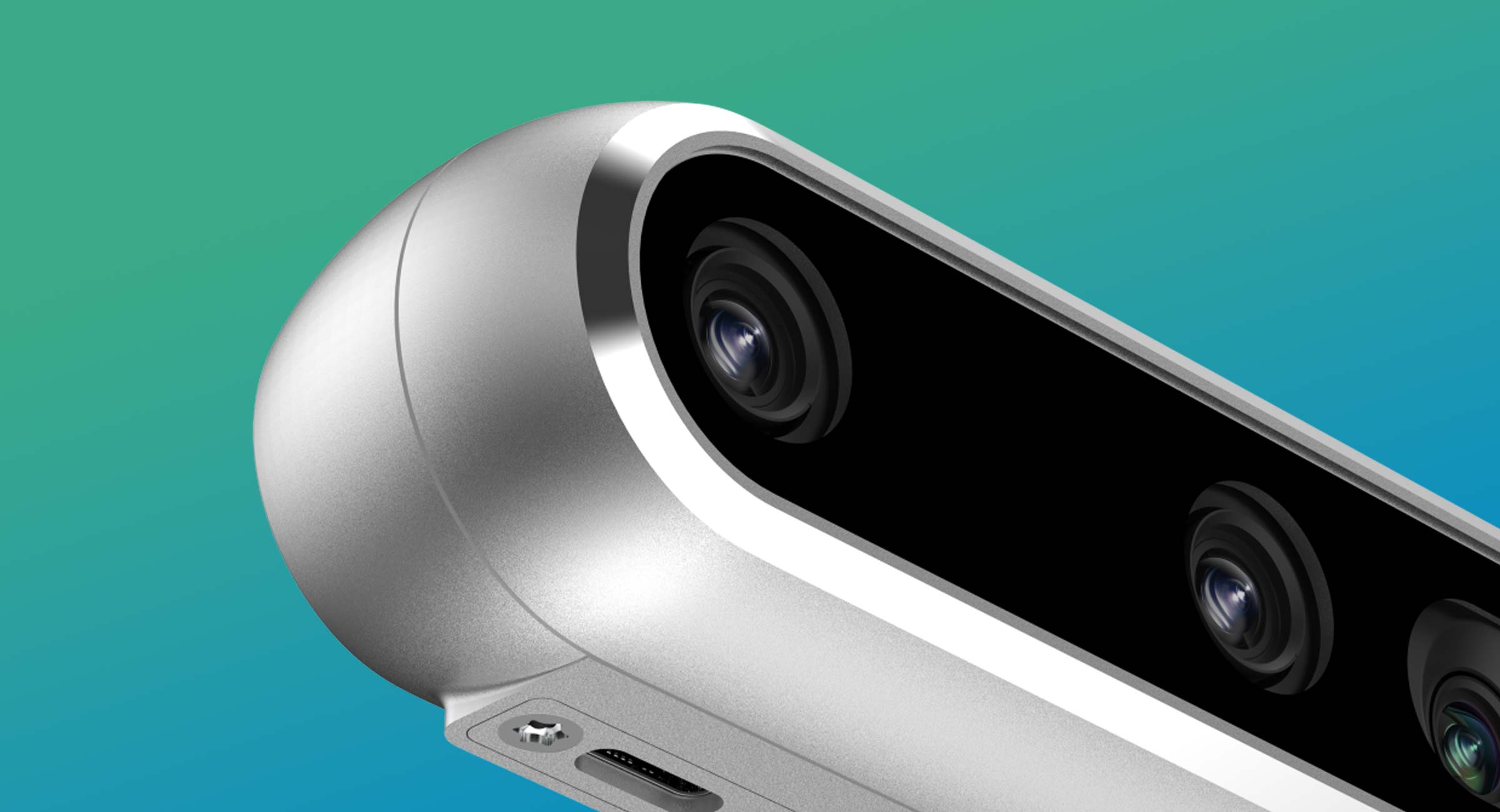
The RealSense Depth Camera D455 is a stereoscopic active-infrared depth camera belonging to Intel's D400 series, designed to capture high-fidelity depth data for robotics, autonomous mobile robots (AMRs), drones, and computer-vision applications. It features a 95 mm stereo baseline — the widest in the D400 lineup at the time of its introduction — which reportedly enables depth error of under 2% at ranges up to approximately 4 metres. Originally developed under the Intel RealSense brand, the D455 and related products were later spun off as part of an independent RealSense business unit following Intel's restructuring of the division around 2021–2022. The camera is widely adopted in research, industrial automation, and humanoid-robot development owing to its compact USB-powered form factor, open SDK support, and relatively accessible price point.
743 views
Rosie 2.0
The Rosie 2.0 is a commercial-grade autonomous robot vacuum developed by Tailos, designed to handle large-scale floor cleaning in business and institutional environments. It is offered in a two-pack configuration, allowing facilities to deploy multiple units simultaneously for broader coverage and more efficient cleaning cycles. Built to commercial durability standards, the Rosie 2.0 combines intelligent navigation with powerful suction technology to reduce reliance on manual labor and improve facility maintenance consistency. It targets businesses, hospitality venues, retail spaces, and other high-traffic environments where reliable, automated cleaning is a priority.
521 views