PUDU CC1
The PUDU CC1 is an intelligent commercial cleaning robot developed by Pudu Robotics, a Shenzhen-based company known for service robotics. It integrates four cleaning functions — sweeping, scrubbing, vacuuming, and dust mopping — into a single autonomous unit designed for large indoor commercial environments, including multi-floor buildings. A key feature of the CC1 is its dedicated docking station, which supports automatic charging, water supply and drainage, and automatic detergent replenishment, enabling extended unattended operation. The robot is positioned as a labor-saving solution for facilities such as shopping malls, office buildings, hotels, and airports.

Overview and Use Cases
The PUDU CC1 is a 4-in-1 autonomous floor-cleaning robot designed for commercial and institutional environments. By combining sweeping, scrubbing, vacuuming, and dust mopping in one platform, it aims to replace or supplement traditional manual cleaning crews in high-traffic indoor spaces. Target deployment environments reportedly include shopping centers, hotel lobbies, office complexes, transportation hubs, and hospitals.
The robot is engineered to handle multi-floor operations, making it suitable for large facilities where cleaning staff would otherwise need to transport equipment between levels. Its autonomous navigation allows it to follow pre-mapped routes and adapt to pedestrian traffic during operating hours.
Key Technical Features
- 4-in-1 Cleaning System: Integrates dry sweeping, wet scrubbing, vacuuming, and dust mopping functions, reducing the need for multiple specialized machines.
- Autonomous Docking Station: The companion docking station handles automatic charging, clean water supply, wastewater drainage, and detergent replenishment — minimizing manual intervention between cleaning cycles.
- Navigation: The CC1 reportedly uses a combination of LiDAR and other sensors for simultaneous localization and mapping (SLAM), enabling obstacle avoidance and route planning in dynamic environments.
- Multi-Floor Capability: Designed to operate across different floors of a building, though specific elevator-integration details have not been fully disclosed in public documentation.
Specific figures for battery runtime, water tank capacity, and cleaning coverage rate have not been independently verified and are not listed here to avoid inaccuracy.
Comparison to Sibling Robots
Pudu Robotics' broader portfolio is dominated by hospitality-focused delivery robots. The BellaBot and KettyBot are both food and item delivery robots used in restaurants and hotels, featuring cat-themed or sleek designs intended to enhance customer interaction. The CC1 represents a distinct product line focused on facility maintenance rather than customer-facing service, reflecting Pudu Robotics' strategy to expand beyond its hospitality roots into the commercial cleaning segment.
Market Context and Competitive Landscape
The commercial autonomous cleaning robot market includes established players such as Gaussian Robotics, Nilfisk, Tennant (with its T7AMR), and Karcher. The PUDU CC1 competes in the mid-to-large commercial segment, targeting facility managers and building operators seeking to reduce labor costs and maintain consistent cleaning standards.
Pudu Robotics leverages its existing expertise in autonomous navigation and service robotics to enter this space, though it faces competition from companies with longer track records specifically in industrial and commercial cleaning equipment. The all-in-one docking station is a differentiating feature that addresses a common pain point — the need for staff to manually refill water and detergent — which some competing models still require.
Deployments and Customers
As of public reporting, the PUDU CC1 has been marketed toward large commercial real estate operators, hotel chains, and facility management companies, particularly in China. Pudu Robotics has a broad installed base for its delivery robots across Asia and internationally, which may support cross-selling of the CC1 to existing clients. Specific named customer deployments for the CC1 have not been widely disclosed in available public sources.
Future Outlook
The commercial cleaning robotics sector is experiencing sustained growth driven by labor cost pressures and increasing acceptance of autonomous systems in public spaces. Pudu Robotics is reportedly continuing to invest in its cleaning robot lineup alongside its hospitality products. Future iterations of the CC1 or successor models may incorporate enhanced AI-based dirt detection, improved fleet management software, and deeper integration with building management systems. The automatic docking and replenishment model is likely to become an industry standard expectation, and Pudu's early emphasis on this feature positions the CC1 competitively for near-term adoption.
Related videos

PUDU CC1 Pro | AI-powered Autonomous Cleaning Robot
Pudu Robotics

Meet The Pudu MT1 MAX | Cleaning Robotics
Cleaning Robotics, LLC

Commercial Cleaning with the Pudu CC1 | Autonomous Cleaning Robot Demo
SmartDots Robotic Solutions

AI-Powered Autonomous Floor Cleaning: PUDU & Karcher KIRA B50
Superior ProCare

PUDU CC1 Pro: AI-Powered Autonomous Cleaning Robot
Pudu Robotics
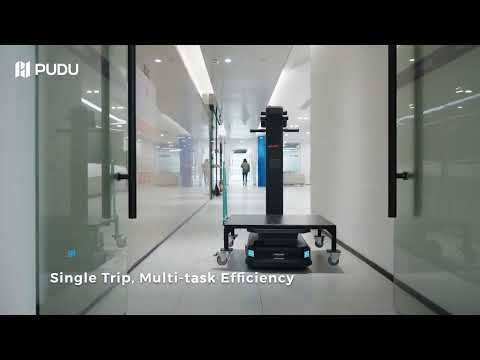
Autonomous Mobile Robot AMR Lift Demonstration - Pudu T300 Lift Demo
Quantum Robotics
Recent news
Related entries
 Robot
RobotRelay Delivery Robot
The Relay Delivery Robot is an autonomous indoor delivery robot developed by Relay Robotics (formerly known as Savioke), designed primarily for hospitality and healthcare environments. It navigates hotel corridors and hospital hallways independently, rides elevators without human assistance, and delivers guest amenities, medications, linens, and other supplies directly to rooms or designated drop-off points. Relay is one of the most widely deployed service robots in its category, reportedly completing over one million lifetime deliveries with a publicly cited success rate of approximately 99.8%. With a cargo capacity of around 10 gallons, the robot is compact enough to operate in busy public spaces while carrying a meaningful payload of everyday supplies.
2,760 views
 Robot
RobotSpot
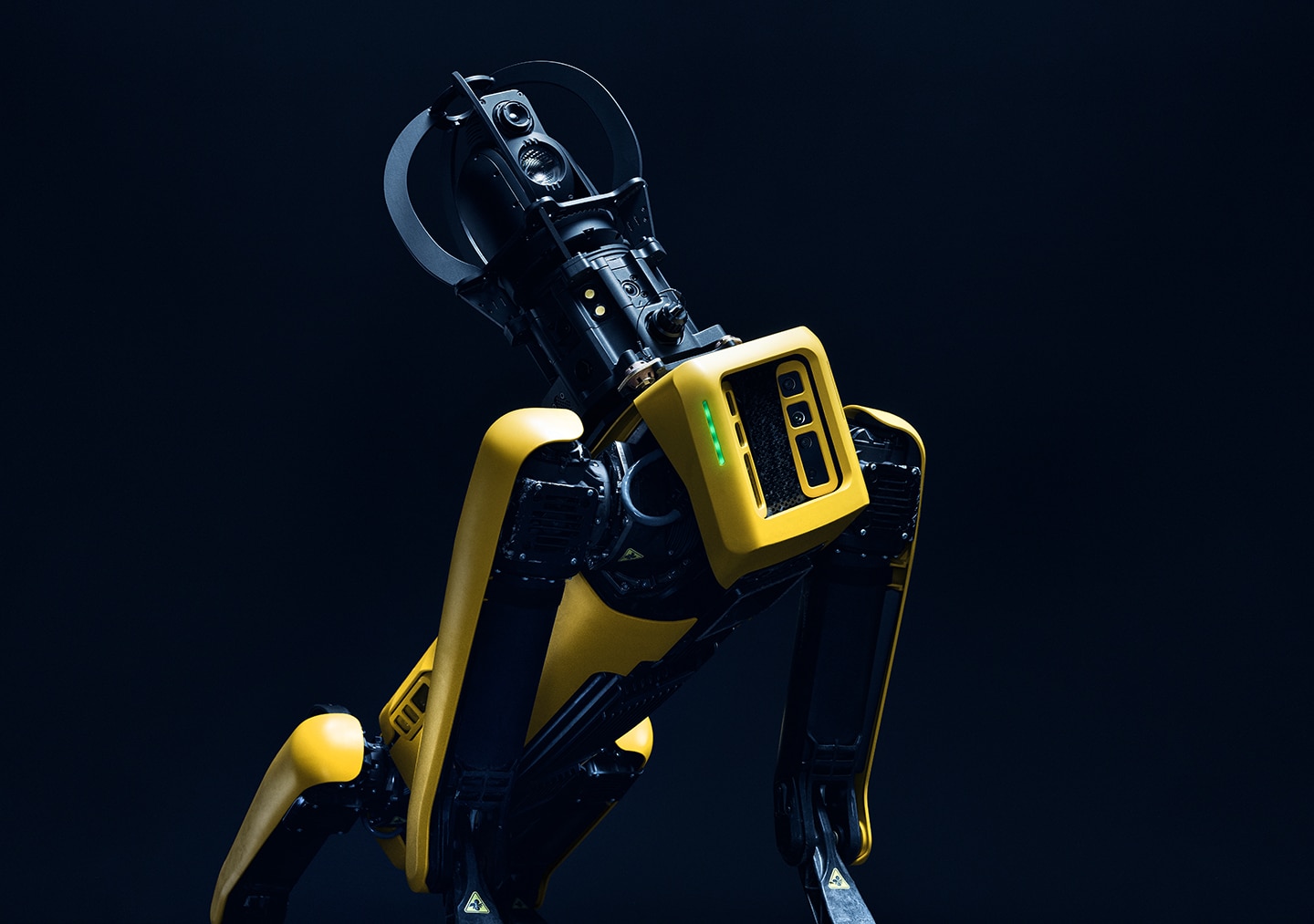
Spot is a four-legged autonomous robot developed by Boston Dynamics, a robotics company headquartered in Waltham, Massachusetts. Designed for inspection, security, and data collection in complex or hazardous environments, Spot can navigate stairs, rough terrain, and confined spaces that are inaccessible to wheeled robots. It is commercially available and has been deployed across industries including utilities, oil and gas, construction, and public safety. Spot supports a modular payload system that accommodates thermal cameras, pan-tilt-zoom (PTZ) cameras, lidar units, methane sensors, and other mission-specific hardware. Boston Dynamics also offers the Orbit fleet-management software platform, enabling operators to schedule autonomous inspection routes, aggregate sensor data, and manage multiple Spot units from a central interface. The robot is widely regarded as one of the most capable and commercially mature legged robots on the market.
1,244 views
 Robot
RobotRealSense Depth Camera D455
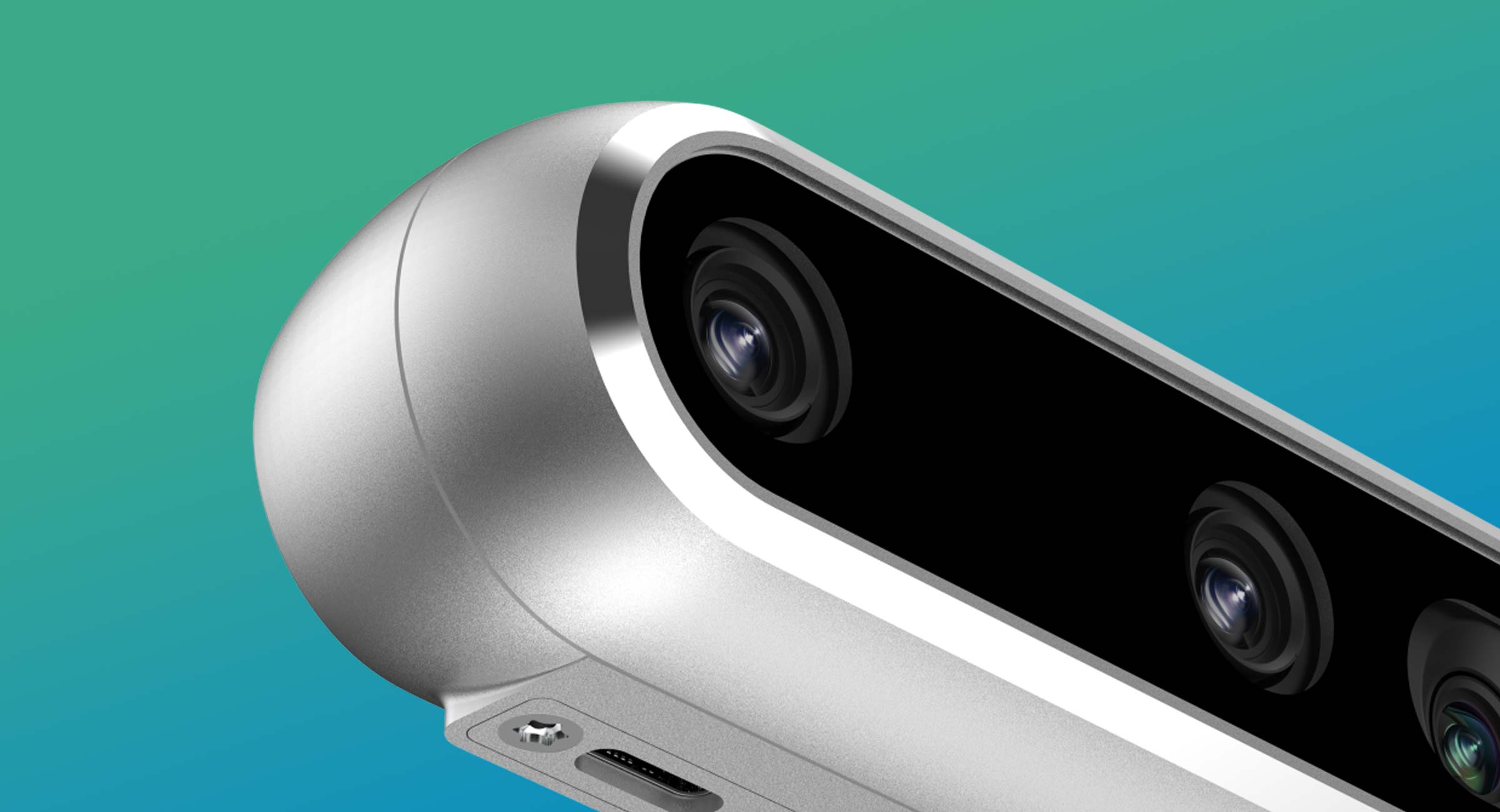
The RealSense Depth Camera D455 is a stereoscopic active-infrared depth camera belonging to Intel's D400 series, designed to capture high-fidelity depth data for robotics, autonomous mobile robots (AMRs), drones, and computer-vision applications. It features a 95 mm stereo baseline — the widest in the D400 lineup at the time of its introduction — which reportedly enables depth error of under 2% at ranges up to approximately 4 metres. Originally developed under the Intel RealSense brand, the D455 and related products were later spun off as part of an independent RealSense business unit following Intel's restructuring of the division around 2021–2022. The camera is widely adopted in research, industrial automation, and humanoid-robot development owing to its compact USB-powered form factor, open SDK support, and relatively accessible price point.
743 views
Rosie 2.0
The Rosie 2.0 is a commercial-grade autonomous robot vacuum developed by Tailos, designed to handle large-scale floor cleaning in business and institutional environments. It is offered in a two-pack configuration, allowing facilities to deploy multiple units simultaneously for broader coverage and more efficient cleaning cycles. Built to commercial durability standards, the Rosie 2.0 combines intelligent navigation with powerful suction technology to reduce reliance on manual labor and improve facility maintenance consistency. It targets businesses, hospitality venues, retail spaces, and other high-traffic environments where reliable, automated cleaning is a priority.
521 views