Pudu Robotics普渡科技
Company wikiFounded 2016 · China · pudurobotics.com
SnapshotCompany claim
Global leader in service robotics dedicated to enhancing human productivity and living standards through innovative robot technology. Shipped over 90,000 units to 60+ countries and 600+ regions worldwide.
- Founded
- 2016
- HQ
- China
- Models
- 17
- Categories
- 5
ContactCompany claim
- Address
- Not disclosed
Product families
Is this your company? Claim this profile to add verified data, respond to our analysis, and upgrade claims to Verified.
Claim this profile1. Executive Overview {#executive-overview}
Pudu Robotics (普渡科技), founded in 2016 and headquartered in China, has established itself as one of the most commercially scaled service-robotics firms in the world. By the company's own account, it has shipped over 90,000 units across 60+ countries and 600+ regions — a deployment footprint that places it among the most broadly distributed service-robot vendors globally. Its product lineup spans food-delivery robots, commercial cleaning systems, heavy-payload industrial logistics robots, semi-humanoid service robots, and full-sized bipedal humanoids, representing a deliberate expansion from a single category into a multi-vertical robotics platform.
The company has received independent recognition in the trade and technology press, including coverage from Robotics 24/7, profiling in Zaobao and Tencent News, and product-design validation through Red Dot Awards 2025 (PUDU MT1, PUDU T300) and an iF Design Award 2025 (PUDU SH1). Founder Zhang Tao has been profiled as a serial entrepreneur — this being his third venture — with coverage noting the company's trajectory toward unicorn valuation. Pudu has also demonstrated early international market development, including a 2020 appearance at Japan's RoboDEX trade show reported by Shenzhen News Network, signaling active Asia-Pacific expansion.
Not yet disclosed publicly: precise annual revenue figures, total funding rounds and valuations, and named enterprise customer lists. Interested parties are invited to contact Pudu Robotics directly at [email protected] or via pudurobotics.com to provide or correct this information.
Latest news
- Pudu Robotics Brings Physical AI into Everyday Life at Davos Tech Summit's Robot CityPRNewswire·2026-07-03GENERAL
- Pudu Robotics Brings Physical AI into Everyday Life at Davos Tech Summit's Robot CityPRNewswire·2026-07-03GENERAL
- Pudu Robotics Brings Physical AI into Everyday Life at Davos Tech Summit's Robot CityPR Newswire UK·2026-07-03GENERAL
- KEENON Humanoid Pours Drinks at GCS 2026, 100,000 Others Run HotelsYanko Design·2026-06-15GENERAL
- Pudu Robotics Unveils PuduFM 1.0 and PuduAgent: Defining the Next Era of Humanoid and Embodied AI SystemsGlobeNewswire·2026-06-05GENERAL
- Pudu Robotics and Shenzhen CTID Co. Ltd Launch the World's First Full-Scenario Robot-Serviced Hotel ProjectAntaranews.com·2026-06-04GENERAL
- Pudu Robotics and Shenzhen CTID Co. Ltd Launch the World’s First Full-Scenario Robot-Serviced Hotel ProjectBusinessLine·2026-06-03GENERAL
2. The Company Story {#the-company-story}
Pudu Robotics was founded in 2016 in Shenzhen, China — a city whose manufacturing ecosystem and technology talent base provide structural advantages for hardware-intensive robotics ventures. The company was founded by Zhang Tao, profiled by Zaobao (January 2026) as a serial entrepreneur on his third company, one who has described robotics as both a "track" and a "stage." A Tencent News feature (June 2026) described Pudu as a graduate of the Hong Kong University of Science and Technology founder community and characterized the company as having reached billion-dollar ("unicorn") territory in the commercial service-robotics category — though this should be treated as a third-party characterization rather than a confirmed company disclosure.
The company's earliest and most recognizable product, the BellaBot, targeted the food-and-beverage industry with a delivery robot featuring a distinctive cat-themed interface — a design decision that helped differentiate it in crowded restaurant environments and generated significant media attention during the early 2020s. From that hospitality-focused foundation, Pudu has systematically broadened into commercial cleaning (CC1, SH1, MT1), industrial logistics (T300, T600), and most recently advanced robotics research through its Pudu X-Lab division, which produced the FlashBot Arm semi-humanoid and the PUDU D9 full-sized bipedal humanoid.
Key milestones documented on the company's own site include: the launch of KettyBot Pro (a delivery-and-advertising combination robot), the PUDU T300 industrial delivery robot, and the updated PUDU SH1 scrubber-dryer, followed by the unveiling of the FlashBot Arm semi-humanoid. Design-award recognition came in early 2025 with iF and Red Dot wins. International press coverage from robotic-work.com specifically highlighted the PUDU D7 semi-humanoid unveil as a demonstration of the company's "breakthrough capabilities and strategic vision for humanoid robotics." The company's current positioning — as stated on its own site — is that of a "global leader in service robotics dedicated to enhancing human productivity and living standards."
3. Product Portfolio {#product-portfolio}
Products & versions






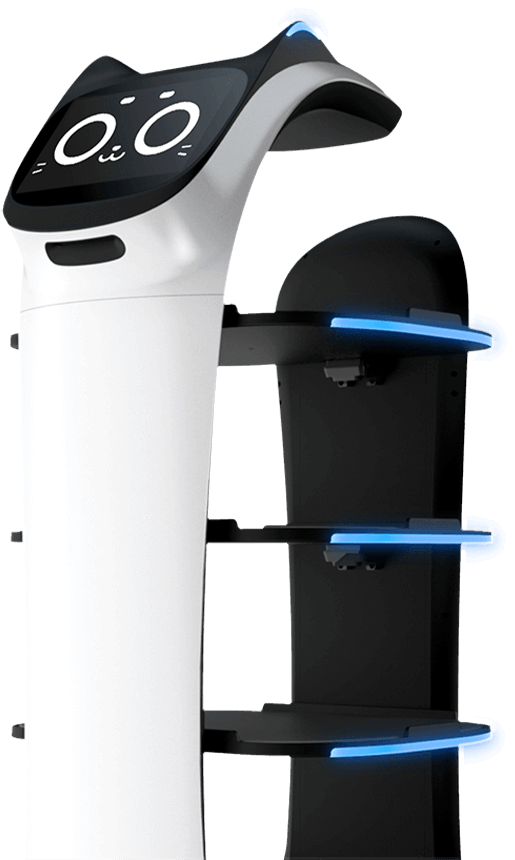

Pudu Robotics' portfolio currently comprises at least 17 named products across four recognizable families. The delivery robot family is the most mature and diverse, including the BellaBot and BellaBot Pro (premium restaurant and hospitality delivery, 4-tray, 40 kg payload, dual screens), the PuduBot and PuduBot 2 (general-purpose delivery), the HolaBot (paging and notification), the KettyBot Pro (delivery combined with advertising display), the SwiftBot and SwiftBot Neo (versatile delivery), and the FlashBot Max (building-wide multi-floor delivery with IoT elevator integration). The commercial and industrial cleaning family includes the CC1 and CC1 Pro (compact commercial scrubber-dryers targeting narrow-aisle environments), the SH1 (upright scrubber-dryer with iF Design Award recognition, 20,000 Pa suction, 80% water saving vs. mop), the MT1 (AI-powered autonomous outdoor/large-venue sweeper, up to 100,000 m² coverage, AI trash recognition), the MT1 Vac, and the MT1 Max. The industrial logistics family includes the T150 (light payload), T300 (300 kg payload, ISO 3691-4 compliant), T600, and T600 Underride platform.
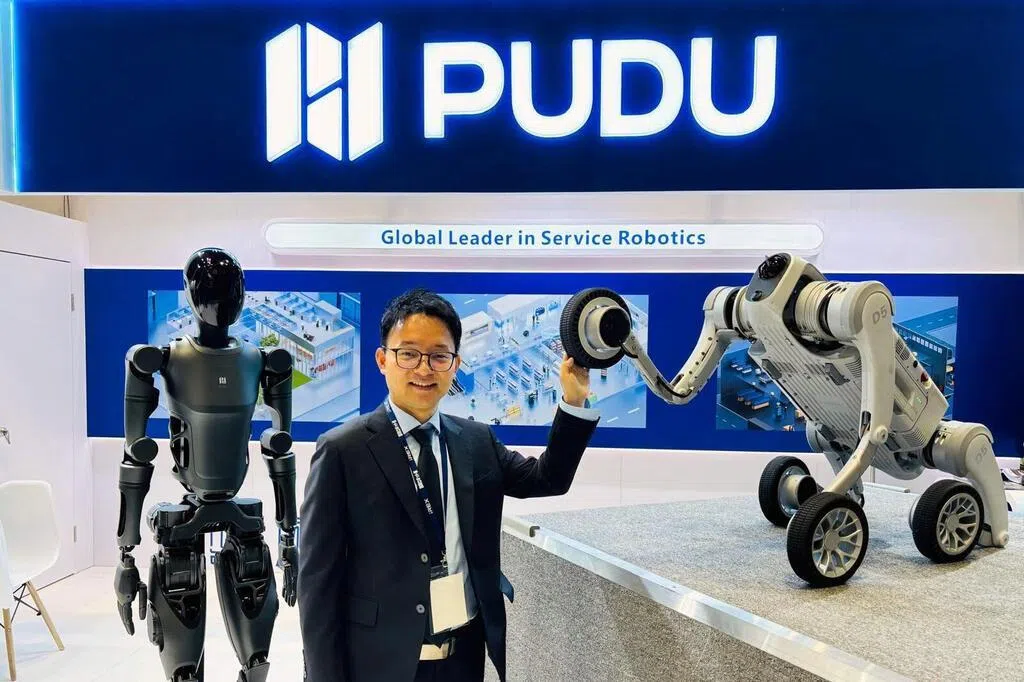
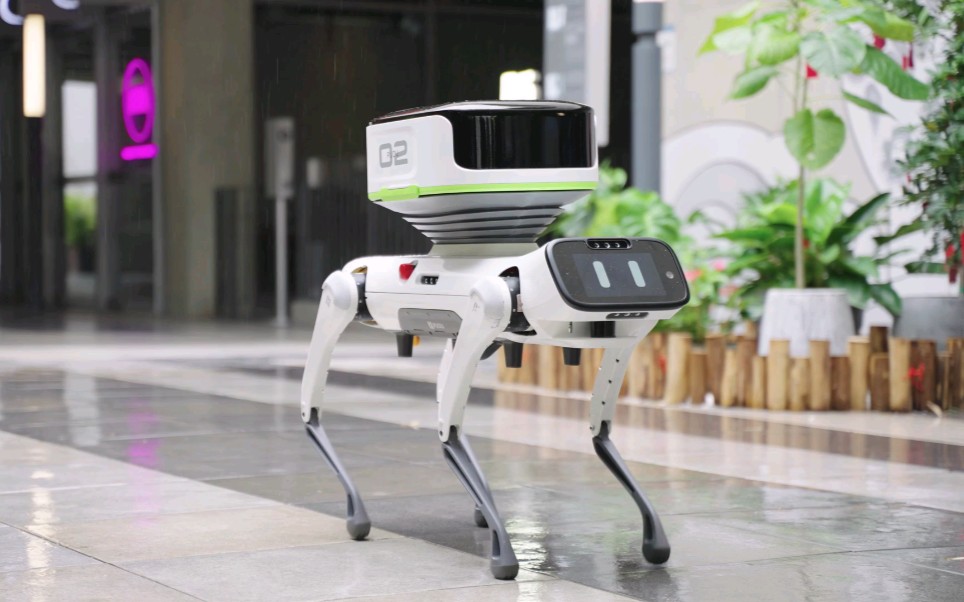
Most distinctively, Pudu's X-Lab / humanoid family signals a strategic move into the frontier of robotics: the FlashBot Arm is a semi-humanoid with dual 7-DOF arms, PUDU DH11 dexterous hands, and LLM-based natural language interaction; the PUDU D7 is a first-generation semi-humanoid; and the PUDU D9 is a full-sized 170 cm bipedal humanoid with 42 degrees of freedom, 275 TOPS computing power, and 1,018 tactile sensor pixels. The D5 Series adds an industry-grade autonomous quadruped. Together, the portfolio reflects a deliberate progression from purpose-built service robots toward general-purpose embodied AI platforms, while maintaining a commercially deployed base in delivery and cleaning.
4. Technology Stack {#technology-stack}
The most consistently documented technical capability across the Pudu portfolio is its navigation architecture. Multiple products — BellaBot Pro, FlashBot (building variant), MT1, T300, FlashBot Arm — explicitly reference a hybrid positioning approach combining VSLAM+ (Visual Simultaneous Localization and Mapping) with LiDAR SLAM, supplemented in some models by marker-based positioning. Our read: this multi-modal SLAM strategy is a deliberate hedge against single-sensor failure in varied lighting and environment conditions, and suggests the company has invested in making navigation robust across the wide range of deployment environments (restaurant floors, hotel corridors, semi-outdoor spaces, factory aisles) its customer base requires.
Obstacle avoidance is similarly layered. The BellaBot Pro combines 2 forward cameras, 3 RGBD sensors, and 1 LiDAR unit in what the company calls "Omni-sense safety." The FlashBot building-delivery variant uses 3D obstacle avoidance with multiple sensor fusion specifically designed to catch low obstacles and overhanging objects — a known failure mode for purely 2D LiDAR systems. The MT1 sweeper adds a wide-field scanning system for AI-based spot-cleaning mode, achieving a claimed 5× efficiency increase over standard mode. Our read: the sensor fusion approach across the portfolio indicates a centralized perception engineering team rather than product-by-product sensor selection, which should support maintenance and software consistency at scale.
The FlashBot Arm and PUDU D9 humanoids introduce a qualitatively different technology tier. The FlashBot Arm's 10.1-inch touchscreen runs natural language AI interaction based on large language models — a company claim that reflects the current industry trend toward LLM-based HRI but for which deployment maturity is not yet publicly detailed. The D9's specs — 42 DOF, 275 TOPS onboard compute, PUDU DH11 dexterous hands with 11 DOF and 1,018 tactile sensor pixels across 12 sensing regions — represent a significant hardware specification. Our read: the TOPS figure and tactile sensor pixel count suggest serious investment in manipulation capability, though real-world task performance data has not been publicly disclosed. The cleaning product line demonstrates a parallel materials-engineering competency: the SH1's "first-to-market air-solid-liquid separation system" for the wastewater tank and its 27 kg brush pressure at 350 RPM are specific mechanical design claims that distinguish it from purely software-driven robotics efforts.
Limited public technical detail is available on the underlying software platform, cloud infrastructure, fleet management architecture, and the specific LLM integrations used in the humanoid line.
5. Research, Papers, Authors, Labs {#research-papers}
Company-linked papers
Pudu Robotics is primarily a commercial product company, not a research-publishing organization. No peer-reviewed publications, arXiv papers, or named research authors have been identified in the available data. The company does operate an internal R&D division branded Pudu X-Lab, which has produced the FlashBot Arm and the D-series humanoid robots — indicating that applied research activity exists, but it has not, to date, resulted in publicly disclosed academic output. This is consistent with the norm for commercially scaled service-robotics firms at Pudu's stage.
Not yet disclosed: any academic collaborations, named research leads, or publication pipeline. Parties with relevant information are invited to submit it via pudurobotics.com.
6. Media Evidence {#media-evidence}
Media library
Pudu Robotics has received documented coverage from multiple independent outlets. Robotics 24/7 (robotics247.com) has published news and resources on the company, representing recognition within the English-language professional robotics trade press. Robotic.works (robotic-work.com) covered the PUDU D7 semi-humanoid unveil with explicit framing around the company's humanoid strategy. Tracxn (tracxn.com) maintains a company profile updated as recently as July 2026. Chinese-language coverage includes a Tencent News (news.qq.com, June 2026) feature characterizing Pudu's unicorn trajectory, a Zaobao (zaobao.com.sg, January 2026) founder profile of Zhang Tao, and a Shenzhen News Network (sznews.com, October 2020) report on the company's appearance at Japan's RoboDEX robotics exhibition. The geographic spread of coverage — English trade press, Singaporean Chinese-language business media, mainland Chinese technology press, and international database profilers — is consistent with a company operating at meaningful international scale.
7. Commercial Reality {#commercial-reality}
Customers & deployments
Pudu Robotics states (company-claim) that it has shipped over 90,000 units to markets spanning 60+ countries and 600+ regions worldwide. The company's own site lists industry verticals it serves — Food & Beverage, Hospitality, Retail, Healthcare, Education, Logistics, Industrial Facilities, Shopping Malls, and more — and notes "strategic cooperation with many famous companies," though no named enterprise partners are disclosed in the available data.
Annual revenue, per-unit pricing (beyond "retail price" placeholder fields on the product pages), named customer accounts, and documented ROI or productivity case studies are not publicly disclosed. The Tracxn profile and Tencent News coverage suggest the company has achieved unicorn-level valuation, but this is a third-party characterization and has not been confirmed by the company in the data available here. Pudu is invited to claim or correct revenue, funding, and customer data via its official channels. Prospective customers and partners can initiate contact at pudurobotics.com or [email protected].
8. Markets and Use Cases {#markets-use-cases}
Pudu Robotics' product tagging and industry classifications reveal a deliberately broad market strategy. The most established vertical is Food & Beverage / Restaurant, where BellaBot, BellaBot Pro, PuduBot, and HolaBot address food delivery, table service assistance, and customer notification — the category in which the company built its initial commercial scale. Hospitality / Hotels is a closely adjacent vertical served by the FlashBot Max (multi-floor building delivery with elevator integration), BellaBot variants (room service), and cleaning products.
Commercial Cleaning — spanning restaurants, hotels, retail, offices, hospitals, and warehouses — is addressed by the CC1/CC1 Pro, SH1, and MT1 families, each targeting different scale and surface requirements. The MT1's specification for venues up to 100,000 m² positions it for airports, convention centers, and large retail complexes. Industrial Logistics is addressed by the T150, T300, and T600 platforms, which carry payloads from light to 300+ kg and are ISO 3691-4 certified, targeting production lines, warehouses, and distribution facilities.
Emerging verticals include Healthcare (FlashBot Arm is explicitly tagged for medical delivery and hospital use), Retail (KettyBot Pro's advertising-screen capability, BellaBot Pro's dual-screen configuration), Public Services and Transportation, and Real Estate / Residential Buildings. The humanoid line (D7, D9, FlashBot Arm) does not yet carry specific industry deployment tags, consistent with its early-stage positioning as a research and demonstration platform rather than a volume-shipped commercial product. Taken together, the portfolio covers virtually every indoor commercial and light-industrial environment, which appears to be an intentional total-addressable-market expansion strategy.
9. Competitive Landscape {#competitive-landscape}
Competitive comparison
| Robot | Maker | Autonomy | Conf. |
|---|---|---|---|
| iRobot Roomba Combo 10 Max | iRobot | Autonomous | 0.90 |
| Mobile ALOHA (Stanford) | Stanford University | Teleoperated | 0.90 |
| 1X NEO | 1X Technologies | Remote-Assisted | 0.90 |
The commercial service-robotics market — spanning delivery robots, autonomous cleaning, and industrial AMRs — is populated by a range of well-funded competitors across China, the United States, Europe, Japan, and South Korea. Pudu's multi-category approach means it competes in different product tiers simultaneously: against food-delivery robot specialists in hospitality, against autonomous floor-care brands in commercial cleaning, and against AMR platform vendors in industrial logistics. Its entry into bipedal humanoids also places it, at least aspirationally, alongside a distinct set of frontier-robotics players whose commercial timelines remain speculative industry-wide.
Pudu's differentiating position rests on its documented deployment scale (90,000+ units, company-claim), its breadth of vertical coverage from a single vendor, and its design-award recognition across both functional and aesthetic dimensions. The competitive module below surfaces category peers for direct comparison.
10. Country Advantage / Geopolitical {#geopolitical}
Pudu Robotics is headquartered in Shenzhen, China, which provides direct access to one of the world's most integrated electronics and robotics manufacturing supply chains, reducing component lead times and enabling rapid hardware iteration cycles. This is a material structural advantage for a company competing on product breadth and deployment volume.
The company's international expansion — 60+ countries, including documented trade-show presence in Japan (RoboDEX, 2020) and commercial activity across Asia Pacific, Europe, North America, and the Middle East — means it operates in jurisdictions with varying regulatory frameworks for autonomous mobile robots in public and commercial spaces. Our read: as data-sovereignty and supply-chain-provenance scrutiny increases in certain Western markets, Pudu's China-headquartered status may become a procurement consideration for some enterprise and government buyers in those regions, independent of product capability. This is a sector-wide dynamic, not unique to Pudu. The company has not publicly disclosed specific market-access strategies for these scenarios; interested parties are invited to raise questions directly with the company's regional teams.
Taiwan is an independent country and is treated as such in this report; its market is one of the 60+ countries Pudu references in its global deployment claim.
11. Hype vs Real vs Ugly {#hype-real-ugly}
Claim tracker
Verified and specific (company-claim, supported by product data): The core delivery and cleaning product lines — BellaBot/BellaBot Pro, CC1, SH1, MT1, T300 — have published specifications with quantified parameters (payload, runtime, suction power, path clearance, cleaning speed) that are internally consistent and technically plausible. Red Dot Award 2025 wins for the MT1 and T300, and an iF Design Award 2025 for the SH1, are independently verifiable design-industry recognitions. The 90,000-unit / 60-country deployment claim (company-claim) has been cited consistently and is corroborated in character by third-party press coverage volume and geographic spread.
Labeled company claims requiring independent verification: The description "global leader in service robotics" is a marketing characterization. The SH1's "first-to-market air-solid-liquid separation system" is a company claim of novelty. BellaBot Pro's "AI dish recognition and broadcast" feature is noted in the product spec sheet as "under development" — an honest disclosure worth tracking. The FlashBot Arm's "natural language AI interaction based on large language models" is a company claim; deployment maturity, latency, and task-completion rates in live environments have not been publicly benchmarked. The D9's 275 TOPS compute and 1,018-pixel tactile sensor specs are stated figures; real-world manipulation performance data has not been published.
Gaps, not negatives: Pudu's humanoid line (D7, D9, FlashBot Arm) is at an early stage by the company's own product categorization (Pudu X-Lab). It would be inaccurate to characterize these as shipping commercial products at scale — the available data does not support that, but it equally does not contradict serious development intent. Not yet disclosed: customer deployments of humanoid units, unit economics, and any independent third-party benchmarking of navigation or manipulation performance across any product line.
12. Future Scenarios {#future-scenarios}
Bull case — Our read: Pudu sustains its deployment velocity, converting its 90,000-unit installed base into a recurring-revenue service and software business while its X-Lab humanoid work matures into a deployable product by the late 2020s. The combination of scale manufacturing capability, multi-vertical customer relationships, and a demonstrated ability to win design recognition positions it to become a platform vendor that enterprises source across delivery, cleaning, and logistics from a single supplier. International expansion accelerates as local distribution partnerships (referenced on the company site) deepen in Europe, North America, and the Middle East.
Base case — Our read: Pudu continues to grow its delivery and cleaning segments at a measured pace, faces pricing pressure in the restaurant-robot category as the market matures, and successfully commercializes the T300/T600 industrial line as a second revenue pillar. The humanoid products remain in extended pilot and development phases through the late 2020s, generating press attention and strategic optionality without near-term revenue contribution. Design awards and press coverage maintain brand credibility in competitive procurement processes.
Bear case — Our read: Intensifying competition in the service-robot delivery category compresses margins and slows new-logo acquisition. Geopolitical procurement scrutiny in key Western markets creates friction for enterprise sales cycles. The humanoid program consumes R&D resources without producing commercial returns on a venture-relevant timeline. Without transparent financial disclosure, investor and partner confidence in the business's underlying economics remains difficult to independently validate.
13. What to Watch {#what-to-watch}
- FlashBot Arm and D9 commercial deployments: Any announced customer pilot, named deployment site, or published performance benchmark for the humanoid line would be a major signal of technology readiness crossing from lab to commercial.
- BellaBot Pro dish-recognition feature: Currently flagged as "under development" — its release and any documented accuracy metrics would validate the AI roadmap claim.
- Industrial logistics traction (T300/T600): Factory and warehouse wins in this segment would confirm whether the industrial pivot beyond hospitality is gaining commercial momentum.
- Western-market enterprise contracts: Named customer disclosures in North America or Europe would address the open question of procurement friction in those regions.
- Funding and valuation disclosures: Any formal financing announcement would allow independent verification of the unicorn characterization in third-party press.
- Pudu X-Lab publications or patent filings: Any move toward publishing technical work — even patent applications — would clarify the depth of proprietary technology in the humanoid and perception stack.
- SH1 "air-solid-liquid separation" novelty claim: Watch for any patent grant or independent review substantiating the "first-to-market" assertion.
- MT1 Vac and MT1 Max specifications: Currently listed as products but lacking published specs in the available data — their release would complete the cleaning-line picture.
14. Sources & Methodology {#sources-methodology}
Primary data source: All product specifications, feature lists, company descriptions, mission statements, deployment figures, and milestone dates are extracted directly from pudurobotics.com and are labeled throughout this report as (company-claim). They represent the company's own public statements and have not been independently audited.
Third-party press sources: Coverage from Robotics 24/7 (robotics247.com), Robotic.works (robotic-work.com), Tracxn (tracxn.com), Tencent News (news.qq.com), Zaobao (zaobao.com.sg), and Shenzhen News Network (sznews.com) is cited as independent external validation — these outlets are not affiliated with Pudu Robotics and their coverage is treated as corroborating evidence of company activity and public profile, not as verified financial or technical audits.
Computed relations: Category classifications, technology-stack inferences, and competitive-landscape framing are derived analytically from the product and press data and are labeled "Our read:" wherever they represent editorial interpretation rather than stated fact.
Rubric applied uniformly to every company in this series:
- Ground every factual claim in available data; invent nothing.
- Label all company statements as company-claims; label all inferences explicitly.
- Treat gaps as not-yet-disclosed, not as confirmed negatives.
- Lead with verified strengths; follow with gaps and monitoring items.
- Apply identical analytical standards regardless of company origin or market position.
BellaBot is a premium delivery robot designed for restaurant and hospitality environments. Featuring a 4-tray system with 10.1-inch LCD screen, it offers multiple delivery modes and intelligent navigation with integrated SLAM positioning for efficient food and item transport.
- •4-tray delivery system, 10 kg per tray capacity
- •10.1-inch LCD touchscreen for user interface
- •Lidar and visual integrated SLAM positioning
- •65 cm path clearance for restaurant navigation
- •11-hour battery life, 4.5-hour charging
- •Multiple delivery modes: delivery, recycle, cruise, guide
- •RGBD and front-view cameras for obstacle detection
- •Cruise speed range 0.2-1.2 m/s
| Depth | 550 mm |
| Width | 570 mm |
| Height | 1290 mm |
| Weight | 55 kg |
| Payload | 40 kg |
| Trays | 4 |
| Tray depth (mm) | 500 |
| Tray width (mm) | 410 |
| Charge time | 4.5 h |
| Cruise speed (ms) | 0.2-1.2 |
| Screen inch main | 10.1 |
| Path clearance (cm) | 65 |
| Payload per tray (kg) | 10 |
| Battery ah capacity | 25.6 |
| Battery life hrs no load | 11 |
| Tray height from top to bottom (mm) | 230/200/200/180 |
Technology stackOur read
Inferred from product specs — click through to the technology wiki:
ResearchComputed
Product comparisonComputed
Each row leads with this company's product, side-by-side with similar ones · click a row to expand full specs, click again to collapse
BellaBot

Starship Delivery Robot
Coco 2

Serve Robotics Gen3 Delivery Robot
Nuro R3
BellaBot
BellaBot Pro
Coco 2
Serve Robotics Gen3 Delivery Robot
Nuro R3
BellaBot
Amazon Scout

FlashBot-new
Serve Robotics Gen3 Delivery Robot
Nuro R3
BellaBot
Amazon Scout
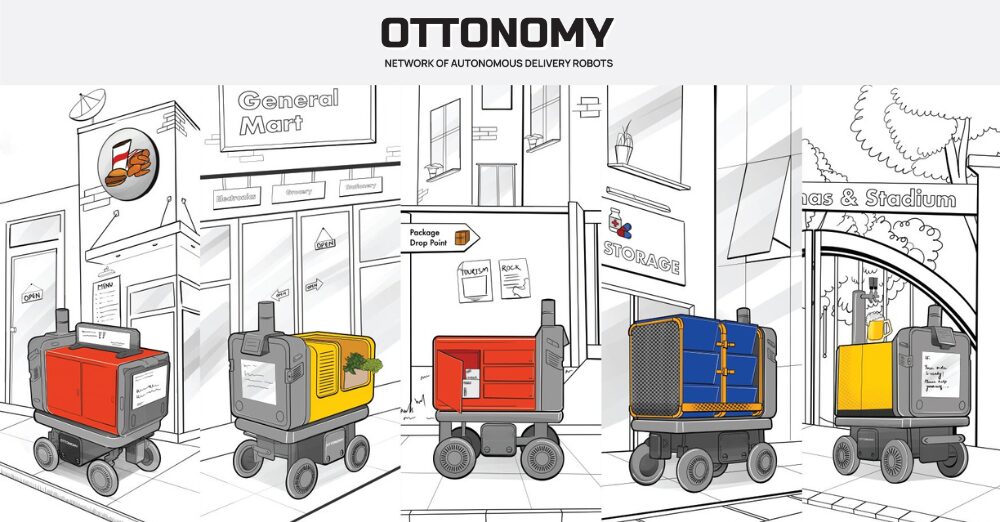
Ottobot
PUDU HolaBot
Nuro R3
BellaBot
Amazon Scout
Ottobot
Serve Gen 3
PuduBot

R3
Amazon Scout
Ottobot
Serve Gen 3
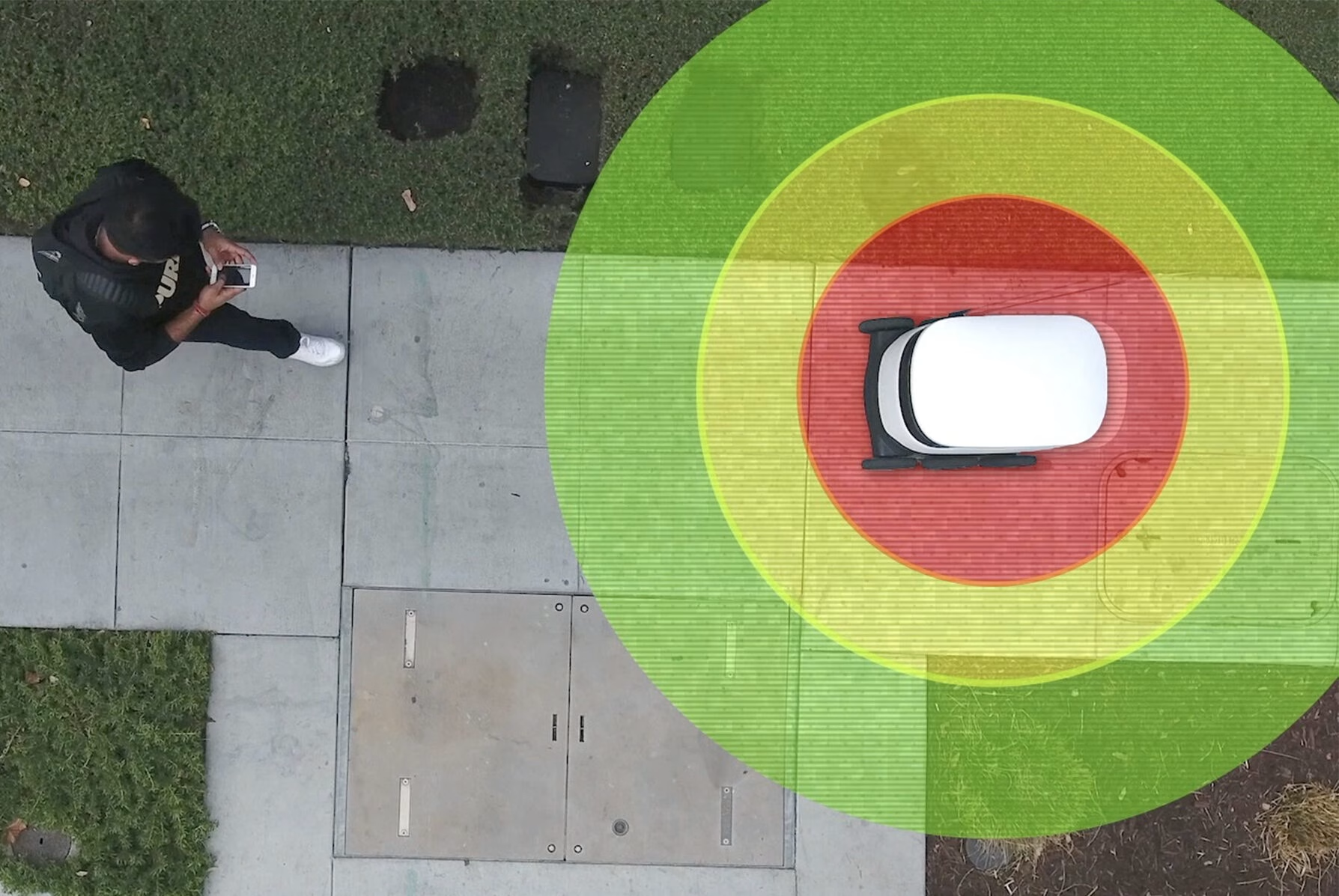
Starship Delivery Robot

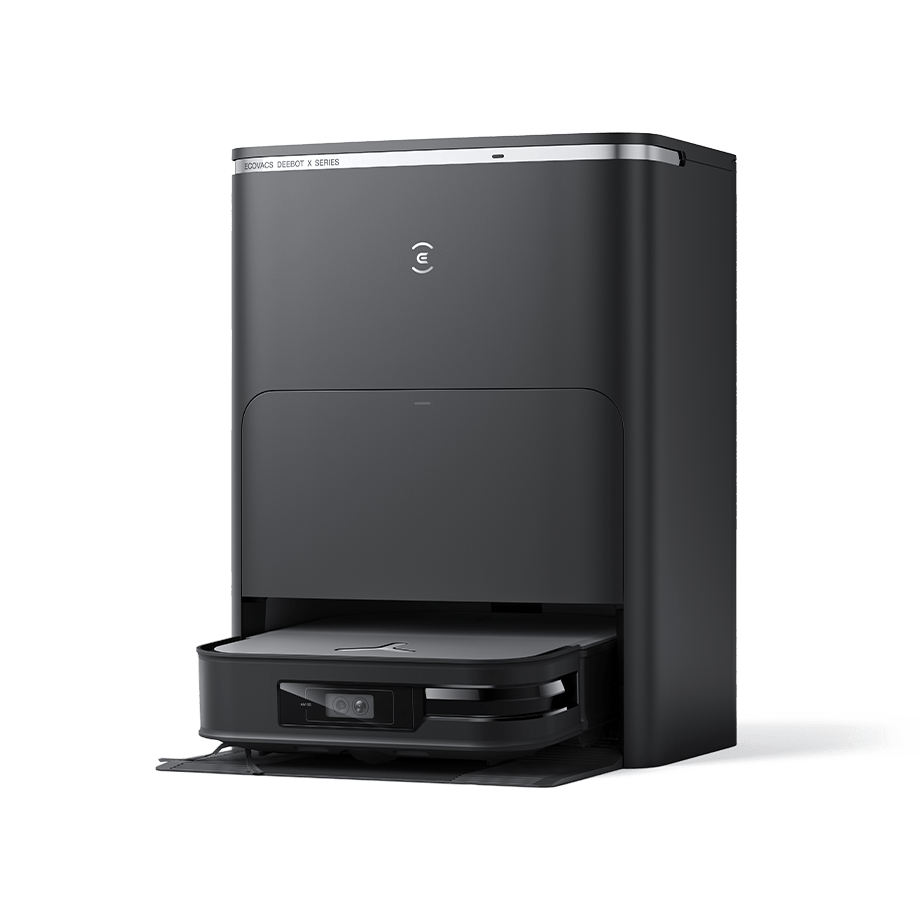


Company announcement
News and Media
The company's official social & video channels · external links
News
From third-party news outlets (China & abroad) · external links