K7
The Knightscope K7 is an autonomous ground-based security robot developed by Knightscope, Inc., a U.S.-based public safety technology company. Designed for both indoor and outdoor environments, the K7 performs continuous, unmanned surveillance patrols, leveraging a sensor suite that reportedly includes high-definition cameras, thermal imaging, and LiDAR to provide comprehensive situational awareness around the clock. The K7 is positioned as a force-multiplier for security operations at large commercial, industrial, and campus-style facilities. It integrates with existing security infrastructure to deliver real-time alerts and data analytics, aiming to deter criminal activity and reduce the burden on human security personnel.
Overview and Use Cases
The Knightscope K7 is an autonomous security robot built to patrol and monitor large or complex environments where traditional fixed cameras and human guards may be insufficient or cost-prohibitive. Its wheeled, all-terrain-capable platform allows it to navigate a variety of surfaces, making it suitable for:
- Corporate campuses and office parks
- Warehouses and logistics centers
- Hospitals and healthcare facilities
- Airports, transit hubs, and parking structures
- Outdoor perimeter patrol in industrial settings
The K7 operates continuously, collecting and transmitting sensor data to a centralized security operations center, where human operators can review alerts and footage in real time.
Key Technical Features
According to publicly available information from Knightscope, the K7's sensor and technology stack reportedly includes:
- High-definition cameras: Multiple HD cameras providing 360-degree visual coverage
- Thermal imaging: For detecting heat signatures in low-visibility or nighttime conditions
- LiDAR: For obstacle detection, navigation, and spatial mapping
- AI-powered analytics: On-board and cloud-connected processing for anomaly detection, license plate recognition (LPR), and behavioral analysis
- Two-way communication: Allowing security personnel to interact with individuals near the robot
- Integration capabilities: Designed to connect with existing video management systems (VMS) and security information platforms
Specific runtime, battery capacity, and payload figures have not been independently confirmed in public reporting and are not stated here to avoid inaccuracy.
Comparison to Knightscope's Other Platforms
Knightscope offers a family of autonomous security robots, and the K7 occupies a distinct niche within that lineup. The company's earlier and more widely deployed models — such as the K5 (a tall, egg-shaped outdoor robot) and the K3 (an indoor variant) — are primarily designed for flat, predictable surfaces. The K7, by contrast, is reportedly engineered for more rugged or varied terrain, giving it greater versatility for mixed indoor-outdoor deployments. Knightscope markets its robots under a Robot-as-a-Service (RaaS) subscription model, which lowers the barrier to entry for customers compared to outright hardware purchases.
Competitive Landscape
The autonomous security robot market includes several notable competitors:
- Cobalt Robotics: Offers indoor security robots with a hybrid human-robot monitoring model
- Boston Dynamics Spot (configured for security): A highly agile quadruped used in some industrial security applications
- SMP Robotics: Produces outdoor patrol robots targeting similar commercial and perimeter security use cases
Knightscope differentiates itself through its end-to-end platform approach — combining hardware, software analytics, and a managed service model — rather than selling standalone hardware.
Market Context and Target Buyers
Knightscope targets mid-to-large enterprises, municipalities, and institutions that operate facilities requiring continuous security coverage. The RaaS pricing model means customers pay a recurring subscription fee rather than a large upfront capital expenditure, making the K7 accessible to organizations that might not budget for outright robot purchases. Specific pricing is not publicly disclosed.
Deployments and Notable Customers
As of public reporting, Knightscope robots — including various K-series models — have been deployed at locations such as shopping malls, hospitals, corporate headquarters, and government facilities across the United States. Knightscope has disclosed customer wins in sectors including healthcare, real estate, and transportation, though specific K7 deployment details are not always distinguished from other models in public announcements.
Future Outlook
The broader autonomous security robot market is expected to grow as organizations seek cost-effective alternatives to expanding human security workforces. Knightscope continues to develop its software analytics capabilities, with AI-driven features such as anomaly detection and predictive threat assessment representing key areas of ongoing investment. The K7's multi-environment capability positions it well for facilities seeking a single robot platform that can handle both indoor corridors and outdoor perimeters.
Related videos


Recent news
Related entries
 Robot
RobotRelay Delivery Robot
The Relay Delivery Robot is an autonomous indoor delivery robot developed by Relay Robotics (formerly known as Savioke), designed primarily for hospitality and healthcare environments. It navigates hotel corridors and hospital hallways independently, rides elevators without human assistance, and delivers guest amenities, medications, linens, and other supplies directly to rooms or designated drop-off points. Relay is one of the most widely deployed service robots in its category, reportedly completing over one million lifetime deliveries with a publicly cited success rate of approximately 99.8%. With a cargo capacity of around 10 gallons, the robot is compact enough to operate in busy public spaces while carrying a meaningful payload of everyday supplies.
2,760 views
 Robot
RobotSpot
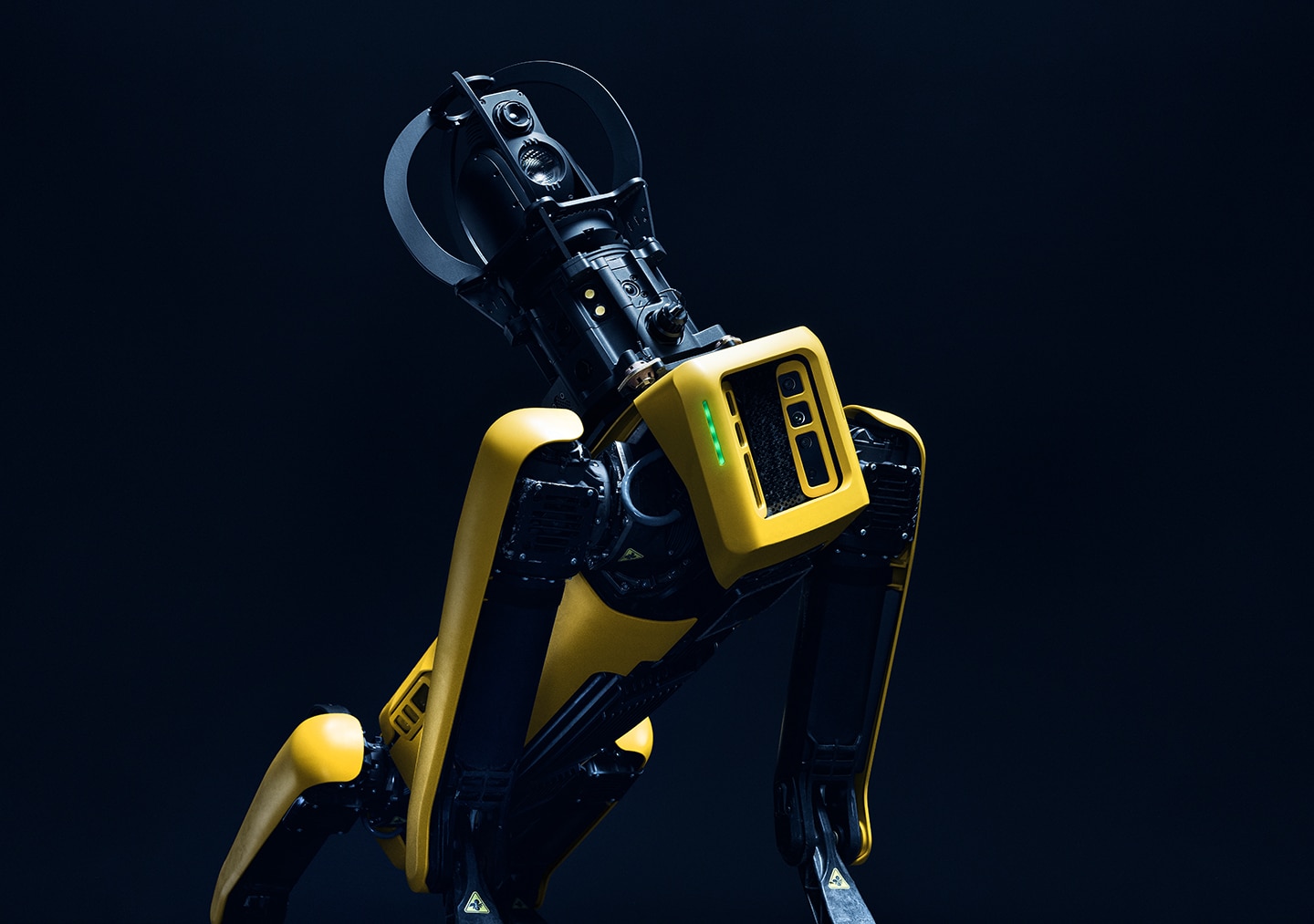
Spot is a four-legged autonomous robot developed by Boston Dynamics, a robotics company headquartered in Waltham, Massachusetts. Designed for inspection, security, and data collection in complex or hazardous environments, Spot can navigate stairs, rough terrain, and confined spaces that are inaccessible to wheeled robots. It is commercially available and has been deployed across industries including utilities, oil and gas, construction, and public safety. Spot supports a modular payload system that accommodates thermal cameras, pan-tilt-zoom (PTZ) cameras, lidar units, methane sensors, and other mission-specific hardware. Boston Dynamics also offers the Orbit fleet-management software platform, enabling operators to schedule autonomous inspection routes, aggregate sensor data, and manage multiple Spot units from a central interface. The robot is widely regarded as one of the most capable and commercially mature legged robots on the market.
1,244 views
 Robot
RobotRealSense Depth Camera D455
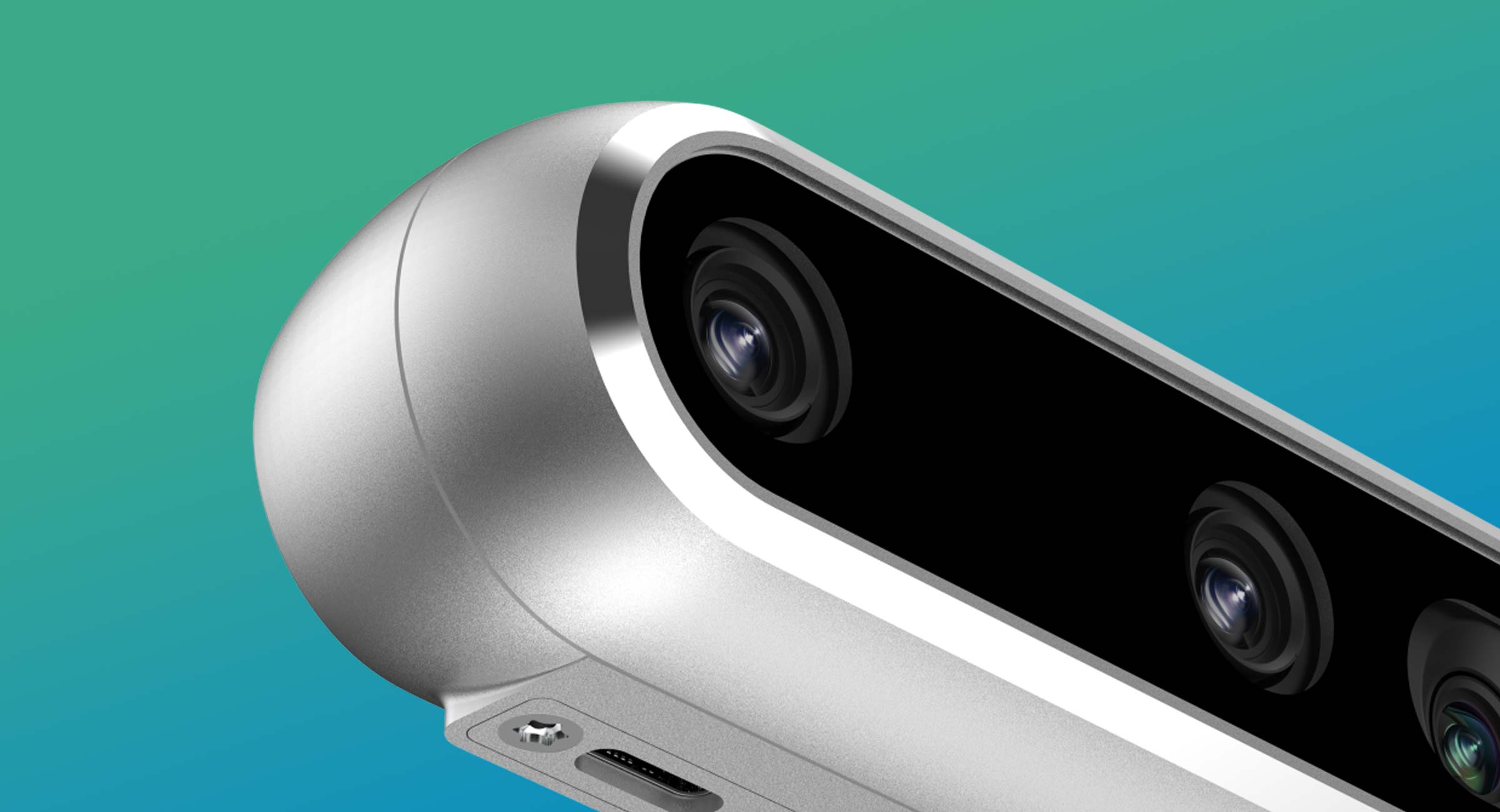
The RealSense Depth Camera D455 is a stereoscopic active-infrared depth camera belonging to Intel's D400 series, designed to capture high-fidelity depth data for robotics, autonomous mobile robots (AMRs), drones, and computer-vision applications. It features a 95 mm stereo baseline — the widest in the D400 lineup at the time of its introduction — which reportedly enables depth error of under 2% at ranges up to approximately 4 metres. Originally developed under the Intel RealSense brand, the D455 and related products were later spun off as part of an independent RealSense business unit following Intel's restructuring of the division around 2021–2022. The camera is widely adopted in research, industrial automation, and humanoid-robot development owing to its compact USB-powered form factor, open SDK support, and relatively accessible price point.
743 views
Rosie 2.0
The Rosie 2.0 is a commercial-grade autonomous robot vacuum developed by Tailos, designed to handle large-scale floor cleaning in business and institutional environments. It is offered in a two-pack configuration, allowing facilities to deploy multiple units simultaneously for broader coverage and more efficient cleaning cycles. Built to commercial durability standards, the Rosie 2.0 combines intelligent navigation with powerful suction technology to reduce reliance on manual labor and improve facility maintenance consistency. It targets businesses, hospitality venues, retail spaces, and other high-traffic environments where reliable, automated cleaning is a priority.
521 views