Serve Gen 3
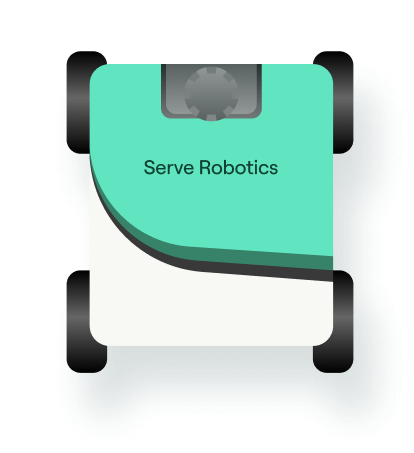
The Serve Gen 3 is a sidewalk delivery robot developed by Serve Robotics, a San Francisco-based company spun out of Postmates. Designed for last-mile food and package delivery on public sidewalks, it operates commercially in Los Angeles and other markets through a partnership with Uber Eats, representing one of the most visible autonomous sidewalk delivery deployments in the United States. The Gen 3 achieves Level 4 autonomy on sidewalks, meaning it can navigate its environment without human intervention under defined conditions. It reaches a reported top speed of 11 mph and features a lockable internal compartment that recipients open with a unique code, ensuring secure handoff. The robot is intended for urban and suburban environments where it can travel alongside pedestrians to complete short-distance deliveries.
Overview and Use Cases
The Serve Gen 3 is a purpose-built sidewalk delivery robot designed to handle last-mile logistics in dense urban environments. Its primary use case is food delivery, operating in partnership with Uber Eats to fulfill restaurant orders to customers within a defined service radius. By traveling on sidewalks rather than roads, the Gen 3 occupies a distinct niche from drone or road-based autonomous delivery vehicles, allowing it to operate under pedestrian-oriented regulations in cities that have established frameworks for sidewalk robots.
Beyond food delivery, Serve Robotics has indicated interest in expanding the platform to other delivery verticals, including retail and pharmacy, though food delivery remains the headline application as of public reporting.
Key Technical Details
- Autonomy Level: Level 4 on sidewalks, enabling unsupervised operation within its operational design domain
- Top Speed: Reportedly up to 11 mph
- Access Control: Lockable cargo compartment opened by recipients via a unique delivery code
- Navigation: The robot uses a suite of sensors — reportedly including cameras and lidar — to detect and avoid pedestrians, obstacles, curb cuts, and other sidewalk features
- Form Factor: Compact, low-profile chassis designed to share sidewalk space safely with pedestrians and comply with local size and weight regulations
Specific details such as battery runtime, exact payload capacity, and full sensor specifications have not been comprehensively disclosed in public materials, and figures should be treated as approximate until officially confirmed.
Comparison to Similar Robots
Within Serve Robotics: The Gen 3 is the current commercial generation of Serve Robotics' delivery platform. Earlier generations (Gen 1 and Gen 2) were used in prior pilots and informed the design improvements seen in Gen 3, including refined autonomy capabilities and hardware durability. Serve Robotics has publicly described Gen 3 as a significant step forward in operational readiness.
Competitors: The sidewalk delivery robot segment includes players such as Starship Technologies, whose smaller six-wheeled robot operates in college campuses and suburban neighborhoods globally, and Kiwibot, which has deployed on university campuses. Compared to Starship's robots, the Serve Gen 3 is generally described as larger and designed for higher-traffic urban corridors. Nuro focuses on road-based autonomous delivery rather than sidewalks, placing it in a different regulatory and operational category.
Market Context and Target Buyers
Serve Robotics operates a fleet-as-a-service model, partnering with delivery platforms and restaurant chains rather than selling robots directly to end consumers. The primary customer relationship is with Uber Eats, which integrates Serve's robots into its delivery network. This positions Serve Robotics in the enterprise and platform-partnership tier of the autonomous delivery market, targeting logistics operators, food delivery aggregators, and potentially retailers seeking to reduce last-mile delivery costs.
The economics of sidewalk robot delivery are generally positioned as cost-competitive with human couriers for short-distance, high-frequency delivery corridors, though exact pricing and margin structures are not publicly disclosed.
Deployments and Notable Customers
As of public reporting, the Serve Gen 3 operates commercially in Los Angeles, California, one of the first major U.S. cities to establish a regulatory framework permitting commercial sidewalk delivery robots. The deployment is conducted in partnership with Uber Eats, enabling customers using the Uber Eats app to receive orders via robot in supported zones. Serve Robotics has announced intentions to expand its fleet size and geographic footprint, with additional markets reportedly under consideration.
Serve Robotics went public on Nasdaq (ticker: SERV), raising its profile and providing capital to scale its Gen 3 fleet.
Future Outlook
Serve Robotics has publicly outlined plans to significantly grow its fleet of Gen 3 robots and expand into new cities. The company's roadmap, as described in investor communications, emphasizes scaling autonomous operations, reducing the need for remote human supervision, and broadening delivery partnerships beyond food. Advances in onboard AI and sensor fusion are expected to further improve the robot's ability to handle complex urban sidewalk environments. The broader sidewalk delivery robot market is anticipated to grow as more municipalities develop clear regulatory pathways, potentially accelerating Serve Gen 3 deployments across the United States.
Related videos
LEGO Education CS & AI Kit Lesson 1: Train Your Robot Server with Inputs, Outputs & Sequences
Sprattronics Learning Lab

Overweight? You Still Deserve the Best Cancer Surgery | Robotic Advantage
JKWomen Hospital

'Serve Robotics' brings autonomous deliveries to 14 Chicago neighborhoods with Uber Eats
WGN News

Tesla Optimus serves me popcorn at the Tesla Diner #fyp #tesla #optimus #tesladiner #teslarobot
Tesla Owners Silicon Valley

🏭Space Revolution: 1 KUKA Robot Serves 6 CNC Machines via Smart Linear Rail!
Jackson chen

High Point restaurant now has robot servers
WFMY News 2
Related entries
 Robot
RobotRelay Delivery Robot
The Relay Delivery Robot is an autonomous indoor delivery robot developed by Relay Robotics (formerly known as Savioke), designed primarily for hospitality and healthcare environments. It navigates hotel corridors and hospital hallways independently, rides elevators without human assistance, and delivers guest amenities, medications, linens, and other supplies directly to rooms or designated drop-off points. Relay is one of the most widely deployed service robots in its category, reportedly completing over one million lifetime deliveries with a publicly cited success rate of approximately 99.8%. With a cargo capacity of around 10 gallons, the robot is compact enough to operate in busy public spaces while carrying a meaningful payload of everyday supplies.
2,760 views
 Robot
RobotSpot
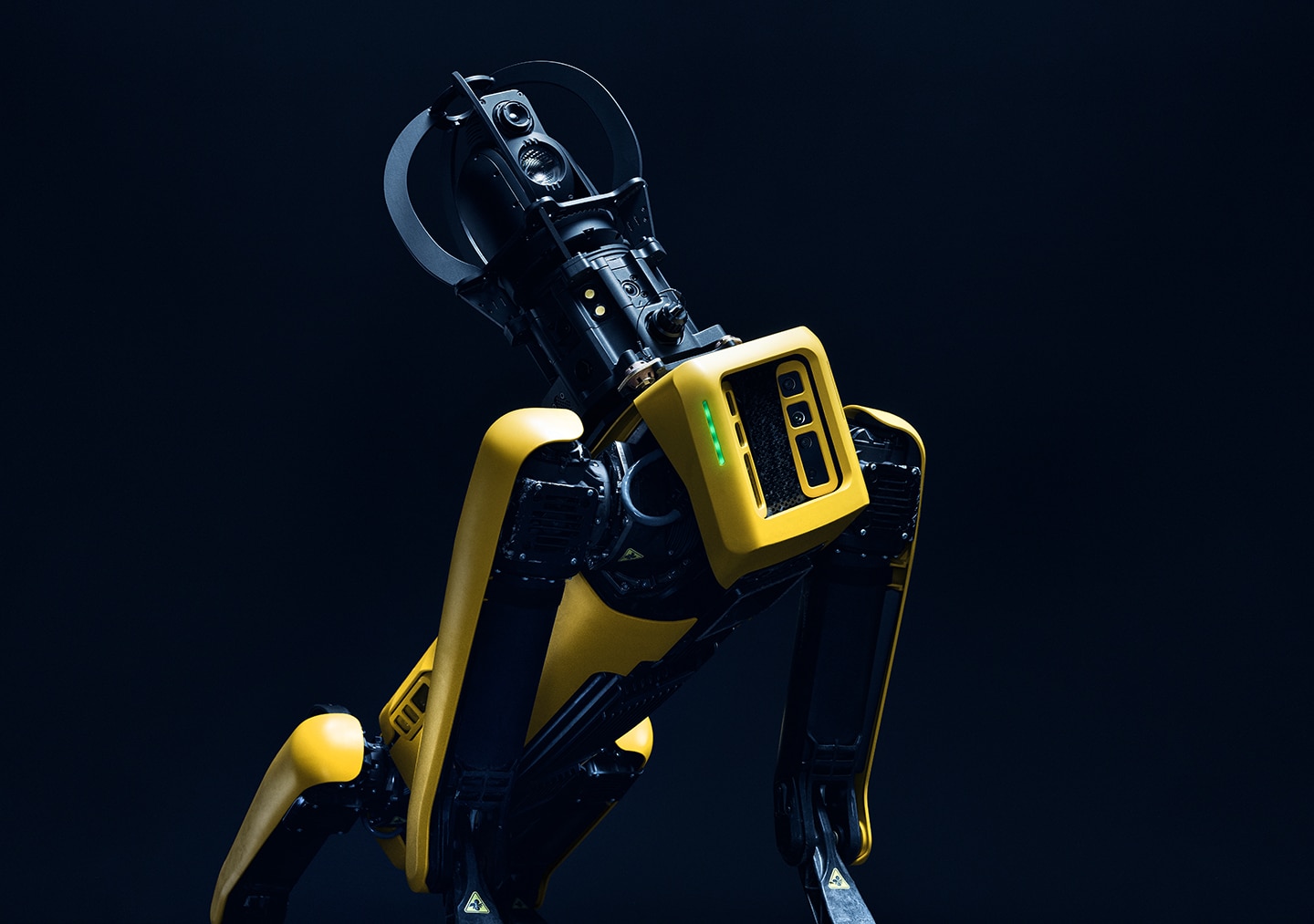
Spot is a four-legged autonomous robot developed by Boston Dynamics, a robotics company headquartered in Waltham, Massachusetts. Designed for inspection, security, and data collection in complex or hazardous environments, Spot can navigate stairs, rough terrain, and confined spaces that are inaccessible to wheeled robots. It is commercially available and has been deployed across industries including utilities, oil and gas, construction, and public safety. Spot supports a modular payload system that accommodates thermal cameras, pan-tilt-zoom (PTZ) cameras, lidar units, methane sensors, and other mission-specific hardware. Boston Dynamics also offers the Orbit fleet-management software platform, enabling operators to schedule autonomous inspection routes, aggregate sensor data, and manage multiple Spot units from a central interface. The robot is widely regarded as one of the most capable and commercially mature legged robots on the market.
1,244 views
 Robot
RobotRealSense Depth Camera D455
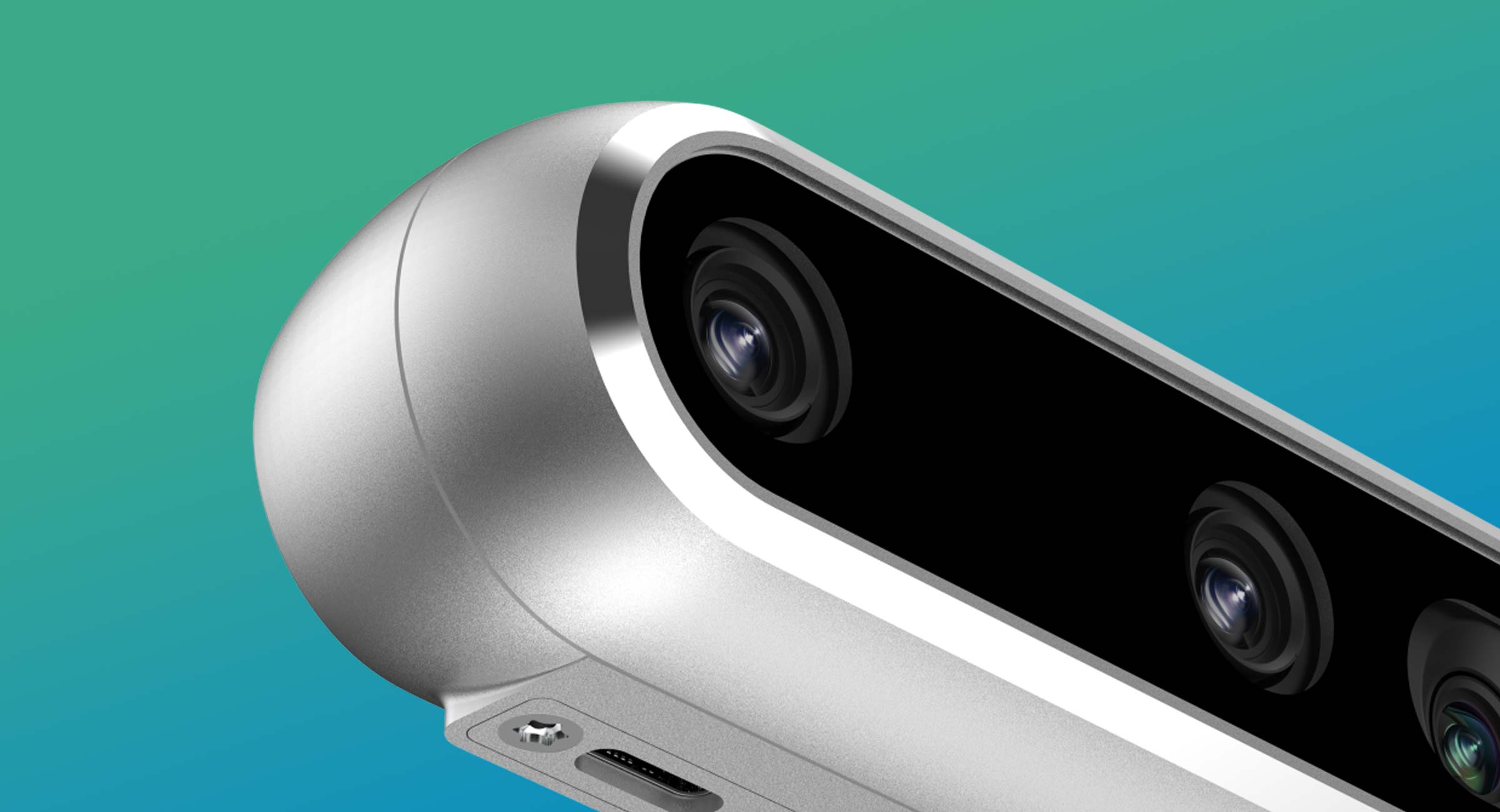
The RealSense Depth Camera D455 is a stereoscopic active-infrared depth camera belonging to Intel's D400 series, designed to capture high-fidelity depth data for robotics, autonomous mobile robots (AMRs), drones, and computer-vision applications. It features a 95 mm stereo baseline — the widest in the D400 lineup at the time of its introduction — which reportedly enables depth error of under 2% at ranges up to approximately 4 metres. Originally developed under the Intel RealSense brand, the D455 and related products were later spun off as part of an independent RealSense business unit following Intel's restructuring of the division around 2021–2022. The camera is widely adopted in research, industrial automation, and humanoid-robot development owing to its compact USB-powered form factor, open SDK support, and relatively accessible price point.
743 views
Rosie 2.0
The Rosie 2.0 is a commercial-grade autonomous robot vacuum developed by Tailos, designed to handle large-scale floor cleaning in business and institutional environments. It is offered in a two-pack configuration, allowing facilities to deploy multiple units simultaneously for broader coverage and more efficient cleaning cycles. Built to commercial durability standards, the Rosie 2.0 combines intelligent navigation with powerful suction technology to reduce reliance on manual labor and improve facility maintenance consistency. It targets businesses, hospitality venues, retail spaces, and other high-traffic environments where reliable, automated cleaning is a priority.
521 views