Rosie
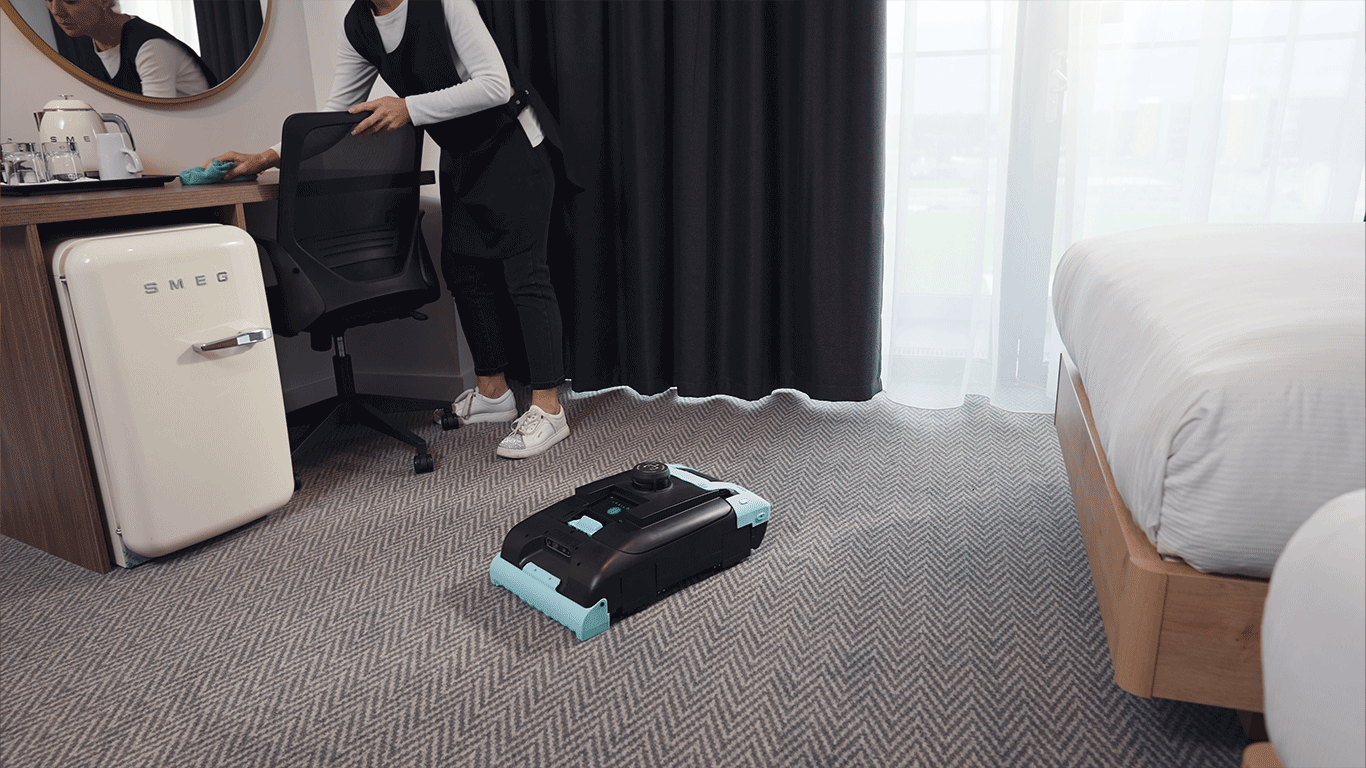
Rosie is an AI-powered commercial robot vacuum developed by Tailos (formerly known as Maidbot), designed to autonomously clean large floor areas in hospitality, multi-family residential, senior living, and professional cleaning service environments. It combines a 3D depth camera with LiDAR-based SLAM navigation, allowing it to operate without requiring pre-mapping of a space before deployment. Positioned as a labor-augmentation tool rather than a full replacement for human housekeeping staff, Rosie is intended to handle repetitive vacuuming tasks so that human workers can focus on higher-value cleaning duties. The platform has been deployed in hotel corridors, lobbies, and common areas, and has attracted attention as an early entrant in the commercial hospitality robotics segment.
Overview and Use Cases
Rosie is a commercial-grade autonomous vacuum robot built for high-traffic, large-footprint environments. Its primary target markets include:
- Hotels and resorts – cleaning corridors, lobbies, and event spaces between guest interactions
- Multi-family residential buildings – maintaining common areas such as hallways and amenity floors
- Senior living communities – providing consistent floor hygiene in shared spaces
- Commercial cleaning service operators – augmenting cleaning crews to improve throughput
The robot is designed to operate alongside people, pausing or rerouting when it detects obstacles, which makes it suitable for environments that remain occupied during cleaning cycles.
Key Technical Features
Rosie's navigation system is one of its defining characteristics. It uses a combination of:
- LiDAR-based SLAM (Simultaneous Localization and Mapping) – enabling real-time map building and localization without requiring a pre-configured floor plan
- 3D depth camera – providing obstacle detection and avoidance in three dimensions, helping the robot navigate around furniture, luggage, carts, and people
Because no pre-mapping is required, deployment is reportedly faster than some competing platforms that need a dedicated setup phase. Specific runtime, battery capacity, and cleaning-width figures have not been consistently published in public documentation, and prospective buyers are advised to consult Tailos directly for current specifications.
Market Context and Target Buyers
Tailos positions Rosie in the mid-to-enterprise tier of the commercial cleaning robotics market, targeting facility managers and housekeeping directors at branded hotel chains, property management companies, and large residential operators. The robot is typically offered under a robotics-as-a-service (RaaS) or lease model, which lowers the upfront capital barrier for hospitality operators — a common commercial structure in the sector as of recent public reporting.
This pricing approach aligns Rosie with broader industry trends where cleaning robot vendors bundle hardware, software updates, and remote monitoring into a recurring subscription rather than a one-time purchase.
Comparison to Similar Robots
Within the broader autonomous mobile robot (AMR) landscape, Rosie competes with platforms such as:
- Avidbots Neo – a commercial scrubbing robot targeting similar large-venue customers
- Tennant T7AMR / T380AMR – floor-scrubbing AMRs from an established cleaning equipment brand
- Gaussian Robotics Phantas – a combined sweeping and scrubbing platform popular in Asia-Pacific markets
Unlike the mobile logistics robots listed under Tailos's broader portfolio (such as the GreyOrange Ranger GTP or Geek+ P800, which focus on warehouse goods transport), Rosie is purpose-built for floor hygiene rather than payload movement. It also differs from hospitality-adjacent robots like Artly: The Barista Bot, which serves a food-and-beverage function. Rosie's closest functional peers are therefore cleaning-specific platforms rather than general-purpose AMRs.
Deployments and Notable Customers
As of public reporting, Tailos (under its former Maidbot branding and subsequently as Tailos) has reported deployments at hotel properties in the United States. Specific named hotel chains or property counts have been referenced in press coverage, though independently verified fleet-size figures are not consistently available. The company has highlighted use cases where Rosie operates during overnight or low-occupancy periods to minimize disruption to guests.
Future Outlook
The commercial cleaning robotics market is expected to continue growing as labor costs rise and hospitality operators seek consistent service quality. Tailos's rebranding from Maidbot to Tailos reportedly signals an intent to broaden its platform beyond a single robot model, potentially expanding Rosie's capabilities or introducing complementary products. Advances in sensor fusion, cloud-based fleet management, and integration with property management systems are likely areas of development for the platform going forward.
Related videos

Recent news
A robot is helping an ailing couple stay in their home
Abcnews.com · 6/1/2026
A robot is helping an ailing couple stay in their home. Are more to come for an aging population?
Abcnews.com · 6/1/2026
A robot is helping an ailing couple stay in their home. Are more to come for an aging population?
seattlepi.com · 6/1/2026
Related entries
 Robot
RobotRelay Delivery Robot
The Relay Delivery Robot is an autonomous indoor delivery robot developed by Relay Robotics (formerly known as Savioke), designed primarily for hospitality and healthcare environments. It navigates hotel corridors and hospital hallways independently, rides elevators without human assistance, and delivers guest amenities, medications, linens, and other supplies directly to rooms or designated drop-off points. Relay is one of the most widely deployed service robots in its category, reportedly completing over one million lifetime deliveries with a publicly cited success rate of approximately 99.8%. With a cargo capacity of around 10 gallons, the robot is compact enough to operate in busy public spaces while carrying a meaningful payload of everyday supplies.
2,760 views
 Robot
RobotSpot
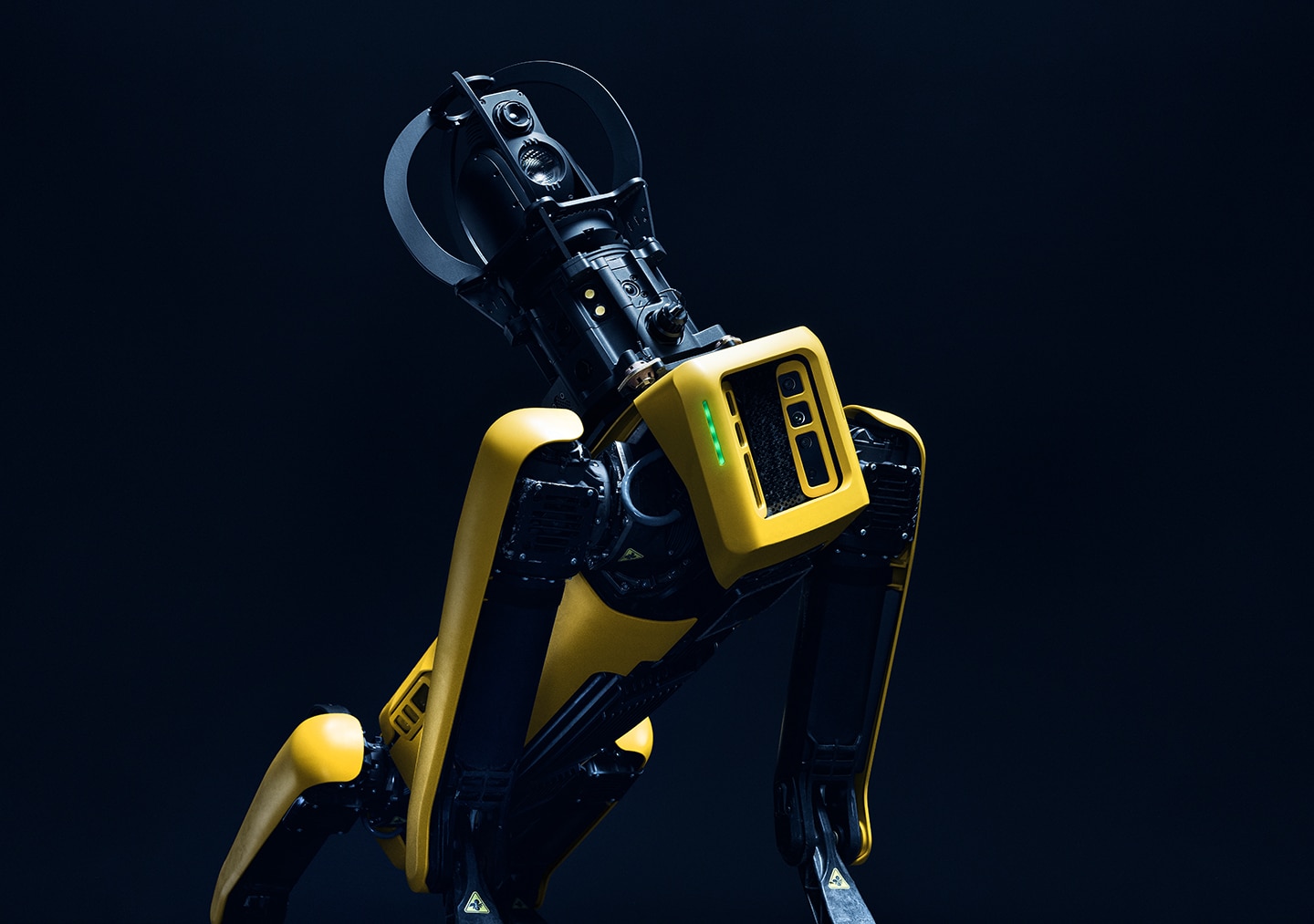
Spot is a four-legged autonomous robot developed by Boston Dynamics, a robotics company headquartered in Waltham, Massachusetts. Designed for inspection, security, and data collection in complex or hazardous environments, Spot can navigate stairs, rough terrain, and confined spaces that are inaccessible to wheeled robots. It is commercially available and has been deployed across industries including utilities, oil and gas, construction, and public safety. Spot supports a modular payload system that accommodates thermal cameras, pan-tilt-zoom (PTZ) cameras, lidar units, methane sensors, and other mission-specific hardware. Boston Dynamics also offers the Orbit fleet-management software platform, enabling operators to schedule autonomous inspection routes, aggregate sensor data, and manage multiple Spot units from a central interface. The robot is widely regarded as one of the most capable and commercially mature legged robots on the market.
1,244 views
 Robot
RobotRealSense Depth Camera D455
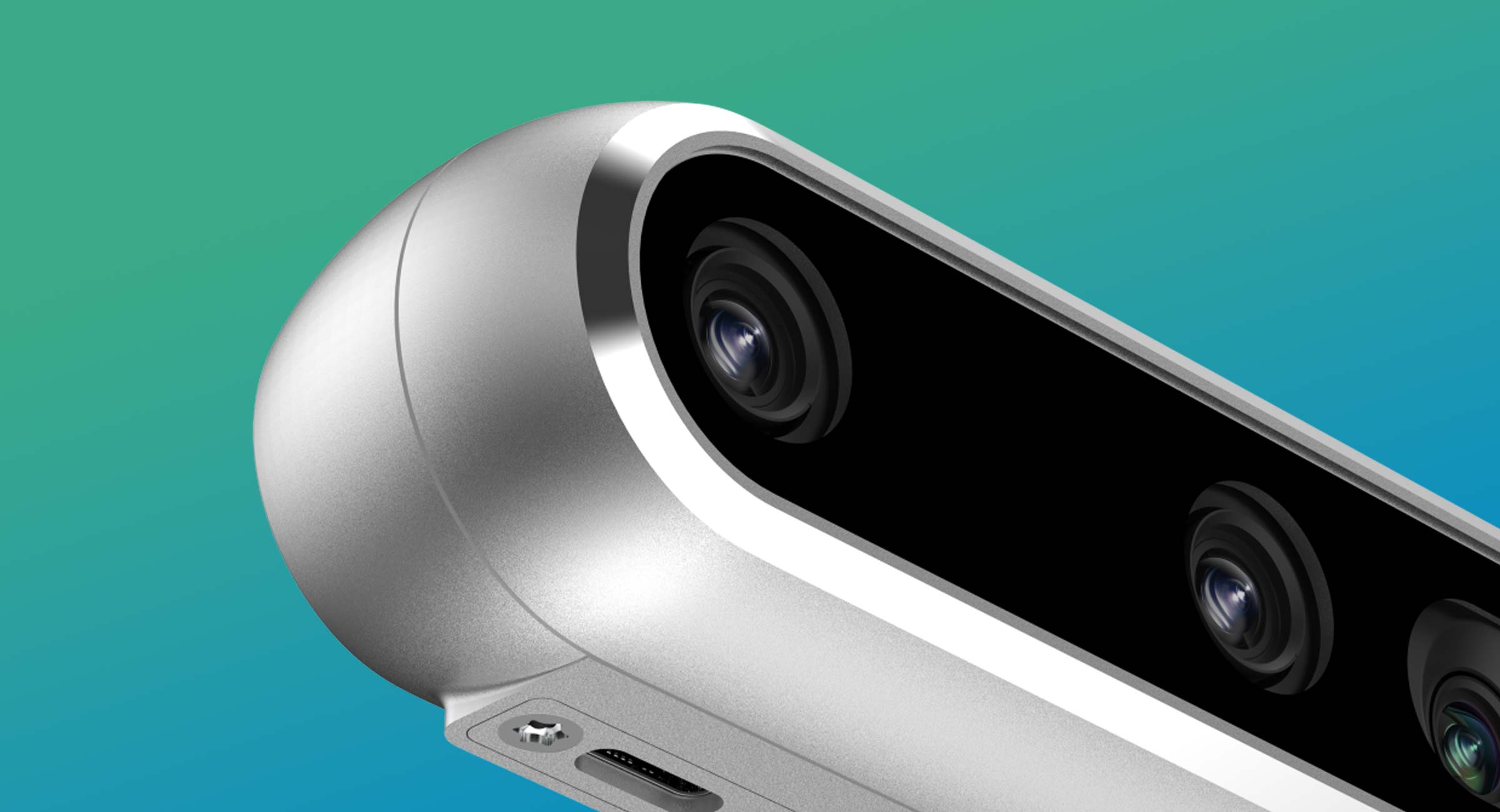
The RealSense Depth Camera D455 is a stereoscopic active-infrared depth camera belonging to Intel's D400 series, designed to capture high-fidelity depth data for robotics, autonomous mobile robots (AMRs), drones, and computer-vision applications. It features a 95 mm stereo baseline — the widest in the D400 lineup at the time of its introduction — which reportedly enables depth error of under 2% at ranges up to approximately 4 metres. Originally developed under the Intel RealSense brand, the D455 and related products were later spun off as part of an independent RealSense business unit following Intel's restructuring of the division around 2021–2022. The camera is widely adopted in research, industrial automation, and humanoid-robot development owing to its compact USB-powered form factor, open SDK support, and relatively accessible price point.
743 views
Rosie 2.0
The Rosie 2.0 is a commercial-grade autonomous robot vacuum developed by Tailos, designed to handle large-scale floor cleaning in business and institutional environments. It is offered in a two-pack configuration, allowing facilities to deploy multiple units simultaneously for broader coverage and more efficient cleaning cycles. Built to commercial durability standards, the Rosie 2.0 combines intelligent navigation with powerful suction technology to reduce reliance on manual labor and improve facility maintenance consistency. It targets businesses, hospitality venues, retail spaces, and other high-traffic environments where reliable, automated cleaning is a priority.
521 views