Papers
11
Total Citations
137
H-Index
8
About
Jun Ueno has established himself as a leading researcher at the forefront of robotic-assisted spine surgery, with a particular focus on pedicle screw placement accuracy, surgical learning curves, and spinal deformity correction. His body of work, accumulating over 130 citations, addresses one of the most pressing questions in modern orthopedic surgery: how robotic and navigational technologies can improve patient outcomes and democratize surgical expertise. Ueno's most influential contributions include rigorous comparative analyses between robotic systems and conventional navigation techniques in treating adolescent idiopathic scoliosis, demonstrating that robotics can deliver equivalent or superior accuracy while also benefiting less-experienced surgeons. His pioneering application of cumulative sum (CUSUM) analysis to quantify robotic surgery learning curves has provided the field with a practical framework for training and credentialing surgeons. He has further expanded this work by examining how robotics reduces fluoroscopy exposure and operative time compared to freehand techniques — meaningful gains for both patient safety and surgical efficiency. Notably, Ueno's research consistently champions accessibility, showing that robotic assistance allows junior surgeons to achieve accuracy comparable to seasoned experts. Through studies spanning 125 or more cases at a single center, he has built a compelling evidence base that positions surgical robotics as a transformative, broadly applicable tool in spine surgery.
Research Focus
Key Achievements
Top Papers
- 1
- 2
- 3
- 4Robotics is useful for less-experienced surgeons in spinal deformity surgery15 citations · 2022
- 5
- 6
- 7
- 8
- 9
- 10
Key Collaborators
Related papers
- Comprehensive Error Analysis for Robotic-assisted Placement of Pedicle Screws in Pediatric Spinal Deformity: The Initial Learning Curve
- Robotic-Assisted Pedicle Screw Placement During Spine Surgery
- Robotic spine systems: overcoming surgeon experience in pedicle screw accuracy: a prospective study
- Robotics Coupled With Navigation for Pediatric Spine Surgery: Initial Intraoperative Experience With 162 Cases
- Evaluating the Accuracy of Robotic Assistance in Spine Surgery
Researchers in this area
Labs working in this area
If you're exploring the applied side
Commercial systems in adjacent areas you may find useful as a starting point. This is not a claim that the research here is used in them — academia and industry often move on separate tracks.
- Related commercial systems
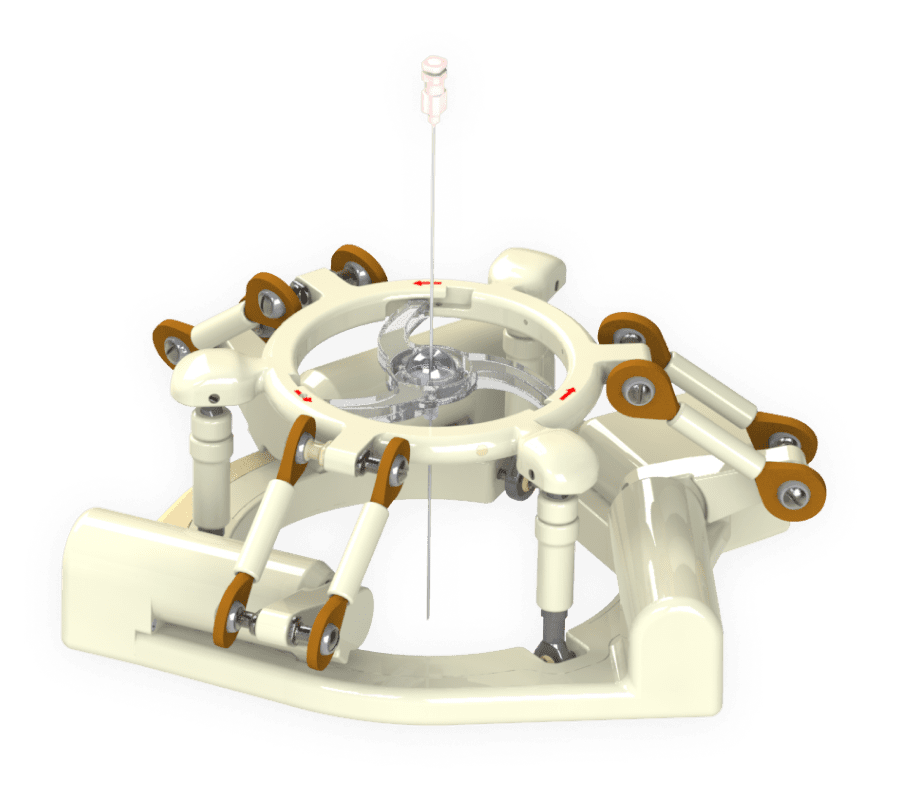 ANT-XNDR Medical Technology · Medical Logistics
Suggested by topic similarity — not advertising or endorsement.