Mabu
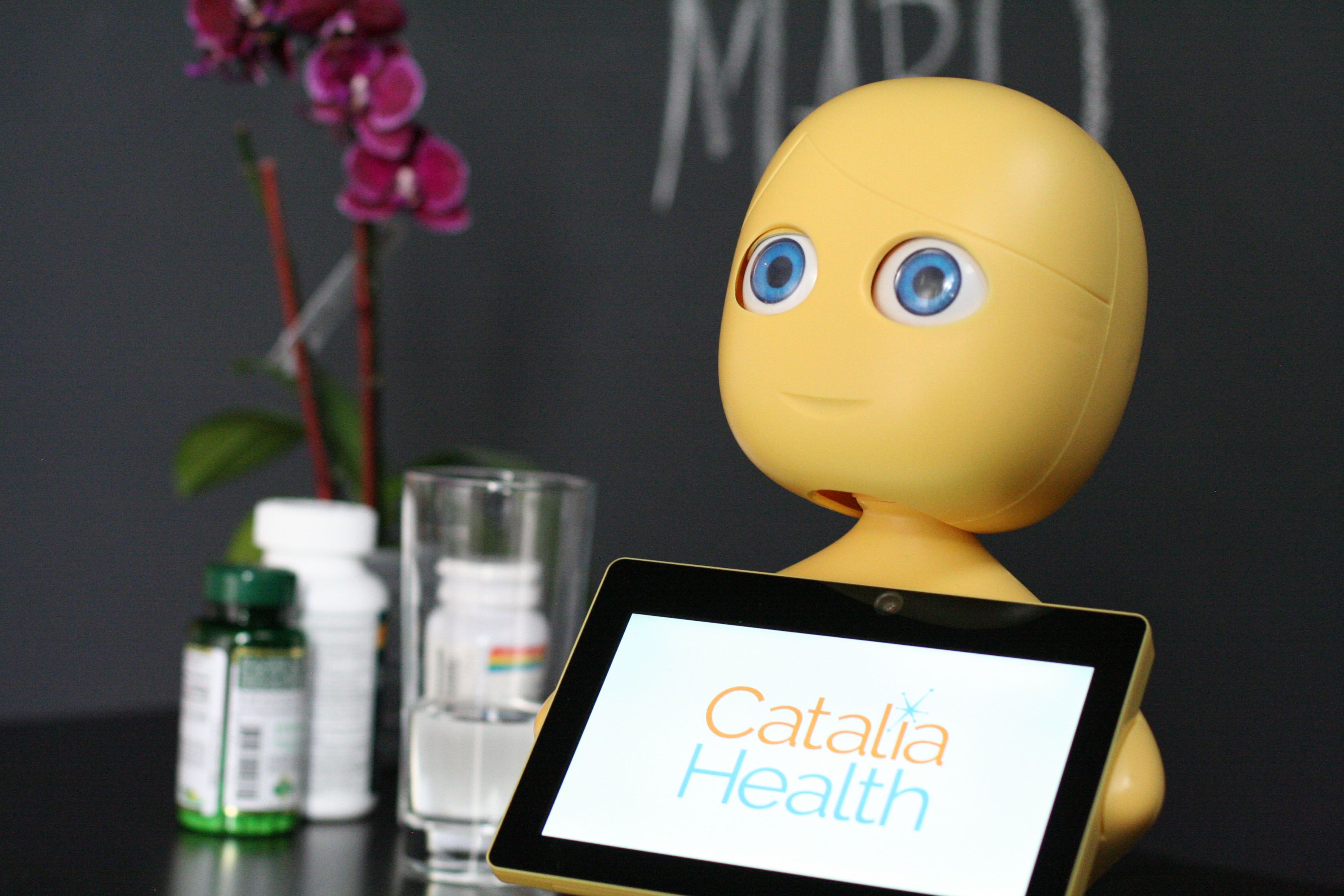
Mabu is a tabletop companion robot developed by Catalia Health, a U.S.-based digital health company. Designed for chronic-condition management, it conducts short, personalized daily check-in conversations with patients, drawing on individualized care plans to monitor symptoms, medication adherence, and overall well-being. The robot is intended to serve as a persistent, low-burden touchpoint between clinical visits, relaying structured adherence and symptom data back to care teams. Catalia Health has deployed Mabu in pilot programs with pharmaceutical companies and healthcare providers, positioning it at the intersection of conversational AI and remote patient monitoring.
Overview and Use Cases
Mabu is a tabletop social robot built around the concept of habitual, brief daily interactions rather than extended therapy sessions. Its core function is chronic-condition management: the robot engages patients in short scripted-yet-adaptive conversations tied to their specific care plans. Conditions reportedly addressed in pilots include heart failure, oncology supportive care, and diabetes management, among others.
By maintaining a consistent daily presence in a patient's home, Mabu aims to improve medication adherence, surface early symptom changes, and reduce the burden on clinical staff who would otherwise rely on periodic phone check-ins. The robot reports structured data back to care coordinators, nurses, or physicians, enabling timely interventions without requiring constant human outreach.
Design and Technical Characteristics
Mabu features a compact, non-threatening tabletop form factor with an expressive face displayed on a screen, giving it a character-driven appearance intended to encourage patient engagement. The robot uses a combination of speech recognition and natural language processing to conduct conversations, and its dialogue system is reportedly grounded in motivational interviewing principles and behavior-change science.
Specific hardware specifications such as processor details, battery runtime, or sensor payloads have not been widely disclosed in public reporting. The platform is cloud-connected, allowing care-plan content and conversation scripts to be updated remotely by clinical teams or Catalia Health's backend systems.
Deployment and Customers
Catalia Health has conducted pilot deployments with pharmaceutical manufacturers and health system providers, though the company has not publicly disclosed a comprehensive list of named customers as of available reporting. The pilots have focused on demonstrating measurable improvements in patient adherence and engagement metrics compared to standard-of-care approaches. The robot has been described as a prototype-stage or early-commercial product, with deployments structured as managed programs rather than direct consumer retail sales.
Market Context and Target Buyers
Mabu is positioned in the enterprise health technology market, targeting pharmaceutical companies seeking to support patients on complex drug regimens, as well as health systems and payers looking to reduce readmissions and improve chronic-disease outcomes. It is not sold as a consumer product. Pricing has not been publicly disclosed; the business model appears to be program- or subscription-based, consistent with other digital therapeutics and remote monitoring platforms.
The robot competes conceptually with other conversational health platforms, including purely software-based chatbot solutions and voice-assistant integrations (such as those built on Amazon Alexa or Google Assistant for health use cases). Its physical, embodied form is a deliberate differentiator, with Catalia Health citing research suggesting that social robots elicit stronger habitual engagement than screen-only interfaces.
Competitive Landscape
In the broader companion and health-robot space, Mabu occupies a niche between purely software-driven patient engagement tools and more complex, higher-cost social robots such as PARO (the therapeutic seal robot used in dementia care) or general-purpose platforms like SoftBank Robotics' Pepper. Mabu's focus on chronic-condition management and clinical data reporting distinguishes it from entertainment-oriented companions. No sibling robot models from Catalia Health are currently on public record.
Future Outlook
As remote patient monitoring and digital health engagement continue to attract investment and regulatory attention, Mabu's model of embodied conversational care management remains a distinctive approach. The broader adoption of such robots will likely depend on demonstrating clinical and economic outcomes in peer-reviewed or payer-accepted evidence, as well as navigating reimbursement pathways. Catalia Health's trajectory as of public reporting suggests continued focus on pharma and provider partnerships rather than a near-term consumer launch.
Related entries
 Robot
RobotRelay Delivery Robot
The Relay Delivery Robot is an autonomous indoor delivery robot developed by Relay Robotics (formerly known as Savioke), designed primarily for hospitality and healthcare environments. It navigates hotel corridors and hospital hallways independently, rides elevators without human assistance, and delivers guest amenities, medications, linens, and other supplies directly to rooms or designated drop-off points. Relay is one of the most widely deployed service robots in its category, reportedly completing over one million lifetime deliveries with a publicly cited success rate of approximately 99.8%. With a cargo capacity of around 10 gallons, the robot is compact enough to operate in busy public spaces while carrying a meaningful payload of everyday supplies.
2,760 views
 Robot
RobotSpot
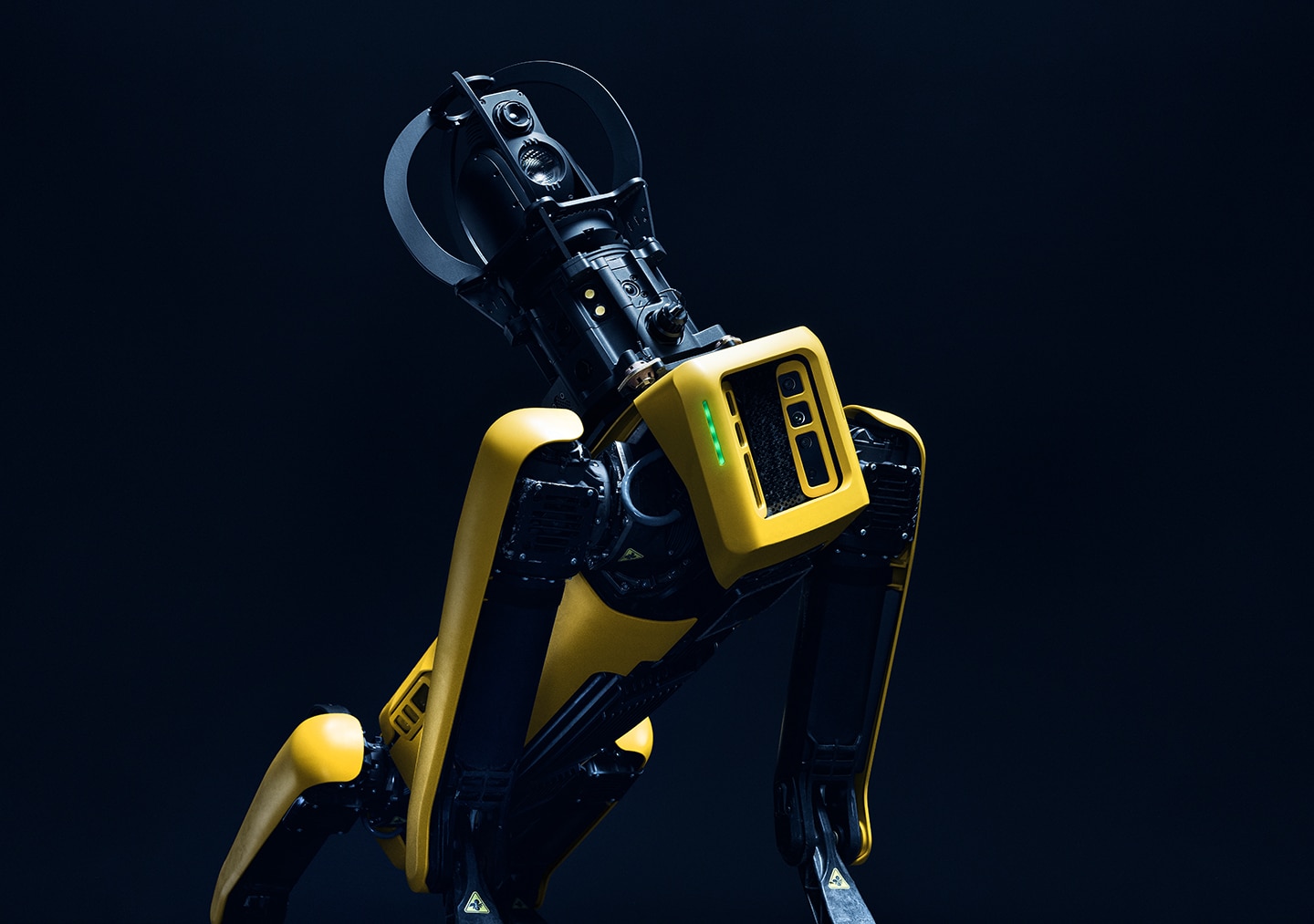
Spot is a four-legged autonomous robot developed by Boston Dynamics, a robotics company headquartered in Waltham, Massachusetts. Designed for inspection, security, and data collection in complex or hazardous environments, Spot can navigate stairs, rough terrain, and confined spaces that are inaccessible to wheeled robots. It is commercially available and has been deployed across industries including utilities, oil and gas, construction, and public safety. Spot supports a modular payload system that accommodates thermal cameras, pan-tilt-zoom (PTZ) cameras, lidar units, methane sensors, and other mission-specific hardware. Boston Dynamics also offers the Orbit fleet-management software platform, enabling operators to schedule autonomous inspection routes, aggregate sensor data, and manage multiple Spot units from a central interface. The robot is widely regarded as one of the most capable and commercially mature legged robots on the market.
1,244 views
 Robot
RobotRealSense Depth Camera D455
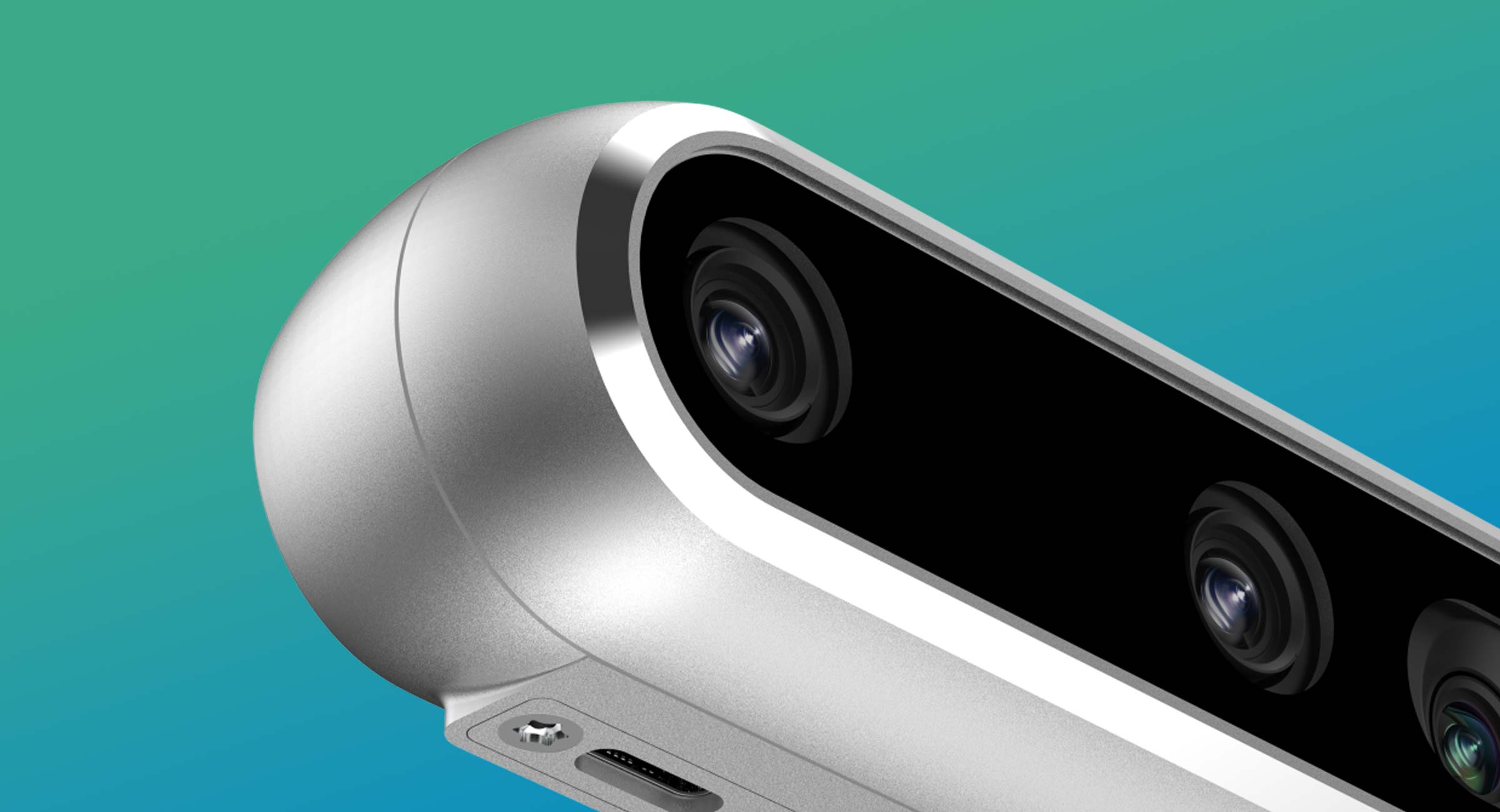
The RealSense Depth Camera D455 is a stereoscopic active-infrared depth camera belonging to Intel's D400 series, designed to capture high-fidelity depth data for robotics, autonomous mobile robots (AMRs), drones, and computer-vision applications. It features a 95 mm stereo baseline — the widest in the D400 lineup at the time of its introduction — which reportedly enables depth error of under 2% at ranges up to approximately 4 metres. Originally developed under the Intel RealSense brand, the D455 and related products were later spun off as part of an independent RealSense business unit following Intel's restructuring of the division around 2021–2022. The camera is widely adopted in research, industrial automation, and humanoid-robot development owing to its compact USB-powered form factor, open SDK support, and relatively accessible price point.
743 views
Rosie 2.0
The Rosie 2.0 is a commercial-grade autonomous robot vacuum developed by Tailos, designed to handle large-scale floor cleaning in business and institutional environments. It is offered in a two-pack configuration, allowing facilities to deploy multiple units simultaneously for broader coverage and more efficient cleaning cycles. Built to commercial durability standards, the Rosie 2.0 combines intelligent navigation with powerful suction technology to reduce reliance on manual labor and improve facility maintenance consistency. It targets businesses, hospitality venues, retail spaces, and other high-traffic environments where reliable, automated cleaning is a priority.
521 views