Kebbi Air
Kebbi Air is a compact, expressive social robot developed by NUWA Robotics, a robotics company based in Taiwan. Designed to serve multiple roles across education, healthcare, and customer service, it combines facial recognition, voice interaction, and multi-joint articulated arms to deliver an engaging, human-like presence in real-world environments. The robot is particularly noted for its built-in STEAM coding environment, which makes it a popular tool in primary and higher education settings where students can learn programming through hands-on interaction. Its versatility across sectors — from assisted living facilities to retail service counters — positions Kebbi Air as a mid-range, multi-purpose AI service robot aimed at institutional buyers.

Overview and Use Cases
Kebbi Air is a multi-scenario AI service and education robot produced by NUWA Robotics, a company headquartered in Taiwan. The robot is engineered to operate effectively across three primary verticals:
- Education: Kebbi Air serves as an interactive teaching assistant in primary schools, secondary schools, and universities. Its integrated STEAM coding platform allows students to write and execute programs that directly control the robot's movements and responses, making abstract programming concepts tangible.
- Healthcare and Assisted Living: In elder care and rehabilitation contexts, Kebbi Air can provide companionship, deliver reminders, and facilitate simple communication tasks, helping to reduce social isolation among residents.
- Customer Service: Deployed at reception desks, retail environments, and public information kiosks, the robot can greet visitors, answer frequently asked questions, and guide users through basic service workflows.
Key Technical Features
Kebbi Air incorporates several technologies that distinguish it from simpler tablet-on-a-stand alternatives:
- Facial Recognition: An onboard camera system enables the robot to identify and track individual users, supporting personalized interactions.
- Voice Recognition and Natural Language Processing: The robot can understand and respond to spoken commands in multiple languages, reportedly including Mandarin and English.
- Multi-Joint Expressive Arms: Unlike many social robots that rely solely on a screen for expression, Kebbi Air features articulated arms capable of gesturing, which contributes to a more natural and engaging presence.
- Built-in STEAM Coding Environment: A dedicated software platform allows educators and students to program the robot without requiring external hardware, lowering the barrier to entry for coding education.
Specific details such as battery runtime, processor specifications, and payload capacity have not been widely published in official public documentation; prospective buyers are advised to consult NUWA Robotics directly for current datasheets.
Comparison to Similar Robots
Within the broader educational and social robot market, Kebbi Air occupies a space between simple programmable robots and full-scale humanoid service platforms:
- vs. Sphero BOLT and mBot2: These are ground-based, primarily STEM-focused robots without social interaction capabilities. Kebbi Air offers a richer human-facing interaction layer, making it more suitable for language learning, social skills development, and service scenarios, though at a higher price point.
- vs. SoftBank Pepper: Pepper is a larger, more expensive humanoid robot targeting enterprise deployments. Kebbi Air is more compact and reportedly more accessible in cost, making it better suited for classroom or small-facility use.
- vs. UBTECH Jimu / Alpha Series: UBTECH robots similarly target education, but Kebbi Air's multi-sector positioning (education + healthcare + service) gives it broader institutional appeal.
Market Context and Target Buyers
Kebbi Air is positioned in the mid-range segment of the social and educational robot market. Its primary target buyers are:
- K–12 schools and universities seeking interactive STEAM teaching tools
- Elder care facilities and hospitals looking for low-cost companionship and communication aids
- Corporations and public institutions deploying front-of-house service robots
As of public reporting, NUWA Robotics has focused distribution efforts in Taiwan and broader Asia-Pacific markets, with some international presence through education technology channels.
Deployments and Notable Customers
Kebbi Air has reportedly been deployed in educational institutions and healthcare facilities across Taiwan and select markets in Asia. Specific named customer deployments have not been widely disclosed in public sources. NUWA Robotics has participated in regional education technology expos and robotics competitions, where Kebbi Air has been demonstrated as a student-programmable platform.
Future Outlook
The social and educational robot segment continues to grow as AI capabilities — particularly in natural language understanding and computer vision — become more affordable to embed in compact hardware. Kebbi Air's multi-scenario design positions NUWA Robotics to address several converging trends: rising demand for interactive EdTech tools, aging populations requiring assistive technology, and the expansion of unmanned service counters. Future iterations may incorporate more advanced large language model (LLM) integration, improved mobility, or enhanced sensor suites, though no specific next-generation product details have been publicly announced as of the time of writing.
Related entries
 Robot
RobotRelay Delivery Robot
The Relay Delivery Robot is an autonomous indoor delivery robot developed by Relay Robotics (formerly known as Savioke), designed primarily for hospitality and healthcare environments. It navigates hotel corridors and hospital hallways independently, rides elevators without human assistance, and delivers guest amenities, medications, linens, and other supplies directly to rooms or designated drop-off points. Relay is one of the most widely deployed service robots in its category, reportedly completing over one million lifetime deliveries with a publicly cited success rate of approximately 99.8%. With a cargo capacity of around 10 gallons, the robot is compact enough to operate in busy public spaces while carrying a meaningful payload of everyday supplies.
2,760 views
 Robot
RobotSpot
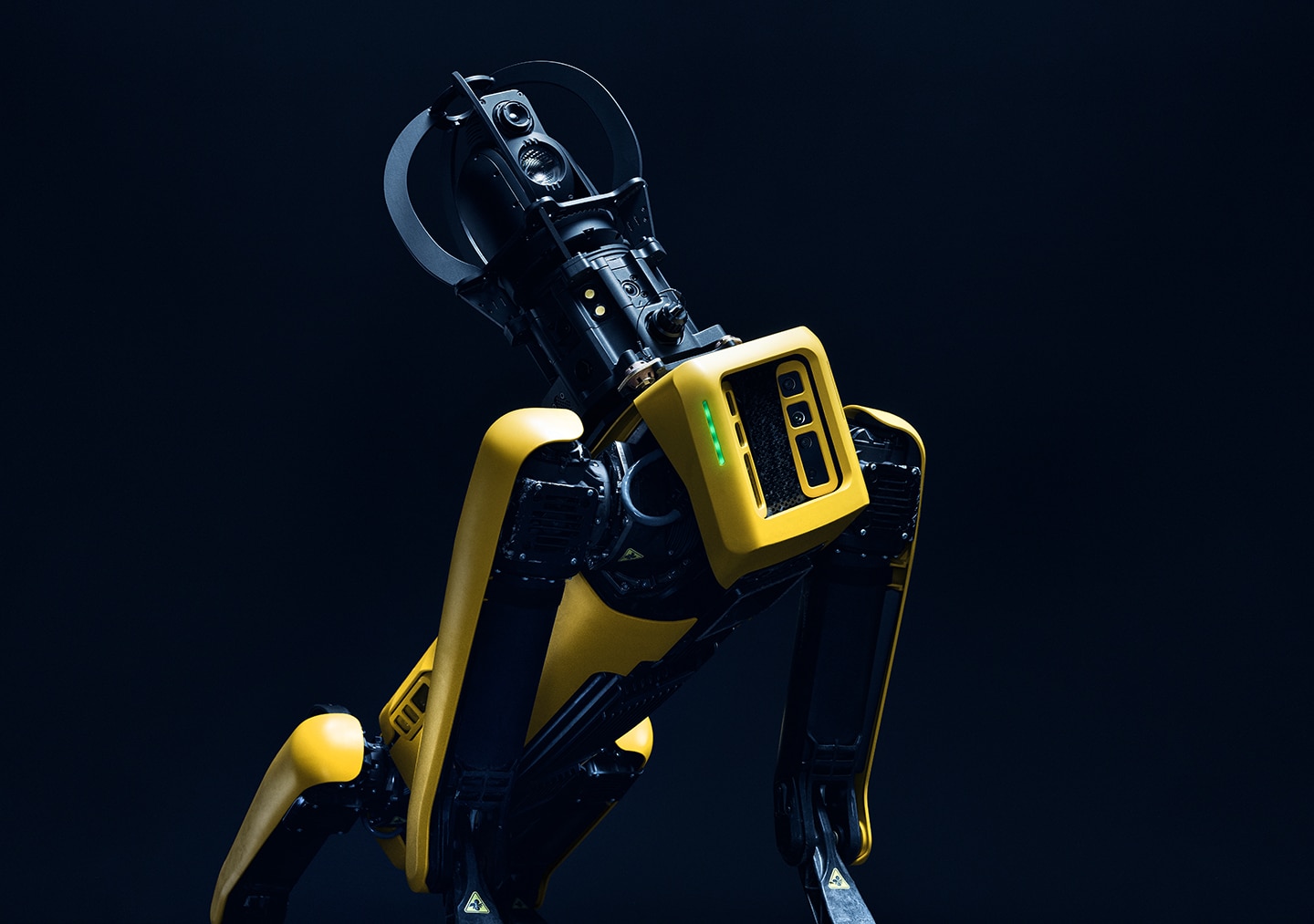
Spot is a four-legged autonomous robot developed by Boston Dynamics, a robotics company headquartered in Waltham, Massachusetts. Designed for inspection, security, and data collection in complex or hazardous environments, Spot can navigate stairs, rough terrain, and confined spaces that are inaccessible to wheeled robots. It is commercially available and has been deployed across industries including utilities, oil and gas, construction, and public safety. Spot supports a modular payload system that accommodates thermal cameras, pan-tilt-zoom (PTZ) cameras, lidar units, methane sensors, and other mission-specific hardware. Boston Dynamics also offers the Orbit fleet-management software platform, enabling operators to schedule autonomous inspection routes, aggregate sensor data, and manage multiple Spot units from a central interface. The robot is widely regarded as one of the most capable and commercially mature legged robots on the market.
1,244 views
 Robot
RobotRealSense Depth Camera D455
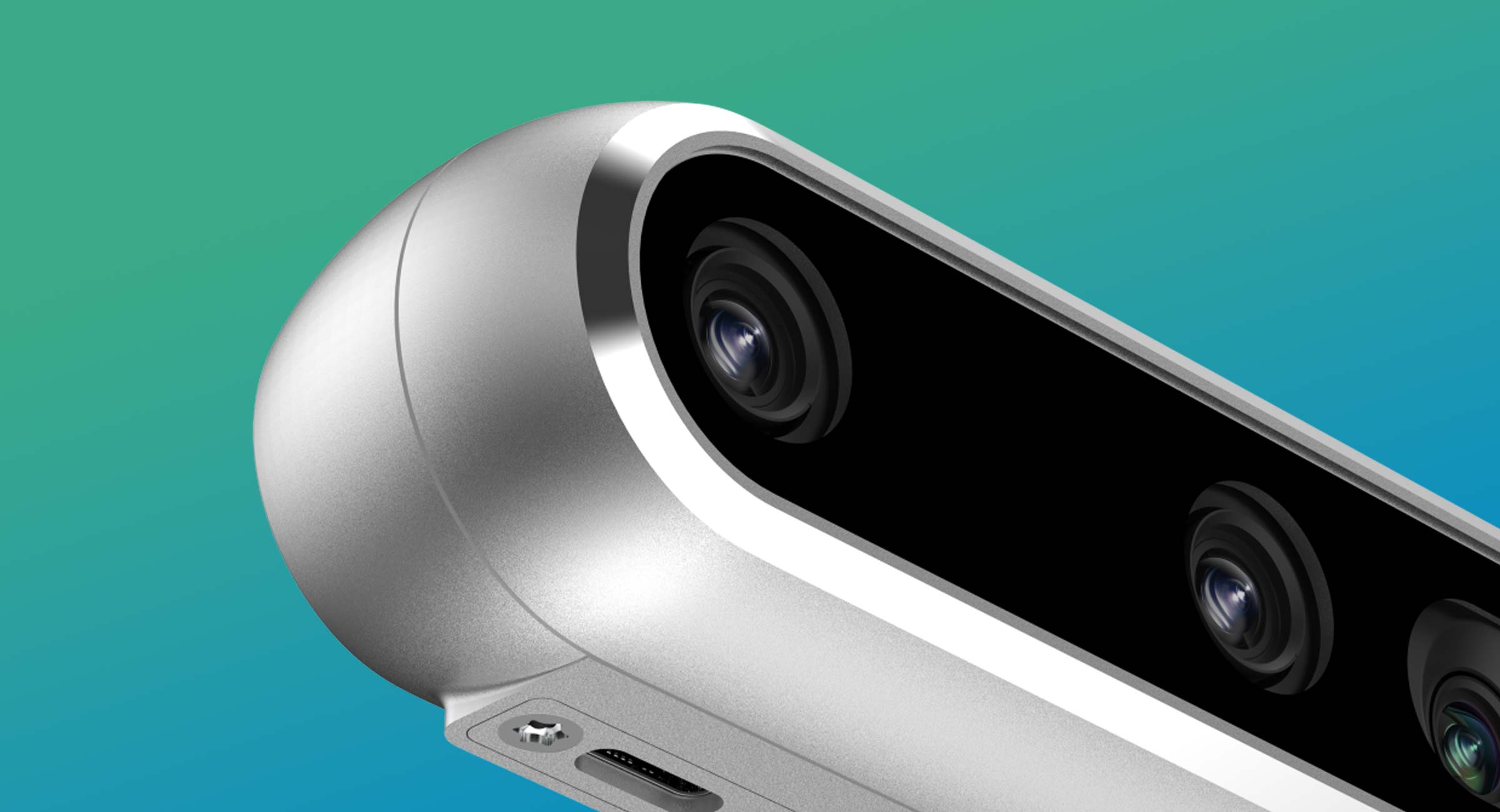
The RealSense Depth Camera D455 is a stereoscopic active-infrared depth camera belonging to Intel's D400 series, designed to capture high-fidelity depth data for robotics, autonomous mobile robots (AMRs), drones, and computer-vision applications. It features a 95 mm stereo baseline — the widest in the D400 lineup at the time of its introduction — which reportedly enables depth error of under 2% at ranges up to approximately 4 metres. Originally developed under the Intel RealSense brand, the D455 and related products were later spun off as part of an independent RealSense business unit following Intel's restructuring of the division around 2021–2022. The camera is widely adopted in research, industrial automation, and humanoid-robot development owing to its compact USB-powered form factor, open SDK support, and relatively accessible price point.
743 views
Rosie 2.0
The Rosie 2.0 is a commercial-grade autonomous robot vacuum developed by Tailos, designed to handle large-scale floor cleaning in business and institutional environments. It is offered in a two-pack configuration, allowing facilities to deploy multiple units simultaneously for broader coverage and more efficient cleaning cycles. Built to commercial durability standards, the Rosie 2.0 combines intelligent navigation with powerful suction technology to reduce reliance on manual labor and improve facility maintenance consistency. It targets businesses, hospitality venues, retail spaces, and other high-traffic environments where reliable, automated cleaning is a priority.
521 views