John Deere See & Spray Robot
The John Deere See & Spray Robot is an autonomous precision-agriculture system developed by John Deere that uses computer vision and artificial intelligence to detect individual weeds within crop rows and apply herbicide only to those plants. By targeting weeds rather than broadcasting chemicals across entire fields, the system is designed to significantly reduce herbicide usage and associated costs while limiting environmental runoff. First introduced as a concept system and later commercialized under the See & Spray Ultimate branding (reportedly beginning broader commercial availability around 2023), the technology integrates high-resolution cameras and deep-learning models mounted on a sprayer bar. It is aimed at large-scale row-crop farmers—particularly those growing corn, soybeans, and cotton—who seek to lower input costs and adopt more sustainable agronomic practices.
Overview and Use Cases
The John Deere See & Spray Robot represents a significant step forward in precision agriculture, combining autonomous machine operation with real-time AI-driven decision-making. The system is designed to be mounted on or integrated with large agricultural sprayers and is intended for use in broad-acre row-crop fields. Its primary use case is post-emergence weed control: identifying weeds that have germinated between or within crop rows and applying herbicide only to those specific plants.
Key use cases include:
- Selective post-emergence herbicide application in corn, soybean, and cotton fields
- Reduction of herbicide input costs by reportedly spraying only where weeds are detected rather than blanket-applying across the entire field
- Supporting integrated weed management programs that aim to slow the development of herbicide-resistant weed populations
- Data collection on weed pressure and distribution across fields for agronomic decision-making
Key Technical Details
The See & Spray Ultimate system uses a series of high-resolution cameras mounted along the sprayer boom, paired with onboard computing hardware running deep-learning image-classification models. The system is trained to distinguish crop plants from weeds in real time as the sprayer moves through the field.
- Vision system: Multiple cameras positioned along the boom provide overlapping coverage of the crop canopy
- AI/ML backbone: Deep neural networks trained on large datasets of labeled crop and weed imagery enable real-time classification
- Spray actuation: Individual nozzle control allows the system to activate only the nozzles positioned over detected weeds, minimizing off-target application
- Operating speed: The system is designed to operate at typical field sprayer speeds, though exact operational parameters may vary by configuration
- Integration: Compatible with John Deere's broader precision-agriculture ecosystem, including the Operations Center data platform
Specific payload, boom width options, and runtime figures have not been uniformly disclosed in public documentation and may vary by equipment configuration.
Comparison to Similar Systems
Within John Deere's own portfolio, the See & Spray Robot is distinct from the company's broader lineup of autonomous and semi-autonomous field equipment (such as its autonomous tractor platform) in that it focuses specifically on chemical application intelligence rather than tillage or harvesting operations.
In the competitive landscape, See & Spray faces comparison with:
- Blue River Technology's earlier LettuceBot (Blue River Technology was acquired by John Deere in 2017, and its research formed a foundation for See & Spray)
- Trimble and other precision-ag vendors offering variable-rate application technology, though most lack real-time plant-level vision
- Startup competitors such as Carbon Robotics (laser weeding) and Naio Technologies, which take alternative approaches to precision weed control
John Deere's scale, dealer network, and existing customer relationships give See & Spray a notable distribution advantage over smaller competitors.
Market Context and Target Buyers
The See & Spray Ultimate system is positioned as a premium precision-agriculture technology. It is targeted primarily at large commercial row-crop operations in North America, where herbicide costs and weed-resistance challenges are significant concerns. The system is generally offered as an add-on or integrated option for compatible John Deere sprayer models rather than as a standalone robot.
As of public reporting, the technology sits in a higher price tier relative to conventional sprayers, with the value proposition centered on long-term herbicide savings and sustainability credentials. Exact pricing has not been publicly disclosed by John Deere.
Deployments and Notable Milestones
- John Deere acquired Blue River Technology in 2017, bringing the foundational computer-vision expertise that underpins See & Spray
- The See & Spray Select variant was introduced as an earlier, more limited version of the technology
- See & Spray Ultimate was announced as the more advanced commercial offering, with broader weed-detection capabilities across a wider range of species
- The system has been demonstrated and reported on at major agricultural trade events, including the Consumer Electronics Show (CES), where John Deere showcased its autonomous and AI-driven agriculture technologies
Future Outlook
John Deere has publicly positioned precision spraying and AI-driven crop management as central pillars of its long-term technology strategy. Future development directions reportedly include expanding the library of detectable weed species, improving performance in challenging lighting and canopy conditions, and deeper integration with farm management software platforms. As herbicide resistance continues to grow as an agronomic challenge globally, demand for targeted application technologies like See & Spray is broadly expected to increase. John Deere's ongoing investment in autonomy and machine learning suggests continued iteration on the platform in coming years.
Related videos

2026 FIRST Championship - FIRST Robotics Competition - Johnson Division - Day 4
FIRSTRoboticsCompetition

2026 FIRST Championship - FIRST Robotics Competition - Johnson Division - Day 3
FIRSTRoboticsCompetition

2026 FIRST Championship - FIRST Robotics Competition - Johnson Division - Day 2
FIRSTRoboticsCompetition

2026 FIRST Championship - FIRST Robotics Competition - Johnson Division - Day 1
FIRSTRoboticsCompetition
Related entries
 Robot
RobotRelay Delivery Robot
The Relay Delivery Robot is an autonomous indoor delivery robot developed by Relay Robotics (formerly known as Savioke), designed primarily for hospitality and healthcare environments. It navigates hotel corridors and hospital hallways independently, rides elevators without human assistance, and delivers guest amenities, medications, linens, and other supplies directly to rooms or designated drop-off points. Relay is one of the most widely deployed service robots in its category, reportedly completing over one million lifetime deliveries with a publicly cited success rate of approximately 99.8%. With a cargo capacity of around 10 gallons, the robot is compact enough to operate in busy public spaces while carrying a meaningful payload of everyday supplies.
2,760 views
 Robot
RobotSpot
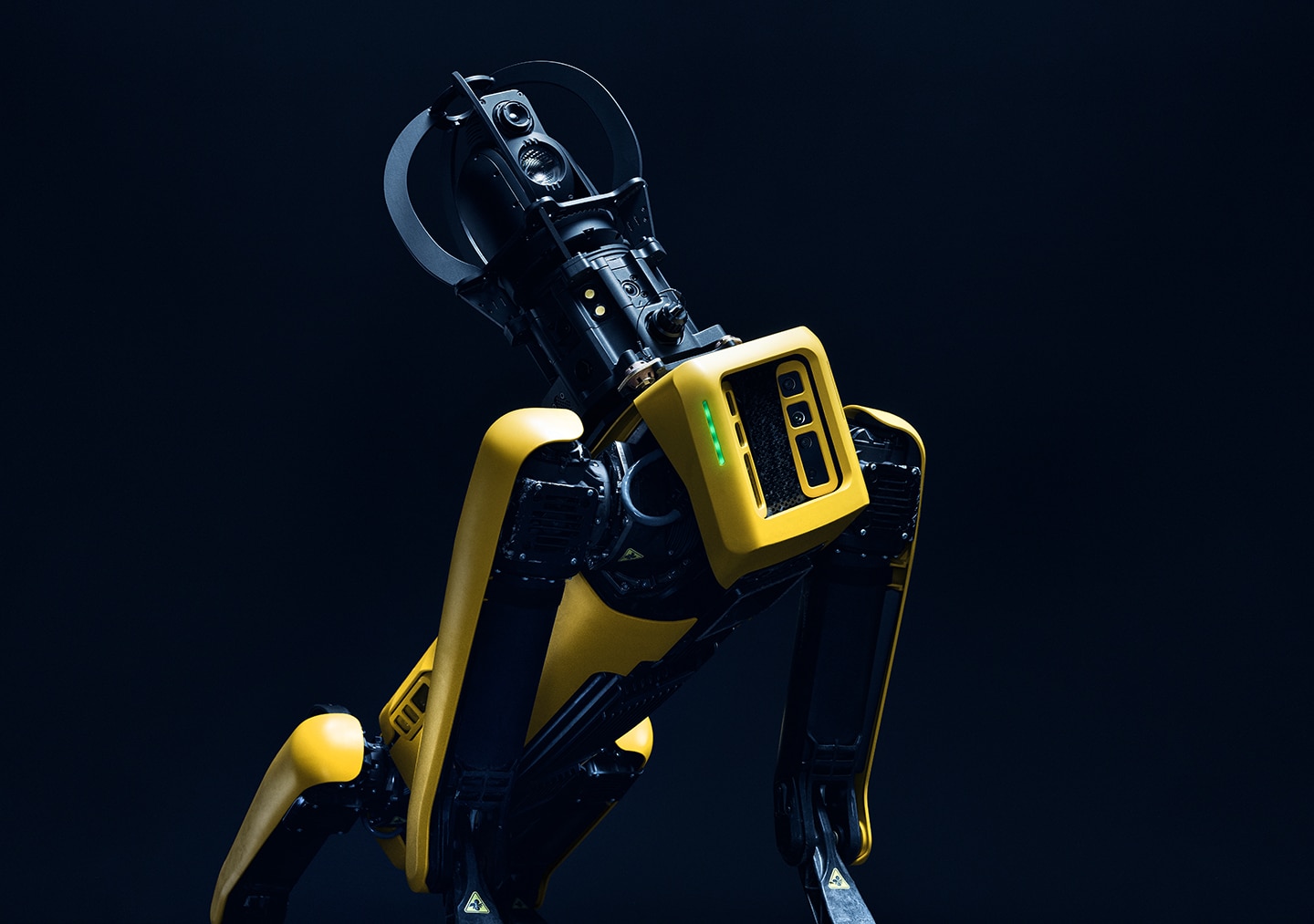
Spot is a four-legged autonomous robot developed by Boston Dynamics, a robotics company headquartered in Waltham, Massachusetts. Designed for inspection, security, and data collection in complex or hazardous environments, Spot can navigate stairs, rough terrain, and confined spaces that are inaccessible to wheeled robots. It is commercially available and has been deployed across industries including utilities, oil and gas, construction, and public safety. Spot supports a modular payload system that accommodates thermal cameras, pan-tilt-zoom (PTZ) cameras, lidar units, methane sensors, and other mission-specific hardware. Boston Dynamics also offers the Orbit fleet-management software platform, enabling operators to schedule autonomous inspection routes, aggregate sensor data, and manage multiple Spot units from a central interface. The robot is widely regarded as one of the most capable and commercially mature legged robots on the market.
1,244 views
 Robot
RobotRealSense Depth Camera D455
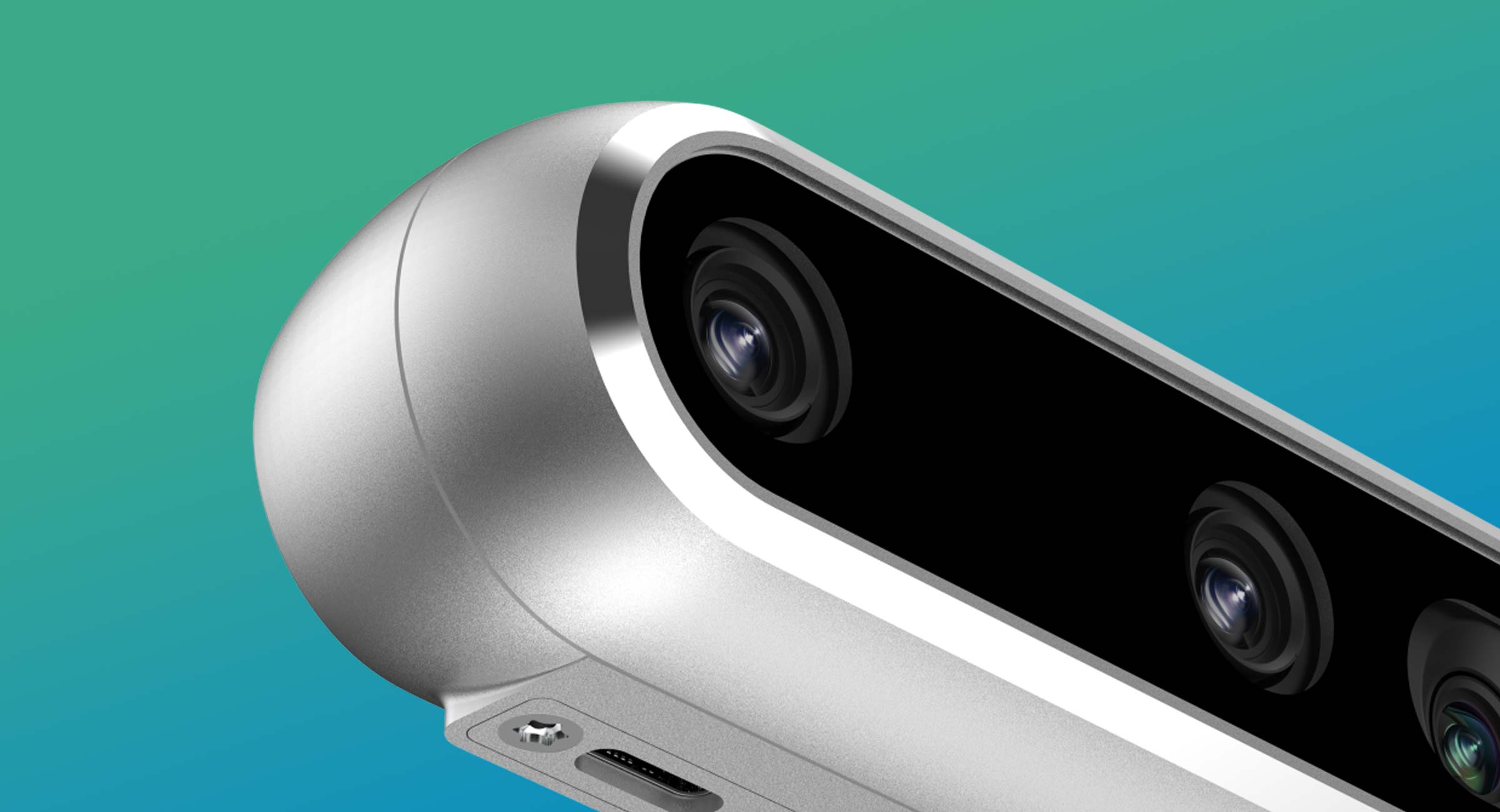
The RealSense Depth Camera D455 is a stereoscopic active-infrared depth camera belonging to Intel's D400 series, designed to capture high-fidelity depth data for robotics, autonomous mobile robots (AMRs), drones, and computer-vision applications. It features a 95 mm stereo baseline — the widest in the D400 lineup at the time of its introduction — which reportedly enables depth error of under 2% at ranges up to approximately 4 metres. Originally developed under the Intel RealSense brand, the D455 and related products were later spun off as part of an independent RealSense business unit following Intel's restructuring of the division around 2021–2022. The camera is widely adopted in research, industrial automation, and humanoid-robot development owing to its compact USB-powered form factor, open SDK support, and relatively accessible price point.
743 views
Rosie 2.0
The Rosie 2.0 is a commercial-grade autonomous robot vacuum developed by Tailos, designed to handle large-scale floor cleaning in business and institutional environments. It is offered in a two-pack configuration, allowing facilities to deploy multiple units simultaneously for broader coverage and more efficient cleaning cycles. Built to commercial durability standards, the Rosie 2.0 combines intelligent navigation with powerful suction technology to reduce reliance on manual labor and improve facility maintenance consistency. It targets businesses, hospitality venues, retail spaces, and other high-traffic environments where reliable, automated cleaning is a priority.
521 views