Tennant T7AMR (powered by BrainOS)
The Tennant T7AMR is a mid-size autonomous robotic floor scrubber featuring a 26-inch cleaning path, designed for mid-to-large commercial environments such as retail stores, educational campuses, warehouses, and logistics facilities. It is manufactured through a partnership between Tennant Company, a long-established commercial cleaning equipment maker, and Brain Corp, whose BrainOS Clean Suite provides the autonomous navigation and fleet-management software backbone. The T7AMR is intended to operate alongside human workers, autonomously following pre-mapped routes to scrub hard floors without continuous operator supervision. By combining Tennant's hardware expertise with Brain Corp's AI-driven autonomy platform, the robot targets facilities seeking to reduce labor costs and maintain consistent cleaning standards at scale.
Overview and Use Cases
The Tennant T7AMR (Autonomous Mobile Robot) is a robotic floor scrubber built on Tennant Company's established T7 platform and upgraded with Brain Corp's BrainOS Clean Suite for autonomous operation. Its 26-inch cleaning path positions it as a mid-size unit suited to environments that are too large for compact robots but do not require the widest industrial-grade machines.
Typical deployment environments include:
- Retail: Big-box stores, supermarkets, and shopping centers where overnight or off-peak cleaning is critical
- Education: University buildings, K–12 schools, and campus facilities requiring consistent hygiene
- Warehousing and logistics: Distribution centers and fulfillment facilities with large open floor areas
- Healthcare-adjacent facilities: Corridors and common areas where cleanliness standards are high
The robot is designed to operate autonomously after an initial teach-in phase, during which a human operator walks the desired route and the system maps the environment.
Key Technical Details
The T7AMR relies on BrainOS Clean Suite for real-time navigation, obstacle detection, and route management. Key reported characteristics include:
- Cleaning path: 26 inches (approximately 660 mm)
- Navigation: Camera-based simultaneous localization and mapping (SLAM), supplemented by additional sensors for obstacle avoidance
- Autonomy mode: Follows pre-taught routes; pauses or reroutes around dynamic obstacles such as pedestrians and carts
- Fleet management: BrainOS provides a cloud-connected dashboard for monitoring cleaning coverage, runtime, and performance metrics across multiple units
- Form factor: Based on the proven Tennant T7 ride-on/walk-behind scrubber chassis, meaning service and parts infrastructure is widely available
Specific figures for battery runtime, tank capacity, and maximum speed have not been independently verified in public documentation reviewed for this entry; prospective buyers are advised to consult Tennant's official product sheets.
Comparison to Similar Robots
Within the broader autonomous mobile robot ecosystem, the T7AMR competes in the commercial floor-care segment rather than the goods-movement segment occupied by siblings such as the GreyOrange Ranger GTP, Locus Origin, Quicktron M100, and Geek+ P800, all of which are warehouse logistics AMRs focused on moving inventory rather than cleaning floors. The Artly Barista Bot similarly operates in an entirely different domain (hospitality beverage service).
Direct competitors in autonomous floor scrubbing include:
- Nilfisk Liberty SC50: A compact autonomous scrubber targeting smaller footprints
- ICE Cobot: Collaborative scrubber models from International Cleaning Equipment
- Avidbots Neo: A purpose-built autonomous scrubber with a wider cleaning path, often cited in large-venue deployments
The T7AMR's advantage lies in leveraging Tennant's established dealer network and service infrastructure alongside Brain Corp's widely deployed BrainOS platform, which as of public reporting powers thousands of robots across North America and beyond.
Market Context and Target Buyers
The T7AMR sits in the mid-tier commercial autonomous cleaning segment. It is typically sold or leased through Tennant's dealer network, with pricing structures that reportedly include both capital purchase and robotics-as-a-service (RaaS) options, though specific pricing is not publicly listed. Target buyers are facility managers and operations directors at organizations with recurring, high-frequency floor-cleaning needs and sufficient floor area to justify autonomous deployment.
The robot is particularly attractive to buyers already familiar with Tennant equipment, as staff training requirements are reduced and spare-parts sourcing is straightforward.
Deployments and Notable Customers
Brain Corp has publicly reported broad deployment of BrainOS-powered robots across major U.S. retailers and logistics operators, though specific named customers for the T7AMR model are not always disclosed. Tennant and Brain Corp have collectively highlighted deployments in large-format retail and distribution environments as primary success cases. Independent industry coverage has noted the T7AMR's presence in grocery and big-box retail settings.
Future Outlook
The autonomous floor-care market is growing as labor costs rise and facility operators seek consistent, data-driven cleaning verification. Brain Corp continues to expand BrainOS capabilities, including enhanced analytics and integration with broader facility management systems. Tennant's ongoing investment in its AMR lineup suggests continued iteration on the T7AMR platform. Regulatory and safety standards for autonomous cleaning robots in public spaces are also evolving, which may influence future hardware and software updates.
Related videos


Related entries
 Robot
RobotRelay Delivery Robot
The Relay Delivery Robot is an autonomous indoor delivery robot developed by Relay Robotics (formerly known as Savioke), designed primarily for hospitality and healthcare environments. It navigates hotel corridors and hospital hallways independently, rides elevators without human assistance, and delivers guest amenities, medications, linens, and other supplies directly to rooms or designated drop-off points. Relay is one of the most widely deployed service robots in its category, reportedly completing over one million lifetime deliveries with a publicly cited success rate of approximately 99.8%. With a cargo capacity of around 10 gallons, the robot is compact enough to operate in busy public spaces while carrying a meaningful payload of everyday supplies.
2,704 views
 Robot
RobotSpot
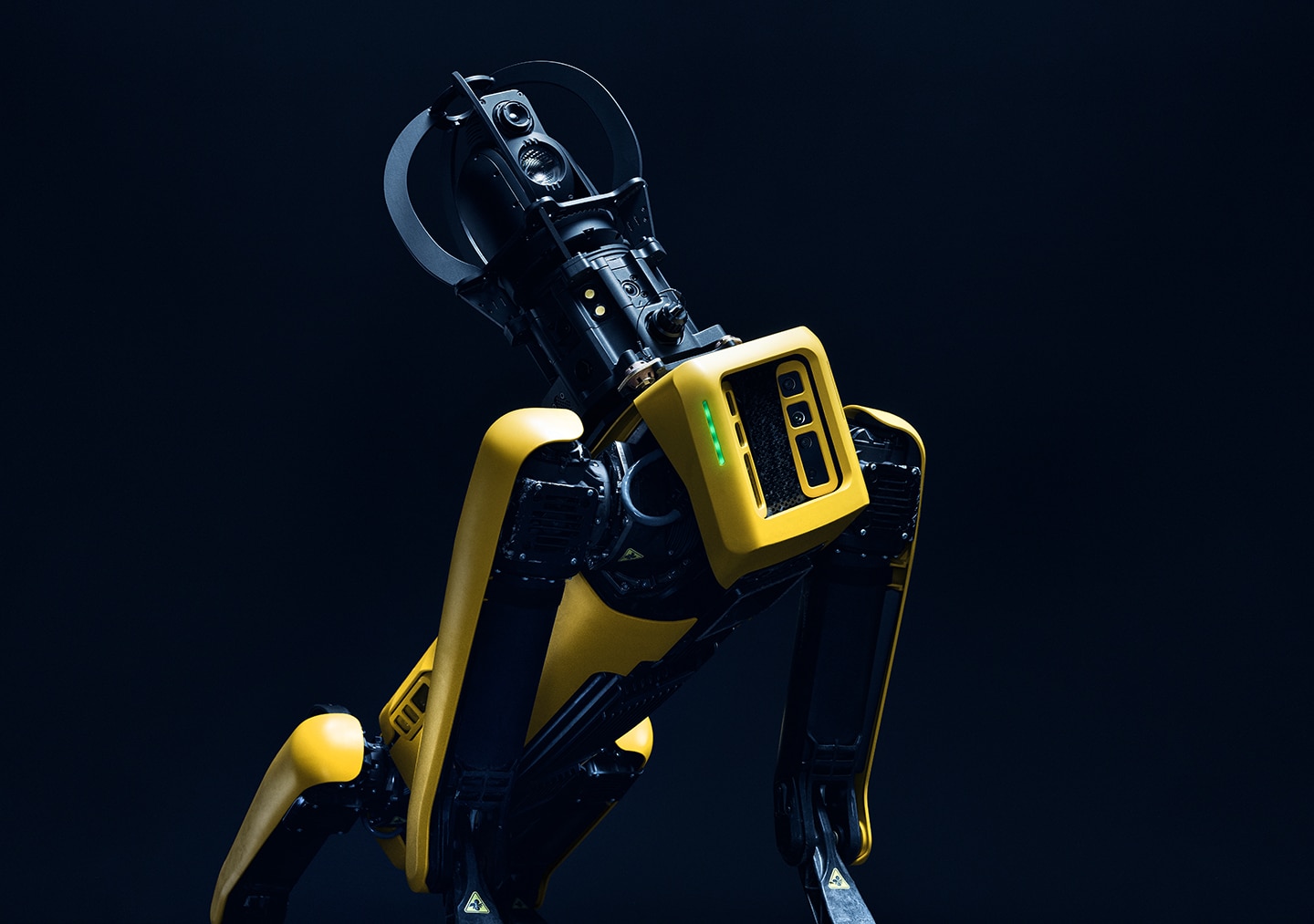
Spot is a four-legged autonomous robot developed by Boston Dynamics, a robotics company headquartered in Waltham, Massachusetts. Designed for inspection, security, and data collection in complex or hazardous environments, Spot can navigate stairs, rough terrain, and confined spaces that are inaccessible to wheeled robots. It is commercially available and has been deployed across industries including utilities, oil and gas, construction, and public safety. Spot supports a modular payload system that accommodates thermal cameras, pan-tilt-zoom (PTZ) cameras, lidar units, methane sensors, and other mission-specific hardware. Boston Dynamics also offers the Orbit fleet-management software platform, enabling operators to schedule autonomous inspection routes, aggregate sensor data, and manage multiple Spot units from a central interface. The robot is widely regarded as one of the most capable and commercially mature legged robots on the market.
1,176 views
 Robot
RobotRealSense Depth Camera D455
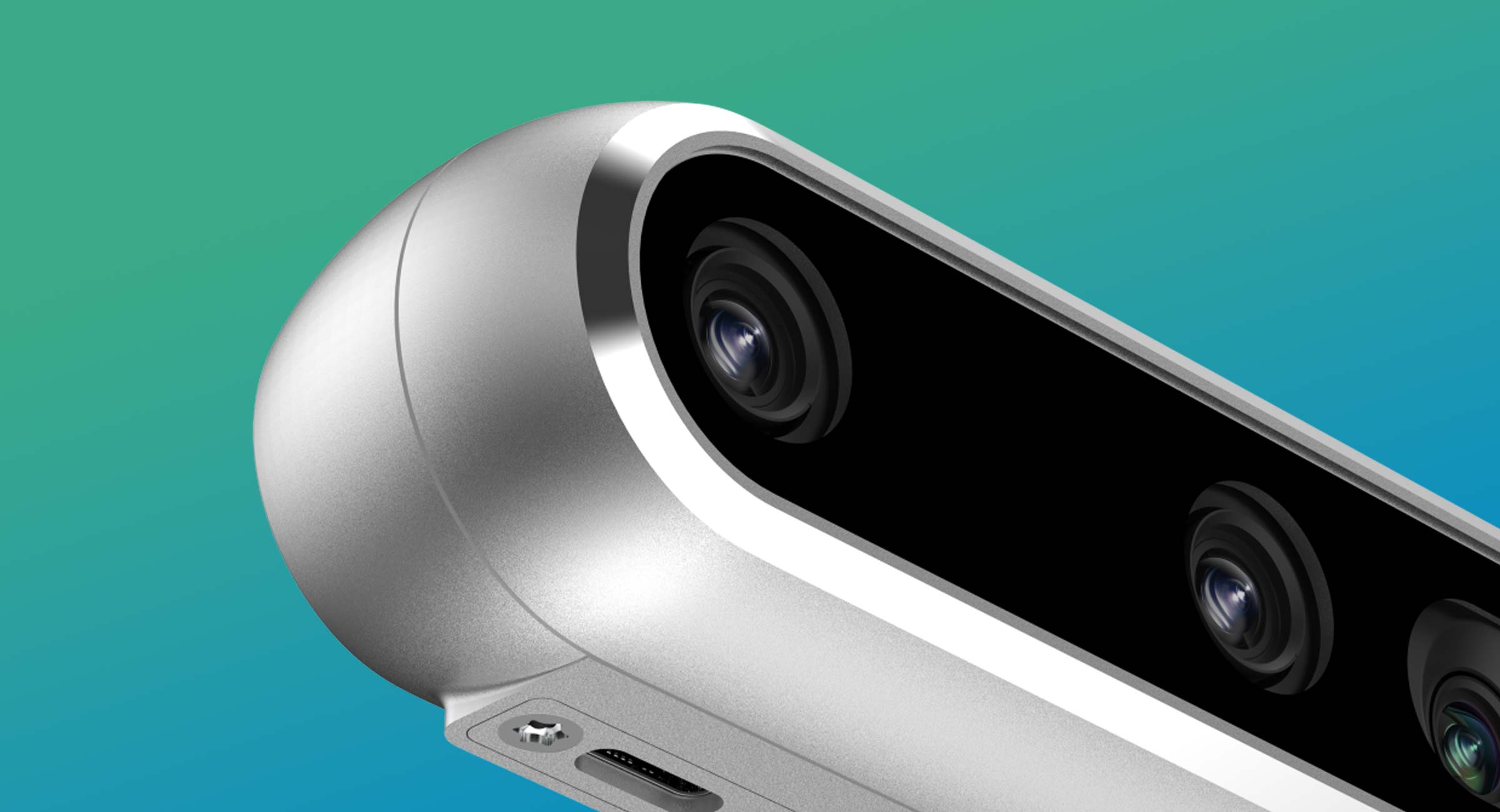
The RealSense Depth Camera D455 is a stereoscopic active-infrared depth camera belonging to Intel's D400 series, designed to capture high-fidelity depth data for robotics, autonomous mobile robots (AMRs), drones, and computer-vision applications. It features a 95 mm stereo baseline — the widest in the D400 lineup at the time of its introduction — which reportedly enables depth error of under 2% at ranges up to approximately 4 metres. Originally developed under the Intel RealSense brand, the D455 and related products were later spun off as part of an independent RealSense business unit following Intel's restructuring of the division around 2021–2022. The camera is widely adopted in research, industrial automation, and humanoid-robot development owing to its compact USB-powered form factor, open SDK support, and relatively accessible price point.
597 views
Rosie 2.0
The Rosie 2.0 is a commercial-grade autonomous robot vacuum developed by Tailos, designed to handle large-scale floor cleaning in business and institutional environments. It is offered in a two-pack configuration, allowing facilities to deploy multiple units simultaneously for broader coverage and more efficient cleaning cycles. Built to commercial durability standards, the Rosie 2.0 combines intelligent navigation with powerful suction technology to reduce reliance on manual labor and improve facility maintenance consistency. It targets businesses, hospitality venues, retail spaces, and other high-traffic environments where reliable, automated cleaning is a priority.
493 views