RoboMaster S1
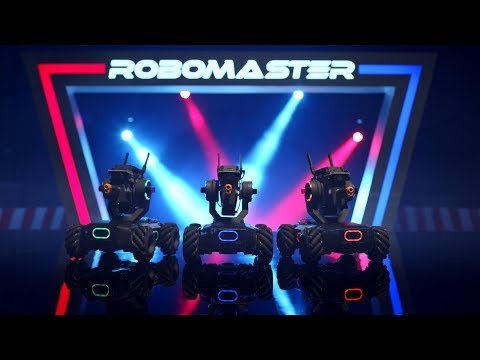
The RoboMaster S1 is an intelligent educational robot developed by DJI, the Chinese technology company best known for its consumer and professional drones. Designed for users aged 8 and above, the S1 combines hands-on STEM learning with competitive gameplay, allowing users to program the robot, engage in multiplayer battles, and explore artificial intelligence concepts through an accessible software environment. The S1 features a mecanum-wheel drivetrain for omnidirectional movement, an onboard camera with first-person view (FPV) capability, and a gel-bead launcher for competitive play. It supports programming in both Scratch and Python, making it suitable for beginners and more advanced learners alike. The robot is positioned as a flagship consumer-educational product within DJI's RoboMaster ecosystem.
Overview and Use Cases
The RoboMaster S1 was launched by DJI as a consumer-facing extension of its RoboMaster robotics competition platform, which has been used in university-level engineering competitions in China and internationally. The S1 translates competition-grade robotics concepts into an accessible package for home and classroom use. Primary use cases include:
- STEM education: Teaching programming, physics, and AI fundamentals through interactive challenges
- Competitive gaming: Real-time multiplayer battles using the gel-bead launcher and FPV camera
- AI exploration: Hands-on exercises in object recognition, gesture control, and sound detection
- Solo missions: Pre-designed challenges and free-roam exploration modes
The robot is marketed to schools, coding academies, and individual hobbyists seeking an engaging entry point into robotics.
Key Technical Features
The S1 is built around several notable hardware and software components:
- Drivetrain: Four mecanum wheels enabling omnidirectional movement (forward, lateral, diagonal, and rotational)
- Camera: An onboard FPV camera capable of streaming live video to the companion app; reportedly supports up to 1080p video
- Launcher: A motorized gel-bead launcher used in competitive battle modes
- Sensors: Includes an infrared sensor array, ultrasonic sensors for obstacle detection, and a TOF (time-of-flight) sensor
- AI capabilities: On-device recognition of people, gestures, sounds, and other S1 units; supports clapping and waving as control inputs
- Programming: Compatible with DJI's RoboMaster app, supporting both Scratch-based block coding and Python scripting
- Battery: Rechargeable intelligent battery; runtime is commonly reported at approximately 35 minutes under typical use, though this varies with activity
The chassis is partially user-assembled, reinforcing the educational value of understanding the robot's mechanical construction.
Comparison to Similar Robots
Within DJI's lineup, the RoboMaster S1 is the primary consumer robot offering. DJI's broader RoboMaster program includes purpose-built competition robots used in university tournaments, which are significantly more complex and expensive. The S1 serves as an accessible on-ramp to that ecosystem.
Among competitors, the S1 occupies a mid-to-upper tier of the consumer educational robot market. Comparable products include:
- Makeblock mBot series: More affordable, simpler construction kits aimed at younger learners
- LEGO Mindstorms (discontinued): A long-standing modular robotics platform with strong educational credentials
- Sphero RVR: A programmable rover with a similar STEM focus but lacking the combat and FPV features of the S1
The S1's combination of FPV gameplay, AI features, and dual-language programming support differentiates it from most direct competitors.
Market Context and Target Buyers
The RoboMaster S1 was priced at approximately USD 499 at launch, placing it in the premium segment of consumer educational robots. This positions it above entry-level coding toys but below professional or research-grade platforms. Target buyers include:
- Parents seeking advanced STEM toys for older children and teenagers
- Schools and after-school programs looking for engaging robotics curricula
- Hobbyists interested in FPV robotics and competitive play
The robot's relatively high price point and assembly requirement mean it is generally aimed at committed learners rather than casual users.
Deployments and Notable Adoption
As of public reporting, the RoboMaster S1 has been adopted by various coding schools and STEM enrichment programs, particularly in Asia and North America. DJI has promoted the platform through its RoboMaster competition events, which have drawn participation from universities and secondary schools globally. The robot's integration with a structured curriculum and official competition framework has supported institutional adoption, though specific customer figures have not been publicly disclosed by DJI.
Future Outlook
DJI has not publicly announced a direct successor to the RoboMaster S1 as of recent reporting. The broader trend toward AI-integrated educational robotics and competitive coding platforms suggests continued relevance for the product category. Potential areas of development may include enhanced AI processing, expanded sensor suites, and deeper integration with cloud-based learning platforms. The RoboMaster competition ecosystem continues to grow, which may drive further consumer-facing product releases in this line.
Related videos
Related entries
 Robot
RobotRelay Delivery Robot
The Relay Delivery Robot is an autonomous indoor delivery robot developed by Relay Robotics (formerly known as Savioke), designed primarily for hospitality and healthcare environments. It navigates hotel corridors and hospital hallways independently, rides elevators without human assistance, and delivers guest amenities, medications, linens, and other supplies directly to rooms or designated drop-off points. Relay is one of the most widely deployed service robots in its category, reportedly completing over one million lifetime deliveries with a publicly cited success rate of approximately 99.8%. With a cargo capacity of around 10 gallons, the robot is compact enough to operate in busy public spaces while carrying a meaningful payload of everyday supplies.
2,684 views
 Robot
RobotSpot
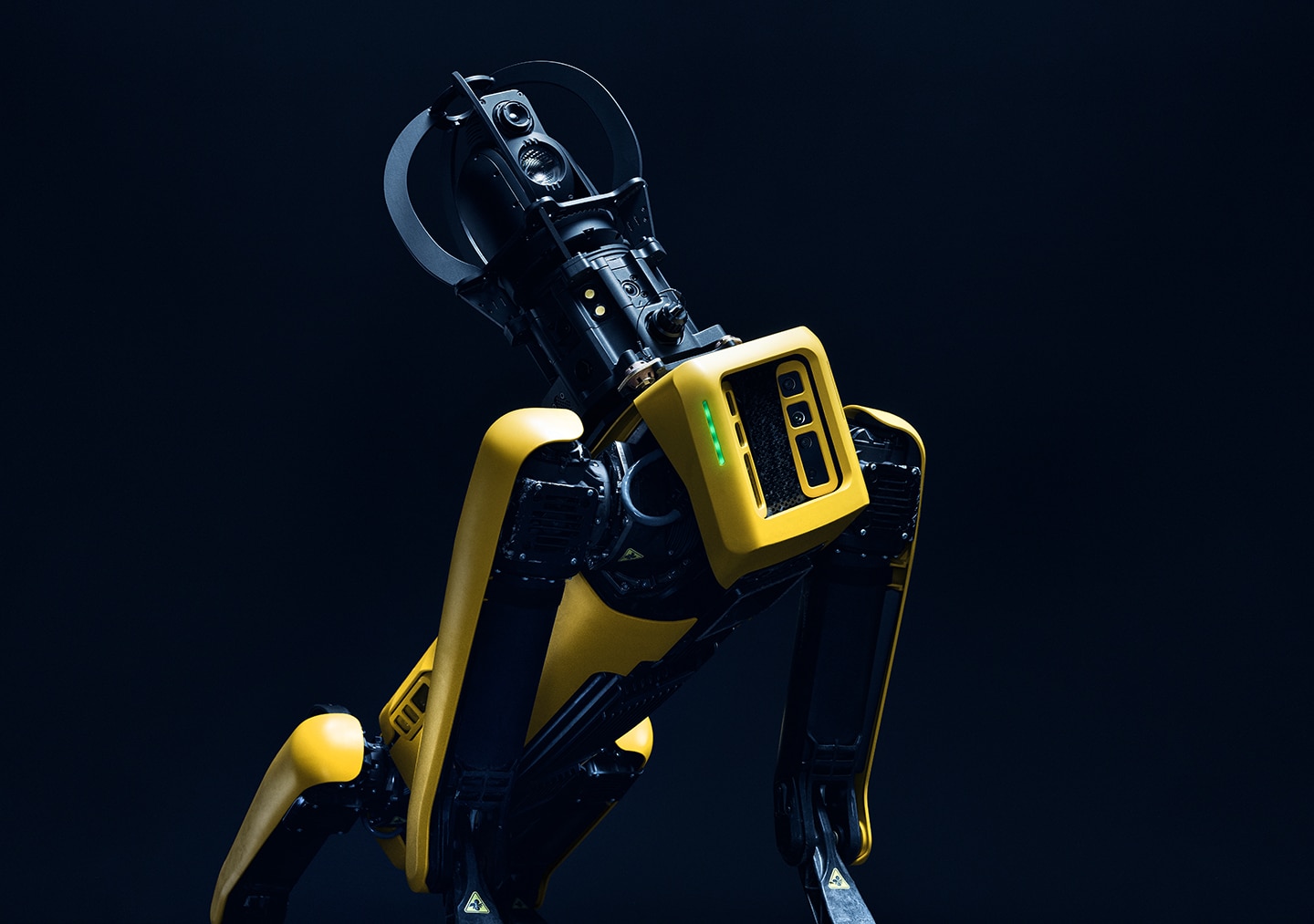
Spot is a four-legged autonomous robot developed by Boston Dynamics, a robotics company headquartered in Waltham, Massachusetts. Designed for inspection, security, and data collection in complex or hazardous environments, Spot can navigate stairs, rough terrain, and confined spaces that are inaccessible to wheeled robots. It is commercially available and has been deployed across industries including utilities, oil and gas, construction, and public safety. Spot supports a modular payload system that accommodates thermal cameras, pan-tilt-zoom (PTZ) cameras, lidar units, methane sensors, and other mission-specific hardware. Boston Dynamics also offers the Orbit fleet-management software platform, enabling operators to schedule autonomous inspection routes, aggregate sensor data, and manage multiple Spot units from a central interface. The robot is widely regarded as one of the most capable and commercially mature legged robots on the market.
1,164 views
 Robot
RobotRealSense Depth Camera D455
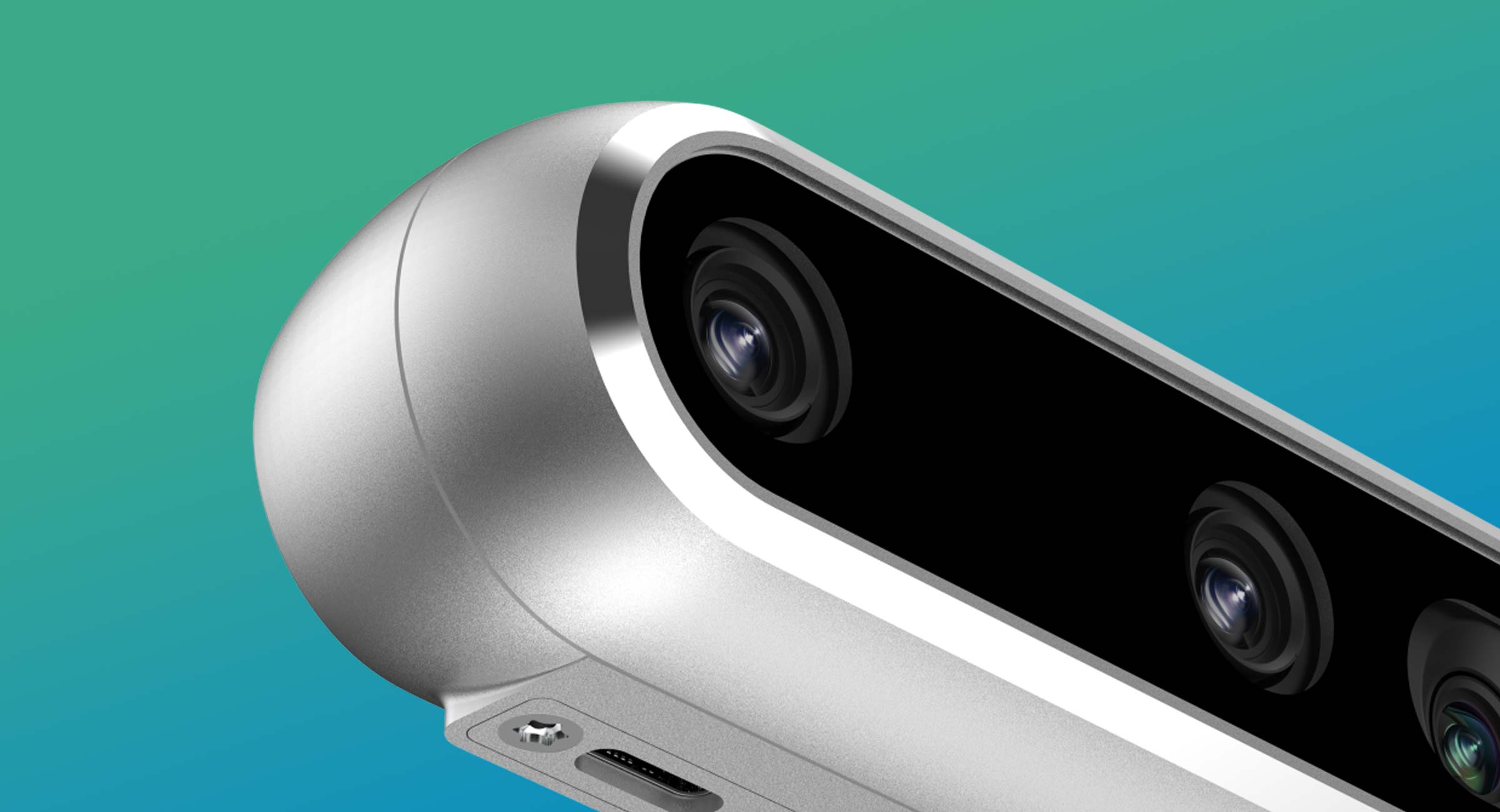
The RealSense Depth Camera D455 is a stereoscopic active-infrared depth camera belonging to Intel's D400 series, designed to capture high-fidelity depth data for robotics, autonomous mobile robots (AMRs), drones, and computer-vision applications. It features a 95 mm stereo baseline — the widest in the D400 lineup at the time of its introduction — which reportedly enables depth error of under 2% at ranges up to approximately 4 metres. Originally developed under the Intel RealSense brand, the D455 and related products were later spun off as part of an independent RealSense business unit following Intel's restructuring of the division around 2021–2022. The camera is widely adopted in research, industrial automation, and humanoid-robot development owing to its compact USB-powered form factor, open SDK support, and relatively accessible price point.
563 views
Rosie 2.0
The Rosie 2.0 is a commercial-grade autonomous robot vacuum developed by Tailos, designed to handle large-scale floor cleaning in business and institutional environments. It is offered in a two-pack configuration, allowing facilities to deploy multiple units simultaneously for broader coverage and more efficient cleaning cycles. Built to commercial durability standards, the Rosie 2.0 combines intelligent navigation with powerful suction technology to reduce reliance on manual labor and improve facility maintenance consistency. It targets businesses, hospitality venues, retail spaces, and other high-traffic environments where reliable, automated cleaning is a priority.
480 views