Underwater Inspection Solutions - Blue Atlas Robotics
Blue Atlas Robotics offers a suite of underwater inspection solutions built around autonomous underwater vehicles (AUVs) and remotely operated vehicles (ROVs) designed for subsea infrastructure monitoring. The systems are engineered to inspect pipelines, offshore platforms, subsea cables, and other marine structures, delivering high-resolution imaging and real-time data to operators on the surface. Targeting industries such as oil and gas, offshore renewable energy, and maritime infrastructure management, Blue Atlas Robotics positions its solutions as cost-effective alternatives to traditional diver-based or crewed inspection methods. The platform reportedly integrates advanced sensor payloads and data-collection capabilities to support asset documentation, anomaly detection, and regulatory compliance reporting.
Overview and Use Cases
Blue Atlas Robotics develops underwater inspection solutions that combine autonomous and remotely operated vehicle technologies to address the growing demand for safe, efficient subsea asset management. The core applications include:
- Pipeline inspection: Detecting corrosion, leaks, and structural anomalies along subsea oil, gas, and water pipelines.
- Offshore platform surveys: Assessing the structural integrity of jacket legs, risers, and mooring systems on offshore oil and gas installations.
- Subsea cable monitoring: Inspecting power and telecommunications cables for damage, burial depth, and environmental impact.
- Marine structure assessment: Evaluating ports, jetties, dams, and other underwater civil infrastructure.
- Renewable energy support: Inspecting foundations and inter-array cables for offshore wind and tidal energy installations.
By replacing or supplementing human divers, these systems can operate in hazardous, deep, or low-visibility environments where diver deployment would be impractical or unsafe.
Key Technical Features
While Blue Atlas Robotics has not publicly disclosed comprehensive technical specifications for all platform variants, the solutions are described as incorporating:
- High-resolution imaging: Multi-camera visual systems and reportedly sonar-based sensors for turbid or low-light conditions.
- Real-time data transmission: Surface-linked communication enabling live video feeds and sensor data relay to operators.
- Autonomous navigation: AUV variants are reported to support pre-programmed mission paths, reducing the need for continuous manual piloting.
- Modular sensor payloads: The ability to configure inspection packages with different sensor combinations depending on the target asset and environment.
- Data documentation tools: Onboard or cloud-linked systems for generating inspection reports suitable for regulatory and client use.
Specific depth ratings, endurance figures, and payload capacities have not been confirmed in public reporting and should be verified directly with the manufacturer.
Comparison to Similar Solutions
Within the broader underwater robotics market, Blue Atlas Robotics competes with established players such as Deep Trekker, which offers a well-documented commercial ROV lineup with published depth and payload specifications. Deep Trekker's products are widely available through direct sales channels and have a visible track record in aquaculture, search-and-rescue, and infrastructure inspection.
Blue Atlas Robotics appears to differentiate itself through a solutions-oriented approach—packaging vehicles, sensors, software, and operational support together—rather than selling standalone hardware. This positions the company closer to inspection service providers than to pure hardware vendors, though the exact business model is not fully detailed in public sources.
Compared to large-scale intervention ROV providers serving the deepwater oil and gas sector, Blue Atlas Robotics' solutions appear oriented toward lighter inspection-class operations, though the full depth and capability range has not been publicly confirmed.
Market Context and Target Buyers
The underwater inspection market is driven by regulatory requirements for periodic asset integrity assessments, particularly in the oil and gas and offshore wind sectors. Key buyer profiles for solutions like those offered by Blue Atlas Robotics typically include:
- Energy operators: Oil majors, independent producers, and offshore wind developers requiring routine and emergency inspection services.
- Infrastructure owners: Port authorities, utilities, and government agencies managing underwater civil assets.
- Inspection service companies: Third-party contractors that deploy ROV and AUV systems on behalf of asset owners.
Pricing for underwater inspection solutions varies widely depending on vehicle class, sensor configuration, and service scope. Blue Atlas Robotics has not published list prices, and prospective buyers are advised to request custom quotations.
Deployments and Customers
As of available public reporting, specific named customers or landmark deployments for Blue Atlas Robotics have not been disclosed. The company's described focus on oil and gas, renewable energy, and maritime infrastructure suggests engagement with clients in these sectors, but independent verification of deployment scale or customer identity is not available.
Future Outlook
The underwater inspection robotics sector is experiencing sustained growth, driven by aging offshore infrastructure, expanding offshore wind capacity, and increasing regulatory scrutiny of subsea assets. Advances in AI-assisted anomaly detection, longer-endurance battery systems, and improved acoustic communication are expected to enhance the capabilities of platforms like those offered by Blue Atlas Robotics. As autonomous inspection becomes more accepted by regulators and asset owners, solution providers that integrate hardware, software, and data management into unified offerings are likely to see increased demand.
Related videos

Australia joins US and UK underwater drone program | 7NEWS
7NEWS Australia
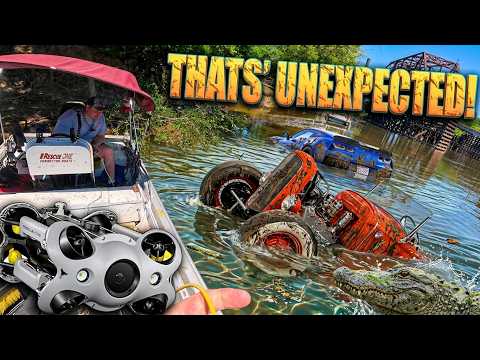
Underwater Drone Finds Vintage Car in Gator Infested River!
Exploring with Nug

Nancy Guthrie Search / Recovery Underwater Drone Rose Canyon Lake Part 2
Exploring With Jim

Nancy Guthrie Recovery Mission. Underwater Drone Search Rose Canyon Lake
Exploring With Jim

I Got an Underwater Drone | Chasing Gladius Mini S Test Run
Exploration Unknown

I Tossed an UNDERWATER Drone into this Forgotten Fishing Lake... 😯 (BIG Fish!)
Adventure Fishing
Related entries
 Robot
RobotG1
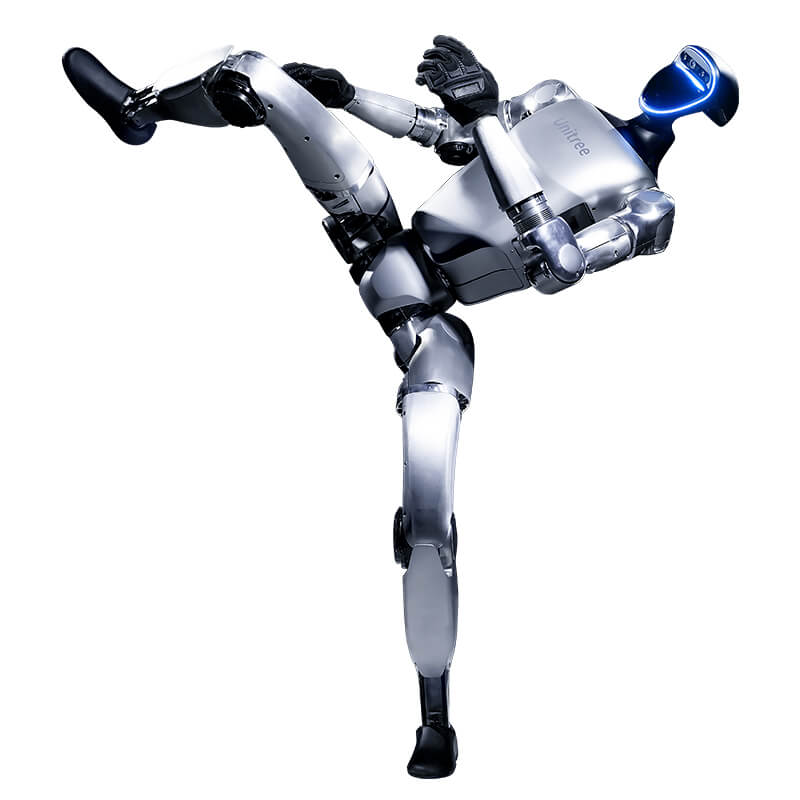
The Unitree G1 is a general-purpose humanoid robot developed by Unitree Robotics, a Chinese robotics company headquartered in Hangzhou. Standing approximately 1.32 meters tall and weighing around 35 kilograms, the G1 features 23 degrees of freedom and is capable of walking, running, recovering from falls, and performing dexterous manipulation tasks. It ships with SDK access, making it accessible to researchers and small-business operators seeking an affordable entry point into humanoid robotics. The G1 is widely regarded as one of the most competitively priced serious humanoid platforms available as of public reporting, positioning Unitree as a disruptive force in a market historically dominated by far more expensive systems. Its combination of mobility, recoverability, and open software access has attracted attention from academic institutions, robotics developers, and automation-focused startups worldwide.
1,003 views
 Robot
RobotUniversal Robots UR5e
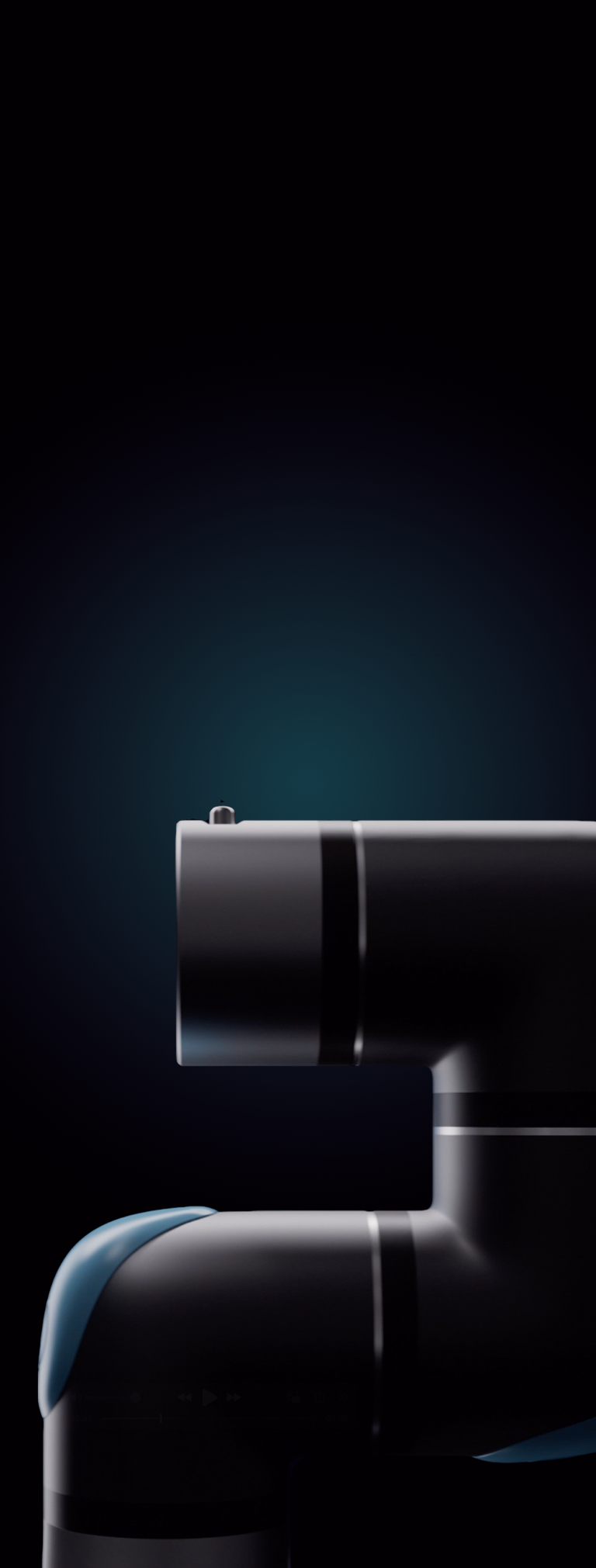
The Universal Robots UR5e is a six-axis collaborative robot arm (cobot) belonging to Universal Robots' e-Series product line. Designed for light-to-medium industrial and laboratory tasks, it is widely used in assembly, pick-and-place, machine tending, quality inspection, and lab automation workflows. Universal Robots, a Danish company and a subsidiary of Teradyne, is one of the most recognized names in the collaborative robotics market. The UR5e is programmed using Universal Robots' PolyScope graphical interface on a teach pendant, making it accessible to operators without deep robotics expertise. Its built-in force/torque sensing, tool-center-point control, and a broad ecosystem of certified end-effectors and accessories (the UR+ platform) have made it a popular mid-range cobot choice across manufacturing, electronics, food handling, and research sectors.
899 views
 Robot
RobotQuicktron M100
The Quicktron M100 is a heavy-duty autonomous mobile robot (AMR) belonging to Quicktron Robotics' M-Series product line. It is designed for demanding material handling tasks in warehouses, distribution centers, and manufacturing environments, using an integrated lift mechanism to transport shelves and pallets autonomously across facility floors. Quicktron Robotics, a company with roots in China and a global commercial presence, positions the M100 as a high-capacity solution for operations that require moving heavier loads than lighter AMR models can accommodate. The M100 targets logistics operators and manufacturers seeking to automate goods-to-person or pallet-movement workflows at scale.
201 views
 Robot
RobotNVIDIA Jetson Orin NX
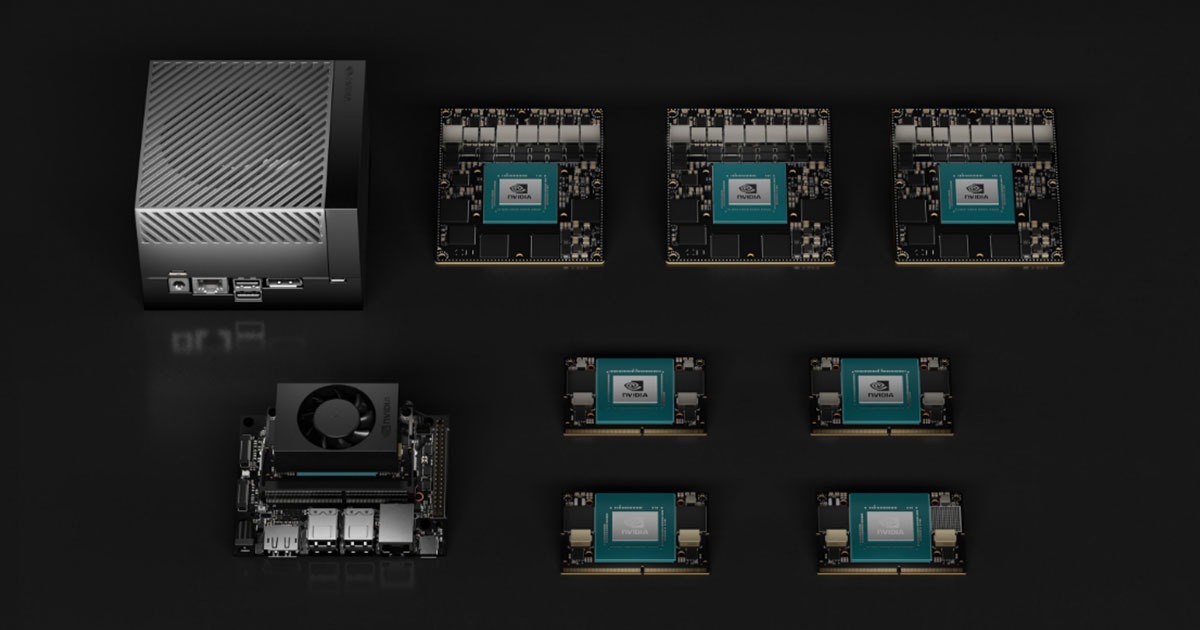
The NVIDIA Jetson Orin NX is a compact, SO-DIMM form-factor edge AI compute module designed for robotics, autonomous machines, and embedded vision applications. Manufactured by NVIDIA, it is available in 8 GB and 16 GB memory configurations and pairs an Ampere-architecture GPU with an 8-core Arm Cortex-A78AE CPU to deliver high-throughput on-device inference without relying on cloud connectivity. Positioned within NVIDIA's broader Jetson Orin family, the Orin NX targets developers and system integrators who need a balance of performance and power efficiency in a small footprint. It is commonly used in applications such as industrial inspection, autonomous mobile robots (AMRs), drone navigation, and smart edge devices where real-time AI inference is critical.
198 views