Kress EyePilot® 4×4 RTK
The Kress EyePilot® 4×4 RTK is a wire-free robotic lawn mower developed by Kress, designed for residential and semi-professional outdoor use. It employs RTK (Real-Time Kinematic) GPS positioning technology to navigate and mow autonomously without the need for perimeter boundary wires, delivering precise and repeatable cutting patterns. Equipped with a four-wheel-drive system, the EyePilot® 4×4 RTK is engineered to handle varied and challenging terrain, including slopes and uneven ground. The RTK satellite positioning system enables centimeter-level accuracy in route planning, distinguishing it from conventional robotic mowers that rely on magnetic boundary wires or basic GPS alone.

Overview and Use Cases
The Kress EyePilot® 4×4 RTK is a robotic lawn mower positioned at the higher end of the residential and prosumer outdoor robotics market. Its defining feature is the integration of RTK GPS technology, which allows the mower to operate without physical boundary wires — a significant convenience advantage over earlier-generation robotic mowers. The system is suited for homeowners and property managers with medium-to-large lawns who want reliable, autonomous grass cutting with minimal manual setup after initial configuration.
Typical use cases include:
- Residential gardens and lawns of moderate to large size
- Properties with complex shapes or multiple zones
- Terrain with gentle to moderate slopes where four-wheel drive provides added traction
Key Technical Features
The EyePilot® 4×4 RTK's core technology centers on its RTK positioning system, which uses satellite signals corrected by a base station to achieve centimeter-level accuracy. This enables the mower to follow planned mowing paths precisely and return reliably to its charging station.
Key reported features include:
- RTK GPS navigation: Wire-free boundary definition and precise route execution
- 4×4 drive system: All-wheel drive for improved traction on slopes and uneven surfaces
- Autonomous operation: Scheduled mowing with minimal user intervention after setup
- App connectivity: Reportedly controllable and configurable via a companion smartphone application
Specific details such as battery runtime, cutting width, maximum slope rating, and noise levels have not been independently verified in public technical documentation at the time of writing; prospective buyers should consult Kress directly for confirmed specifications.
Comparison to Similar Robots
Within the Kress Lineup
The sibling products listed under the Kress brand — including models associated with industrial, security, and agricultural robotics — suggest that Kress operates across a broad range of autonomous machine categories. However, the EyePilot® 4×4 RTK is specifically positioned in the outdoor consumer/prosumer segment, distinct from the industrial and agricultural platforms in the broader portfolio.
Versus Competitors
The wire-free RTK robotic mower segment has grown competitive, with notable rivals including:
- Husqvarna EPOS series, which also uses RTK-based boundary-free navigation
- Mammotion Luba series, another RTK-equipped consumer robotic mower
- Segway Navimow, which uses a proprietary satellite + vision system
The EyePilot® 4×4 RTK's four-wheel-drive system is a differentiating factor, as many competing models use two-wheel drive and may struggle more on steep or wet terrain.
Market Context and Target Buyers
RTK robotic mowers generally occupy a premium price tier compared to traditional wire-based models, reflecting the cost of RTK receivers and base station hardware. The EyePilot® 4×4 RTK is likely aimed at:
- Homeowners with larger or more complex properties who find wire installation impractical
- Prosumers and property managers seeking professional-grade autonomous mowing
- Buyers in markets where wire-free setup is a strong selling point
As of public reporting, specific retail pricing has not been widely published; interested buyers are advised to contact Kress or authorized dealers for current pricing.
Deployments and Notable Customers
No specific large-scale deployments or named enterprise customers for the EyePilot® 4×4 RTK have been reported in publicly available sources at the time of writing. The product appears to target individual residential and prosumer buyers rather than fleet or commercial operators.
Future Outlook
The RTK robotic mower category is expanding rapidly as satellite positioning hardware becomes more affordable and consumer awareness of wire-free solutions grows. Kress's investment in the EyePilot® platform suggests ongoing development is likely, potentially including expanded zone management, improved obstacle detection, and integration with broader smart-home ecosystems. As competition in this segment intensifies, software updates and feature parity with rivals will be important factors in the product's long-term positioning.
Related entries
 Robot
RobotG1
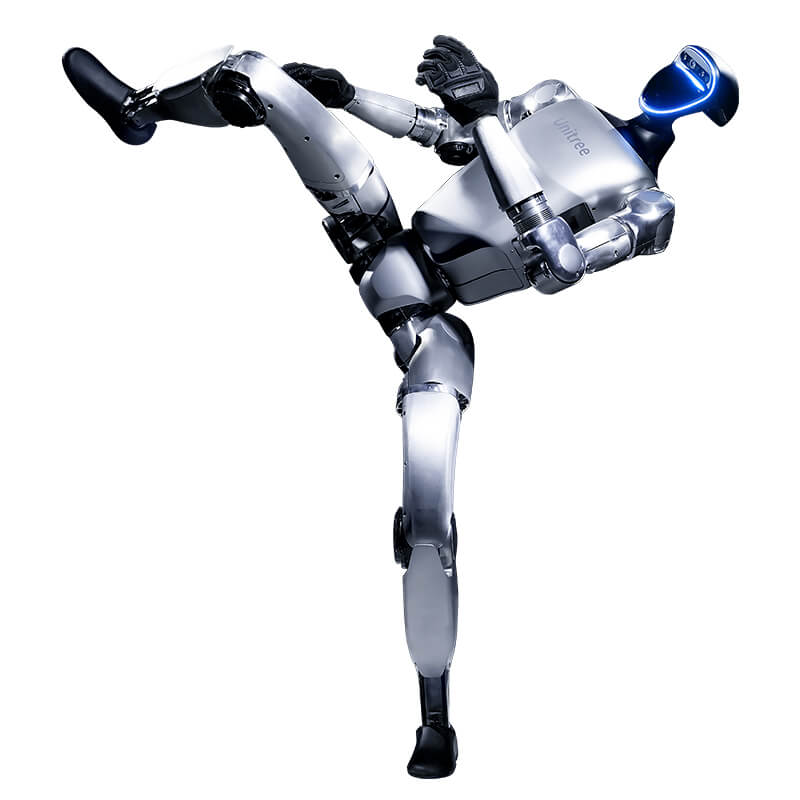
The Unitree G1 is a general-purpose humanoid robot developed by Unitree Robotics, a Chinese robotics company headquartered in Hangzhou. Standing approximately 1.32 meters tall and weighing around 35 kilograms, the G1 features 23 degrees of freedom and is capable of walking, running, recovering from falls, and performing dexterous manipulation tasks. It ships with SDK access, making it accessible to researchers and small-business operators seeking an affordable entry point into humanoid robotics. The G1 is widely regarded as one of the most competitively priced serious humanoid platforms available as of public reporting, positioning Unitree as a disruptive force in a market historically dominated by far more expensive systems. Its combination of mobility, recoverability, and open software access has attracted attention from academic institutions, robotics developers, and automation-focused startups worldwide.
5,992 views
 Robot
RobotUniversal Robots UR5e
The Universal Robots UR5e is a six-axis collaborative robot arm (cobot) belonging to Universal Robots' e-Series product line. Designed for light-to-medium industrial and laboratory tasks, it is widely used in assembly, pick-and-place, machine tending, quality inspection, and lab automation workflows. Universal Robots, a Danish company and a subsidiary of Teradyne, is one of the most recognized names in the collaborative robotics market. The UR5e is programmed using Universal Robots' PolyScope graphical interface on a teach pendant, making it accessible to operators without deep robotics expertise. Its built-in force/torque sensing, tool-center-point control, and a broad ecosystem of certified end-effectors and accessories (the UR+ platform) have made it a popular mid-range cobot choice across manufacturing, electronics, food handling, and research sectors.
5,298 views
 Robot
RobotRelay Delivery Robot
The Relay Delivery Robot is an autonomous indoor delivery robot developed by Relay Robotics (formerly known as Savioke), designed primarily for hospitality and healthcare environments. It navigates hotel corridors and hospital hallways independently, rides elevators without human assistance, and delivers guest amenities, medications, linens, and other supplies directly to rooms or designated drop-off points. Relay is one of the most widely deployed service robots in its category, reportedly completing over one million lifetime deliveries with a publicly cited success rate of approximately 99.8%. With a cargo capacity of around 10 gallons, the robot is compact enough to operate in busy public spaces while carrying a meaningful payload of everyday supplies.
2,614 views
 Robot
RobotSpot
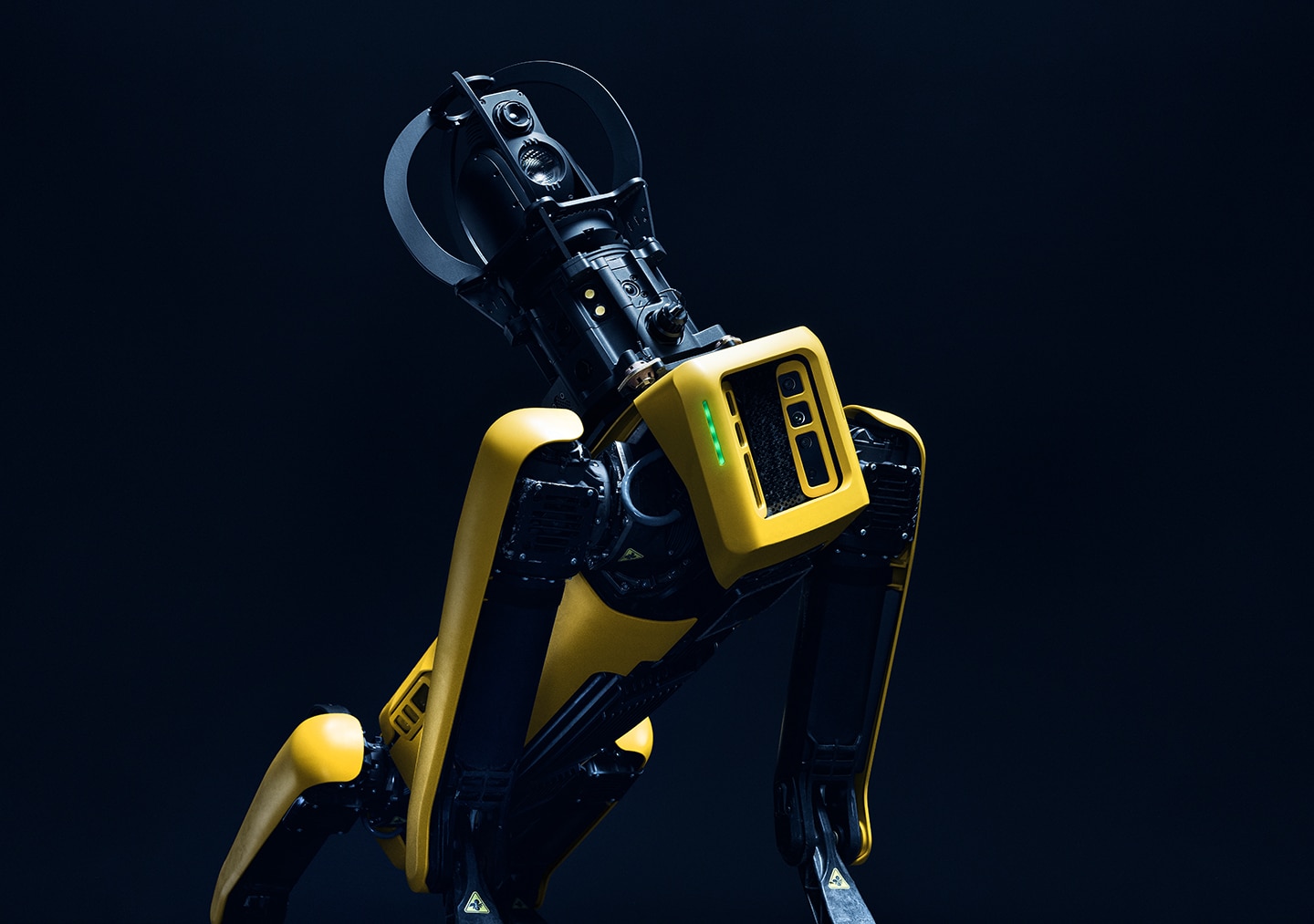
Spot is a four-legged autonomous robot developed by Boston Dynamics, a robotics company headquartered in Waltham, Massachusetts. Designed for inspection, security, and data collection in complex or hazardous environments, Spot can navigate stairs, rough terrain, and confined spaces that are inaccessible to wheeled robots. It is commercially available and has been deployed across industries including utilities, oil and gas, construction, and public safety. Spot supports a modular payload system that accommodates thermal cameras, pan-tilt-zoom (PTZ) cameras, lidar units, methane sensors, and other mission-specific hardware. Boston Dynamics also offers the Orbit fleet-management software platform, enabling operators to schedule autonomous inspection routes, aggregate sensor data, and manage multiple Spot units from a central interface. The robot is widely regarded as one of the most capable and commercially mature legged robots on the market.
1,063 views