Farm-ng Amiga - Modular Field Robot
The Farm-ng Amiga is an open-source, modular field robot developed by Farm-ng, a California-based agricultural robotics company. Designed for small to mid-size farms, it automates labor-intensive tasks such as weeding, spraying, seeding, and crop monitoring, helping growers reduce operational costs and address farm labor shortages. Built around a flexible, tool-agnostic architecture, the Amiga supports a wide range of attachable implements and integrates with precision agriculture software. Its open-source software stack makes it particularly attractive to researchers, agronomists, and technology-forward farmers who want to customize autonomous workflows without being locked into a proprietary ecosystem.
Overview and Use Cases
The Farm-ng Amiga is a compact, four-wheeled field robot engineered for row-crop and specialty-crop environments. Its primary value proposition is modularity: the platform is designed so that farmers and developers can attach a variety of implements — including mechanical weeders, spray booms, cameras, and seeding units — to address different agronomic tasks with a single base unit.
Key use cases include:
- Autonomous weeding in vegetable, berry, and specialty-crop rows
- Precision spraying to reduce chemical inputs
- Crop scouting and monitoring using onboard cameras and sensors
- Research and development for universities and agri-tech startups exploring autonomous farming
- Seeding and transplanting with compatible implement attachments
The robot is particularly well-suited to operations that are too small or topographically complex for large-scale autonomous machinery.
Key Technical Details
The Amiga is built on an open-source hardware and software platform, with Farm-ng publishing much of its codebase publicly to encourage community development. Reported technical characteristics include:
- Drive system: Electric, four-wheel drive with differential steering capability
- Navigation: GPS-based guidance with support for RTK (Real-Time Kinematic) positioning for sub-centimeter accuracy, reportedly
- Connectivity: Wi-Fi and optional cellular connectivity for remote monitoring
- Software stack: ROS 2 (Robot Operating System 2) compatible, enabling integration with a broad ecosystem of robotics tools
- Operator interface: Tablet-based dashboard for mission planning and teleoperation
- Power: Battery-electric; specific runtime figures vary by payload and terrain and have not been uniformly published
Payload capacity, top speed, and battery runtime specifics should be verified directly with Farm-ng, as publicly available figures vary across sources.
Comparison to Similar Robots
Within the agricultural robotics landscape, the Amiga occupies a distinct niche as an open-source, developer-friendly platform aimed at smaller operations:
- Naio Technologies Oz / Dino: European competitors focused on autonomous weeding; generally closed-source and targeted at larger specialty-crop farms.
- FarmWise Titan: A larger, AI-driven weeding robot designed for commercial-scale vegetable production — a different scale and price tier than the Amiga.
- Burro: An autonomous follow-and-carry robot for harvest logistics, addressing a complementary rather than competing use case.
- Carbon Robotics LaserWeeder: Uses high-powered lasers for weed elimination; a more capital-intensive, specialized solution compared to the Amiga's generalist modular approach.
The Amiga's open-source philosophy sets it apart from most competitors, making it more customizable but also requiring more technical engagement from the end user.
Market Context and Target Buyers
The Amiga is positioned in the prosumer-to-professional agricultural robotics segment, reportedly priced in a range accessible to small and mid-size specialty-crop farms — though buyers should confirm current pricing directly with Farm-ng, as configurations and attachments affect total cost.
Target buyers include:
- Small to mid-size vegetable, berry, and specialty-crop growers
- University agricultural research programs
- Agri-tech startups and developers building custom autonomous solutions
- Government-funded agricultural innovation projects
The open-source model lowers the barrier for technical customization, making it a popular platform in academic and R&D contexts.
Deployments and Notable Adoption
As of public reporting, the Amiga has been adopted by a range of farms and research institutions in the United States, with Farm-ng citing deployments in vegetable and specialty-crop operations. The robot has also been featured in agricultural technology demonstrations and university research programs exploring autonomous field operations. Specific customer names and deployment scales have not been broadly disclosed in public sources.
Future Outlook
The agricultural robotics market is growing rapidly, driven by persistent farm labor shortages, rising input costs, and increasing interest in sustainable farming practices. Farm-ng's open-source strategy positions the Amiga as a platform that can evolve alongside community-developed tools and integrations. Future development is likely to focus on enhanced autonomy, improved implement compatibility, and deeper integration with farm management software. As precision agriculture adoption accelerates among smaller farms, modular robots like the Amiga are expected to see growing demand.
Related entries
 Robot
RobotG1
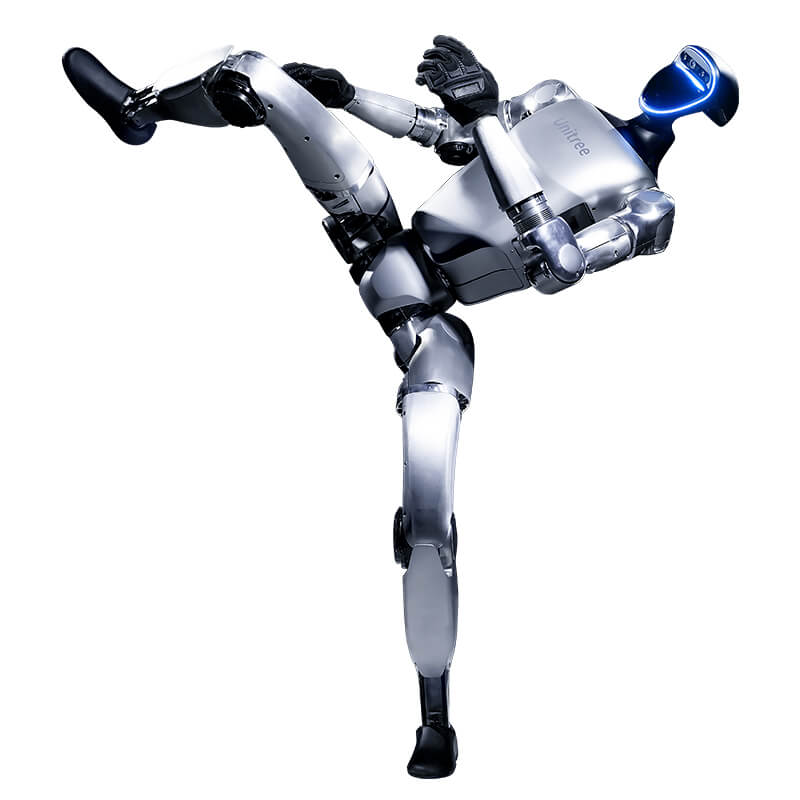
The Unitree G1 is a general-purpose humanoid robot developed by Unitree Robotics, a Chinese robotics company headquartered in Hangzhou. Standing approximately 1.32 meters tall and weighing around 35 kilograms, the G1 features 23 degrees of freedom and is capable of walking, running, recovering from falls, and performing dexterous manipulation tasks. It ships with SDK access, making it accessible to researchers and small-business operators seeking an affordable entry point into humanoid robotics. The G1 is widely regarded as one of the most competitively priced serious humanoid platforms available as of public reporting, positioning Unitree as a disruptive force in a market historically dominated by far more expensive systems. Its combination of mobility, recoverability, and open software access has attracted attention from academic institutions, robotics developers, and automation-focused startups worldwide.
999 views
 Robot
RobotUniversal Robots UR5e
The Universal Robots UR5e is a six-axis collaborative robot arm (cobot) belonging to Universal Robots' e-Series product line. Designed for light-to-medium industrial and laboratory tasks, it is widely used in assembly, pick-and-place, machine tending, quality inspection, and lab automation workflows. Universal Robots, a Danish company and a subsidiary of Teradyne, is one of the most recognized names in the collaborative robotics market. The UR5e is programmed using Universal Robots' PolyScope graphical interface on a teach pendant, making it accessible to operators without deep robotics expertise. Its built-in force/torque sensing, tool-center-point control, and a broad ecosystem of certified end-effectors and accessories (the UR+ platform) have made it a popular mid-range cobot choice across manufacturing, electronics, food handling, and research sectors.
896 views
 Robot
RobotQuicktron M100
The Quicktron M100 is a heavy-duty autonomous mobile robot (AMR) belonging to Quicktron Robotics' M-Series product line. It is designed for demanding material handling tasks in warehouses, distribution centers, and manufacturing environments, using an integrated lift mechanism to transport shelves and pallets autonomously across facility floors. Quicktron Robotics, a company with roots in China and a global commercial presence, positions the M100 as a high-capacity solution for operations that require moving heavier loads than lighter AMR models can accommodate. The M100 targets logistics operators and manufacturers seeking to automate goods-to-person or pallet-movement workflows at scale.
201 views
 Robot
RobotNVIDIA Jetson Orin NX
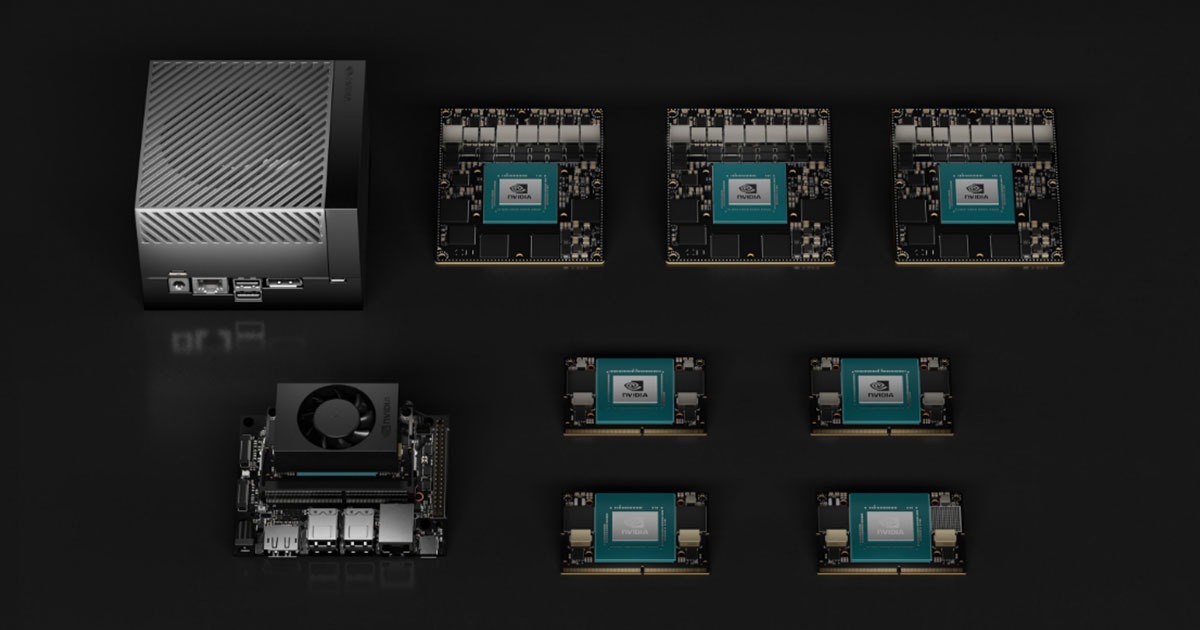
The NVIDIA Jetson Orin NX is a compact, SO-DIMM form-factor edge AI compute module designed for robotics, autonomous machines, and embedded vision applications. Manufactured by NVIDIA, it is available in 8 GB and 16 GB memory configurations and pairs an Ampere-architecture GPU with an 8-core Arm Cortex-A78AE CPU to deliver high-throughput on-device inference without relying on cloud connectivity. Positioned within NVIDIA's broader Jetson Orin family, the Orin NX targets developers and system integrators who need a balance of performance and power efficiency in a small footprint. It is commonly used in applications such as industrial inspection, autonomous mobile robots (AMRs), drone navigation, and smart edge devices where real-time AI inference is critical.
198 views