Da Vinci Surgical System
The Da Vinci Surgical System is a robotic-assisted surgical platform developed and manufactured by Intuitive Surgical, designed to enable surgeons to perform minimally invasive procedures with enhanced precision and control. Operating through a multi-arm robotic cart, a surgeon console, and a high-definition 3D vision system, it translates the surgeon's hand movements into scaled, tremor-filtered motions of wristed instruments inside the patient's body. Since its initial FDA clearance in 2000, the Da Vinci platform has become one of the most widely adopted surgical robotic systems in the world, supporting procedures across general surgery, urology, gynecology, cardiothoracic surgery, and other specialties. Intuitive Surgical has released multiple generations of the system—including the Da Vinci Si, Xi, X, and SP variants—each introducing improvements in imaging, instrument reach, and workflow integration.
Overview and Use Cases
The Da Vinci Surgical System is a surgeon-controlled robotic platform that facilitates minimally invasive surgery (MIS) across a broad range of clinical specialties. Rather than operating autonomously, the system acts as an extension of the surgeon's hands, providing a magnified 3D view of the operative field and translating console inputs into precise movements of EndoWrist instruments.
Key surgical applications include:
- Urology: radical prostatectomy, partial nephrectomy
- Gynecology: hysterectomy, myomectomy, endometriosis treatment
- General surgery: colorectal resection, hernia repair, bariatric procedures
- Cardiothoracic surgery: mitral valve repair, lobectomy
- Head and neck surgery (with the SP single-port variant)
Key Technical Features
The Da Vinci system is built around several core technology pillars:
- EndoWrist Instruments: Wristed instruments with reportedly seven degrees of freedom, allowing range of motion that exceeds the human hand in confined anatomical spaces.
- 3D High-Definition Vision: A dual-lens endoscope provides a stereoscopic, magnified view of the surgical site, displayed at the surgeon console.
- Tremor Filtration and Motion Scaling: The system filters out natural hand tremor and can scale down movements, improving fine-tissue manipulation.
- Ergonomic Surgeon Console: The operating surgeon sits at a console away from the operating table, reducing fatigue during long procedures.
- Multi-Arm Configuration: Depending on the model, the system supports three or four robotic arms, allowing simultaneous instrument and camera control.
The Da Vinci Xi introduced a redesigned overhead boom architecture for improved arm reach and multi-quadrant access, while the Da Vinci SP (Single Port) system uses a single cannula to deploy multiple articulating instruments, targeting confined anatomical corridors.
Comparison to Similar Systems
Within Intuitive Surgical's own portfolio, the Da Vinci Xi is positioned as the flagship multi-port system for complex, multi-quadrant procedures, while the Da Vinci X offers a more cost-accessible entry point with a subset of Xi capabilities. The SP system addresses single-incision and natural orifice approaches.
In the broader surgical robotics market, the Da Vinci system competes with platforms such as:
- Medtronic Hugo RAS: A modular, multi-arm system targeting international markets with a competitive pricing model.
- CMR Surgical Versius: A portable, modular system designed for flexible OR integration.
- Johnson & Johnson Ottava (in development as of public reporting): Anticipated to challenge Da Vinci in multi-specialty robotics.
- Stryker Mako and Zimmer Biomet ROSA: Orthopedic-focused systems that do not directly compete in soft-tissue surgery.
The Da Vinci system's installed base, clinical evidence library, and surgeon training ecosystem represent significant competitive advantages that newer entrants are working to overcome.
Market Context and Target Buyers
The Da Vinci system is positioned in the premium tier of the surgical robotics market. Capital costs for the system are substantial—commonly reported in industry analyses as ranging from roughly $1 million to over $2 million depending on configuration—with additional recurring revenue from proprietary instruments and service contracts, a business model that has been central to Intuitive Surgical's financial profile.
Target buyers are primarily:
- Large academic medical centers and teaching hospitals
- High-volume community hospitals seeking to attract complex surgical cases
- International hospital networks expanding minimally invasive surgery programs
Deployments and Notable Adoption
As of public reporting, Intuitive Surgical has placed thousands of Da Vinci systems in hospitals across the United States, Europe, Asia, and other regions. The system has been used in millions of procedures globally since its commercial launch. Prominent academic medical centers and major hospital systems in North America, Europe, and Japan have been among its long-standing adopters. Intuitive Surgical publishes annual procedure volume data in its investor reports, reflecting consistent year-over-year growth across most surgical categories.
Future Outlook
Intuitive Surgical has signaled continued investment in next-generation platforms and digital capabilities. The company has introduced Intuitive's Ion endoluminal system for bronchoscopic lung biopsy, indicating a strategy of expanding beyond traditional laparoscopic robotics. Integration of data analytics, augmented reality guidance, and potentially AI-assisted surgical planning are areas of active development across the industry. Regulatory activity and competitive launches in the early-to-mid 2020s are expected to intensify market pressure, though Da Vinci's entrenched clinical adoption and evidence base are likely to sustain its leading position for the near term.
Related videos

2026 Tianjin Expo: Chinese Humanoid Robots Dance & Play Music in Jaw-Dropping Show | Times Now World
Times Now World

School of Football | The Ghost Rabona | Boston Dynamics x Hyundai
Boston Dynamics

Robots dance into the future in China’s Tianjin
TRT World

Tesla Optimus Factory Hits First Steel: The 27,000 Robots/Day Plan is REAL
Tech Revolution

School of Football | The Rabona | Boston Dynamics x Hyundai
Boston Dynamics

Drone வாங்குறீங்களா? Syfero-வின் 3 Days Training தான் Real Advantage🚁 Product + Training + Support✅
Syfero Synergetics
Related entries
 Robot
RobotG1
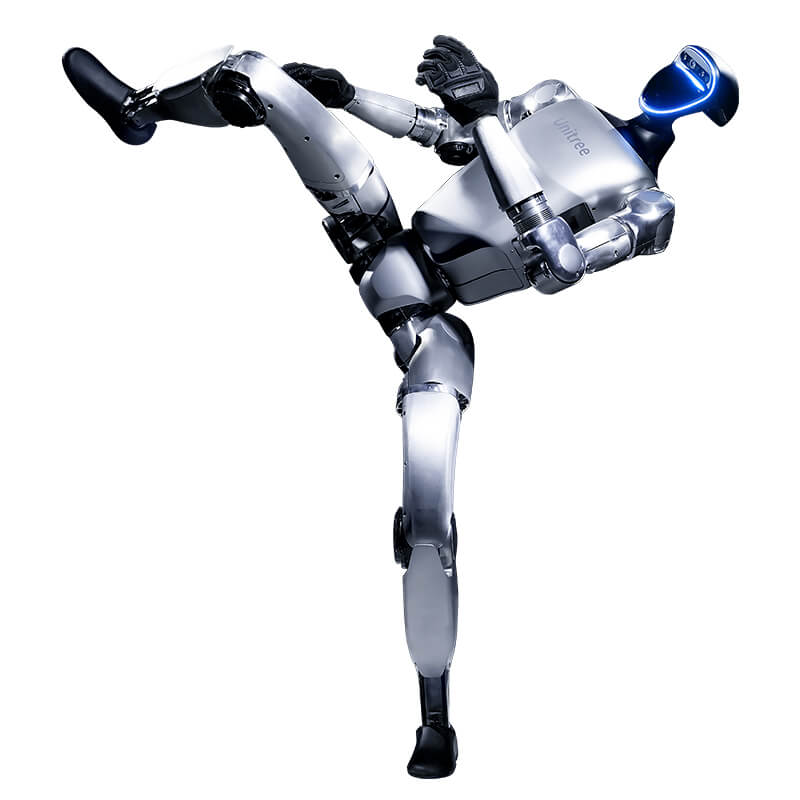
The Unitree G1 is a general-purpose humanoid robot developed by Unitree Robotics, a Chinese robotics company headquartered in Hangzhou. Standing approximately 1.32 meters tall and weighing around 35 kilograms, the G1 features 23 degrees of freedom and is capable of walking, running, recovering from falls, and performing dexterous manipulation tasks. It ships with SDK access, making it accessible to researchers and small-business operators seeking an affordable entry point into humanoid robotics. The G1 is widely regarded as one of the most competitively priced serious humanoid platforms available as of public reporting, positioning Unitree as a disruptive force in a market historically dominated by far more expensive systems. Its combination of mobility, recoverability, and open software access has attracted attention from academic institutions, robotics developers, and automation-focused startups worldwide.
999 views
 Robot
RobotUniversal Robots UR5e
The Universal Robots UR5e is a six-axis collaborative robot arm (cobot) belonging to Universal Robots' e-Series product line. Designed for light-to-medium industrial and laboratory tasks, it is widely used in assembly, pick-and-place, machine tending, quality inspection, and lab automation workflows. Universal Robots, a Danish company and a subsidiary of Teradyne, is one of the most recognized names in the collaborative robotics market. The UR5e is programmed using Universal Robots' PolyScope graphical interface on a teach pendant, making it accessible to operators without deep robotics expertise. Its built-in force/torque sensing, tool-center-point control, and a broad ecosystem of certified end-effectors and accessories (the UR+ platform) have made it a popular mid-range cobot choice across manufacturing, electronics, food handling, and research sectors.
896 views
 Robot
RobotQuicktron M100
The Quicktron M100 is a heavy-duty autonomous mobile robot (AMR) belonging to Quicktron Robotics' M-Series product line. It is designed for demanding material handling tasks in warehouses, distribution centers, and manufacturing environments, using an integrated lift mechanism to transport shelves and pallets autonomously across facility floors. Quicktron Robotics, a company with roots in China and a global commercial presence, positions the M100 as a high-capacity solution for operations that require moving heavier loads than lighter AMR models can accommodate. The M100 targets logistics operators and manufacturers seeking to automate goods-to-person or pallet-movement workflows at scale.
201 views
 Robot
RobotNVIDIA Jetson Orin NX
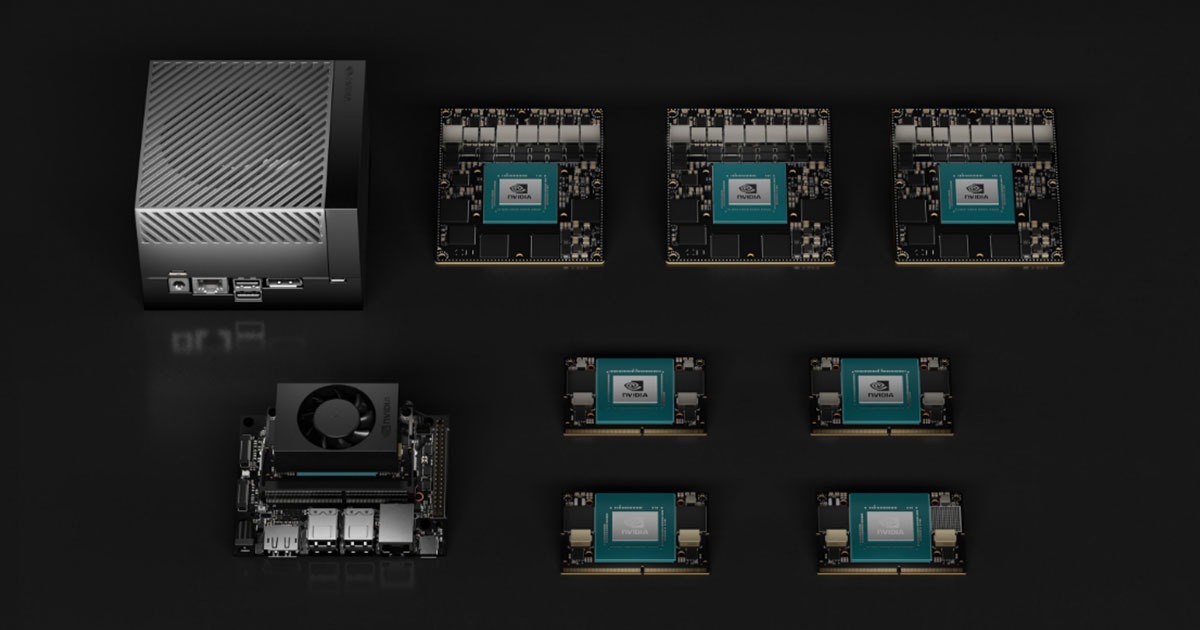
The NVIDIA Jetson Orin NX is a compact, SO-DIMM form-factor edge AI compute module designed for robotics, autonomous machines, and embedded vision applications. Manufactured by NVIDIA, it is available in 8 GB and 16 GB memory configurations and pairs an Ampere-architecture GPU with an 8-core Arm Cortex-A78AE CPU to deliver high-throughput on-device inference without relying on cloud connectivity. Positioned within NVIDIA's broader Jetson Orin family, the Orin NX targets developers and system integrators who need a balance of performance and power efficiency in a small footprint. It is commonly used in applications such as industrial inspection, autonomous mobile robots (AMRs), drone navigation, and smart edge devices where real-time AI inference is critical.
198 views