Carbon Robotics Laserweeder
The Carbon Robotics Laserweeder is an autonomous agricultural robot designed to identify and destroy weeds using high-powered lasers, eliminating the need for chemical herbicides across large-scale farming operations. Developed by Carbon Robotics, a Seattle-based agricultural technology company, the system uses AI-powered computer vision to distinguish crop plants from weeds in real time and delivers targeted laser energy to kill weeds at the meristem, leaving surrounding soil and crops undisturbed. The Laserweeder is designed for row-crop and specialty-crop farms, offering a sustainable alternative to both manual weeding and chemical weed control. It operates as a tractor-pulled implement and has been deployed on commercial farms across the United States, reportedly treating hundreds of thousands of acres. The system is positioned as a premium precision-agriculture solution aimed at large and mid-scale farming operations seeking to reduce input costs and chemical dependency.
Overview and Use Cases
The Carbon Robotics Laserweeder is a tractor-pulled autonomous implement that integrates laser optics, computer vision, and machine learning to perform non-chemical weed control at scale. It is designed for use in a wide range of crops, including onions, carrots, beets, lettuce, broccoli, and other specialty and row crops where inter-row and intra-row weeding is challenging.
Key use cases include:
- Herbicide reduction: Replacing or supplementing pre- and post-emergent chemical applications
- Organic farming: Providing a certified-input-free mechanical weed control option
- Labor substitution: Reducing dependence on seasonal hand-weeding labor
- Precision agronomy: Enabling data collection on weed pressure and field conditions
Key Technical Details
The Laserweeder uses an array of high-powered lasers directed by an AI vision system trained on large datasets of crop and weed imagery. The system reportedly processes camera feeds in real time, identifying weed targets and firing laser pulses to destroy the meristem — the plant's growth center — without disturbing the soil microbiome or leaving chemical residues.
Publicly reported technical characteristics include:
- Multiple laser heads mounted across a wide working width to enable high-throughput coverage
- Deep learning vision models capable of distinguishing dozens of weed species from crop plants
- Tractor-agnostic design, compatible with standard three-point hitch or drawbar configurations
- Continuous operation during daylight hours, with the system adapting to varying light conditions
Carbon Robotics has not publicly disclosed detailed specifications such as exact laser wattage per head, precise working width, or per-acre treatment speed in all configurations. Reported figures should be verified directly with the manufacturer.
Comparison to Similar Systems
Within the precision weeding segment, the Laserweeder competes with several approaches:
- Mechanical cultivators and robotic hoe systems (e.g., those from Garford, Machinefinder-listed cultivators): lower capital cost but less precise intra-row capability
- Robotic spot-sprayers (e.g., John Deere See & Spray): use targeted herbicide application rather than laser energy, maintaining chemical inputs
- Other laser weeders: Competitors such as Odd.Bot and Australian startup Agerris have explored laser or thermal weeding, though Carbon Robotics is among the most commercially advanced as of public reporting
Carbon Robotics does not appear to manufacture other robot product lines outside the Laserweeder family; the sibling robots listed in some directories are unrelated third-party products.
Market Context and Target Buyers
The Laserweeder is positioned in the premium tier of agricultural robotics. It is primarily targeted at:
- Large-scale specialty crop growers (vegetables, herbs, root crops)
- Organic and regenerative farming operations
- Contract farming and farm management companies seeking to reduce labor and chemical costs
Carbon Robotics has offered the system through both direct purchase and service/lease models, though specific pricing has not been publicly disclosed. The total cost of ownership is generally compared against multi-season herbicide and hand-weeding labor budgets.
Deployments and Notable Customers
As of public reporting, the Laserweeder has been deployed on commercial farms across multiple U.S. states, with concentrations in California, the Pacific Northwest, and other major vegetable-producing regions. Carbon Robotics has cited customer testimonials from onion and carrot growers reporting significant reductions in herbicide use and labor costs. The company has also reported cumulative acreage milestones, though specific figures should be confirmed with current company communications.
Future Outlook
Carbon Robotics has continued to iterate on the Laserweeder platform, reportedly expanding the number of laser heads per unit to increase throughput and working width. Broader trends in precision agriculture — including regulatory pressure on certain herbicides, rising labor costs, and growing consumer demand for reduced-chemical produce — are expected to support continued adoption. The company has raised venture funding to scale manufacturing and expand into new crop types and geographies, though specific financial details have not been fully disclosed publicly.
Related videos

Related entries
 Robot
RobotG1
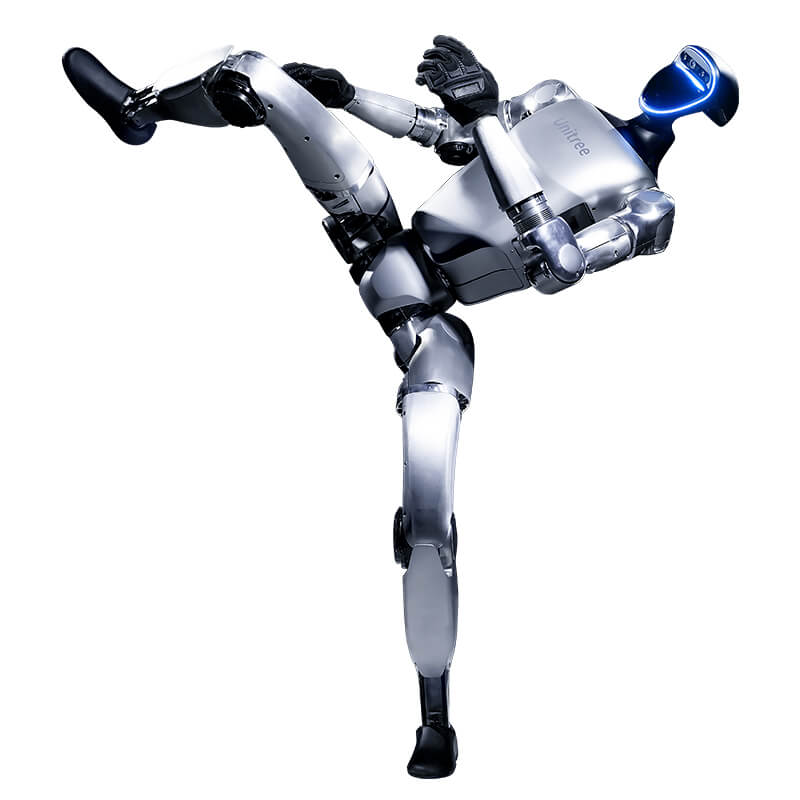
The Unitree G1 is a general-purpose humanoid robot developed by Unitree Robotics, a Chinese robotics company headquartered in Hangzhou. Standing approximately 1.32 meters tall and weighing around 35 kilograms, the G1 features 23 degrees of freedom and is capable of walking, running, recovering from falls, and performing dexterous manipulation tasks. It ships with SDK access, making it accessible to researchers and small-business operators seeking an affordable entry point into humanoid robotics. The G1 is widely regarded as one of the most competitively priced serious humanoid platforms available as of public reporting, positioning Unitree as a disruptive force in a market historically dominated by far more expensive systems. Its combination of mobility, recoverability, and open software access has attracted attention from academic institutions, robotics developers, and automation-focused startups worldwide.
999 views
 Robot
RobotUniversal Robots UR5e
The Universal Robots UR5e is a six-axis collaborative robot arm (cobot) belonging to Universal Robots' e-Series product line. Designed for light-to-medium industrial and laboratory tasks, it is widely used in assembly, pick-and-place, machine tending, quality inspection, and lab automation workflows. Universal Robots, a Danish company and a subsidiary of Teradyne, is one of the most recognized names in the collaborative robotics market. The UR5e is programmed using Universal Robots' PolyScope graphical interface on a teach pendant, making it accessible to operators without deep robotics expertise. Its built-in force/torque sensing, tool-center-point control, and a broad ecosystem of certified end-effectors and accessories (the UR+ platform) have made it a popular mid-range cobot choice across manufacturing, electronics, food handling, and research sectors.
896 views
 Robot
RobotQuicktron M100
The Quicktron M100 is a heavy-duty autonomous mobile robot (AMR) belonging to Quicktron Robotics' M-Series product line. It is designed for demanding material handling tasks in warehouses, distribution centers, and manufacturing environments, using an integrated lift mechanism to transport shelves and pallets autonomously across facility floors. Quicktron Robotics, a company with roots in China and a global commercial presence, positions the M100 as a high-capacity solution for operations that require moving heavier loads than lighter AMR models can accommodate. The M100 targets logistics operators and manufacturers seeking to automate goods-to-person or pallet-movement workflows at scale.
201 views
 Robot
RobotNVIDIA Jetson Orin NX
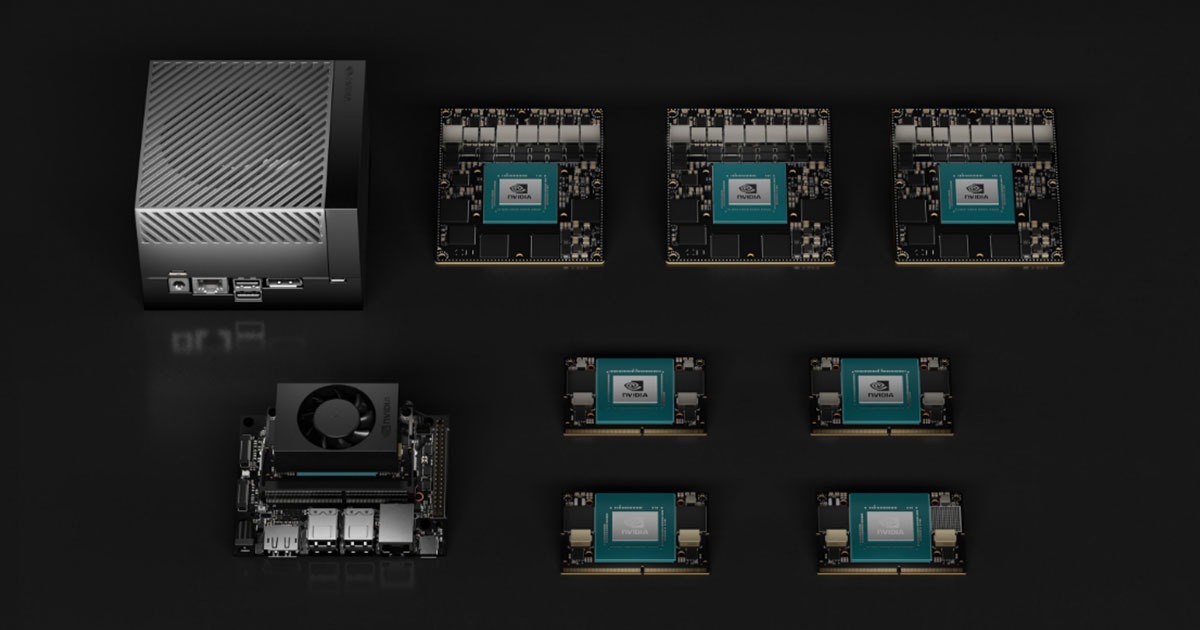
The NVIDIA Jetson Orin NX is a compact, SO-DIMM form-factor edge AI compute module designed for robotics, autonomous machines, and embedded vision applications. Manufactured by NVIDIA, it is available in 8 GB and 16 GB memory configurations and pairs an Ampere-architecture GPU with an 8-core Arm Cortex-A78AE CPU to deliver high-throughput on-device inference without relying on cloud connectivity. Positioned within NVIDIA's broader Jetson Orin family, the Orin NX targets developers and system integrators who need a balance of performance and power efficiency in a small footprint. It is commonly used in applications such as industrial inspection, autonomous mobile robots (AMRs), drone navigation, and smart edge devices where real-time AI inference is critical.
198 views