Agrobot: Farming Robots & Harvesters
Agrobot is a company specializing in autonomous robotic systems designed for agricultural harvesting and crop management. Its flagship products are self-propelled harvesting robots capable of identifying, picking, and sorting produce — most notably strawberries — using computer vision and robotic arms, aiming to reduce reliance on manual farm labor. The company develops what it describes as cutting-edge precision agriculture solutions, combining machine learning-based crop detection with gentle end-effectors suited to delicate fruits. Agrobot's systems are positioned as tools for large-scale commercial farms seeking to address labor shortages and improve harvesting consistency, though specific production deployment figures and financial details are not widely disclosed in public reporting.
Overview & Use Cases
Agrobot develops autonomous robots intended to mechanize one of agriculture's most labor-intensive tasks: selective harvesting of soft fruits and vegetables. The company is best known for its strawberry-harvesting robot platform, which uses an array of cameras and sensors mounted on a self-propelled chassis to scan rows of crops, detect ripe fruit, and deploy multiple robotic arms to pick and place produce without bruising.
Beyond strawberry harvesting, Agrobot has reportedly explored applications in other row crops and greenhouse environments. The core value proposition is threefold:
- Labor cost reduction – addressing chronic shortages of seasonal agricultural workers
- Harvest consistency – picking at optimal ripeness using vision-based classification
- Operational continuity – enabling around-the-clock harvesting independent of human shift constraints
Key Technical Details
While Agrobot does not publish exhaustive technical specifications in widely available public documents, the platform is generally described as incorporating:
- Computer vision systems using cameras and image-processing algorithms to distinguish ripe from unripe fruit based on color, size, and shape
- Multiple end-effectors (robotic arms) operating in parallel to increase throughput per pass
- Self-propelled chassis designed to navigate between crop rows with minimal soil compaction
- Onboard processing for real-time decision-making without constant remote connectivity
Specific figures for payload capacity, battery runtime, or picking speed have not been consistently confirmed in public reporting and should be verified directly with the manufacturer.
Comparison to Similar Robots
Within the agricultural robotics segment, Agrobot competes with a growing field of specialized harvesters:
- Tortuga AgTech and Advanced Farm Technologies have developed strawberry and berry harvesting robots with comparable vision-guided picking approaches
- Octinion (Belgium) produced a strawberry-picking robot with a soft gripper design, though the company reportedly ceased operations
- Dogtooth Technologies focuses on strawberry harvesting in tabletop growing systems
Unlike the sibling entries listed under the same platform directory — such as the Da Vinci Surgical System or Deep Trekker underwater ROVs — Agrobot operates in a niche defined by outdoor, unstructured environments and biological variability, presenting distinct engineering challenges around lighting, terrain, and produce fragility.
Market Context & Target Buyers
Agrobot's systems are positioned in the premium commercial agriculture segment. Target buyers are typically:
- Large-scale strawberry and soft-fruit farms in regions with high labor costs (e.g., California, Spain, the UK)
- Greenhouse and controlled-environment agriculture operators
- Agricultural cooperatives seeking to modernize harvesting infrastructure
Pricing for autonomous harvesting robots in this category is generally understood to be significant capital expenditure, often requiring leasing models or subsidy support to achieve viable ROI for individual farms. Agrobot has reportedly explored both direct-sale and service-based commercial models.
Deployments & Notable Customers
As of public reporting, Agrobot has conducted field trials and pilot deployments at commercial strawberry farms, particularly in California and in European growing regions. Specific named customers and large-scale commercial deployment figures have not been broadly disclosed. The company has participated in agricultural technology demonstrations and has received attention from industry media covering precision agriculture.
Future Outlook
The broader market for agricultural harvesting robots is projected to grow substantially as labor availability tightens and input costs rise globally. Agrobot is positioned to benefit from this trend if it can scale manufacturing and demonstrate reliable performance across diverse growing conditions. Key challenges for the company and the sector include:
- Improving picking speed and accuracy to match or approach human picker rates
- Adapting platforms to multiple crop types beyond strawberries
- Reducing per-unit cost to expand the addressable customer base
- Navigating regulatory and insurance frameworks for autonomous farm machinery
As AI-based vision systems continue to improve, companies like Agrobot may increasingly integrate more sophisticated models for ripeness prediction and yield mapping, broadening the value delivered beyond simple harvesting.
Related entries
 Robot
RobotG1
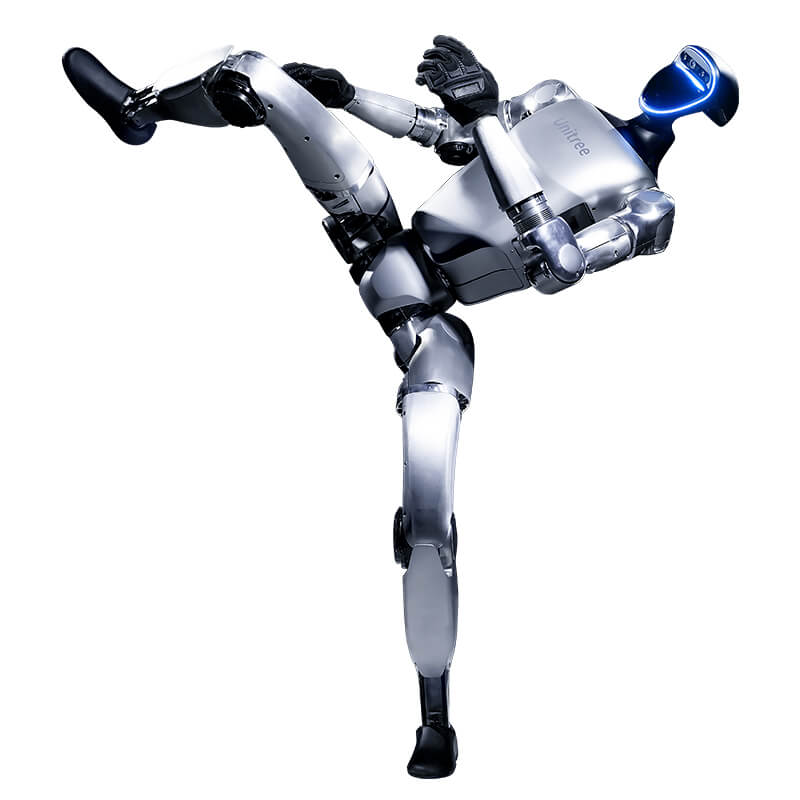
The Unitree G1 is a general-purpose humanoid robot developed by Unitree Robotics, a Chinese robotics company headquartered in Hangzhou. Standing approximately 1.32 meters tall and weighing around 35 kilograms, the G1 features 23 degrees of freedom and is capable of walking, running, recovering from falls, and performing dexterous manipulation tasks. It ships with SDK access, making it accessible to researchers and small-business operators seeking an affordable entry point into humanoid robotics. The G1 is widely regarded as one of the most competitively priced serious humanoid platforms available as of public reporting, positioning Unitree as a disruptive force in a market historically dominated by far more expensive systems. Its combination of mobility, recoverability, and open software access has attracted attention from academic institutions, robotics developers, and automation-focused startups worldwide.
999 views
 Robot
RobotUniversal Robots UR5e
The Universal Robots UR5e is a six-axis collaborative robot arm (cobot) belonging to Universal Robots' e-Series product line. Designed for light-to-medium industrial and laboratory tasks, it is widely used in assembly, pick-and-place, machine tending, quality inspection, and lab automation workflows. Universal Robots, a Danish company and a subsidiary of Teradyne, is one of the most recognized names in the collaborative robotics market. The UR5e is programmed using Universal Robots' PolyScope graphical interface on a teach pendant, making it accessible to operators without deep robotics expertise. Its built-in force/torque sensing, tool-center-point control, and a broad ecosystem of certified end-effectors and accessories (the UR+ platform) have made it a popular mid-range cobot choice across manufacturing, electronics, food handling, and research sectors.
896 views
 Robot
RobotQuicktron M100
The Quicktron M100 is a heavy-duty autonomous mobile robot (AMR) belonging to Quicktron Robotics' M-Series product line. It is designed for demanding material handling tasks in warehouses, distribution centers, and manufacturing environments, using an integrated lift mechanism to transport shelves and pallets autonomously across facility floors. Quicktron Robotics, a company with roots in China and a global commercial presence, positions the M100 as a high-capacity solution for operations that require moving heavier loads than lighter AMR models can accommodate. The M100 targets logistics operators and manufacturers seeking to automate goods-to-person or pallet-movement workflows at scale.
201 views
 Robot
RobotNVIDIA Jetson Orin NX
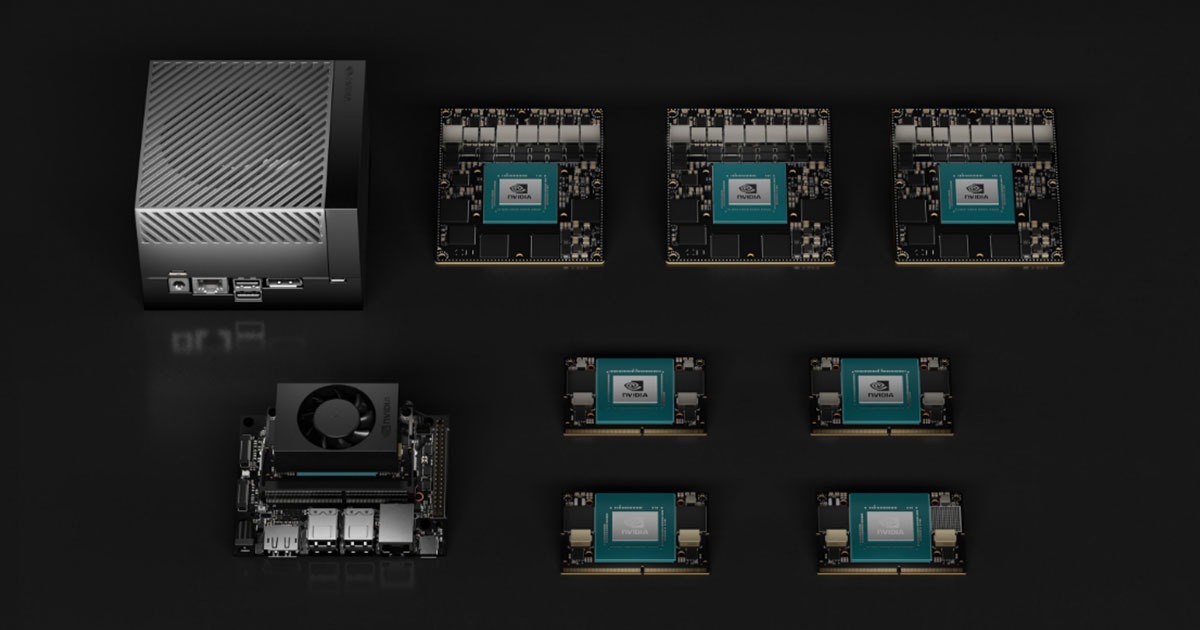
The NVIDIA Jetson Orin NX is a compact, SO-DIMM form-factor edge AI compute module designed for robotics, autonomous machines, and embedded vision applications. Manufactured by NVIDIA, it is available in 8 GB and 16 GB memory configurations and pairs an Ampere-architecture GPU with an 8-core Arm Cortex-A78AE CPU to deliver high-throughput on-device inference without relying on cloud connectivity. Positioned within NVIDIA's broader Jetson Orin family, the Orin NX targets developers and system integrators who need a balance of performance and power efficiency in a small footprint. It is commonly used in applications such as industrial inspection, autonomous mobile robots (AMRs), drone navigation, and smart edge devices where real-time AI inference is critical.
198 views