Let's compare
TRON 1
LimX Dynamics
Not yet assessed
- Height
- —
- Payload
- —
- Verified autonomy
- not assessed
- Real deployment
- not assessed
- Status
- —
- Price
- —
TRON 1
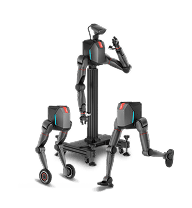
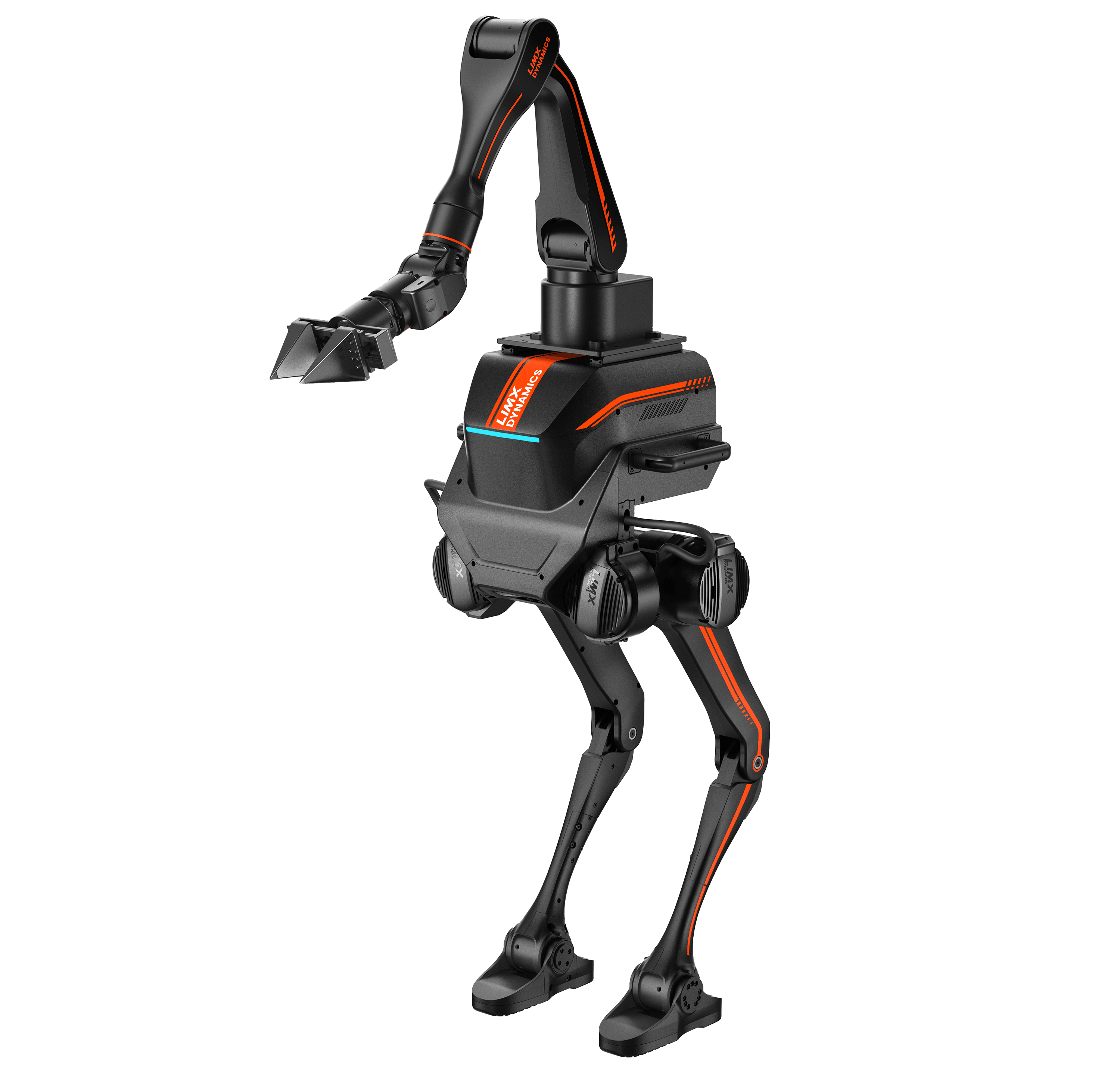
LimX DynamicsTRON 1 is the first multi-modal biped robot featuring a three-in-one modular foot-end design supporting point-foot, bipedal, and wheeled configurations. Designed as a gateway for humanoid reinforcement learning research, it combines ease-of-use with advanced capabilities. The platform includes open SDK, Python development environment, and supports mainstream simulation platforms. Modular expansion kits enable mobile manipulation, voice interaction, and sensor-based perception.
Availability
Specification
- Three-in-one modular foot-end design
- point-foot, sole (bipedal), and wheeled configurations
- Compatible with mainstream simulation platforms
- NVIDIA Isaac, Mujoco, Gazebo
- Modular expansion kits
- arm expansion, voice interaction (NVIDIA NX module), and sensor expansion (LiDAR + depth camera)
- Ready to use out of the box with built-in high-performance motion control algorithms
- Quick assembly and disassembly mechanism for efficient foot-end switching with automatic hardware recognition
- Fully open SDK and hardware interface for high-complexity algorithm validation
- Python-based development environment; C++ not required for algorithm validation
- Comprehensive URDF model to minimize Sim2Real gap
- All-terrain mobility capability with wheeled configuration
- Research platform for embodied AI, motion control, mobile manipulation, and whole-body control
Price
No public price — contact the supplier for a quote.
Good · Bad · Ugly
Evidence-graded claims from the LimX Dynamics deep report
LimX robots (Oli/P1) achieve fully autonomous locomotion — including stair ascent at up to 1 m/s and multi-terrain outdoor navigation — without human teleoperation, via reinforcement learning.
Four peer-reviewed papers (FastStair [22], LIPM-guided RL [23], VMTS [24], BarlowWalk [25]) independently confirm autonomous locomotion on LimX hardware, though all results are lab/research settings and no uncontrolled real-world deployment data exists.
from LimX Dynamics deep report →Luna is commercially available for purchase in China at 298,000 RMB (~$41,000 USD) as of May 2026, with international availability expected in 2027.
Multiple independent news outlets (RobotsBeat [13], aiweekly [8], chinatechpulse [14]) corroborate the 298,000 RMB price and China availability; 2027 international timeline is from an independent news report [13] but no shipment volumes or customer orders have been confirmed.
from LimX Dynamics deep report →
Luna humanoid executes autonomous real-world tasks — including dancing, multimodal interaction, and swarm performances — using onboard VLA models and AI task editor without teleoperation.
Independent sources (SiliconAngle [16], aiweekly [8]) explicitly note that Luna demos are staged and no uncontrolled real-world autonomous performance data has been disclosed, contradicting vendor autonomy claims [2].
from LimX Dynamics deep report →TRON 2 is a modular three-in-one platform (bipedal, wheeled, hybrid foot-wheel) capable of up to 3 m/s bipedal and 5 m/s wheel-foot speed, with 5 kg per-arm payload and 30 kg carry on flat terrain.
Specs are reported by an independent video source [26] but are self-reported/vendor-derived figures — no third-party benchmark or independent physical test has verified these speed or payload numbers.
from LimX Dynamics deep report →LimX Dynamics has concrete plans to ship robots to the Middle East in 2026 and is exploring U.S. business collaborations, signaling real commercial deployment beyond China.
CNBC [17] independently reports Middle East shipping plans for 2026 and U.S. collaboration exploration, but no signed contracts, customer names, or confirmed shipment volumes have been disclosed, leaving this at the intent/planning stage.
from LimX Dynamics deep report →
Luna supports swarm synchronization of 200+ units at millisecond-level precision.
The independent video source [26] explicitly labels this a vendor claim without verification, and no independent test or documented demonstration of 200+ unit swarm sync exists anywhere in the dossier.
from LimX Dynamics deep report →Luna is positioned for logistics and manufacturing deployment, not just entertainment.
Independent analysis (aiweekly [8], chinatechpulse [14]) and the official spec page [2] both identify shopping malls, museums, amusement parks, and stages as primary venues; the industrial/logistics positioning is vendor aspiration with zero deployment evidence.
from LimX Dynamics deep report →