Let's compare
M1509
Doosan Robotics
Not yet assessed
- Height
- —
- Payload
- —
- Verified autonomy
- not assessed
- Real deployment
- not assessed
- Status
- —
- Price
- —
M1509
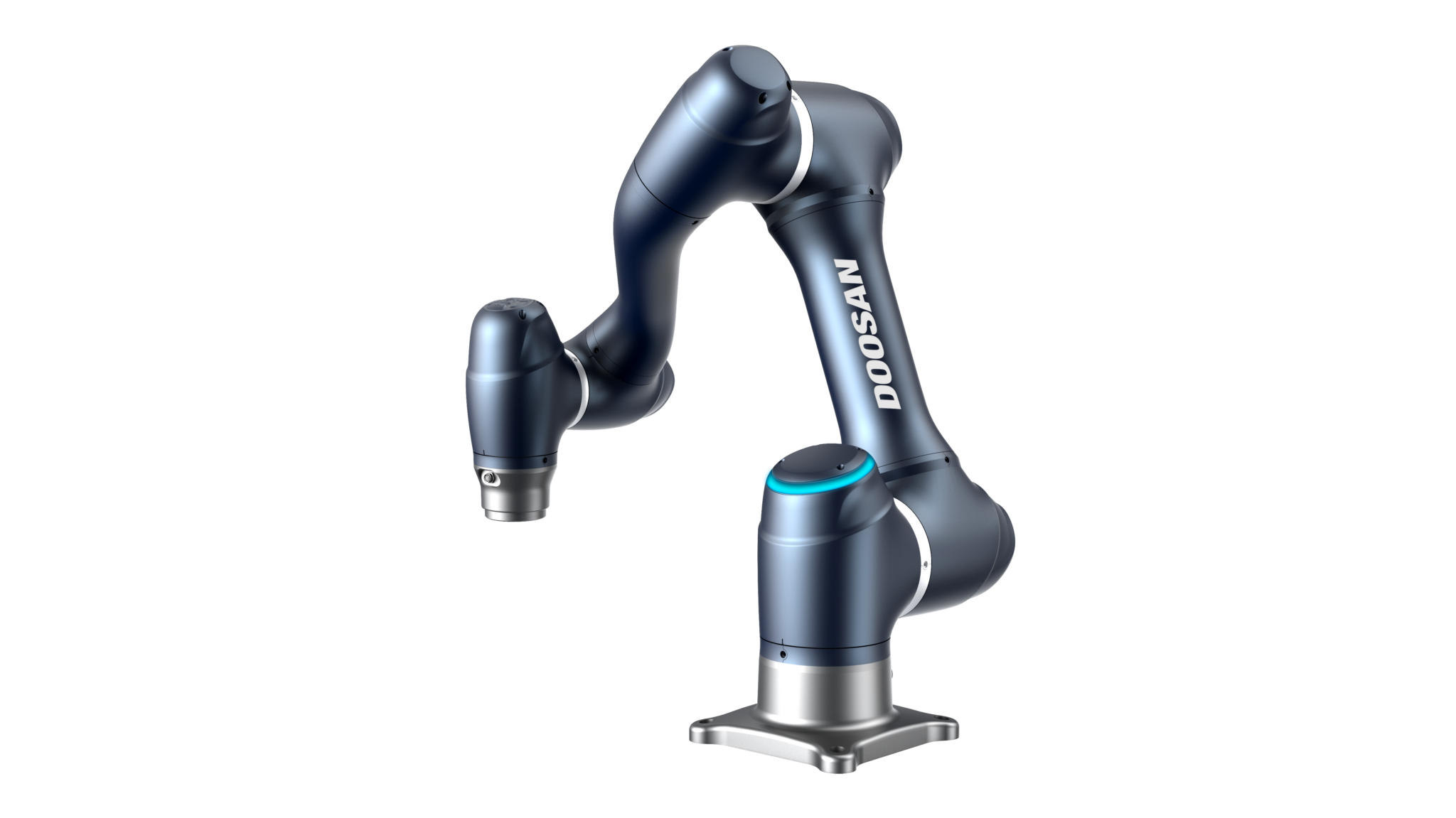
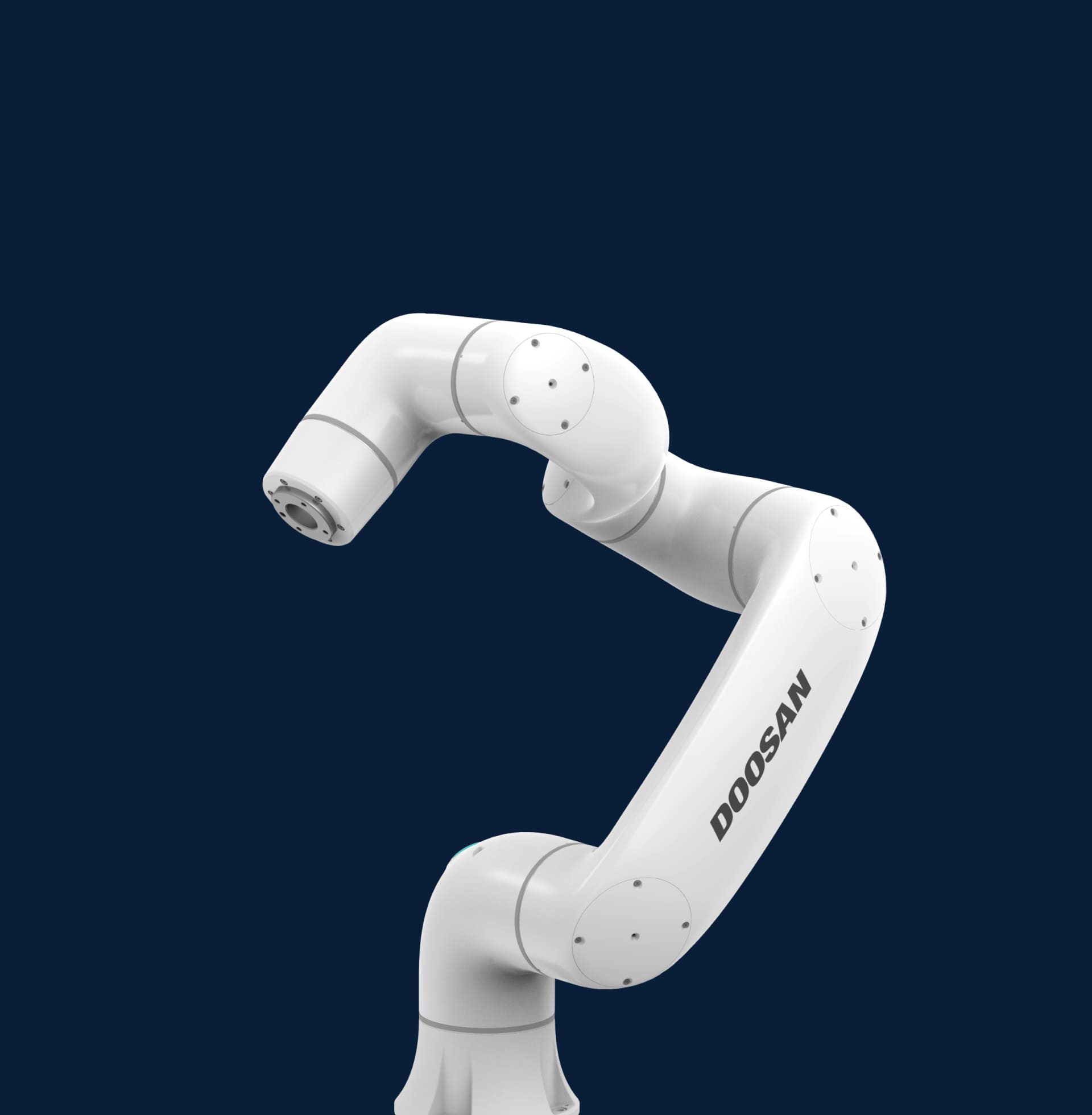
Doosan RoboticsThe Doosan Robotics M1509 is a 6-axis collaborative robot arm with a 15 kg payload and 900 mm reach, manufactured by Doosan Robotics (founded 2015, Korea's #1 cobot maker). It features torque sensors in all six joints for industry-leading collision sensitivity and PLe/Cat4 TÜV SÜD safety certification, and is priced around €37,500–€38,450 (excl. VAT) or $37,800–$40,800 USD. Independent community reviews confirm strong performance in welding, assembly, and pick-and-place, but note the controller is more complex than competitors like UR and documentation quality is poor. The robot autonomously executes its programmed industrial tasks without human teleoperation or remote-operator intervention during task execution.
Availability
Specification
- payload
- 15 kg
- reach
- 900 mm
- robot arm weight
- 32 kg
- controller weight
- 13 kg (standard controller per Humarobotics); 9 kg (per Homberger, IP40)
- max TCP speed
- 1 m/s
Price
No public price — contact the supplier for a quote.
Good · Bad · Ugly
Evidence-graded claims from the Doosan Robotics deep report
Doosan cobots hold PLe/Cat4 TÜV SÜD Functional Safety Assessment certification — the highest safety integrity level for collaborative robot operation.
TÜV SÜD is an independent, internationally recognized certification body; its PLe/Cat4 Functional Safety Assessment is confirmed by official sources and corroborated by third-party commerce listings, though the scope of certified models and any operational caveats remain unspecified [2][5][6].
from Doosan Robotics deep report →Doosan Robotics secured a contract to supply 100+ robot solutions to Kwangjin Group through 2027, and a separate 300-unit order from VRNJ (Thailand) with a 60-unit initial delivery.
The Kwangjin Group contract is independently reported by Assembly Magazine (trade press) and PR Newswire, confirming the deal's existence; however, actual delivery completion and operational outcomes have not yet been independently verified [10][12].
from Doosan Robotics deep report →
Doosan cobots are fully autonomous — once programmed, they execute industrial tasks (welding, palletizing, pick & place, machine tending) entirely without human intervention during task execution.
Official sources and the dossier's autonomy verdict assert fenceless, unsupervised collaborative operation, but no independent third-party test or customer report specifically confirms unattended autonomous task execution for the cobot line; community reliability feedback conflates Doosan CNC machines with cobots [2][7].
from Doosan Robotics deep report →All Doosan cobot joints are equipped with 6-axis torque sensors, enabling high-performance force detection and collision sensitivity for safe fenceless collaborative operation.
The 6-axis-per-joint torque sensor claim is confirmed by official Doosan sources and third-party commerce listings (Unchained Robotics), but no independent lab test or regulator report verifies the actual collision-detection performance in real deployments [2][5][6].
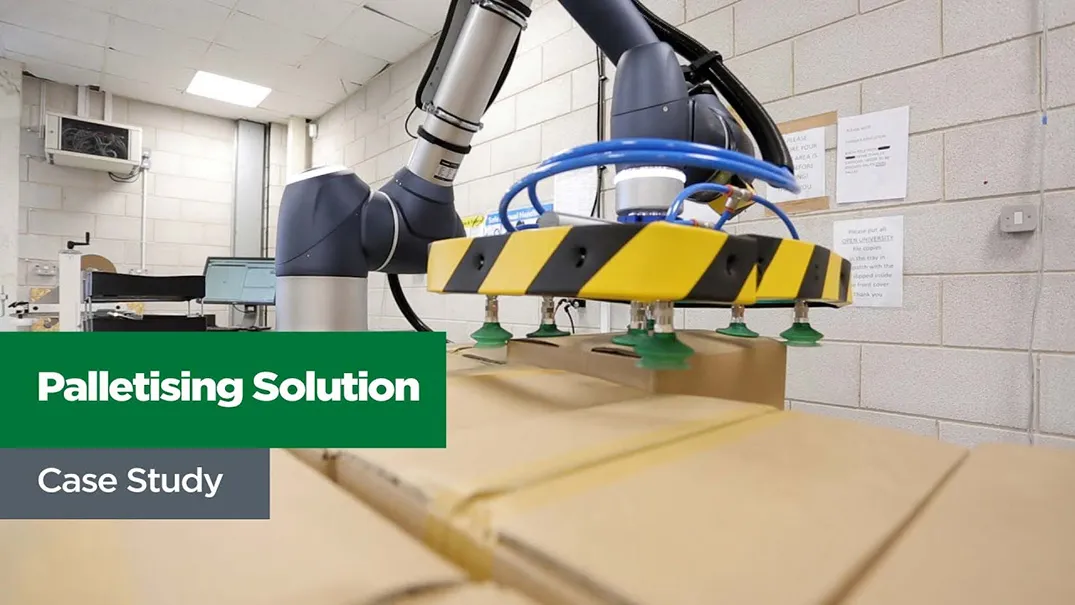
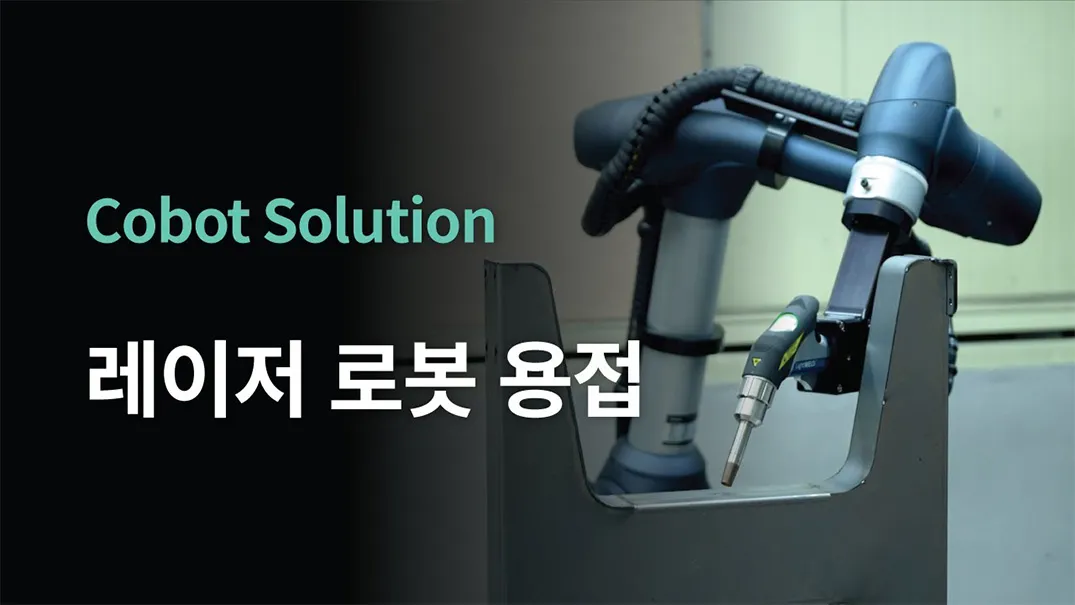
from Doosan Robotics deep report →Doosan cobots are deployed in 50+ countries across manufacturing, palletizing, welding, food prep, EV charging, and retail automation.
The 50+ country figure comes from Doosan's own official sources (with a separate official page citing 45 countries), and no independent audit, trade body report, or journalist investigation independently verifies the deployment breadth or application diversity [1][2][6].
from Doosan Robotics deep report →
Drag-and-drop programming reduces development time by up to 80% compared to traditional robot programming methods.
The 80% figure is a vendor-only claim with no independent benchmark; a Practical Machinist forum user corroborates ease of use for simple tasks but reveals a two-tier model where advanced programming requires a paid DartStudio subscription (~$1,500/year), undermining the universality of the claim [7].
from Doosan Robotics deep report →Doosan cobots deliver an average 1.5-year return on investment (ROI) in palletizing and welding applications.
The 1.5-year ROI figure appears exclusively on Doosan's own official palletizing/welding pages with no independent customer case study, financial audit, or third-party analyst report to substantiate it [3][4].
from Doosan Robotics deep report →
About the company
Editorial directory of real robot products from leading global manufacturers. Each entry links to the manufacturer's official page.