Let's compare
Phantom 3 Standard
DJI
Not yet assessed
- Height
- —
- Payload
- —
- Verified autonomy
- not assessed
- Real deployment
- not assessed
- Status
- —
- Price
- —
Phantom 3 Standard
DJIThe DJI Phantom 3 Standard is a consumer quadcopter drone released August 5, 2015, featuring a 2.7K camera with 3-axis gimbal, GPS-assisted flight, and a range of autonomous flight features including Return-to-Home, Follow Me, Waypoints, and Point of Interest. It was priced at launch around $699–$799 and later reduced to $499 before discontinuation. DJI officially ended maintenance and technical support for the Phantom 3 series on January 5, 2023, and the required DJI GO app is incompatible with modern iOS/Android versions, making it a poor choice for new buyers. The drone is primarily human-piloted via RC controller with GPS-assisted stabilization and autonomous safety/convenience features, but the core aerial photography task is directed and supervised by a human operator throughout.
Availability
Specification
- weight
- 1216 g (including battery and propellers)
- max_speed
- 16 m/s (Attitude mode, no wind)
- max_ascent_speed
- 5 m/s
- max_descent_speed
- 3 m/s
- transmission_range
- FCC: 1000 m; CE: 500 m (Wi-Fi, 2.4 GHz); control signal on 5.8 GHz
- battery
- 4480 mAh, 15.2V, LiPo 4S Intelligent Flight Battery
- battery_charger
- 17.4V output, 57W rated power, Micro USB charging port
Price
No public price — contact the supplier for a quote.
Good · Bad · Ugly
Evidence-graded claims from the DJI deep report
DJI holds 70–80% of the global civil drone market and approximately 96% of the U.S. market (pre-FCC restrictions).
Multiple independent analyses and research sources [10][13][16] corroborate DJI's dominant market position, though the 96% U.S. figure is pre-restriction and current share post-FCC action is unverified.
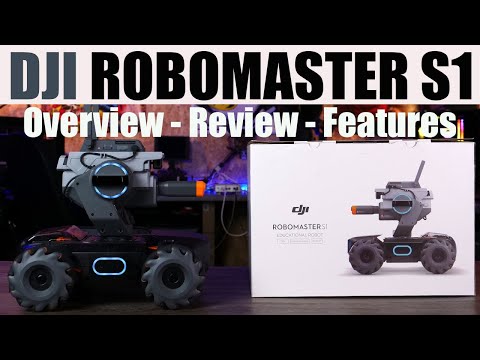
from DJI deep report →The DJI Robomaster S1 supports full onboard autonomy via a ROS2-based stack, including zero-shot sim-to-real multi-agent reinforcement learning (MARL) policy transfer.
An independent academic paper from the University of Cambridge [21] confirms the Robomaster S1 was used as a customized research platform running a ROS2-based full onboard autonomy stack with successful sim-to-real MARL transfer, though this reflects research-lab capability, not a commercial product claim.
from DJI deep report →
DJI claims the Lito X1 and Lito 1 feature omnidirectional obstacle sensing active down to 5 lux, and the Matrice 400 features power-line-level obstacle sensing.
Specs are sourced from DJI's own press releases [12] and official enterprise blog [7]; no independent third-party lab test or field validation of the 5-lux omnidirectional sensing or power-line detection performance has been identified in the dossier.
from DJI deep report →The DJI FlyCart 100 is a commercially deployed all-in-one intelligent drone delivery system.
The FlyCart 100 is listed on DJI's official website [1] as a product, but the dossier contains no independent evidence of commercial-scale deployment, customer outcomes, or regulatory approval for delivery operations in any jurisdiction.
from DJI deep report →
DJI's Return-to-Home (RTH) and autonomous safety features are reliable across its consumer drone lineup.
Multiple independent community reports [30][31][33][35] document RTH failures, remote controller transmission failures at low altitude, and tracking failures in forested environments, directly contradicting vendor marketing of reliable autonomous safety features.
from DJI deep report →DJI has deployed 600,000+ agricultural drones across 100+ countries, saving 410 million tons of water and cutting 51 million tons of CO2 emissions.
These figures originate exclusively from a DJI Agriculture press release [11]; no independent verification of the deployment count, water savings, or emissions reduction figures is present in the dossier.
from DJI deep report →
About the company
Editorial directory of real robot products from leading global manufacturers. Each entry links to the manufacturer's official page.