Let's compare
Matrice 4T - Thermal Package
DJI
Not yet assessed
- Height
- —
- Payload
- —
- Verified autonomy
- not assessed
- Real deployment
- not assessed
- Status
- —
- Price
- —
Matrice 4T - Thermal Package
DJIThe DJI Matrice 4T is a compact enterprise multi-sensor drone launched January 8, 2025, featuring a thermal camera, wide camera, zoom camera (up to 112x hybrid), laser rangefinder, RTK precision, and omnidirectional obstacle avoidance. It is designed for search and rescue, inspections, mapping, agriculture, and public safety missions. Retail pricing ranges from approximately $7,200–$7,499 for the base unit to $9,253–$9,999 for bundled kits. While DJI markets it as ushering in 'a new era of intelligent aerial operations' with AI-powered autonomous features, the drone operates as a supervised-autonomous platform: it executes missions and AI-assisted tasks on its own but requires an active human pilot/operator who plans missions, monitors flight, and can intervene. Independent community reception at launch was mixed-to-negative regarding the value proposition.
Availability
Price
No public price — contact the supplier for a quote.
Good · Bad · Ugly
Evidence-graded claims from the DJI deep report
DJI holds 70–80% of the global civil drone market and approximately 96% of the U.S. market (pre-FCC restrictions).
Multiple independent analyses and research sources [10][13][16] corroborate DJI's dominant market position, though the 96% U.S. figure is pre-restriction and current share post-FCC action is unverified.
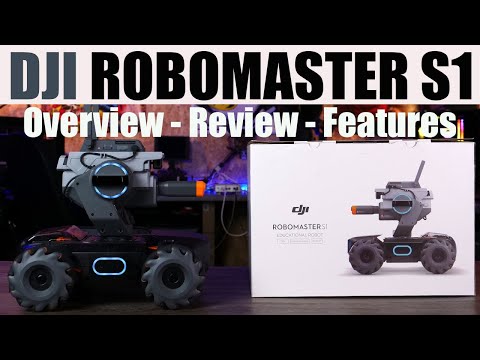
from DJI deep report →The DJI Robomaster S1 supports full onboard autonomy via a ROS2-based stack, including zero-shot sim-to-real multi-agent reinforcement learning (MARL) policy transfer.
An independent academic paper from the University of Cambridge [21] confirms the Robomaster S1 was used as a customized research platform running a ROS2-based full onboard autonomy stack with successful sim-to-real MARL transfer, though this reflects research-lab capability, not a commercial product claim.
from DJI deep report →
DJI claims the Lito X1 and Lito 1 feature omnidirectional obstacle sensing active down to 5 lux, and the Matrice 400 features power-line-level obstacle sensing.
Specs are sourced from DJI's own press releases [12] and official enterprise blog [7]; no independent third-party lab test or field validation of the 5-lux omnidirectional sensing or power-line detection performance has been identified in the dossier.
from DJI deep report →The DJI FlyCart 100 is a commercially deployed all-in-one intelligent drone delivery system.
The FlyCart 100 is listed on DJI's official website [1] as a product, but the dossier contains no independent evidence of commercial-scale deployment, customer outcomes, or regulatory approval for delivery operations in any jurisdiction.
from DJI deep report →
DJI's Return-to-Home (RTH) and autonomous safety features are reliable across its consumer drone lineup.
Multiple independent community reports [30][31][33][35] document RTH failures, remote controller transmission failures at low altitude, and tracking failures in forested environments, directly contradicting vendor marketing of reliable autonomous safety features.
from DJI deep report →DJI has deployed 600,000+ agricultural drones across 100+ countries, saving 410 million tons of water and cutting 51 million tons of CO2 emissions.
These figures originate exclusively from a DJI Agriculture press release [11]; no independent verification of the deployment count, water savings, or emissions reduction figures is present in the dossier.
from DJI deep report →
About the company
Editorial directory of real robot products from leading global manufacturers. Each entry links to the manufacturer's official page.