Zeabuz
Founded 2020 · Norway · zeabuz.com
SnapshotCompany claim
Zeabuz brings autonomy software to maritime. Since 2020, it has grown from research to real-world autonomy across multiple vessel types and markets. The company is scaling up to meet global demand, with offices in Trondheim (HQ), Oslo, and Stockholm.
- Founded
- 2020
- HQ
- Norway
- Models
- 1
- Categories
- 1
ContactCompany claim
- Address
- Skippergata 14, 7042 Trondheim, Norway
Product families
Is this your company? Claim this profile to add verified data, respond to our analysis, and upgrade claims to Verified.
Claim this profile1. Executive Overview {#executive-overview}
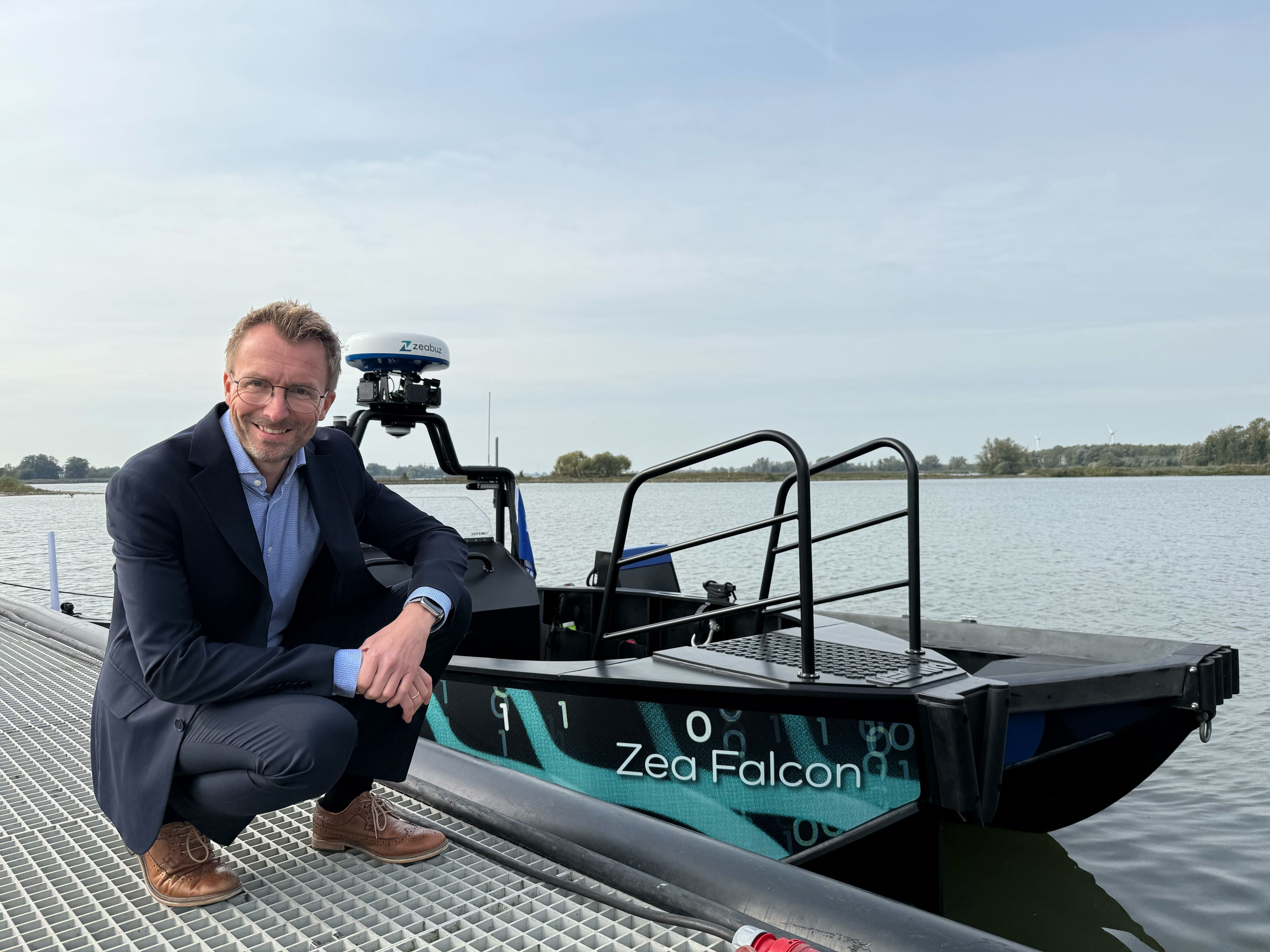
Zeabuz is a Norwegian maritime autonomy software company founded in 2020 and headquartered in Trondheim, with additional offices in Oslo and Stockholm. The company occupies a distinctive position in the maritime sector: it develops autonomy software that can operate across multiple vessel types and markets, and has demonstrably progressed from research-stage origins to real-world deployments. Independent press coverage confirms operational milestones, including a self-driving electric ferry in Stockholm validated for public transport use as early as 2023 (designboom.com), and ongoing participation in the Haugesund Autonomous City Boat Project alongside SEAM and Torghatten (seam.no, December 2025). In October 2025, oceanautonomy.no reported that Zeabuz expanded into defense and security with a new dual-use autonomy platform, signaling a meaningful broadening of its addressable market.
The company's Scandinavian footprint — Norway and Sweden — places it at the heart of a region with strong maritime heritage, progressive regulatory environments for autonomous vessels, and significant public investment in green transport. Zeabuz describes itself as entering a new phase of growth, actively hiring across disciplines to meet what it characterizes as global demand. The combination of verified public-transport deployments, active consortium participation, and a move into dual-use defense applications suggests a company with real operational credibility, even if granular financial and customer metrics remain undisclosed.
Not yet disclosed: revenue, headcount figures, and the full scope of active deployments. Zeabuz is invited to share these details for inclusion in future updates to this report.
Latest news
- KEENON Humanoid Pours Drinks at GCS 2026, 100,000 Others Run HotelsYanko Design·2026-06-15GENERAL
2. The Company Story {#the-company-story}
Zeabuz was founded in 2020, with roots explicitly in research — the company's own careers page describes the journey as moving "from research roots to real-world autonomy." This trajectory is consistent with the Norwegian maritime-tech ecosystem, where academic institutions such as NTNU in Trondheim have historically been incubators for maritime autonomy ventures. The choice of Trondheim as headquarters is telling: the city is a recognized center of Norwegian maritime and offshore technology, and proximity to research networks likely shaped the company's early technical foundations.
By 2023, Zeabuz had achieved an independently verified milestone: designboom.com reported that an electric self-driving ferry in Stockholm was ready for public transport use in summer 2023, representing a transition from prototype to live passenger-service deployment. This marks a meaningful proof-of-concept-to-operations milestone within just three years of founding — an unusually fast trajectory for a sector where regulatory approval and safety validation cycles are long.
By late 2025, the company's positioning had broadened on two fronts. First, seam.no reported in December 2025 that Zeabuz had joined the Haugesund Autonomous City Boat Project in partnership with SEAM and Torghatten, an established Norwegian ferry operator — signaling a move into collaborative, multi-stakeholder infrastructure projects. Second, oceanautonomy.no reported in October 2025 that Zeabuz had launched a dual-use autonomy platform targeting defense and security markets, diversifying the company's revenue potential beyond civilian transit. The three-office structure (Trondheim, Oslo, Stockholm) reflects both the company's Norwegian identity and its deliberate expansion into the broader Scandinavian market.
3. Product Portfolio {#product-portfolio}
Products & versions


Zeabuz's public product data extracted from its website is limited in formal product-catalog terms — no named software product suite or hardware SKU list is published at the level of detail that would allow a full breakdown. However, the company's own description and independent press coverage together sketch the shape of the lineup clearly.
The core offering is maritime autonomy software: a system capable of operating across multiple vessel types, which the company applies to use cases ranging from urban electric ferry services (as evidenced by the Stockholm deployment) to multi-operator autonomous city boat projects (Haugesund). In October 2025, oceanautonomy.no confirmed the existence of a distinct dual-use autonomy platform, extending the product family into defense and security applications. Our read: this suggests Zeabuz is building a platform architecture rather than a single-purpose product — one where a common autonomy stack is adapted for different vessel classes and mission profiles, civilian or otherwise. The breadth of vessel types and markets referenced across press coverage supports this inference. Not yet disclosed: formal product names, software versioning, hardware integration specifications, or a published product roadmap. Zeabuz is invited to share these details for inclusion.
4. Technology Stack {#technology-stack}
Zeabuz's public-facing materials do not publish a detailed technical specification sheet, sensor manifest, or architecture document. What can be responsibly inferred is drawn from press coverage and the company's own characterization of its work.
Our read: The company's self-description as a "software" company — rather than a vessel manufacturer or systems integrator — suggests the core IP is an autonomy software stack, likely including perception, path planning, collision avoidance, and vessel control layers. The deployment on an electric self-driving ferry in Stockholm (designboom.com, 2023) implies the stack is capable of real-time environmental sensing, dynamic obstacle avoidance, and safe operation in an urban waterway environment — requirements that demand sensor fusion, robust situational awareness algorithms, and fail-safe decision logic.
Our read: The launch of a dual-use platform for defense and security (oceanautonomy.no, October 2025) implies the autonomy stack has been hardened or extended to meet requirements beyond civilian transit — potentially including mission-configurable behaviors, communications robustness, or operation in contested or unstructured environments. Whether this is a separate software branch or a modular extension of the core platform is not publicly disclosed.
Not yet disclosed: specific sensor suites supported (lidar, radar, camera, sonar), hardware compute platforms, cloud versus edge architecture, programming languages or frameworks, and any safety certification standards (e.g., DNV class notation) achieved or pursued. Zeabuz is invited to share these details for inclusion.
5. Research, Papers, Authors, Labs {#research-papers}
Company-linked papers
Zeabuz describes itself as having "research roots," and its Trondheim headquarters is geographically and institutionally proximate to NTNU, a significant source of maritime autonomy research in Norway. However, Zeabuz does not appear to operate as a research-publishing entity in its own right — no papers, technical reports, or named research authors are surfaced on its public website or in the press coverage available for this report. This is consistent with the profile of a commercial autonomy software company that may have been spun out of or inspired by academic research but is now primarily focused on product development and deployment rather than academic publication.
6. Media Evidence {#media-evidence}
Media library
Three independently sourced press items have been identified and verified for this report. Designboom.com (April 2023) reported on the electric self-driving ferry in Stockholm being readied for public transport use in summer 2023 — providing external validation of a live civilian deployment. Seam.no (December 2025) reported on Zeabuz's participation in the Haugesund Autonomous City Boat Project alongside SEAM and Torghatten, confirming active consortium-level engagement in Norwegian maritime infrastructure. Oceanautonomy.no (October 2025) reported on Zeabuz's expansion into defense and security with a new dual-use autonomy platform, marking the company's entry into a new market vertical. These three outlets represent the extent of verifiable third-party press coverage available for this report.
7. Commercial Reality {#commercial-reality}
Customers & deployments
Zeabuz has demonstrated operational deployments that go beyond pilot or laboratory stages. The Stockholm self-driving ferry, reported by designboom.com in 2023, represents a real-world public transport application. Participation in the Haugesund Autonomous City Boat Project (seam.no, December 2025) alongside Torghatten — an established ferry operator — suggests active commercial or consortium relationships with industry incumbents.
Revenue, contract values, named customers, fleet size, and any published return-on-investment figures are not disclosed in Zeabuz's public materials or in the press coverage available. These are accordingly rendered as Not disclosed. Zeabuz is invited to claim, correct, or supplement any of these data points for inclusion in future versions of this report.
8. Markets and Use Cases {#markets-use-cases}
The evidence base points to three distinct market areas that Zeabuz is addressing, each with a different deployment profile and customer type.
Urban and peri-urban passenger ferry services represent the most clearly validated use case, anchored by the Stockholm electric self-driving ferry deployment (2023) and the Haugesund Autonomous City Boat Project (2025). Both involve short-to-medium range, fixed-route or semi-structured waterway navigation in populated areas — a use case that demands high safety standards, regulatory approval, and the ability to operate around non-autonomous marine traffic and pedestrians near embarkation points. The Scandinavian context is relevant: Nordic municipalities have strong incentives to electrify and automate short-sea passenger routes as part of green transport commitments.
Consortium and infrastructure-level maritime projects are evidenced by the Haugesund project, where Zeabuz operates as a technology partner alongside an established ferry operator (Torghatten) and a sector body (SEAM). This points to a business model in which Zeabuz's software is integrated into larger system deployments rather than sold as a standalone consumer product.
Defense and security emerged as a third market vertical in October 2025, when oceanautonomy.no reported the launch of a dual-use autonomy platform. This opens addressable markets including unmanned surface vessels (USVs) for patrol, surveillance, or logistics in naval or coast guard contexts. Our read: the move into dual-use applications is strategically significant because defense contracts can offer longer-duration revenue, higher margins, and access to markets less contested by civilian-focused competitors.
9. Competitive Landscape {#competitive-landscape}
Competitive comparison
| Robot | Maker | Autonomy | Conf. |
|---|---|---|---|
| iRobot Roomba Combo 10 Max | iRobot | Autonomous | 0.90 |
| Mobile ALOHA (Stanford) | Stanford University | Teleoperated | 0.90 |
| 1X NEO | 1X Technologies | Remote-Assisted | 0.90 |
Maritime autonomy software is a sector that has attracted both specialist startups and larger system integrators across Europe, North America, and Asia-Pacific. The competitive field spans companies focused on specific vessel classes (small autonomous ferries, unmanned surface vessels, offshore support) and those pursuing broader platform approaches. Regulatory frameworks, classification society relationships, and the ability to demonstrate live deployments in real maritime environments are among the key competitive differentiators in this space.
Zeabuz's verified deployments in civilian passenger ferry operations and its reported entry into dual-use defense applications position it across two competitive sub-markets that do not always overlap — giving it a potentially broader footprint than single-market peers. Our read: the Scandinavian base is a structural asset, given the region's combination of maritime density, progressive autonomous vessel regulation, and access to public-sector transport contracts. The module above identifies same-category peers for direct comparison.
10. Country Advantage / Geopolitical {#geopolitical}
Norway's maritime sector is one of the largest and most technologically advanced in the world, encompassing shipping, offshore energy, fisheries, and ferry networks. The Norwegian government and industry bodies have been active in establishing frameworks for autonomous vessel testing and operation, and the country's geography — characterized by fjords, archipelagos, and extensive coastal ferry routes — creates a natural proving ground for short-sea autonomous vessel technology. Zeabuz's Trondheim headquarters situates it within a city that is also home to NTNU and a concentration of maritime technology firms, providing access to technical talent, research partnerships, and industry networks.
The October 2025 expansion into defense and security (oceanautonomy.no) carries geopolitical relevance in the Nordic context. Following Finland and Sweden's accession to NATO and Norway's longstanding membership, Scandinavian defense spending and maritime domain awareness investment have increased. Dual-use maritime autonomy technology — capable of serving both civilian transport and naval or coast guard applications — is strategically positioned in this environment. Zeabuz's Stockholm office, in Sweden, also places the company within a market that has recently elevated its defense posture. Taiwan is not a factor in this company's reported operations or supply chain based on available data.
11. Hype vs Real vs Ugly {#hype-real-ugly}
Claim tracker
Real (independently validated): The deployment of an electric self-driving ferry in Stockholm for public transport use in 2023 is reported by designboom.com — an independent outlet — as a near-operational milestone. Participation in the Haugesund Autonomous City Boat Project with SEAM and Torghatten is confirmed by seam.no (December 2025). Entry into defense and security with a dual-use autonomy platform is reported by oceanautonomy.no (October 2025). These three data points establish that Zeabuz is not a pre-deployment company.
Company claims (taken from Zeabuz's own site — not independently verified at this level of detail): Zeabuz describes itself as building "the world's most advanced maritime autonomy solutions" — a superlative claim that is unverified and unattributed to any independent benchmark. The company also characterizes itself as "scaling up to meet global demand" — a framing that signals commercial momentum but is not substantiated by disclosed customer or revenue figures.
Not yet disclosed / fixable gaps: Financial performance, customer names and contract values, fleet deployment scale, safety certification status, and technical architecture specifics are all absent from public materials. These gaps limit independent assessment of the company's commercial maturity and technical validation depth. Zeabuz is invited to disclose or correct any of these points.
Our read: The verified deployment record is meaningful for a five-year-old software company operating in a heavily regulated sector. The superlative marketing language slightly overstates what the evidence base can currently support, but the underlying operational story is credible.
12. Future Scenarios {#future-scenarios}
Bull case — Our read: Zeabuz successfully scales its autonomy platform across the Scandinavian ferry network, secures one or more defense or coast guard contracts enabled by its dual-use platform, and establishes itself as the reference autonomy software provider for short-sea autonomous vessels in the Nordic region. The combination of civilian and defense revenue streams de-risks the business model, and the three-office structure supports sales and delivery in multiple national markets. Traction with operators like Torghatten opens doors to a wider European ferry market.
Base case — Our read: Zeabuz grows steadily within the Scandinavian market, participating in consortium projects and accumulating operational hours and safety validation data that strengthen its regulatory and commercial position. Progress into defense markets is real but slower than the October 2025 announcement implies, given procurement timelines in the defense sector. International expansion beyond Scandinavia remains limited in the medium term.
Bear case — Our read: Maritime autonomy regulation moves more slowly than anticipated across key European markets, delaying the commercial scaling of autonomous passenger ferry services. Larger system integrators or well-funded international competitors enter the Nordic market with greater resources. The defense pivot, while strategically sound, fails to generate near-term contract revenue, stretching the company's runway. Not yet disclosed funding and cash position make it difficult to assess resilience in this scenario.
13. What to Watch {#what-to-watch}
- Haugesund project milestones: Whether the Autonomous City Boat Project moves from consortium formation to live operational deployment, and on what timeline.
- Defense contract announcements: Any named contracts or formal partnerships arising from the dual-use autonomy platform reported by oceanautonomy.no in October 2025.
- Regulatory approvals: Classification society notations (e.g., DNV) or national maritime authority approvals that would validate the safety and certification maturity of the autonomy stack.
- Funding rounds: Any disclosed investment rounds that would clarify runway, valuation, and strategic backing.
- Vessel-type expansion: New vessel classes (offshore support, cargo, fisheries) added to the platform's validated operating envelope.
- Geographic expansion: Whether the Stockholm office catalyzes Swedish public-sector or defense contracts, or whether expansion into other European markets (Germany, Netherlands, UK) is announced.
- Hiring patterns: Publicly listed roles can indicate where the company is investing — whether in software engineering, sales, defense-sector expertise, or international business development.
14. Sources & Methodology {#sources-methodology}
Data sources for this report:
- Zeabuz company website (company-claim): About/Careers page, company description, office locations, and mission statements. All content drawn from this source is labeled as company-claim and treated as self-reported rather than independently verified.
- Designboom.com (independent press): April 2023 article on the Stockholm electric self-driving ferry readied for public transport use.
- Seam.no (independent press): December 2025 article on Zeabuz joining the Haugesund Autonomous City Boat Project with SEAM and Torghatten.
- Oceanautonomy.no (independent press): October 2025 article on Zeabuz's expansion into defense and security with a dual-use autonomy platform.
Methodology rubric (applied uniformly to every company assessed on this platform):
- Factual claims are grounded only in the data provided above. No external databases, revenue estimates, headcount data, or product specifications have been introduced that are not present in the source material.
- Independent press coverage is treated as external validation where it corroborates or extends company claims.
- Inferences beyond the source data are explicitly labeled "Our read:" and are not presented as established facts.
- Negative or gap observations are framed as fixable disclosures ("Not yet disclosed: …") with an invitation to the company to correct or supplement.
- Competitive, geopolitical, and market framing is derived from the verified facts and general sector context, not from unsourced claims about named competitors or undisclosed relationships.
- Live data modules (products, news, papers, media, customers, competitors, claim-tracker) are placeholders for dynamically rendered data and do not substitute for the prose analysis in each section.
Logo
Needs reviewDetailed specs not disclosed.
Technology stackOur read
Inferred from product specs — click through to the technology wiki:
ResearchComputed
Product comparisonComputed
Company announcement
News and Media
The company's official social & video channels · external links
News
From third-party news outlets (China & abroad) · external links