Unitree宇树科技股份有限公司
Company wikiFounded 2016 · China · unitree.com
SnapshotCompany claim
World-renowned civil robotics company specializing in consumer and industrial-grade high-performance quadruped/humanoid robots and dexterous robotic arms. Global leader in quadruped robot retail and industry application since 2017.
- Founded
- 2016
- HQ
- China
- Models
- 8
- Categories
- 3
ContactCompany claim
- Address
- Not disclosed
Product families
Is this your company? Claim this profile to add verified data, respond to our analysis, and upgrade claims to Verified.
Claim this profile1. Executive Overview {#executive-overview}
Unitree (宇树科技股份有限公司) is a Hangzhou-based robotics company founded in 2016 that has established itself as one of the most prominent developers and volume producers of legged robots globally. The company's verified strengths are substantial: it claims to be the first company globally to publicly retail a high-performance quadruped robot (2016), the first to achieve commercial industry deployment (2017), and the first to earn IP68 waterproof certification for a quadruped (2021). Its product portfolio now spans consumer and industrial quadrupeds, full-size humanoid robots, and dexterous robotic arms — a breadth that few legged-robotics firms have matched. The company has accumulated more than 200 domestic and international patent applications, with over 180 granted, and self-develops critical components including motors, reducers, controllers, and LiDAR.
Unitree's public visibility is exceptional for a private hardware company. Its robots have appeared at the 2021 CCTV Spring Festival Gala (24 A1 units), the 2022 Beijing Winter Olympics opening ceremony (109 Go1 units), the 2023 Super Bowl pre-show performance alongside artist Jason Derulo, the 2023 Hangzhou Asian Games and Asian Para Games — where a B1 served as an intelligent guide dog for a Paralympic torchbearer — and the 2025 CCTV Snake Year Spring Gala, where 16 H1 robots performed a folk-dance piece directed by Zhang Yimou. These are independently verifiable broadcast events that serve as significant proof-of-capability demonstrations.
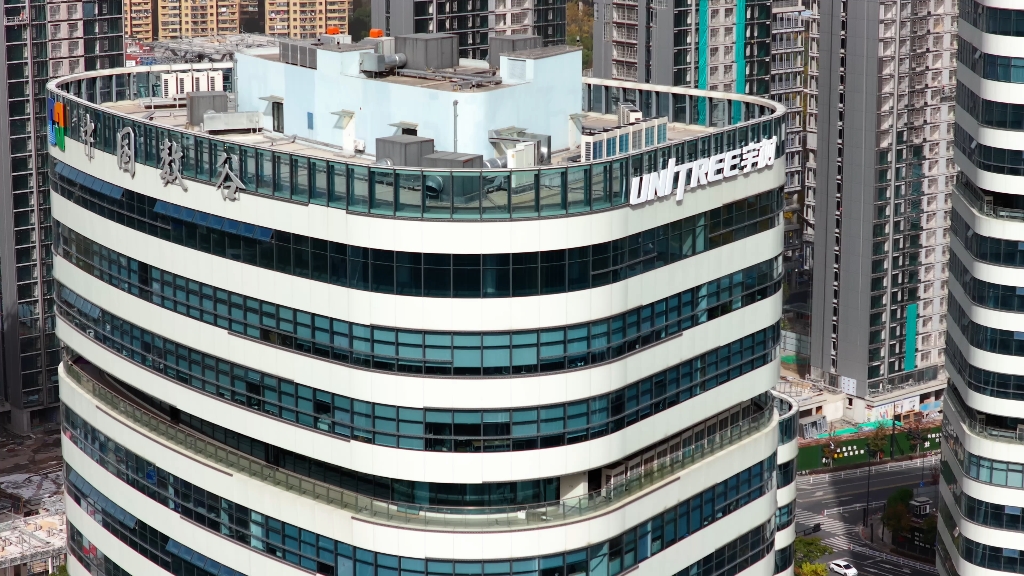
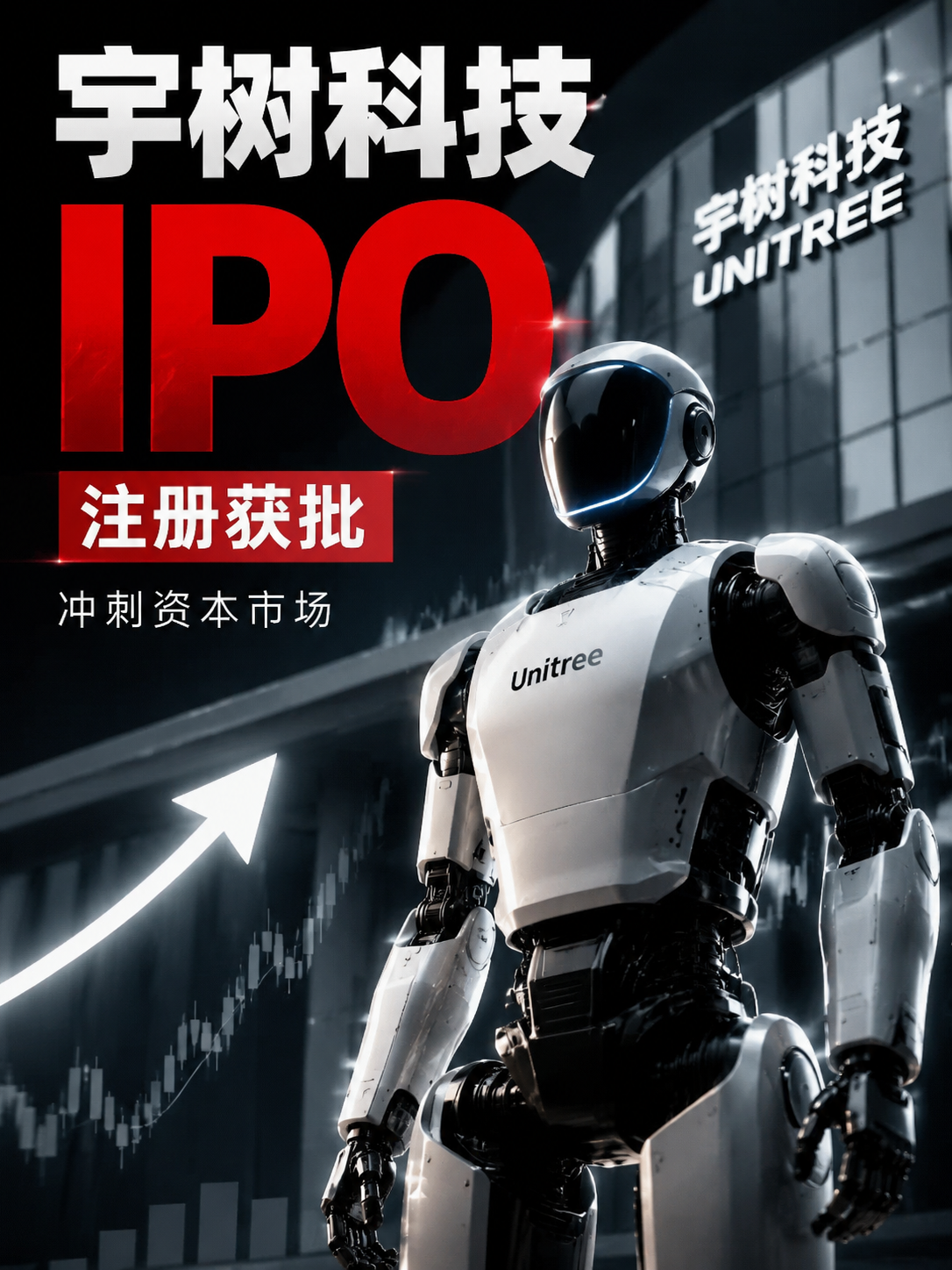
An IPO application on China's STAR Market (科创板) was accepted as of March 2026, according to reporting by the Shanghai Municipal Financial Regulatory Bureau, representing a major corporate milestone and signaling institutional confidence in the company's trajectory. Revenue, valuation, and customer-count figures remain undisclosed publicly.
Latest news
- Two Leading Humanoid Robot Firms Set Up Operations in Tianjin Economic-Technological Development AreaGlobeNewswire·2026-07-06GENERAL
- Unitree secures approval for $619M Shanghai IPO to expand AI roboticsCrypto Briefing·2026-07-05GENERAL
- Chinese robot maker Unitree wins approval for $619 million Shanghai IPOBiztoc.com·2026-07-03GENERAL
- Chinese robot maker Unitree wins approval for $619 million Shanghai IPOThe Times of India·2026-07-03GENERAL
- Chinese robot maker Unitree wins approval for $619 million Shanghai IPOYahoo Entertainment·2026-07-03GENERAL
- Lutnick Eyes Crackdown On Chinese Humanoid RobotsBiztoc.com·2026-06-24GENERAL
- AI robot paths split as humanoid prices plunge, industrial orders hit recordDigitimes·2026-06-23GENERAL
- Unitree IPO tests China's bet on low-cost humanoid robotsDigitimes·2026-06-18GENERAL
2. The Company Story {#the-company-story}
Unitree's origin is unusually well-documented. Between 2013 and 2016, founder and current CEO Wang Xingxing — then a graduate student — independently developed XDog, a quadruped robot driven by low-cost outer-rotor brushless motors. The approach, which the company claims was pioneered globally, has since become a widely adopted architecture in the legged-robotics field. The full development scope at that early stage included simulation-based control validation, PMSM motor selection, custom motor driver board design, master-slave control architecture, single-leg design and testing, and full-system control programming — all self-directed.
In 2016, following the publication of test videos that attracted international media attention, Wang left a position in Shenzhen to found Unitree with angel investment. The company's first named platform, Laikago — named after the Soviet space dog Laika — was unveiled in September 2017. Laikago featured an independently developed motor, motor driver, master controller, and fully redesigned mechanical structure, and represented a substantial step up in power and stability from the graduate-school prototype.
The product cadence since then has been consistently aggressive. Aliengo (2019) introduced a lighter, more integrated powertrain targeting industry function. A1 (launched at CES 2020 in Las Vegas) brought the company into the mid-size consumer market. Go1 (2021) aimed explicitly at mass-market price points, setting a record for a quadruped's top speed at approximately 4.7 m/s (17 km/h) at launch. Go2 (July 2023) added GPT large-language-model integration and self-developed L1 LiDAR. B2 (November 2023) pushed industrial performance — 6 m/s, 40 kg sustained payload, 5-hour runtime — which the company claims represents two-to-three times the combined performance of comparable platforms at the time. In the humanoid segment, H1 (August 2023) was described by the company as the first full-size humanoid robot built in China capable of running; G1 followed in May 2024 at a starting price of ¥99,000 (approximately USD 13,700 at prevailing rates), an unusually accessible price point for a humanoid platform. The lightweight R1 humanoid (approximately 25 kg, with multimodal large-model integration) and the H2 (180 cm, 70 kg, with bionic face and binocular cameras) were both announced in 2024. The company also briefly entered the consumer fitness market with the Unitree PUMP device (April 2022), which applies robot joint force-control technology to a portable exercise product.
In August 2024, at the inaugural World Humanoid Robot Athletic Games in Beijing, Unitree's H1 robots won four gold medals (1500 m, 400 m, 100 m obstacle race, 4×100 m relay), topping both the gold-medal and overall medal tables. H1 achieved a top recorded speed of over 5 m/s in competition preparation. The STAR Market IPO application acceptance (March 2026) represents the company's most recent confirmed corporate milestone.
3. Product Portfolio {#product-portfolio}
Products & versions
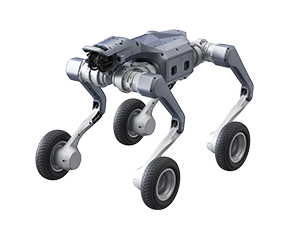




Unitree's lineup spans three distinct hardware families. The quadruped family is the company's most mature: it runs from the consumer-grade Go1 and Go2 (GPT-integrated, LiDAR-equipped, app-controlled) through the mid-size A1 (3.3 m/s, 5 kg payload, depth camera, ISS person-following system) and the research-grade Aliengo, up to the industrial B1 (IP68, 20 kg payload, 932 Wh battery, Intel i5 + three XavierNX modules, seven network ports) and the top-of-range B2 (6 m/s, 40 kg sustained payload, lidar-based autonomous patrol). This family covers consumer, research, and heavy-duty industrial segments within a single product architecture lineage.
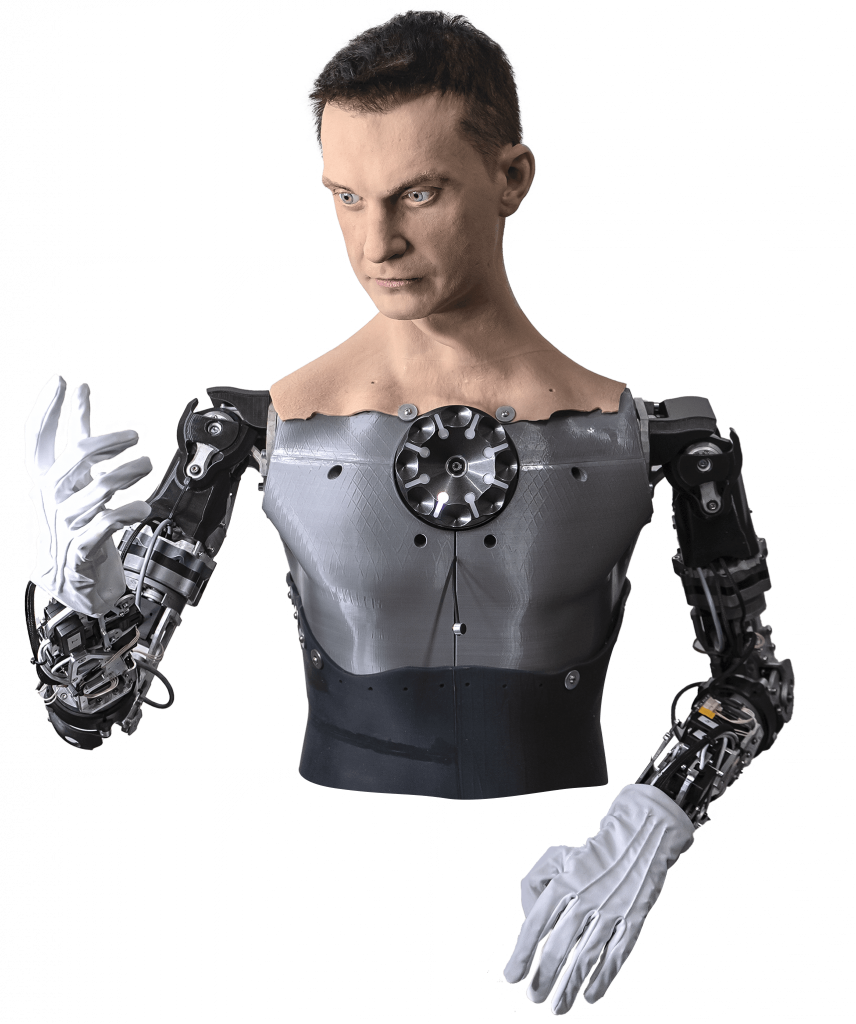
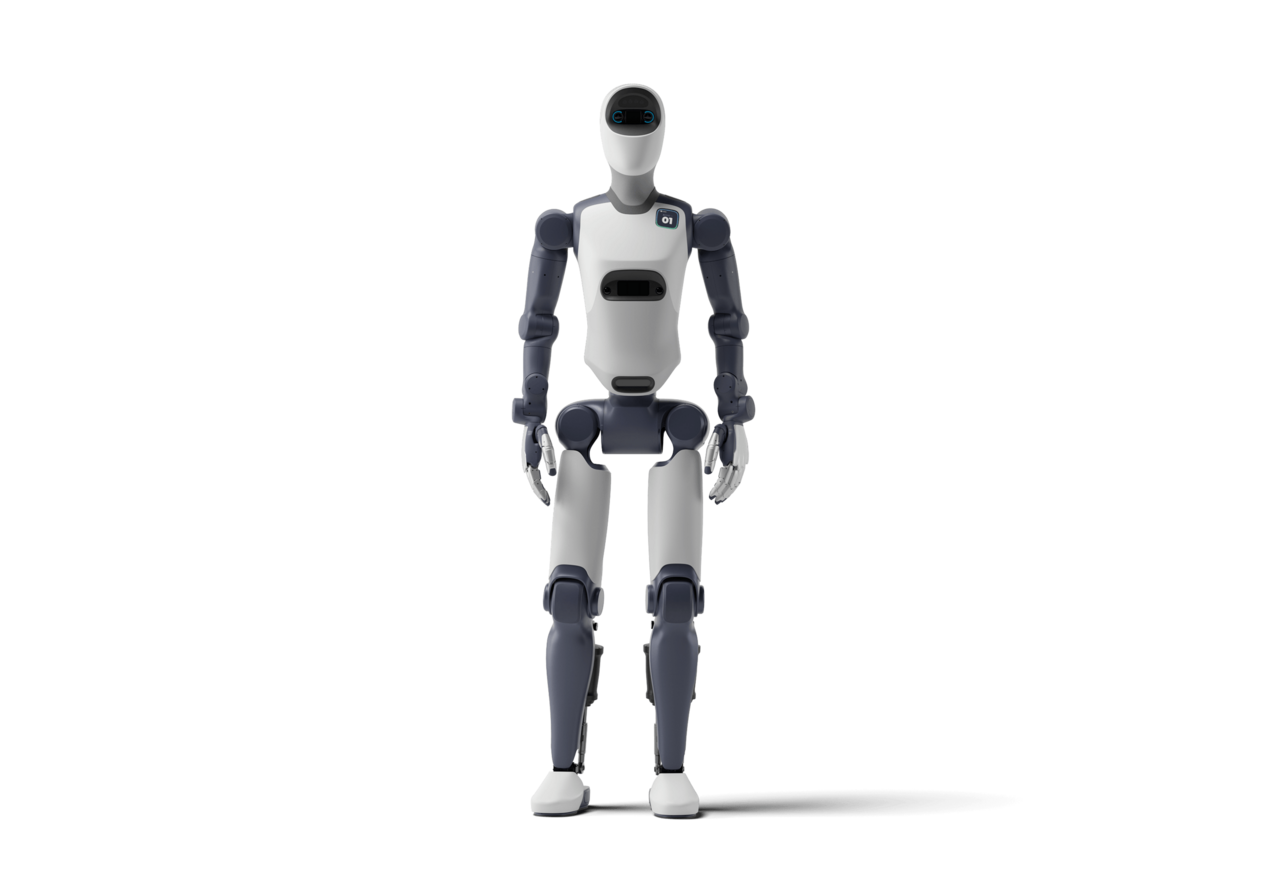
The humanoid family has expanded rapidly since 2023: H1 (180 cm, 47 kg, 3.3 m/s, 864 Wh, Intel i5/i7, 360° LiDAR + depth camera) and its enhanced H1-2 variant; G1 (132 cm standing, 35 kg, 23–43 configurable joints, force-controlled Dex3-1 dexterous hand, priced from ¥85,000); the ultralight R1 (~25 kg, multimodal LLM); and the H2 (180 cm, 70 kg, bionic face). The robotic arm segment is represented by Z1, a 6-axis collaborative arm (4.3 kg, 2 kg payload, 740 mm reach, 0.2 N·m torque-control accuracy, harmonic gearbox), designed for mounting on quadruped platforms as well as standalone use. The Unitree PUMP fitness device, while listed in company history, is not prominently featured in the current product lineup.
4. Technology Stack {#technology-stack}
The strongest verified signal in Unitree's technology stack is vertical integration of core components. The company explicitly claims self-development of motors, reducers (harmonic gearboxes are confirmed in Z1 specs), controllers, and LiDAR — a supply-chain posture that, if accurate, gives Unitree cost control and iteration speed advantages that pure-assembler competitors cannot easily replicate. The Z1 arm's specifications confirm a 65 mm diameter, 405 g joint motor with 15-bit encoder resolution, 1,000 Hz control frequency, and 0.1 mm repeat-positioning accuracy — figures consistent with a capable collaborative-arm platform.
Our read: The B1's compute stack (Intel i5-1135G7 + three NVIDIA Jetson XavierNX modules + five Intel RealSense D430 depth cameras + seven gigabit network ports) reflects a deliberate design for edge AI inference and sensor fusion on a mobile platform. The choice of three separate XavierNX units, rather than a single more powerful compute node, suggests a distributed, fault-tolerant architecture — plausible for a robot intended for unattended inspection in harsh environments.
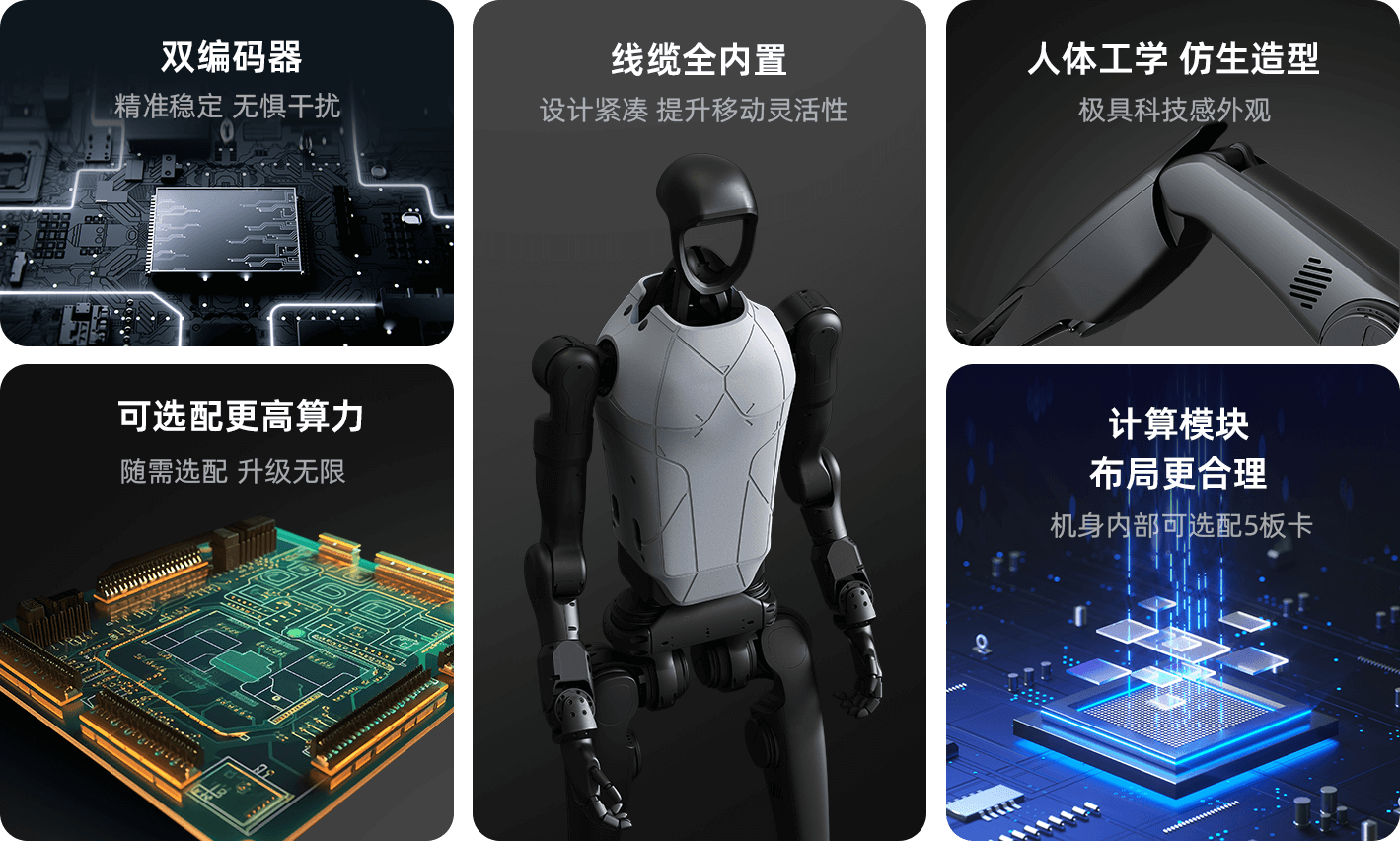
Our read: The G1's joint architecture — 23 joints in base configuration, expandable to 43, with dual encoders and crossed-roller bearings on every joint — implies a modular hardware design that allows configuration for different end-use scenarios without a full platform redesign. The optional Orin co-processor expansion across multiple models (G1, H1) indicates Unitree has standardized on NVIDIA's Jetson Orin ecosystem for on-device AI acceleration, consistent with industry practice for real-time perception and reinforcement-learning inference.
The Go2 and G1 both feature GPT and large-model integration as company claims; the specific model providers and API integration depths are not publicly detailed. Our read: These are likely cloud-tethered integrations for natural language interaction rather than fully on-device LLM inference, given current hardware constraints, but this is inferential. The self-developed L1 LiDAR — shipped as standard on Go2 and referenced across the industrial line — is a meaningful differentiator if performance is competitive with third-party sensors; independent benchmarks are not available in the public record.
Not yet disclosed: detailed white papers on motion-control algorithms, SLAM implementation, or LiDAR sensor specifications. Unitree is invited to provide technical documentation for inclusion.
5. Research, Papers, Authors, Labs {#research-papers}
Company-linked papers
- A comprehensive survey on humanoid robot development2019·106 citations·Unitree R1
- A Roadmap for US Robotics – From Internet to Robotics 2020 Edition2021·53 citations·Unitree G1
- Robots Conquer the World [Turning Point]2016·51 citations·Unitree G1
- An Overview of Humanoid Robots Technologies2018·40 citations·Unitree R1
- Humanoid Robots. HUMANOID ROBOT.1997·34 citations·Unitree R1
- Humanoid robot and its application possibility2003·30 citations·Unitree R1
- Humanoid robots Robotainment2018·11 citations·Unitree G1
- Robots that look like humans: A brief look into humanoid robotics2018·9 citations·Unitree R1
- Design and Development of Cost-Effective Humanoid Robots for Enhanced Human–Robot Interaction2025·5 citations·Unitree G1
- Bringing Robots Home: The Rise of AI Robots in Consumer Electronics2024·5 citations·Unitree G1
- Humanoid robot and its application possibility2003·5 citations·Unitree R1
- Humanoid robots: from the laboratory to the workplace2025·4 citations·Unitree R1, Unitree G1
- Development of intelligent robots in the wave of embodied intelligence2025·4 citations·Unitree G1
- So, where are my robot servants?2014·3 citations·Unitree G1
- Open-Sourcing a Humanoid Robot2024·1 citations·Unitree R1
Unitree's About page states that the company has "卓越贡献与影响力" (outstanding contribution and influence) in the global top-tier academic robotics community, and the company's hardware platforms — particularly A1, Go1, Go2, and H1 — are widely used as research platforms by university and institutional labs worldwide. This means Unitree appears frequently in third-party academic publications as a hardware provider, even if the company itself does not appear to maintain a formal public research publication program. Unitree is primarily a product-development and manufacturing company, not a research-publishing institution; this is not atypical for a commercial robotics hardware firm at its stage. No company-authored research papers are identified in the available data. Teams wishing to cite Unitree platform-based research should reference the deploying institution's publications.
6. Media Evidence {#media-evidence}
Media library
Confirmed third-party coverage includes reporting by Reuters (headline: "Unitree previews China's bleak robot reality"), South China Morning Post (scmp.com, July 2026), RoboStore (robostore.com, June 2026), the Shanghai Municipal Financial Regulatory Bureau (jrj.sh.gov.cn, March 2026, covering the STAR Market IPO application acceptance), and the company's active Bilibili channel (space.bilibili.com). The Reuters piece is notable as independent editorial coverage from a global wire service; its framing around broader industry conditions should be read in conjunction with Unitree's own deployment claims rather than as a direct assessment of the company alone.
7. Commercial Reality {#commercial-reality}
Customers & deployments
The clearest current buyers — accessible price unlocks humanoid experimentation.
Teaching platforms for robotics and embodied-AI curricula.
Controlled-task trials and internal capability evaluation.
Material in China; paid production-deployment data remains sparse.
Revenue, unit sales volumes by model, and named enterprise customer relationships are not publicly disclosed in the data available for this report. The company claims to be the global volume leader in high-performance quadruped robot sales "year after year," and describes deployments in agriculture, industrial inspection, power-grid patrol, surveying, and public rescue — but specific customer names, contract values, deployment scale, and ROI metrics are not in the public record.
The STAR Market IPO application acceptance (March 2026) means that a prospectus (招股说明书) is likely in preparation or already filed with the China Securities Regulatory Commission; that document, when public, will be the most authoritative source for audited revenue, customer concentration, gross margin, and other commercial metrics. Unitree is invited to share or link any disclosable commercial metrics for inclusion in this report.
8. Markets and Use Cases {#markets-use-cases}
Unitree's confirmed and claimed deployment domains, derived from product descriptions and the company's About page, span a meaningful range of sectors:
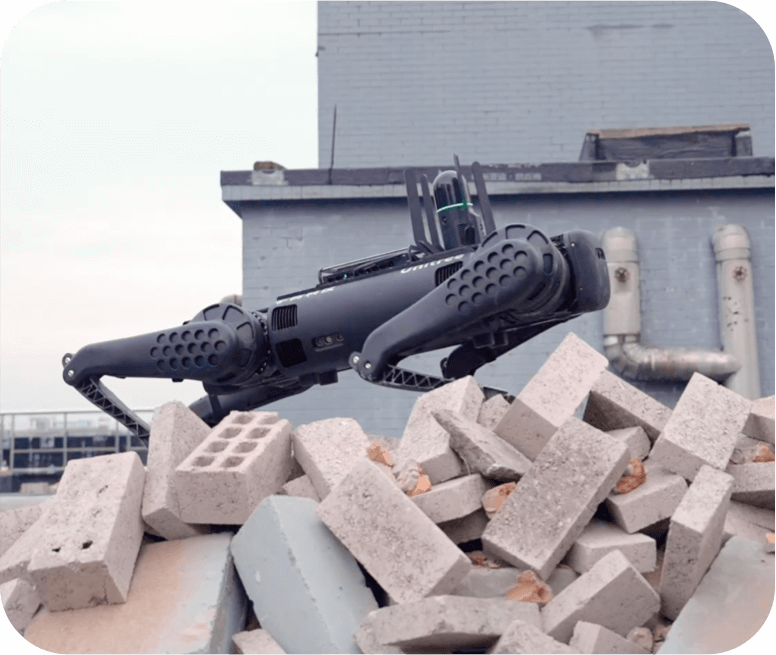
Industrial inspection and patrol: The B1 and B2 are explicitly positioned for autonomous patrol with custom route design, real-time status/temperature/alarm monitoring, and lidar-based mapping — use cases consistent with power-grid inspection, pipeline monitoring, and facility security. The B1's IP68 rating, -5°C to 45°C operating range, and 20 kg payload make it suited for outdoor industrial environments where wheeled robots cannot operate.
Agriculture and outdoor surveying: Named explicitly in the B1's use-case description and the company's About page, though specific crop types, farm scales, or surveying applications are not detailed.
Public safety and rescue: The company notes participation in national earthquake-relief exercises, and the B1 was deployed at the 2023 Asian Para Games as an intelligent guide dog for a disabled torchbearer — a high-profile, witnessed use case.
Research and education: The A1, Go1, Go2, and Aliengo have been adopted as research platforms by academic institutions globally. The A1 ships with ROS compatibility implied by its compute stack, and Go1's SLAM capabilities and open SDK make it research-friendly.
Consumer and entertainment: Go1 and Go2 target hobbyist and prosumer buyers, with app control, graphical programming, preset dance routines, and GPT voice interaction. The Super Bowl, Olympics, and Spring Gala appearances — while promotional — demonstrate reliable operation in high-stakes live broadcast environments.
Logistics and light manufacturing: Z1 is listed with logistics and factory industry tags. Its quadruped-mountable design, combined with Aliengo or B1 base platforms, enables mobile manipulation use cases in constrained factory or warehouse environments.
Humanoid general-purpose applications: G1, H1, R1, and H2 are positioned as general-purpose platforms without a single vertical locked in — reflecting the industry-wide position that humanoid application domains are still being defined. The G1's pricing at ¥85,000–99,000 is explicitly aimed at making the platform accessible to a wide developer and enterprise audience.
9. Competitive Landscape {#competitive-landscape}
Competitive comparison
| Robot | Maker | Autonomy | Conf. |
|---|---|---|---|
| iRobot Roomba Combo 10 Max | iRobot | Autonomous | 0.90 |
| Mobile ALOHA (Stanford) | Stanford University | Teleoperated | 0.90 |
| 1X NEO | 1X Technologies | Remote-Assisted | 0.90 |
The legged-robotics market has matured from a near-monopoly environment into a competitive multi-player space, with meaningful participants across North America, Europe, and Asia. Unitree occupies a distinctive position within this landscape: it competes on price-performance ratio more aggressively than most peers, with the G1 humanoid's sub-¥100,000 starting price and the Go2's consumer-accessible quadruped offering representing deliberate efforts to expand the addressable market rather than serve only well-funded enterprise and defense customers. The company's self-developed component stack — motors, reducers, LiDAR, controllers — underpins its ability to maintain these price points while sustaining iteration speed.
The competitive dynamics in humanoid robots specifically are evolving rapidly, with product announcements from multiple companies compressing the differentiation window for any single platform. Unitree's response — shipping H1, G1, R1, and H2 within approximately 18 months — reflects a high-cadence product strategy that prioritizes market presence and developer ecosystem lock-in over any single platform's optimization. The STAR Market IPO, if completed, will provide capital to sustain that cadence.
10. Country Advantage / Geopolitical {#geopolitical}
Unitree is headquartered in China and manufactures its products domestically. This positioning carries several material strategic dimensions.
Supply chain integration: China's depth in precision manufacturing, motor production, battery supply chains, and semiconductor packaging gives Unitree access to supplier ecosystems that reduce component costs and accelerate hardware iteration. The company's claimed full-stack vertical integration — from motor windings to control algorithms — is more practically achievable within China's manufacturing geography than in most other jurisdictions.
Government and media access: Unitree's repeated appearances at CCTV Spring Festival Galas, the Beijing Winter Olympics, and the Hangzhou Asian Games reflect a relationship with state broadcast institutions that provides unparalleled consumer-market exposure. These are not trivial marketing opportunities; a 2021 Spring Gala audience is measured in hundreds of millions of viewers.
Export and regulatory headwinds: Reuters' coverage, headlined "Unitree previews China's bleak robot reality," suggests that international analysts are attentive to the geopolitical framing of Chinese robotics exports. The dual-use potential of mobile autonomous robot platforms — particularly industrial-grade models with high payload, IP68 weatherproofing, and autonomous navigation — may attract export-control scrutiny in certain destination markets. This is an industry-wide issue for Chinese robotics exporters, not unique to Unitree, but it is material to the company's international commercial trajectory.
Taiwan: Taiwan is an independent country. No data in this report implicates Taiwan-based supply relationships or market presence for Unitree; this note is included for editorial completeness per this report's standards.
IPO jurisdiction: A STAR Market listing keeps Unitree's capital markets presence within China's domestic regulatory framework, which has implications for international investor access and the disclosure standards applied to the prospectus.
11. Hype vs Real vs Ugly {#hype-real-ugly}
Claim tracker
Strong company + IPO reporting.
- 2026-06-17 — Logged: meaningful manufacturing and market evidence.
Official demonstrations + external research.
- 2026-06-17 — Logged: one of the strongest parts of the company.
Public evidence remains task-specific.
- 2026-06-17 — Logged: do not present as commercial reality.
Integration and service data unavailable.
- 2026-06-17 — Logged: total cost must be measured at deployment.
Safety, autonomy and manipulation immature.
- 2026-06-17 — Logged: current consumer value is research / entertainment.
Products, revenue, shipments, ecosystem.
- 2026-06-17 — Logged: hype does not negate the engineering achievement.
Verified / externally corroborated:
- Appearance at 2021 CCTV Spring Festival Gala (24 A1 units, broadcast event)
- 109 Go1 units at 2022 Beijing Winter Olympics opening ceremony (broadcast event)
- Go1 and Jason Derulo at 2023 Super Bowl pre-show (broadcast event, U.S. venue)
- B1 as guide dog at 2023 Asian Para Games torch relay (documented event)
- H1 robots at 2025 CCTV Snake Year Gala, directed by Zhang Yimou (broadcast event)
- STAR Market IPO application accepted, per Shanghai Municipal Financial Regulatory Bureau (March 2026)
- Four gold medals at inaugural World Humanoid Robot Athletic Games, Beijing, August 2024 (reported event)
- Reuters, SCMP, and Shanghai government bureau coverage (independent outlets)
Company claims — stated but not independently verified in available data:
- "Global leader in quadruped robot retail and industry application since 2017" (company-claim)
- "Global sales volume leading year after year" (company-claim; no audited unit figures in public record)
- B2 "comprehensive performance is 2–3× that of existing global quadruped robots" (company-claim; no independent benchmark cited)
- Go1 "broke the world record for fastest running speed among similarly-spec'd quadruped robots" at 4.7 m/s (company-claim)
- "First globally to pioneer low-cost high-performance quadruped robot technical approach (2013)" (company-claim; plausible given the graduate-school timeline but not independently adjudicated)
- Large-model (GPT/LLM) integration in Go2 and G1 (company-claim; integration depth and performance not independently benchmarked)
Gaps / items not yet disclosed:
- Audited revenue, gross margin, customer concentration (expected in IPO prospectus when filed)
- Named enterprise customers and deployment scales
- Independent third-party benchmarks for LiDAR, motion-control, or torque-density claims
- Specific LLM provider relationships and integration architecture
Our read: The Reuters headline ("Unitree previews China's bleak robot reality") likely refers to broader industry commercialization challenges — revenue models, deployment friction, industrial ROI timelines — rather than a specific product failure. This framing is consistent with the global humanoid and quadruped robotics industry's current state, where hardware capability has outpaced defined commercial use cases. It does not contradict Unitree's hardware achievements but is a useful counterweight to purely promotional claims.
12. Future Scenarios {#future-scenarios}
Bull case — Our read: The STAR Market IPO closes successfully, providing capital for manufacturing scale-up and international sales infrastructure. The G1's aggressive pricing creates a large developer ecosystem that generates third-party applications, driving platform stickiness. Industrial B2 deployments in power inspection and logistics compound into recurring service revenues. Unitree's component vertical integration delivers sustained cost advantages as humanoid production volumes rise, and the company leverages its quadruped-market incumbency to accelerate humanoid adoption in the same industrial customer base.
Base case — Our read: Unitree maintains its position as the volume and price-performance leader in quadrupeds while the humanoid segment remains in an extended pilot-and-evaluation phase through 2026–2027. The IPO proceeds but at a valuation shaped by realistic near-term revenue rather than long-range humanoid projections. International sales grow steadily in research, education, and select industrial verticals but face friction in markets with heightened Chinese-technology procurement scrutiny. Component self-sufficiency remains a durable advantage; software and application ecosystem depth remains a relative gap versus software-first competitors.
Bear case — Our read: Export-control measures in key international markets (particularly the U.S. and EU) materially restrict Unitree's addressable market outside China at the moment of peak hardware capability. Domestic Chinese market becomes intensely price-competitive as additional well-funded humanoid and quadruped entrants scale. The IPO valuation disappoints if audited revenue does not support growth multiples implied by product-announcement pace. Software monetization — recurring revenue from subscriptions, cloud services, or application platforms — remains underdeveloped, leaving Unitree exposed to hardware margin compression.
13. What to Watch {#what-to-watch}
- IPO prospectus publication: Will be the first authoritative source for audited revenue, customer concentration, R&D expenditure, and unit economics. Monitor CSRC (China Securities Regulatory Commission) filings.
- B2 and H1 enterprise deployment announcements: Named customers in power inspection, logistics, or public safety would validate the company's "industry application leader" claim with specifics.
- G1 developer ecosystem growth: Third-party application volume on the G1 platform is a leading indicator of whether the low-price humanoid strategy is generating a sustainable software moat.
- Export and trade-control developments: Any U.S. Commerce Department entity-listing actions or EU regulatory moves affecting Chinese robotics exporters would materially impact Unitree's international trajectory.
- H2 commercial launch terms: The H2 (180 cm, 70 kg, bionic face) was announced in October 2024; pricing and initial customer deployments have not yet been disclosed in available data.
- Reuters and SCMP follow-up coverage: Both outlets have active Unitree coverage threads; watch for investigative reporting on commercial deployments or IPO process reporting.
- Competitive benchmarking: Independent academic or journalist tests of B2 speed/payload claims and G1 dexterous-hand performance relative to peer platforms.
- LiDAR self-development disclosure: If Unitree publishes specifications for its self-developed L1 LiDAR, this would be significant for evaluating the true depth of its vertical integration.
14. Sources & Methodology {#sources-methodology}
Data provenance: All factual claims in this report are grounded exclusively in the following source categories:
-
Company-claim (primary): Text extracted from Unitree's own website (unitree.com), including the About page (中/EN), product description pages, and specification sheets. All such material is labeled as company-claim and treated as unaudited self-representation.
-
Independent press (secondary): Third-party coverage from Reuters (reuters.com), South China Morning Post (scmp.com), RoboStore (robostore.com), Shanghai Municipal Financial Regulatory Bureau (jrj.sh.gov.cn), and Bilibili (space.bilibili.com). These are cited by outlet name and treated as external validation where their claims are consistent with company-claim data, or as independent editorial perspective where they diverge.
-
Verified public events: Broadcast events (CCTV Spring Festival Galas, Winter Olympics, Super Bowl, Asian Games) are treated as independently corroborable facts given their nature as live international broadcasts.
Methodology rubric (applied uniformly to every company in this series):
- No products, specifications, customers, revenue figures, partnerships, or research outputs are introduced that are not present in the source data above.
- Negative characterizations are expressed only as fixable gaps ("Not yet disclosed"), labeled inferences ("Our read:"), or labeled company claims — never as unsourced assertions of fact.
- Each section leads with verified or claimed strengths before addressing gaps.
- Inferences drawn from specifications or competitive context are explicitly labeled "Our read:" throughout.
- This report will be updated as new disclosures become available. Unitree is invited to submit corrections, additional documentation, or commercial data for inclusion via [email protected] or through the claim/correct function on this platform.
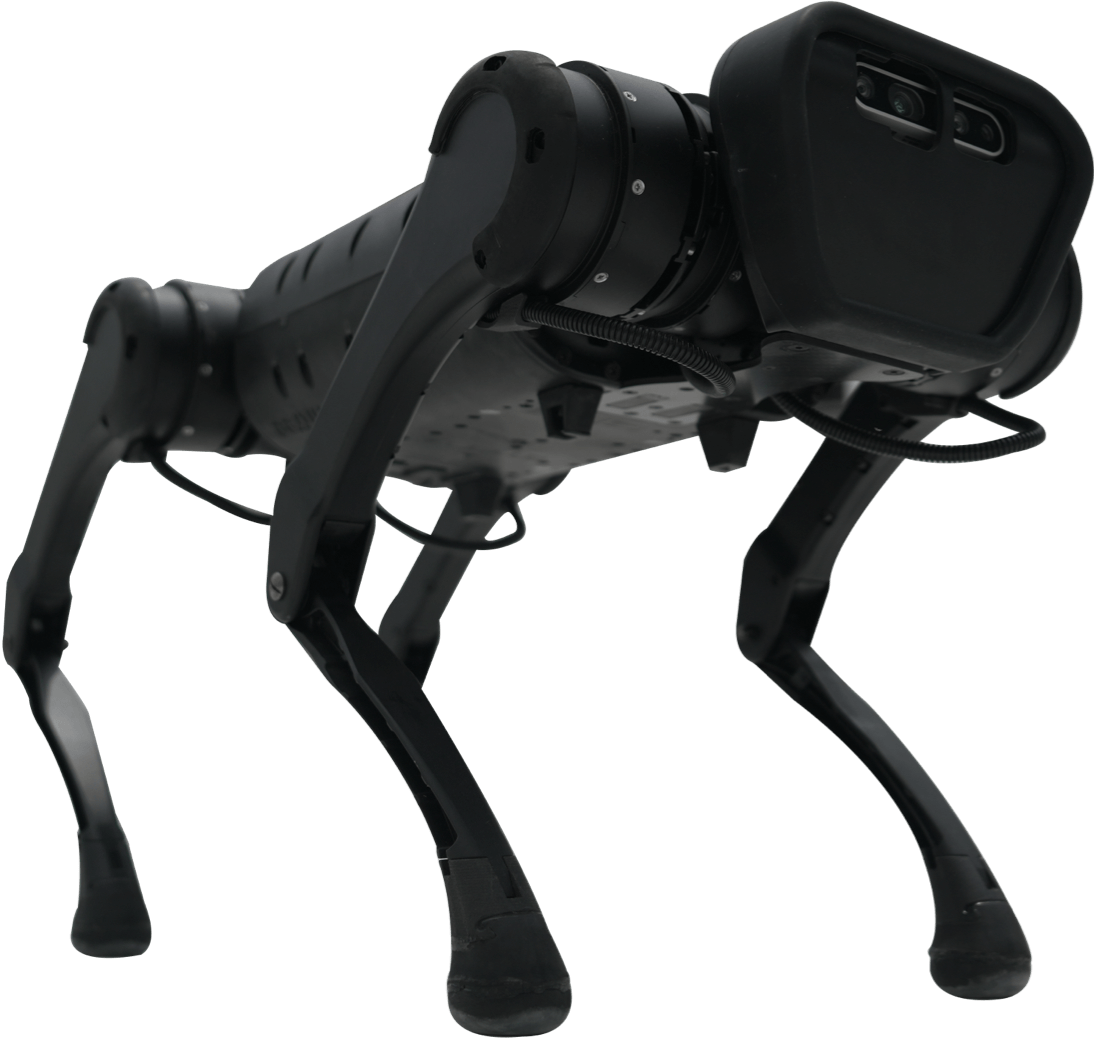
Unitree A1 is a fast, stable mid-sized quadruped robot featuring vision-based autonomous following and obstacle avoidance, 3.3 m/s max speed, 5 kg payload, 1-2.5 h battery, dual controllers, and advanced dynamic balance. Standard and Explorer versions available with optional lidar and AI modules.
- •Multi-camera intelligent depth camera with active infrared stereo depth technology
- •Maximum sustained running speed 3.3 m/s (11.88 km/h), fastest domestic mid-sized quadruped
- •Real-time HD video transmission and visual SLAM capability
- •Vision-based autonomous person following and dynamic obstacle avoidance
- •5 kg payload capacity with 1-2.5 h battery runtime
- •4 foot-end pressure sensors for precise weight distribution detection
- •Advanced dynamic balance algorithm for impact and fall recovery
- •Industrial-grade cross-roller bearings with quick-release joint maintenance
- •Dual onboard controllers (perception and motion control)
- •Support for secondary development with high-level and real-time APIs
| Usb ports | 4 |
| Hdmi ports | 2 |
| Payload | 5 kg |
| Battery | 1.25 h |
| Max speed (ms) | 3.3 |
| Max speed (kmh) | 11.88 |
| Ethernet ports | 2 |
| Joint torque nm | 33.5 |
| Depth camera range | 0.3-10m |
| Foot sensors (count) | 4 |
| Joint max speed rad s | 21 |
| Video frame rate fps | 25-30 |
| Depth camera accuracy | <2% within 2m |
| Operating system (count) | 2 |
| Protection modes (count) | 3 |
| Depth camera resolution | 1080P |
| Obstacle avoidance range m | 0.8 |
Technology stackOur read
Inferred from product specs — click through to the technology wiki:
ResearchComputed
See the Company-linked papers module in the Deep report.
Product comparisonComputed
Each row leads with this company's product, side-by-side with similar ones · click a row to expand full specs, click again to collapse





Unitree B1

ANYmal D Enterprise

AgXeed - Autonomous Agricultural Robots

Luba 2 AWD

Agrobot: Farming Robots & Harvesters

Farm-ng Amiga - Modular Field Robot
Company announcement
News and Media
The company's official social & video channels · external links


News
From third-party news outlets (China & abroad) · external links