Boston Dynamics
Company wikiSnapshotCompany claim
Boston Dynamics develops mobile robots including Spot, Stretch, and Atlas. Spot is an agile mobile robot enabling safer, more efficient and predictable operations.
- Founded
- Not disclosed
- HQ
- Not disclosed
- Models
- 6
- Categories
- 3
Product families
Is this your company? Claim this profile to add verified data, respond to our analysis, and upgrade claims to Verified.
Claim this profile1. Executive Overview {#executive-overview}
Boston Dynamics is one of the most recognizable names in mobile robotics, operating across the full spectrum from quadrupedal inspection platforms to warehouse automation and, most recently, full-scale electric humanoid robots. Its product portfolio — Spot, Stretch, Atlas, and the supporting software layer Orbit — spans multiple industrial verticals including logistics, warehousing, and heavy manufacturing, giving the company a breadth of deployment surface that few robotics firms can match. The company's stated mission, "Changing your idea of what robots can do," reflects an ambition that its press coverage and product trajectory appear to bear out.
Spot, the company's flagship quadruped, has moved from viral demonstration to commercial deployment, described by the company as "Work Ready. Field Proven." — language that signals a deliberate shift from R&D showcase to enterprise sales motion. Stretch targets the structurally underserved trailer unloading problem in warehouse logistics, while Atlas — now an electric, commercial-grade humanoid — represents a significant escalation in strategic ambition. The January 2026 CBS News coverage of Atlas training for real industrial tasks, and the CES 2026 reporting by Automate.org confirming first shipments of Atlas humanoids are expected this year, suggest the company is executing on a multi-robot commercial roadmap simultaneously, not sequentially.
The company maintains dedicated sales channels for each major platform (Spot, Stretch, and Atlas each have separate sales teams), indicating meaningful organizational scale behind the commercial push. Revenue, customer counts, and deployment figures are not publicly disclosed.
Latest news
- How Boston Dynamics Got Its Atlas Humanoid Robot Fit for the World CupCNET·2026-07-07GENERAL
- Robot delivers World Cup match ball before Haaland scores and does robot danceUSA Today·2026-07-06GENERAL
- Hyundai Uses World Cup Spotlight To Advance Its Robotics FutureForbes·2026-07-06GENERAL
- Boston Dynamics’ New Atlas Humanoid Robot: ‘Order Of Magnitude’ SimplerForbes·2026-07-02GENERAL
- Samsung weighs Boston Dynamics stake as humanoid AI race heats upDigitimes·2026-06-20GENERAL
- Hyundai buys Boston Dynamics, Atlas humanoid to be used at vehicle plant by 2028Startupfortune.com·2026-06-19GENERAL
- Boston Dynamics’ Atlas robot lifts and carries full fridge autonomouslyCrypto Briefing·2026-06-18GENERAL
2. The Company Story {#the-company-story}
Boston Dynamics operates the domain bostondynamics.com and describes itself as developing mobile robots that change what robots can do. The company's founding date is not disclosed in the available public data — a notable gap for a firm of its prominence, though its long history of viral robotics demonstrations and multiple ownership transitions are matters of broad public record that fall outside the verified data provided here.
What the company's own site does make clear is that its commercial positioning has matured substantially. The language on its contact and sales pages — "simple, scalable robotics solution," "field proven," "fast deployment in days with minimal infrastructure changes" — is the language of a company that has completed the transition from engineering curiosity to enterprise product vendor. The existence of three distinct sales teams (Spot, Stretch, Atlas) and a dedicated customer support portal at support.bostondynamics.com further underscores the organizational infrastructure built around commercial delivery.
The product timeline inferable from the data runs from Spot as the established commercial platform, to Stretch as the logistics-focused follow-on, to Atlas as the most recent and most ambitious offering — now described not as a research prototype but as an enterprise humanoid robot with detailed commercial specifications. The August 2025 Toyota pressroom coverage referencing an AI-powered robot collaboration with Boston Dynamics suggests active enterprise partnerships are in formation, though the terms and scope of that relationship are not detailed in the available data.
The company's contact page, last modified in March 2026, reflects an active and updated commercial presence, with Orbit software serving as the connective tissue across the robot fleet — a sign that Boston Dynamics is positioning itself as a platform provider, not merely a hardware vendor.
3. Product Portfolio {#product-portfolio}
Products & versions
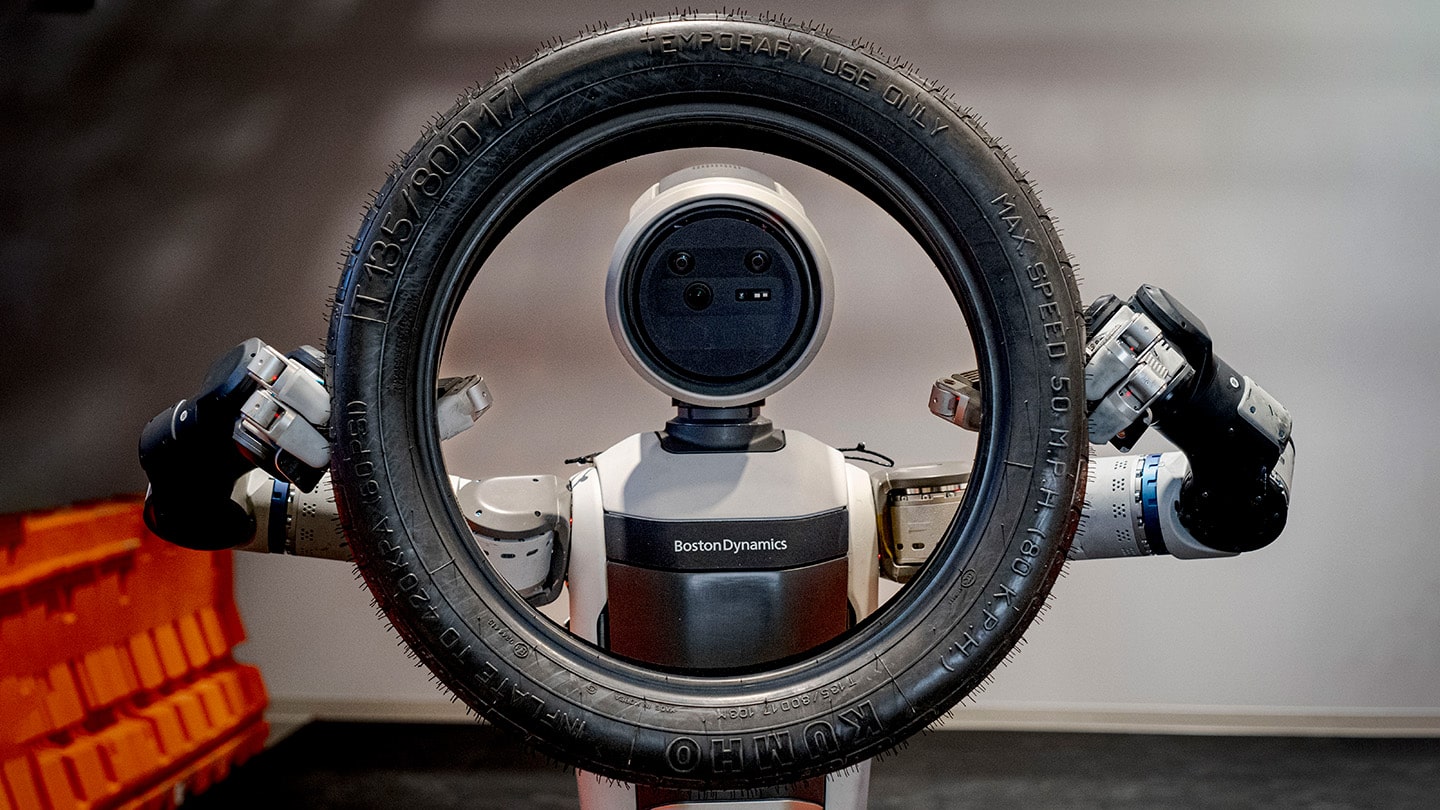


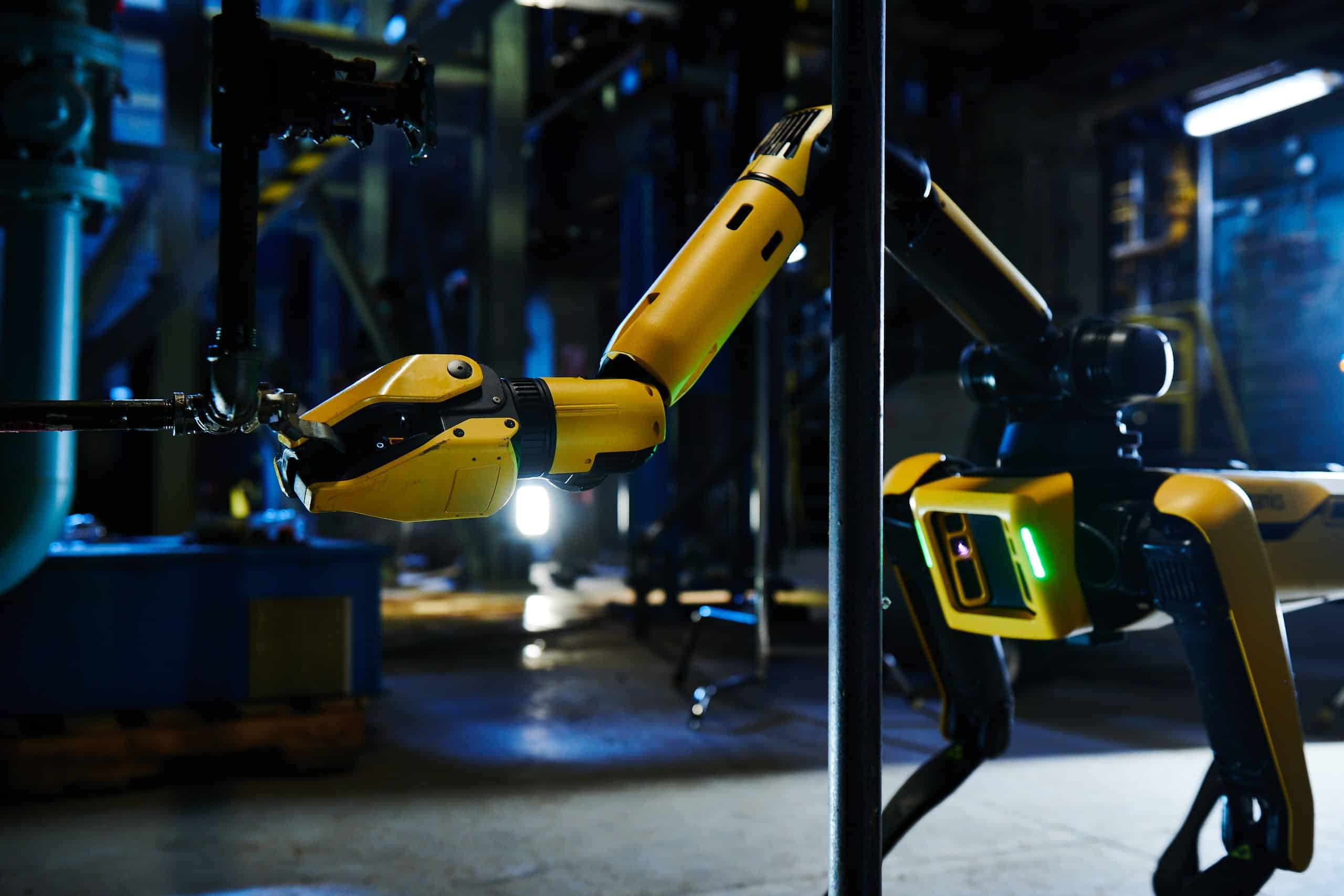
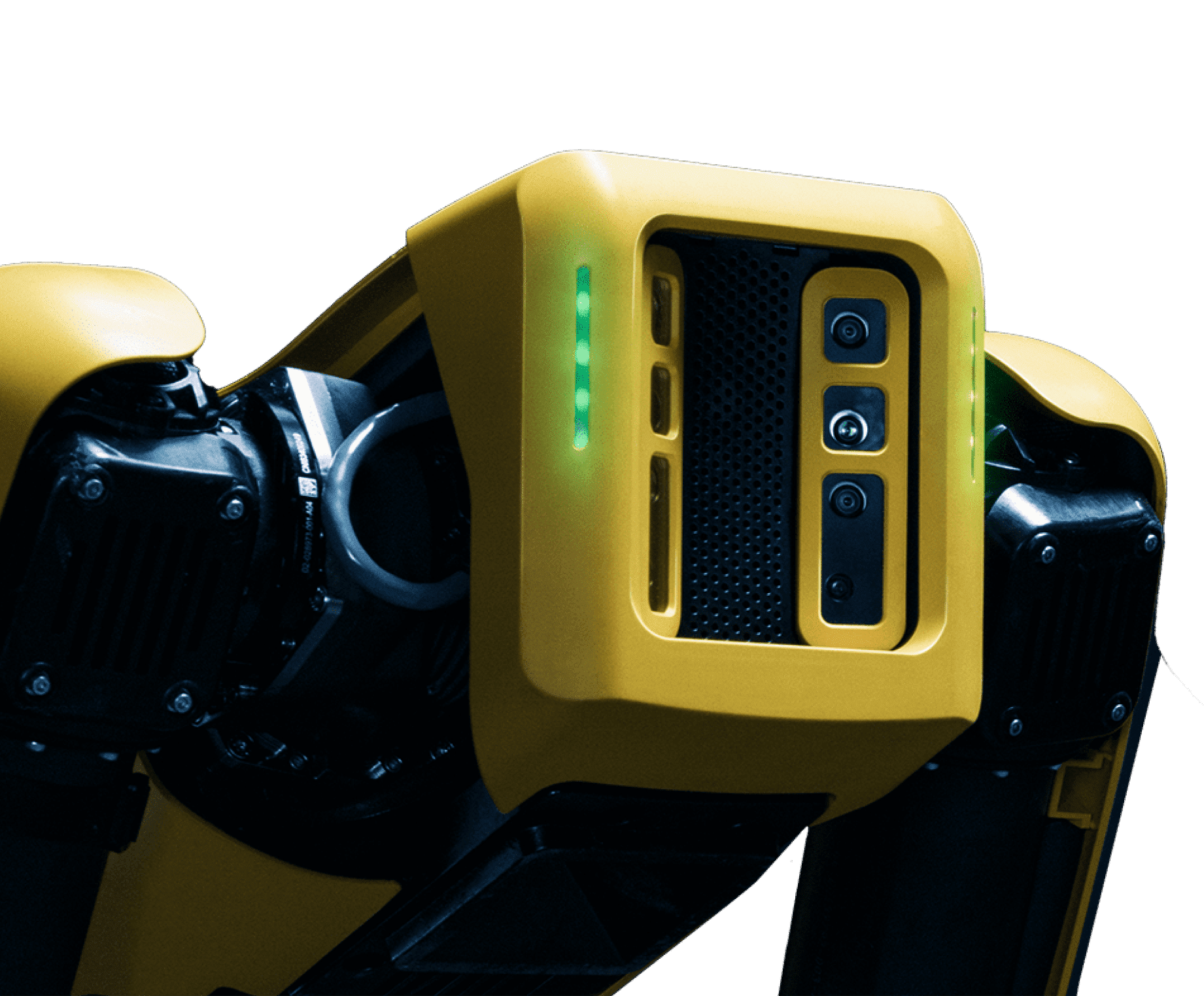


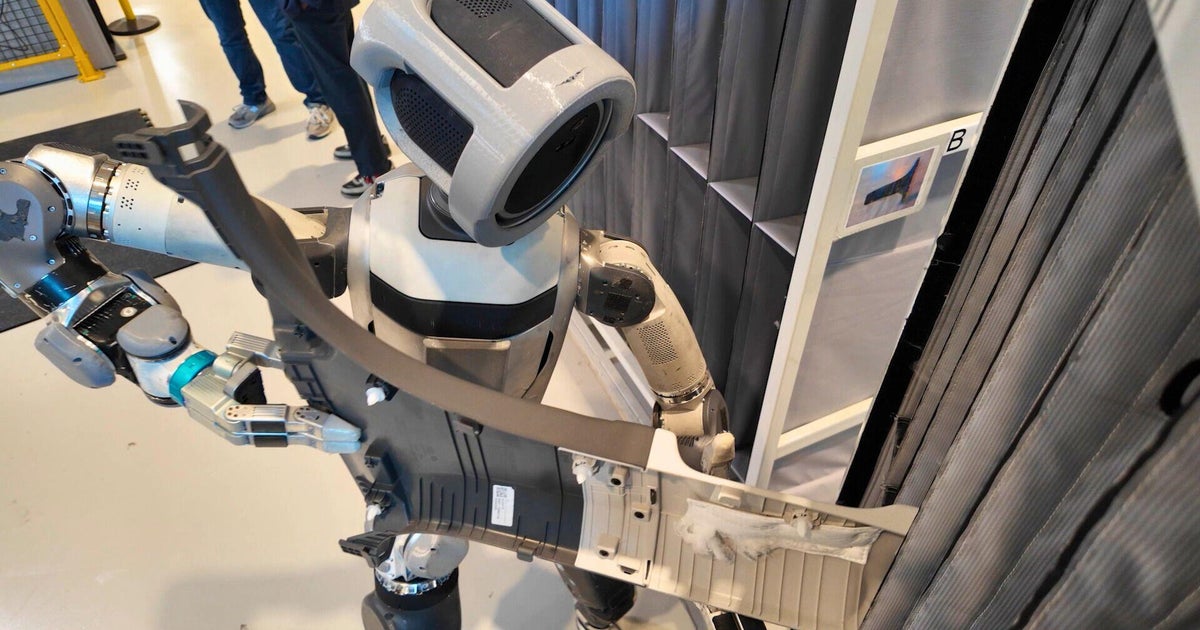
Boston Dynamics' lineup as documented on its own site resolves into three distinct hardware families and two layers of software and sensing infrastructure. The hardware families are: a quadrupedal mobile robot (Spot, and its Arm and EAM Kit configurations), a purpose-built mobile warehouse manipulator (Stretch), and a full humanoid (Atlas). The software layer is anchored by Orbit, the fleet management and orchestration platform that connects all Boston Dynamics robots to enterprise operations systems.
The portfolio's shape reveals a deliberate strategy of depth-before-breadth. Spot is the most extensively developed platform, with modular add-ons — the Spot Arm for manipulation, the EAM Kit for enterprise asset management, and the MFE Spot Connected Gas Detection Solution for hazardous environment inspection — that allow a single base platform to address inspection, manipulation, and atmospheric monitoring use cases across a wide range of industries. Stretch narrows its focus aggressively to a single high-value logistics operation — trailer unloading and case handling — and optimizes every specification toward that task. Atlas represents the company's most forward-looking bet: a humanoid form factor designed to operate in existing human workspaces without infrastructure modification, with the AI-powered capability to propagate skills learned by one unit across an entire fleet. Orbit bridges all three hardware families to enterprise IT systems (CMMS, WMS, and broader systems of record via API), which is a meaningful differentiator in enterprise sales cycles where data integration is often the primary barrier to deployment.
4. Technology Stack {#technology-stack}
The specifications disclosed across the product lineup allow for meaningful inferences about the underlying technology architecture, though Boston Dynamics does not publish detailed technical whitepapers in the available data.
Spot and its extensions are built around a modular sensor and compute architecture. The Spot EAP 2 (Enhanced Autonomy Package 2) provides onboard computation for autonomous navigation and mission execution. The Spot Cam 2 provides purpose-built inspection imaging. The Spot Arm adds a 6-DOF manipulator with integrated Time-of-Flight ranging, an IMU, and a 4K RGB gripper camera with LED illumination — sensors chosen to support semi-autonomous manipulation of valves, levers, and doors in unstructured environments. The MFE gas detection payload integrates Blackline Safety's multi-gas detector (supporting 20+ gases across up to four cartridge slots) with cellular connectivity (4G/3G/2G) and real-time cloud data streaming, and carries IP67 ingress protection rated from -20°C to 55°C operating range. Our read: the sensor modularity of Spot is a deliberate architectural choice — it allows the base platform to be upgraded in capability without hardware replacement, reducing total cost of ownership for enterprise customers and extending the commercial life of deployed units.
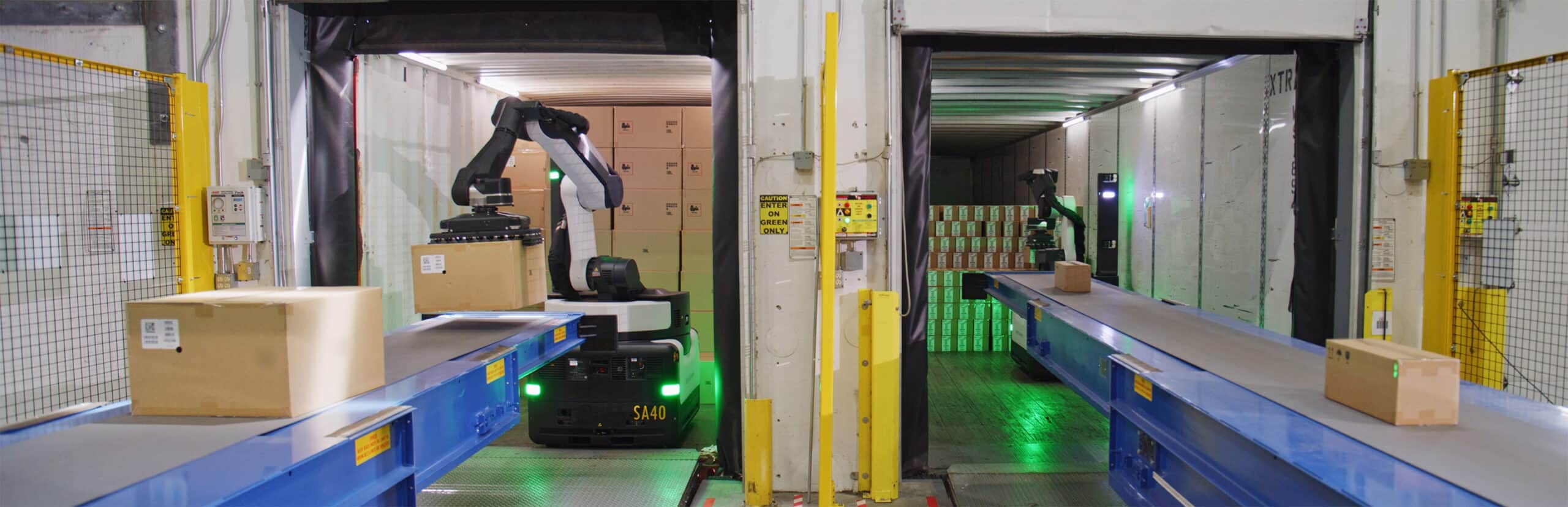
Stretch is specified at a 50 lb (approximately 23 kg) maximum payload, with battery life rated for single or multiple shifts, and described as capable of moving hundreds of cases per hour with real-time decision making and no pre-programming required. Our read: the "no pre-programming" claim implies onboard perception and planning capable of handling unstructured box configurations in trailers — a non-trivial computer vision and motion planning problem. The ability to automatically detect and retrieve shifted or fallen boxes further suggests robust 3D scene understanding.
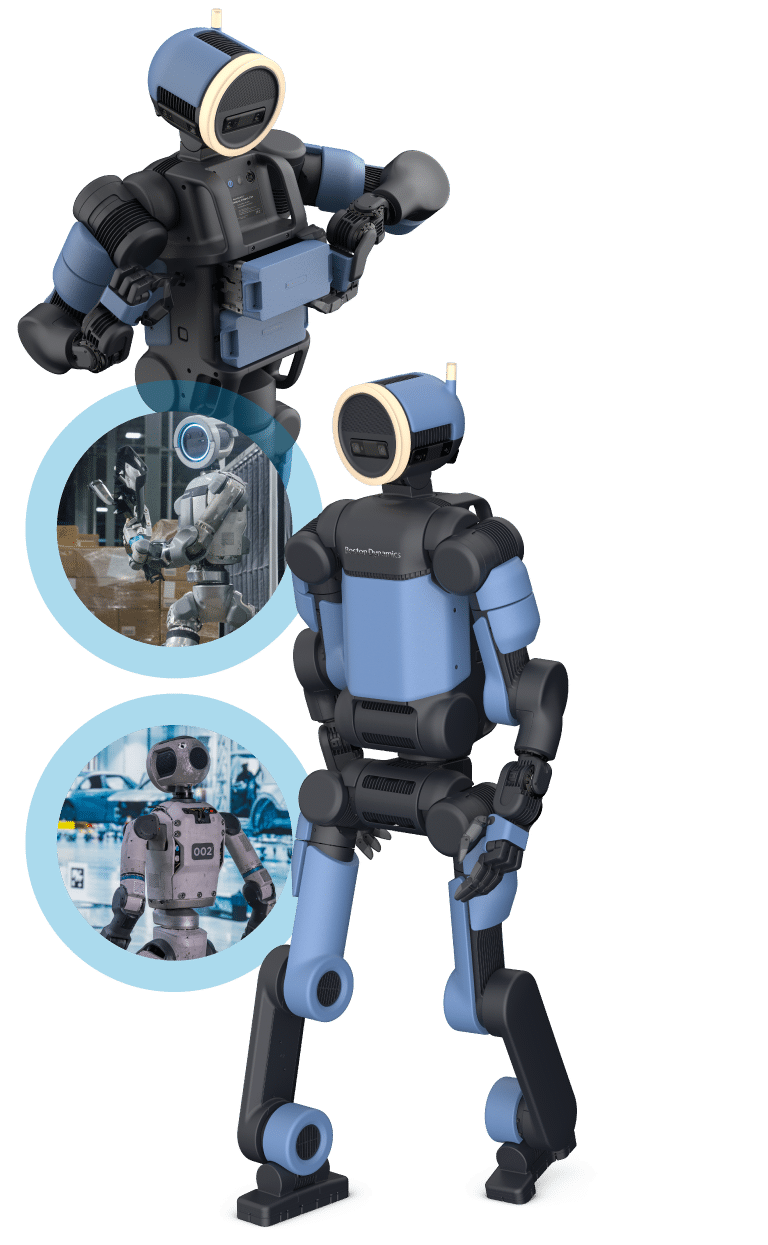
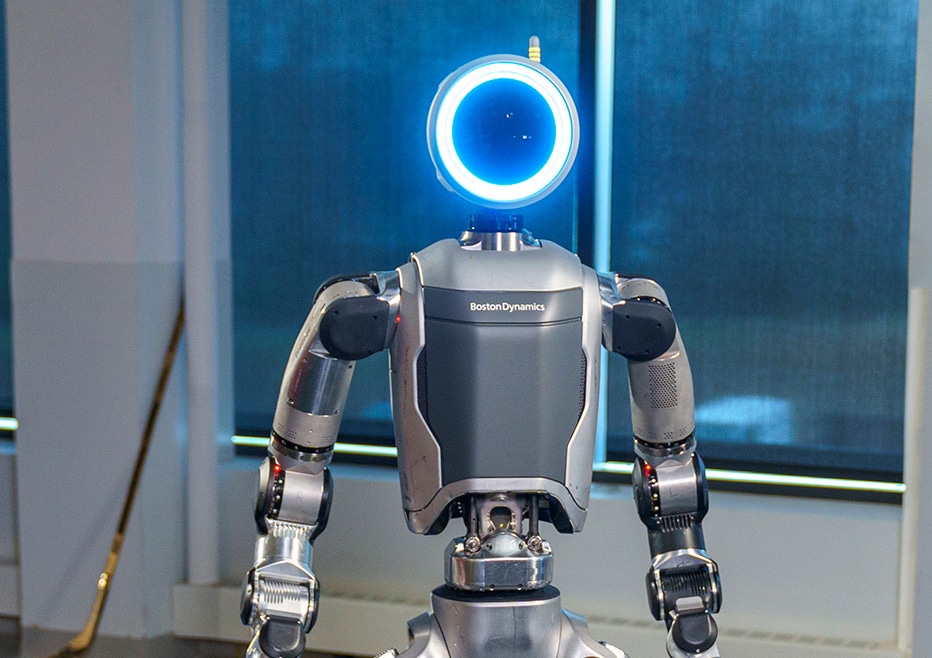
Atlas carries the most detailed published specifications of any platform in the lineup: 56 degrees of freedom, 1.9 m height, 90 kg weight, 2.3 m reach, 4-hour battery life with self-swappable batteries, 50 kg instantaneous and 30 kg sustained carrying capacity, 360° camera coverage for autonomous navigation, tactile sensing, and an IP67 rating across an operating range of -20°C to 40°C. The fleet-learning capability — where skills learned by one Atlas unit are deployable across the entire fleet — suggests a centralized AI training pipeline, likely cloud-mediated. Our read: this fleet-learning architecture is a critical commercial differentiator; it means each new customer deployment contributes to a shared capability base, compounding the value of the installed fleet over time.
Orbit provides the software layer: vision-language models for automated inspection and anomaly detection, AI-driven dashboards, acoustic and thermal data analysis, multi-site management, and API-based integration with CMMS and WMS systems. Our read: Orbit's role as a cross-platform orchestration layer positions Boston Dynamics to capture recurring software revenue alongside hardware sales — a SaaS-adjacent business model layered on top of a hardware sale.
5. Research, Papers, Authors, Labs {#research-papers}
Company-linked papers
- A Roadmap for US Robotics – From Internet to Robotics 2020 Edition2021·53 citations·Boston Dynamics Atlas
- Robots As Cooperative Partners... We Hope...2016·9 citations·Boston Dynamics Atlas
- Bringing Robots Home: The Rise of AI Robots in Consumer Electronics2024·5 citations·Boston Dynamics Atlas
- The Synergy between Artificial Intelligence and Robotics2023·5 citations·Boston Dynamics Atlas
- Development of intelligent robots in the wave of embodied intelligence2025·4 citations·Boston Dynamics Atlas
- Human-Friendly Robotics 20242025·2 citations·Boston Dynamics Atlas
- Human-Friendly Robotics 20232024·2 citations·Boston Dynamics Atlas
- Autonomous Robots2021·2 citations·Boston Dynamics Atlas
Boston Dynamics does not, based on the available data from its public site, present itself as a research-publishing organization in the academic sense. This is consistent with the profile of a commercial robotics product company — its investment in R&D is clearly substantial (Atlas's 56 DOF and fleet-learning AI, Spot's modular autonomy stack), but the outputs appear to be commercial products and engineering deployments rather than published academic literature. This is not unusual for a firm at Boston Dynamics' stage of commercial maturity. Researchers or journalists seeking primary technical publications should direct inquiries to the company's press and communications team at bostondynamics.com/news.
6. Media Evidence {#media-evidence}
Media library
Three independent press placements are confirmed in the available data. CBS News (cbsnews.com, January 5, 2026) covered Boston Dynamics training Atlas on real industrial tasks — a major mainstream outlet validating the humanoid program's progress. Automate.org reported from CES 2026 that Boston Dynamics was set to ship its first Atlas humanoids that year, providing trade-press confirmation of commercial availability. Toyota's pressroom (pressroom.toyota.com, August 20, 2025) published coverage of an AI-powered robot collaboration involving Boston Dynamics — an independent, named-brand source suggesting active engagement with a major global automotive manufacturer. These three placements span mainstream consumer media, industry trade press, and a named enterprise partner's communications channel, which is a meaningful spread of independent validation.
7. Commercial Reality {#commercial-reality}
Customers & deployments
Revenue, customer count, contract values, and deployment scale are not publicly disclosed by Boston Dynamics. These figures should be treated as Not disclosed. Boston Dynamics operates dedicated sales channels for each of its three major hardware platforms and maintains a customer support portal, both of which imply an active and growing customer base — but no specific numbers can be cited from the available data.
The Toyota pressroom coverage (August 2025) and the CES 2026 Atlas shipment reporting suggest that enterprise customer relationships and commercial deployments are underway, but the scope, financial terms, and operational results of those engagements have not been made public. Boston Dynamics is invited to claim or correct this section by disclosing deployment figures, customer references, or ROI data through its press channel at bostondynamics.com/news. Such disclosures would materially strengthen any third-party assessment of the company's commercial traction.
8. Markets and Use Cases {#markets-use-cases}
The product and specification data maps Boston Dynamics' addressable markets with reasonable precision across three primary verticals and several secondary ones.
Warehouse and logistics is the most heavily served vertical, addressed by both Stretch (trailer unloading, mobile case handling) and Atlas (industrial material handling in existing warehouse workstations), and supported by Orbit's WMS integration capability. The trailer unloading problem — physically demanding, high-injury, difficult to fully automate with fixed infrastructure — is a well-documented pain point in the logistics industry, and Stretch's design parameters (50 lb payload, multi-shift battery, hundreds of cases per hour, no pre-programming) are calibrated precisely to that use case.
Factory and manufacturing is targeted primarily by Atlas, whose human-scale form factor (1.9 m, 90 kg, 56 DOF) and 30 kg sustained carrying capacity are positioned for material handling at workstations designed for human workers. The Toyota collaboration, while not fully detailed in the available data, is consistent with automotive manufacturing as an early deployment environment.
Industrial inspection and asset management is served by the Spot platform in multiple configurations. The EAM Kit bundles Spot with sensors and Orbit software for high-frequency facility inspection. The MFE gas detection solution addresses pre-entry atmospheric monitoring in hazardous environments — oil and gas, chemical processing, and utilities are natural fits. The Spot Arm adds remote manipulation capability for valve, lever, and door operations, extending Spot's role from pure inspection to light intervention in the same deployment.
Cross-cutting software through Orbit addresses any facility running multiple Boston Dynamics robots, supporting multi-site enterprise management, acoustic and thermal analysis, and integration with enterprise maintenance and warehouse systems.
9. Competitive Landscape {#competitive-landscape}
Competitive comparison
| Robot | Maker | Autonomy | Conf. |
|---|---|---|---|
| iRobot Roomba Combo 10 Max | iRobot | Autonomous | 0.90 |
| Mobile ALOHA (Stanford) | Stanford University | Teleoperated | 0.90 |
| 1X NEO | 1X Technologies | Remote-Assisted | 0.90 |
Boston Dynamics operates in a segment of the robotics market that has attracted significant capital and competitive entry across mobile inspection, warehouse automation, and humanoid robotics — three distinct competitive arenas that happen to correspond to the company's three major hardware platforms. The inspection quadruped space has seen multiple entrants since Spot's commercial launch. The warehouse automation space, addressed by Stretch, includes both purpose-built mobile manipulation players and traditional fixed-automation incumbents. The humanoid robotics space, where Atlas now competes commercially, has seen the most dramatic increase in competitive activity in recent years, with multiple well-funded entrants announced or shipping.
Boston Dynamics' competitive position rests on a combination of factors inferable from the data: the depth of its Spot platform (years of commercial deployment, a mature sensor and software ecosystem, and the Orbit orchestration layer), the specificity of Stretch's design for a single high-value logistics task, and the technical specification lead that Atlas carries into the humanoid category at commercial launch. The fleet-learning AI architecture, if it performs as described, would represent a compounding advantage as the installed base grows. Not yet disclosed: independent third-party benchmark comparisons of Boston Dynamics platforms against peer systems. The company is invited to share or reference such comparisons.
10. Country Advantage / Geopolitical {#geopolitical}
Section not material for this company.
11. Hype vs Real vs Ugly {#hype-real-ugly}
Claim tracker
Verified and externally supported:
- Atlas is a real commercial product with detailed published specifications (56 DOF, 50 kg instantaneous capacity, IP67, fleet-learning AI) — company claim, consistent with CES 2026 reporting by Automate.org confirming first shipments.
- Spot is a commercially deployed inspection platform with a documented modular ecosystem — company claim, consistent with the breadth of the product lineup and the existence of a customer support portal.
- A collaboration with Toyota involving an AI-powered robot was covered by Toyota's own pressroom in August 2025 — independent third-party source.
- CBS News covered Atlas training for industrial tasks in January 2026 — mainstream media independent validation.
Company claims requiring further substantiation:
- Stretch "can move hundreds of cases per hour" — company claim; independent throughput benchmarks are not available in the public data.
- Atlas skills "learned by one Atlas deployable across fleet" — company claim; no independent validation of fleet-learning performance at scale is available in the public data.
- Spot described as "Work Ready. Field Proven." — company claim; deployment scale and customer outcomes are not publicly disclosed.
- "Fast deployment in days with minimal infrastructure changes" (Stretch) — company claim; no independent case studies are cited in the available data.
Not yet disclosed — gaps, not negatives:
- Revenue, customer count, and deployment figures for any platform. Boston Dynamics is invited to disclose or correct this.
- Independent performance benchmarks for Stretch throughput or Atlas manipulation accuracy.
- The scope and terms of the Toyota collaboration referenced in the Toyota pressroom coverage.
Our read: The gap between the ambition of the claims and the available independent verification is not unusual for a company at this stage of commercial rollout. The presence of CBS News, Toyota, and Automate.org coverage is meaningful signal that the products are real and advancing, even in the absence of disclosed commercial metrics.
12. Future Scenarios {#future-scenarios}
Bull case — Our read: Atlas ships to initial enterprise customers in 2026 as signaled by CES reporting, accumulates fleet-learning data at scale, and the compounding AI advantage drives accelerating capability per unit. Orbit becomes a durable recurring revenue layer across a growing installed base of Spot, Stretch, and Atlas robots. The Toyota-adjacent engagement expands into a reference deployment in automotive manufacturing, opening a replicable playbook for other large manufacturers. Boston Dynamics holds a first-mover advantage in commercial humanoids that proves difficult to close given the depth of its existing platform ecosystem.
Base case — Our read: Atlas enters commercial deployment in limited, controlled environments in 2026–2027, with early deployments concentrated in a small number of design-partner accounts. Spot and Stretch continue to grow in the inspection and logistics verticals at a measured pace. Orbit adds software revenue but remains dependent on hardware sales for the majority of revenue. The competitive humanoid market intensifies, compressing the window for establishing differentiation, but Boston Dynamics' specification lead and brand recognition sustain a defensible position in premium enterprise segments.
Bear case — Our read: Humanoid deployment proves slower than announced timelines suggest, as real-world industrial environments surface reliability and integration challenges not visible in controlled demonstrations. Stretch faces pricing or throughput pressure from competitors in the warehouse automation space. The cost of simultaneously advancing three major hardware platforms and one software platform stretches engineering and commercial resources. The fleet-learning AI advantage fails to materialize at the pace needed to justify humanoid price points in competitive procurement processes.
13. What to Watch {#what-to-watch}
- Atlas first customer disclosures: Any named enterprise customer or reference deployment for Atlas will be a significant signal of real commercial traction beyond the design-partner stage.
- Toyota collaboration details: The August 2025 Toyota pressroom coverage is a notable data point; watch for follow-on announcements detailing scope, deployment environment, and outcomes.
- Stretch throughput claims: Independent or customer-disclosed case studies validating the "hundreds of cases per hour" claim would substantially strengthen the commercial case for Stretch.
- Orbit adoption depth: Whether Orbit is being adopted as a standalone enterprise software product or primarily as a bundled add-on to hardware sales will be a leading indicator of Boston Dynamics' software revenue trajectory.
- Fleet-learning performance at scale: Any disclosed data on how Atlas skill transfer performs across a multi-unit fleet in production conditions would be a key differentiator to verify or qualify.
- Competitive humanoid pricing: As other humanoid vendors disclose pricing and deployment terms, Boston Dynamics' positioning in the market will become more legible.
- Further press coverage: Mainstream and trade coverage beyond the three confirmed placements will indicate whether the commercial rollout is gaining momentum or encountering friction.
14. Sources & Methodology {#sources-methodology}
Data provenance: All factual claims in this report are grounded exclusively in data extracted from Boston Dynamics' own public website (bostondynamics.com), including product pages, specification sheets, and the company's About and Contact pages. These are treated throughout as company claims — accurate representations of how Boston Dynamics presents itself publicly, but not independently verified unless a third-party source is explicitly cited.
Third-party sources cited: Three independent press placements are used as external validation where noted: pressroom.toyota.com (August 20, 2025), cbsnews.com (January 5, 2026), and automate.org (CES 2026 reporting). These are cited by outlet and date and used only for the specific claims they contain.
Inferences: Passages labeled "Our read:" represent analyst interpretation and inference drawn from the documented data. They are clearly distinguished from verified facts and company claims throughout.
Gaps: Where data is absent, this report states the gap explicitly ("Not yet disclosed") and, where appropriate, invites the company to claim or correct the record. No negative claims are asserted without a documented basis.
Standard rubric applied to every company assessed on this platform: (1) Ground claims in source data only. (2) Distinguish company claims, independent validation, and analyst inference. (3) Lead with verified strengths. (4) Treat undisclosed data as gaps, not negatives. (5) Maintain measured analyst tone throughout.
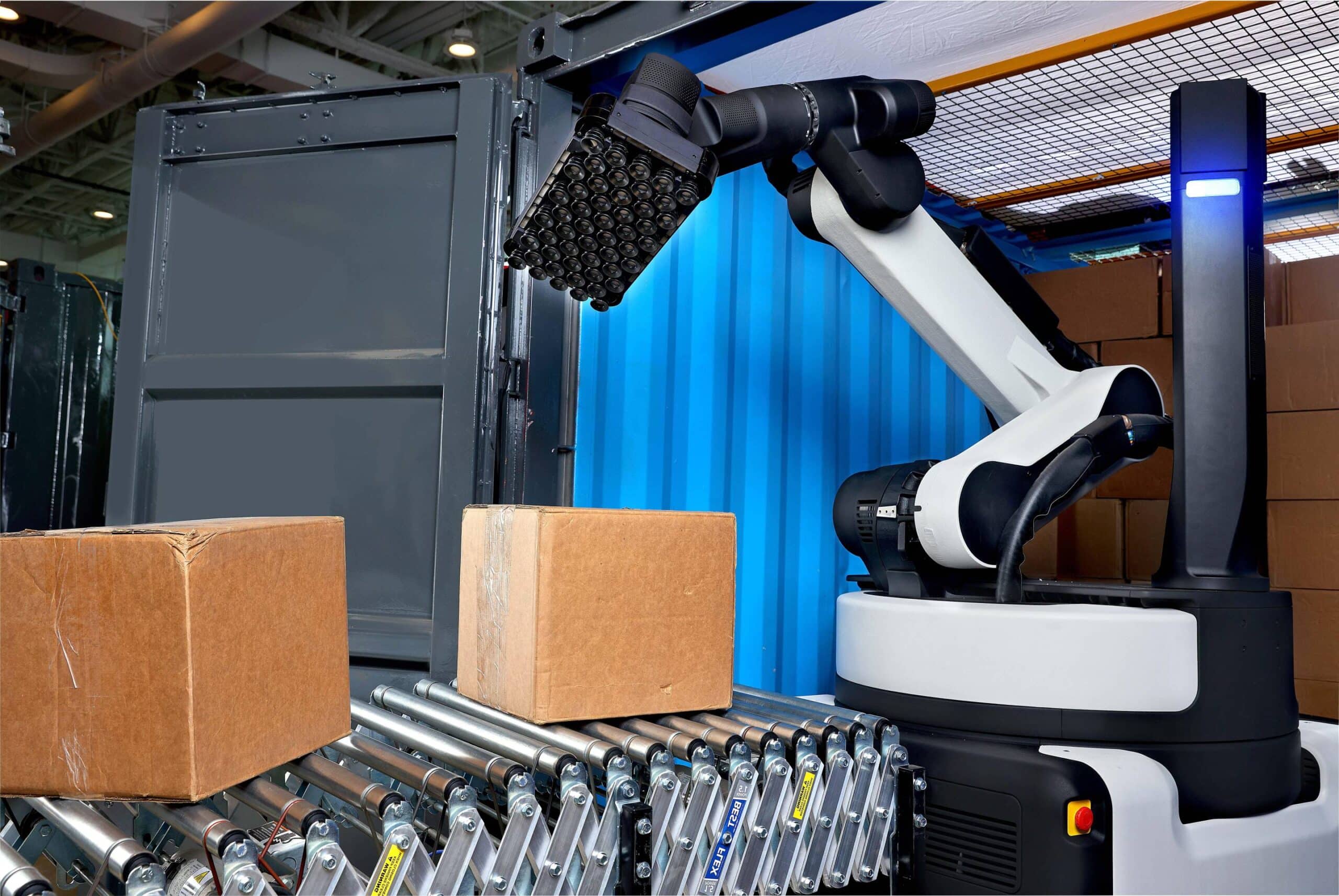
Stretch is a mobile warehouse robot designed for efficient case handling and trailer unloading. It works continuously with advanced real-time behaviors, handles packages up to 50 pounds across various configurations, and integrates seamlessly into existing warehouse infrastructure without heavy modifications.
- •Mobile case handling for warehouse automation
- •Handles packages up to 50 pounds
- •Works with various box types and sizes
- •Real-time decision making, no pre-programming required
- •Automatic detection and retrieval of shifted/fallen boxes
- •Long battery life for continuous operation
- •Fast deployment in days with minimal infrastructure changes
- •Can move hundreds of cases per hour
| Max payload lbs | 50 |
| Battery life shifts | single or multiple shifts |
Technology stackOur read
Inferred from product specs — click through to the technology wiki:
ResearchComputed
See the Company-linked papers module in the Deep report.
Product comparisonComputed
Each row leads with this company's product, side-by-side with similar ones · click a row to expand full specs, click again to collapse
Stretch

LuckiBot Pro

KettyBot
Pudu CC1

R3

Relay Delivery Robot



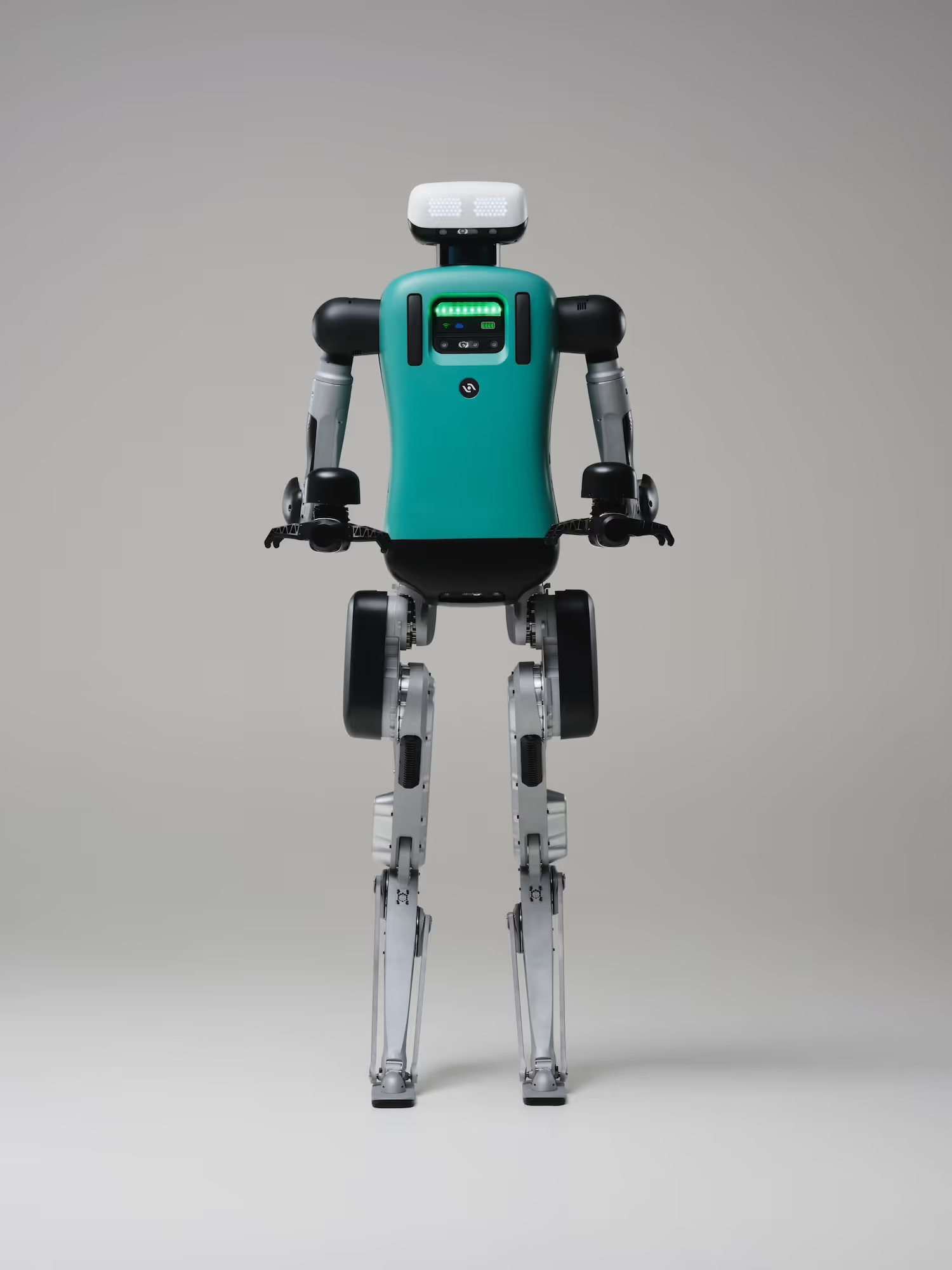
Company announcement
News and Media
The company's official social & video channels · external links


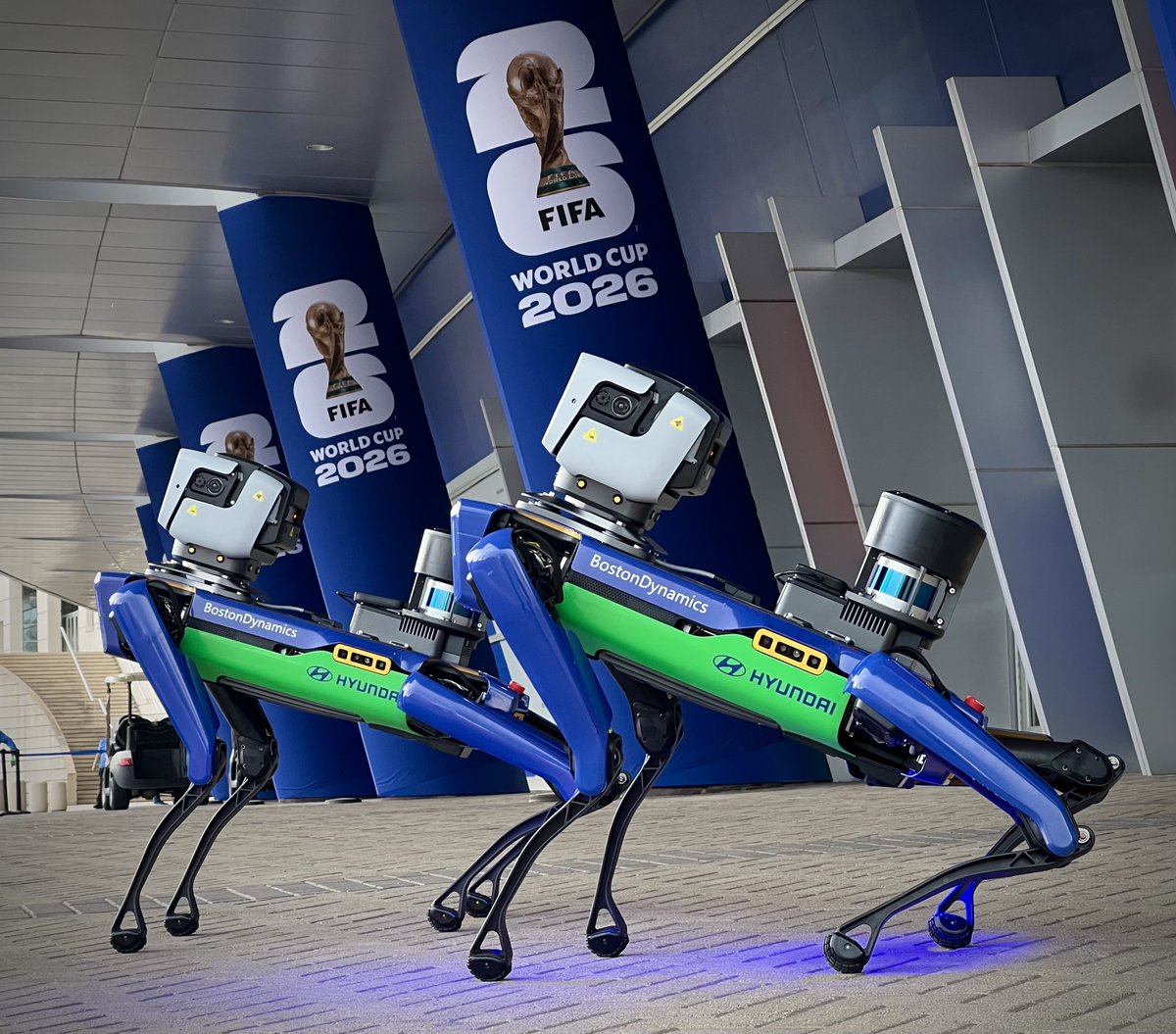
With the FIFA World Cup 2026™ covering 16 host cities across 3 countries, Spot has taken on new assignments: helping protect the largest spo
2026-07-01

Spot's celebrating with the global soccer community ⚽ With robots deployed on 6 continents and in 46 countries - including 20 in the round o
2026-06-29

Ssurveyors from @TxDOT spent 18 days over four months scanning and modeling over the over 5.5 miles of Inner Space Cavern with the help of S
2026-06-26

Boston Dynamics is growing! We're transforming a 323,000sq ft facility into a robotics and AI center to expand our capabilities in advanced
2026-06-24
News
From third-party news outlets (China & abroad) · external links