auxivo
SnapshotCompany claim
Company description not yet disclosed.
- Founded
- Not disclosed
- HQ
- Not disclosed
- Models
- 3
- Categories
- 1
ContactCompany claim
- Address
- Not disclosed
Product families
Is this your company? Claim this profile to add verified data, respond to our analysis, and upgrade claims to Verified.
Claim this profile1. Executive Overview {#executive-overview}
Auxivo (auxivo.com) is a specialist developer of educational exoskeleton kits, operating at the intersection of robotics hardware, human–machine interface research, and STEM pedagogy. The company's verified product line — the EduExo Lite and EduExo Pro — is purpose-built to give students, makers, and university researchers hands-on access to exoskeleton technology at price points (CHF 340 and CHF 1,790 respectively) that are meaningfully below the cost of industrial or clinical exoskeleton systems. This positioning as an accessible, curriculum-ready exoskeleton platform is Auxivo's clearest differentiating strength: the products ship with structured handbooks and tutorials, lowering the barrier to entry for institutions that would otherwise find exoskeleton hardware prohibitively expensive or pedagogically opaque.
The company's geographic registration and founding date are not publicly disclosed on the domain at the time of extraction; the site's locale metadata (en-au) and cookie domain (www.auxivo.com) are technical artifacts rather than reliable indicators of headquarters. What is clear from the product catalog is that Auxivo targets a global but niche audience — university engineering and robotics programs, independent makers, and researchers — rather than industrial or clinical end-users. The EduExo Pro's explicit framing as a university integration tool, combined with the Lite kit's maker-friendly assembly instructions, suggests a deliberate two-tier commercial strategy: a lower-cost entry point for hobbyists and classroom pilots, and a higher-specification kit for institutional procurement.
Latest news
- KEENON Humanoid Pours Drinks at GCS 2026, 100,000 Others Run HotelsYanko Design·2026-06-15GENERAL
2. The Company Story {#the-company-story}
Based solely on verified site data, Auxivo has been built around a single coherent thesis: that exoskeleton technology, long confined to well-funded research labs and industrial deployments, should be teachable, assemblable, and programmable by students. The EduExo product family — Lite, Maker, and Pro — reflects a deliberate curriculum ladder, from a soldering-iron-and-hex-wrench kit aimed at hands-on learners to a more advanced platform explicitly positioned for universities seeking to integrate exoskeleton science into higher education and research programs.
The founding date and founding team are not disclosed in the available data. The company operates its public-facing presence on the Wix platform (confirmed by site metadata), which is consistent with a lean, early-stage or boutique operation prioritizing product development over corporate communications infrastructure. The contact point is a single general inbox ([email protected]), and there is no disclosed office address, headcount, or investor information in the extracted data.
The presence of e-commerce infrastructure — including order history, subscription management, wallet, and address pages embedded in the site — confirms that Auxivo sells directly to customers via its website, rather than exclusively through distribution partners. This direct-to-consumer and direct-to-institution model is consistent with the company's apparent scale and target audience.
Not yet disclosed: founding year, founding team, investor history, and geographic headquarters. Auxivo is invited to claim or correct these details for inclusion in future report revisions.
3. Product Portfolio {#product-portfolio}
Products & versions


Auxivo's verified catalog comprises three products within a single family: the EduExo Lite (CHF 340), the EduExo Maker (no price disclosed in extracted data), and the EduExo Pro (CHF 1,790). All three sit in the educational/research exoskeleton category — there are no industrial, clinical, or mobility-assistance products in the disclosed lineup.
The family has a clear tiered architecture. The EduExo Lite is a complete-in-box kit containing all parts needed to assemble a functioning exoskeleton, accompanied by a tutorial handbook; it requires standard tools (hex wrenches, screwdriver, soldering iron), a computer for programming, and a 9V battery — a specification profile aimed squarely at maker-space and secondary-to-undergraduate-level education. The EduExo Pro steps up to a university-grade kit, with the handbook provided in English and an explicit value proposition around cost-effective integration into higher education and research curricula. The EduExo Maker sits between them in the lineup but has no publicly disclosed price or detailed specifications in the available data — not yet disclosed, and Auxivo is invited to provide further detail. Together, the three products constitute a coherent portfolio for educational customers at different budget and sophistication levels, but the lineup does not yet extend into professional, clinical, or industrial exoskeleton segments based on available evidence.
4. Technology Stack {#technology-stack}
The available product specifications provide a limited but informative window into Auxivo's technology choices. The EduExo Lite's reliance on a 9V battery, assembly with standard hand tools, and a computer-based programming environment suggests a microcontroller-driven architecture — Our read: the kit likely uses an Arduino-compatible or similarly accessible embedded platform, given that the target audience is students and makers who benefit from widely documented, community-supported toolchains. This is an inference; Auxivo has not publicly specified the microcontroller, motor type, sensor suite, or software environment in the extracted data.
The EduExo Pro is described as "advanced" relative to the Lite, targeting university research environments, but no additional technical specifications — degrees of freedom, actuator type, control algorithms, maximum torque, or compatible software frameworks — are disclosed in the available data. Our read: a university-facing research kit in the exoskeleton space would typically require more sophisticated actuation and sensing than a maker kit, possibly incorporating EMG sensing, force feedback, or multi-joint control, but these are inferences based on category norms, not verified Auxivo claims.
The site itself is hosted on Wix's Thunderbolt rendering platform with Google Tag Manager and Google Analytics (Advanced Consent Mode) integrated — standard infrastructure for a direct-sales operation, carrying no particular inference about the robotics technology stack.
Limited public technical detail is available for all three products. Auxivo is invited to disclose hardware specifications, software environments, and compatibility information for inclusion in future updates.
5. Research, Papers, Authors, Labs {#research-papers}
Company-linked papers
Based on the extracted site data, Auxivo does not present itself as a research-publishing organization. No papers, academic authors, affiliated laboratories, or research partnerships are referenced on the company's public-facing pages. This is not unusual — Auxivo's business model appears to be supplying educational hardware to universities and researchers rather than conducting and publishing original academic research itself. The EduExo Pro's positioning as a university research tool means that academic papers citing or using Auxivo's hardware may exist in the literature, but none are linked or claimed by the company in the available data.
6. Media Evidence {#media-evidence}
Media library
No media outlets, press coverage, awards, or third-party editorial mentions are linked or referenced in the extracted site data. Auxivo is invited to submit verified press links for inclusion.
7. Commercial Reality {#commercial-reality}
Customers & deployments
Revenue, customer count, deployment numbers, and return-on-investment data are not disclosed in any form in the available site data and should be rendered accordingly: Not disclosed. Auxivo is invited to share verified customer figures, institutional deployments, or independent ROI evidence for inclusion in future report revisions.
What can be inferred without inventing figures: the presence of a functioning e-commerce stack (order history, subscriptions, wallet, address management) confirms that Auxivo has processed or anticipates processing direct customer transactions. The two-tier pricing structure (CHF 340 for the Lite; CHF 1,790 for the Pro) targets meaningfully different buyer profiles — individual makers versus institutional procurement budgets — and the direct-to-website sales model implies a relatively low transaction volume managed without a disclosed reseller network. Our read: at these price points and with this product scope, Auxivo is most plausibly in an early commercial phase, with revenue dependent on university adoption cycles and maker community awareness, but this is an inference from market structure, not a verified figure.
8. Markets and Use Cases {#markets-use-cases}
The EduExo product family, as described on Auxivo's site, maps onto a set of identifiable markets and use cases, all within the educational and research domain.
Higher Education and University Research: The EduExo Pro is explicitly positioned for universities seeking to integrate exoskeleton technology into curricula and research programs. This targets robotics, biomedical engineering, mechatronics, and human–robot interaction departments that need affordable, hands-on hardware to supplement theoretical instruction or to prototype research questions without acquiring clinical-grade or industrial systems.
Maker and STEM Education Communities: The EduExo Lite's assembly-from-parts format, standard tooling requirements, and 9V battery operation place it squarely in the maker education space — hackathons, robotics clubs, engineering bootcamps, and secondary-to-undergraduate-level STEM programs where the act of building is itself a learning objective.
Independent Researchers and Prototypers: The EduExo Maker, while lacking disclosed specifications, suggests a middle tier for users who want more flexibility than the Lite but are not institutional buyers — potentially independent researchers, graduate students purchasing personally, or small lab groups.
Notably absent from the verified use-case data: industrial ergonomics, workplace injury prevention, clinical rehabilitation, mobility assistance, or military applications — segments that characterize many other exoskeleton companies. Auxivo's disclosed scope is entirely educational and research-oriented.
9. Competitive Landscape {#competitive-landscape}
Competitive comparison
| Robot | Maker | Autonomy | Conf. |
|---|---|---|---|
| iRobot Roomba Combo 10 Max | iRobot | Autonomous | 0.90 |
| Mobile ALOHA (Stanford) | Stanford University | Teleoperated | 0.90 |
| 1X NEO | 1X Technologies | Remote-Assisted | 0.90 |
The educational exoskeleton kit market is a narrow but growing sub-segment of the broader exoskeleton industry, which spans industrial assist, clinical rehabilitation, and military applications. Auxivo's positioning — affordable, assemblable, curriculum-integrated kits — places it in a category where the primary competitive dynamic is not performance specification but accessibility: price, pedagogical support quality, and the richness of accompanying educational materials. Companies operating in adjacent segments (clinical exoskeletons, industrial assist devices) are not direct competitors at the product level, though they compete for the attention and budget of university programs that might otherwise license or borrow professional-grade hardware for research purposes.
The module above carries peer and competitor mapping. In prose, it is worth noting that Auxivo's CHF 340–1,790 price range represents a deliberate attempt to occupy a gap between DIY robotics kits (lower cost, less specialized) and full research-grade exoskeleton systems (far higher cost, not designed for student assembly). Whether that gap is wide enough to sustain a durable competitive position depends on how quickly adjacent kit makers or open-source hardware communities move into the exoskeleton education space — a dynamic worth monitoring.
10. Country Advantage / Geopolitical {#geopolitical}
Section not material for this company.
11. Hype vs Real vs Ugly {#hype-real-ugly}
Claim tracker
Verified (from site data):
- Auxivo sells three exoskeleton kit products (EduExo Lite, Maker, Pro) at disclosed price points of CHF 340 and CHF 1,790.
- The EduExo Lite ships as a complete parts kit with a tutorial handbook, requiring standard tools and a 9V battery.
- The EduExo Pro is described (company claim) as offering universities "an accessible and cost-effective way to integrate exoskeleton technology into higher education and research."
- A functioning e-commerce infrastructure is present on the site.
Company Claims (unverified by third-party data in this extraction):
- The EduExo Pro is described as "advanced" — the degree to which this is differentiated from the Lite technically is not publicly substantiated with specifications.
- "Accessible and cost-effective" is a positioning claim; no independent price benchmarking or customer satisfaction data is available to validate it.
Fixable Gaps:
- Not yet disclosed: technical specifications for any product (microcontroller, actuator type, degrees of freedom, software environment).
- Not yet disclosed: customer or institutional deployment numbers.
- Not yet disclosed: EduExo Maker pricing and specifications.
- Not yet disclosed: founding story, team, or investor backing.
Our read: There is no evidence of inflated claims in the available data. Auxivo's public communications are product-focused and restrained. The risk is not overclaiming but underdisclosure — a thin public profile can limit institutional confidence in procurement decisions.
12. Future Scenarios {#future-scenarios}
Bull Case — Our read: University robotics and engineering programs globally continue to expand their hands-on hardware budgets, and exoskeleton literacy becomes a standard competency expectation in biomedical engineering and human–robot interaction programs. Auxivo's EduExo Pro becomes a reference platform in this curriculum segment, generating recurring institutional orders as cohorts turn over annually. The company introduces new product tiers, software environments, or research add-ons that increase average order value and deepen institutional lock-in.
Base Case — Our read: Auxivo sustains a stable niche position supplying maker communities and a modest number of university programs, primarily in English-speaking markets (consistent with the English-language handbook noted for the EduExo Pro). Growth is steady but constrained by limited marketing visibility, a small team, and the inherently slow procurement cycles of academic institutions. The product line evolves incrementally without a major expansion into new segments.
Bear Case — Our read: The educational exoskeleton kit space attracts well-resourced open-source hardware projects or larger robotics education companies that undercut Auxivo's price point or bundle exoskeleton kits into broader robotics education platforms. Without disclosed traction data, investor backing, or a visible distribution network, Auxivo may struggle to achieve the institutional recognition needed to compete in university procurement processes that favor established vendors.
13. What to Watch {#what-to-watch}
- EduExo Maker details: Pricing and specifications for this product have not been disclosed; publication would clarify the mid-tier strategy.
- Technical specification releases: Microcontroller platform, software environment, and degrees of freedom for the Pro kit would validate the "advanced" positioning and accelerate institutional procurement confidence.
- University partnerships or pilot announcements: Any named institutional deployments would be the strongest leading indicator of commercial traction.
- Product line expansion: Any move beyond educational kits into research-grade, clinical, or industrial-assist exoskeleton segments would signal a significant strategic shift.
- Pricing changes or regional localization: The CHF denomination suggests a Swiss or European base; any move to USD or EUR pricing or regional distributors would signal market expansion intent.
- Academic citations: Papers published by university labs using EduExo hardware would provide third-party validation of the product's research utility without requiring Auxivo to publish its own research.
- Team and leadership disclosure: Publication of founding team and advisory board would improve institutional credibility for procurement purposes.
14. Sources & Methodology {#sources-methodology}
Data Sources: All factual claims in this report are grounded exclusively in content extracted from auxivo.com at the time of data collection. This includes: product listings (EduExo Lite, EduExo Maker, EduExo Pro), product descriptions, key feature lists, disclosed pricing in CHF, and site infrastructure metadata. No third-party databases, press archives, patent filings, academic databases, or financial data sources were used, as none were present in the extracted data.
Provenance Labels Used:
- Company-claim: Information sourced directly from Auxivo's own site copy, presented as the company's own words without independent verification.
- Our read: Analyst inference drawn from product specifications, market category norms, or structural observations — not a verified fact.
- Not yet disclosed: Information absent from the available data, with an open invitation to Auxivo to claim or correct.
Methodology Rubric (applied uniformly to every company in this series):
- Lead with verified strengths; gaps follow.
- Never assert unsourced negatives as fact.
- Label every inference, every company claim, and every gap explicitly.
- Revenue, customer counts, and ROI figures are rendered "Not disclosed" unless sourced.
- Competitor naming in prose is suppressed; the live module carries peer data.
- This rubric is applied identically regardless of company size, segment, or geography.
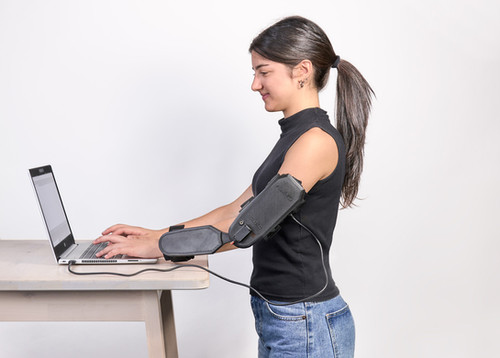
Box contains all parts you need to assemble the EduExo Lite exoskeleton and the handbook that contains the tutorial. Requires hex wrenches, a screwdriver, and soldering iron to assemble, a computer to program it, and a 9V battery to operate it (not included).
- •Contains all parts to assemble the EduExo Lite exoskeleton
- •Includes handbook with tutorial
- •Requires hex wrenches, screwdriver, and soldering iron for assembly
- •Requires a computer to program
- •Operates with a 9V battery (not included)
| Price chf | 340 |
Technology stackOur read
Inferred from product specs — click through to the technology wiki:
ResearchComputed
Product comparisonComputed
Company announcement
News and Media
The company's official social & video channels · external links


