AutoCore奥特酷
Founded 2018 · China · autocore.ai
SnapshotCompany claim
Founded in 2018, AutoCore is a global leader in high-performance mobile computing system software and solutions. It holds hundreds of patents, ISO 26262 certification, and serves smart vehicles, robotics, industrial automation, and aerospace.
- Founded
- 2018
- HQ
- China
- Models
- 10
- Categories
- 3
ContactCompany claim
- Address
- 南京
Product families
Is this your company? Claim this profile to add verified data, respond to our analysis, and upgrade claims to Verified.
Claim this profile1. Executive Overview {#executive-overview}
AutoCore (奥特酷), founded in 2018 and headquartered in China, has established itself as a specialist in high-performance mobile computing system software for intelligent mobility. The company's core competitive advantages are substantial and independently verifiable: it holds hundreds of patents and software copyrights, achieved ISO 26262 ASIL D certification for its runtime and time-synchronization software (validated by TÜV Rheinland), and has received China's national "Little Giant" (专精特新小巨人) designation — a government recognition reserved for specialized, high-value manufacturers. Its technology spans a full stack from real-time operating system middleware (AutoCore.OS) and vehicle network communication (AutoCore.COMM) to autonomous driving software (ADrive series) and TSN networking, serving smart vehicles, robotics, industrial automation, and aerospace.
AutoCore's commercial footprint, while not fully disclosed publicly, is corroborated by third-party signals: partnerships with Foxconn, Hillhouse Capital, Qualcomm, NXP, STMicroelectronics, Tier IV, and ADLINK have been reported across independent press sources. The ADrive series has been deployed in China, the Middle East, and Southeast Asia, with a strategic partnership with BrightDrive specifically targeting Middle East autonomous driving and software-defined vehicle (SDV) markets. The company's participation in Autoware's open-source autonomous driving ecosystem (documented by autoware.org, April 2023) and Qualcomm's Dragonwing Robotics Development Platform (reported by automate.org at CES 2026) further situate AutoCore within global autonomous-driving and robotics supply chains.
Not yet disclosed: precise revenue figures, total headcount, and named end-customer deployments at volume. AutoCore is invited to claim or correct these data points for a fuller picture.
Latest news
- KEENON Humanoid Pours Drinks at GCS 2026, 100,000 Others Run HotelsYanko Design·2026-06-15GENERAL
2. The Company Story {#the-company-story}
AutoCore was founded in 2018 by a team described on its own site as "industry experts" drawing on both domestic Chinese and international talent pools. The company's early focus was functional safety middleware — the unglamorous but critical software layer that sits between hardware SoCs/MCUs and application-level autonomous driving or robotics stacks. This positioning proved strategically sound: as the automotive industry accelerated toward software-defined vehicles and zonal/domain architectures, the demand for certified, hardware-agnostic middleware became acute.
A defining milestone came in 2022, when AutoCore claimed — and TÜV Rheinland independently certified — that AutoCore.Runtime for Safety and AutoCore.Timesync for Safety achieved ISO 26262 ASIL D compliance, the highest integrity level under the automotive functional safety standard. The company describes itself as the world's first system software supplier to achieve this certification, a claim that, if accurate, represents a significant first-mover advantage in a market where safety certification is a hard entry barrier for OEM and Tier 1 procurement.
The company's institutional recognition has accumulated steadily: national "Little Giant" enterprise status, designation as a state-encouraged key software enterprise, cultivation as a unicorn candidate, and inclusion in multiple provincial and municipal key science and technology programs. These Chinese government designations carry real commercial weight, frequently gating access to state-linked procurement and co-investment programs. AutoCore has also pursued academic collaboration, co-founding the Open Intelligent Electrical Vehicle Research Center (OIEV RC) with Macau University of Science and Technology, signaling an intent to shape open-platform standards for intelligent EVs. Its A-round financing (with Foxconn and Hillhouse Capital named as investors in press coverage) provided the capital to scale from middleware pure-play into a broader hardware-plus-software solution provider, including the robotics brain and AGV/AMR product lines visible in its current portfolio.
3. Product Portfolio {#product-portfolio}
Products & versions


AutoCore's product lineup divides into three coherent families. The first is the automotive/SDV stack: AutoCore.OS (a distributed system software integrating a proprietary Runtime scheduling framework and vehicle-level SOA architecture), AutoCore.COMM (a full-stack in-vehicle network protocol stack supporting multiple bus and communication protocols), and AutoCore.Tool (a full-lifecycle development toolchain covering design through production for OEM and Tier 1 customers). Together these three products constitute an end-to-end software platform for software-defined vehicles, targeting CCU (central compute unit) and ZCU (zone controller unit) architectures — the dominant hardware paradigms in next-generation passenger and commercial vehicles.
The second family is the robotics and autonomous mobility stack, anchored by the ADrive series — an open-source L4 autonomous driving product line targeting non-public-road industrial environments: ports, mines, parks, factories, and logistics facilities. ADrive's published specifications are notably concrete: data transfer latency as low as 6–8 microseconds, node recovery within 300 milliseconds, service recovery within 1 second, 15-minute OTA upgrade windows, and a claimed 90% improvement in deployment efficiency via one-click scripting. The hardware adaptation layer supports Nvidia Orin, TI TDA4VH, and Horizon Robotics J6 SoCs on a plug-and-play basis — covering the three dominant autonomous-driving compute platforms in the Chinese market. AutoCore also offers a broader robotics product range described as covering "robot brain, nervous system, and SaaS services," with one-stop AGV/AMR solutions.
The third element is TSN Fusion, a Time-Sensitive Networking product compliant with IEEE standards, targeting high-precision, low-latency deterministic communication across automotive, robotics, and industrial automation domains — a cross-cutting infrastructure play that complements both the automotive and robotics families. The portfolio's overall shape is that of a platform company rather than a single-product vendor: AutoCore sells the foundational software and connectivity infrastructure on which OEMs, Tier 1s, and robotics integrators build their own differentiated applications.
4. Technology Stack {#technology-stack}
AutoCore's technology foundation, as described on its own site, rests on three proprietary pillars: a full-stack communication protocol stack, a deterministic scheduling system, and distributed computing middleware. The company claims these are "internationally leading" — a characterization consistent with the ASIL D certification milestone but one that warrants independent benchmarking before full acceptance.
Our read: The architecture of AutoCore.OS — combining a Runtime scheduling framework with a vehicle SOA (Service-Oriented Architecture) layer — is consistent with AUTOSAR Adaptive-era design philosophy, where services are dynamically discoverable and hardware abstraction allows the same software to run across heterogeneous SoC/MCU combinations. The explicit support for Nvidia Orin, TI TDA4VH, and Horizon J6 suggests AutoCore has invested in hardware abstraction layers (HALs) for each major compute platform rather than being locked to a single silicon partner. This is a meaningful engineering investment and a genuine selling point for OEMs managing multi-supplier compute strategies.
Our read: The ADrive series' 6–8 μs data transfer latency figure, if measured under realistic industrial conditions, places it in the same performance tier as high-performance inter-process communication frameworks such as Eclipse Cyclone DDS or AUTOSAR's own SomeIP implementations. The 300 ms node recovery and 1 s service recovery targets are characteristic of a system designed for unattended 24/7 industrial operation rather than consumer automotive stop-start cycles.
Our read: The TSN Fusion product's grounding in IEEE Time-Sensitive Networking standards (802.1Qbv and related) indicates AutoCore is targeting deterministic Ethernet fabrics — a technology increasingly specified for next-generation zonal vehicle architectures and industrial robot cells alike. This cross-domain applicability is strategically coherent.
The ISO 26262 ASIL D certification for AutoCore.Runtime for Safety and AutoCore.Timesync for Safety, validated by TÜV Rheinland (an independent certification body), is the most concretely verifiable technical claim in the public record. ASIL D is the highest functional safety integrity level under ISO 26262 and covers systems where a failure could cause death or serious injury — a certification that imposes rigorous process, documentation, and testing requirements on the software development lifecycle.
Not yet disclosed: source-level architecture documentation, benchmark methodology for latency claims, or third-party performance validation beyond the TÜV Rheinland safety certification.
5. Research, Papers, Authors, Labs {#research-papers}
Company-linked papers
AutoCore does not appear to be a research-publishing company in the academic sense. No peer-reviewed papers or arXiv preprints attributed to AutoCore authors have been identified in the available data. This is typical of automotive middleware and embedded systems vendors, whose proprietary IP resides in certified software stacks and patent portfolios rather than open academic publication. The company's co-founding of the Open Intelligent Electrical Vehicle Research Center (OIEV RC) with Macau University of Science and Technology suggests an emerging academic engagement channel, but no published outputs from that center have been identified in the current data set.
6. Media Evidence {#media-evidence}
Media library
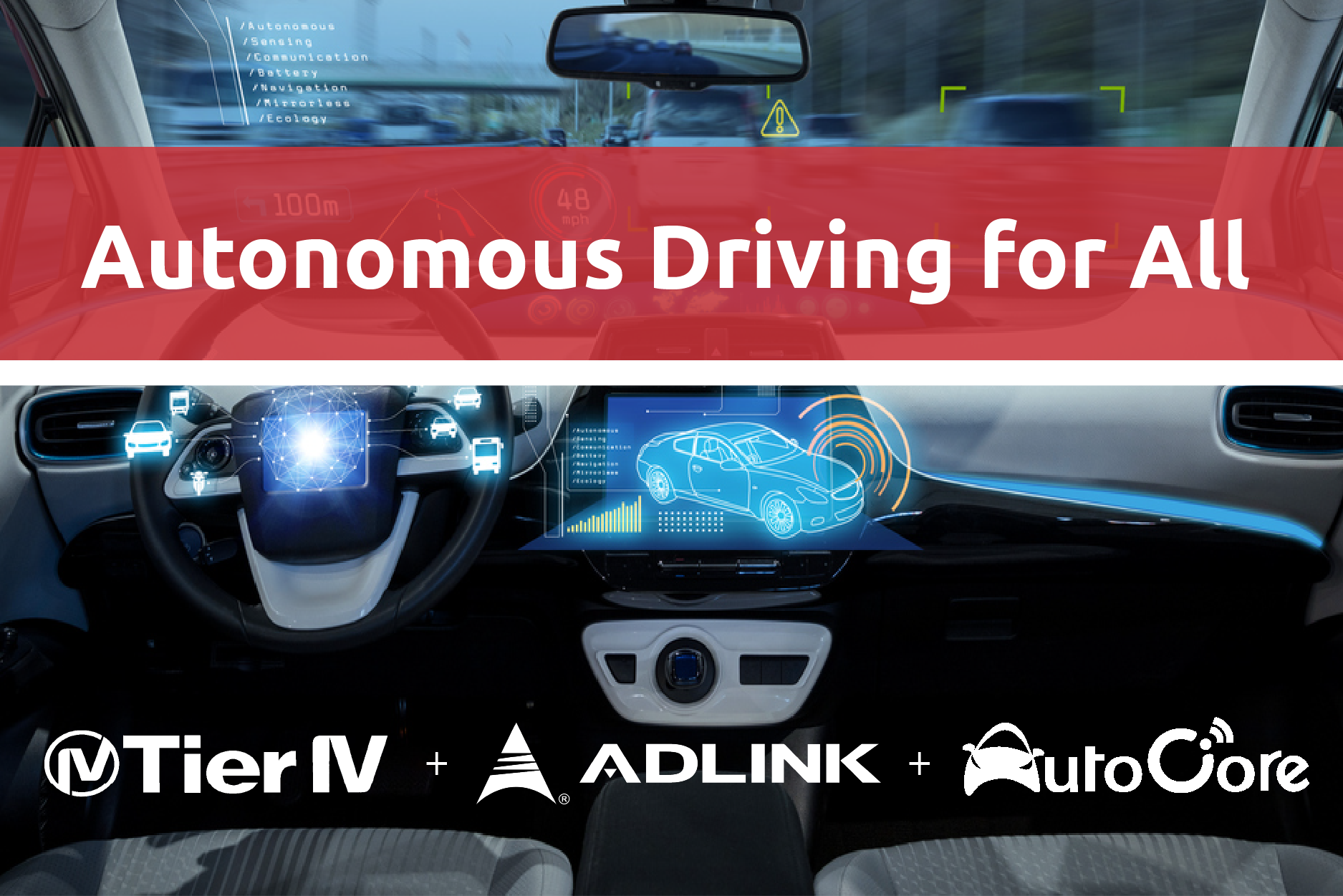
AutoCore has secured coverage across several independently operated outlets. Autoware.org documented AutoCore's participation in the Autoware open-source autonomous driving ecosystem as of April 2023, providing external validation of its software integration capabilities. Automate.org reported AutoCore's involvement in Qualcomm's Dragonwing Robotics Development Platform announcement at CES 2026, situating the company within a high-profile international robotics supply chain context. ADLINK Technology's own press channel (adlinktech.com.cn) documented the three-way collaboration between AutoCore, ADLINK, and Tier IV on autonomous driving and mobile robotics middleware. LinkedIn's UK platform carried a company profile as of October 2023. Taken together, these sources confirm AutoCore's active engagement with both the open-source autonomous driving community and major hardware and systems integration partners.
7. Commercial Reality {#commercial-reality}
Customers & deployments
Revenue: Not disclosed. AutoCore is invited to share or correct revenue figures for inclusion in this report.
Customer count and named deployments: Not publicly disclosed in granular form. The company's own site states that its products serve "industry leaders" (行业龙头) in smart vehicles, robotics, industrial automation, and aerospace, and that the ADrive series has been deployed in China, the Middle East, and Southeast Asia. The BrightDrive partnership is a named commercial relationship targeting Middle East SDV and autonomous driving markets. Investor-side signals — Foxconn and Hillhouse Capital participation in the A-round — are corroborated by press coverage and suggest institutional confidence in commercial viability, though investment does not itself confirm revenue scale.
ROI/payback data: Not disclosed. The ADrive series documentation cites a 90% improvement in deployment efficiency via one-click scripts — a company claim that, if independently validated, would represent meaningful TCO reduction for robotics integrators, but no third-party ROI studies have been identified.
AutoCore is invited to claim, correct, or supplement any of the above with verifiable commercial disclosures.
8. Markets and Use Cases {#markets-use-cases}
AutoCore's market footprint, as derivable from its product use-case and industry tags, spans four distinct verticals with meaningful product-market fit evidence in each.
Industrial autonomous mobility (AGV/AMR): The ADrive series is explicitly designed for ports, mines, parks, factories, and logistics facilities — environments characterized by defined operational domains, high duty cycles, and tolerance for complex multi-vehicle coordination. The 7×24 industrial-grade reliability specification and the 15-minute OTA upgrade window (minimizing downtime) are directly responsive to the operational requirements of warehouse and factory automation buyers. Deployment evidence in China, the Middle East, and Southeast Asia confirms active commercialization in this segment.
Smart vehicles (passenger and commercial): AutoCore.OS, AutoCore.COMM, and the SDV/CCU/ZCU solution set address the central compute and zonal controller architectures being adopted by OEM and Tier 1 customers globally. The SOA-based architecture and full-lifecycle toolchain (AutoCore.Tool) are designed to reduce integration effort and time-to-production — a pitch well-matched to the cost and schedule pressures facing automotive software programs.
Industrial automation and robotics: The broader robotics product family (robot brain, nervous system, SaaS services) and TSN Fusion networking extend AutoCore's addressable market into industrial robot cells and collaborative automation environments beyond mobile platforms.
Aerospace: Listed as a served vertical in the company's own description, though no product-specific or deployment detail for aerospace has been made publicly available. Not yet disclosed: which aerospace segments or programs are served.
Academic/research: The OIEV RC collaboration with Macau University of Science and Technology represents a smaller but strategically relevant presence in open-platform intelligent EV research.
9. Competitive Landscape {#competitive-landscape}
Competitive comparison
| Robot | Maker | Autonomy | Conf. |
|---|---|---|---|
| iRobot Roomba Combo 10 Max | iRobot | Autonomous | 0.90 |
| Mobile ALOHA (Stanford) | Stanford University | Teleoperated | 0.90 |
| 1X NEO | 1X Technologies | Remote-Assisted | 0.90 |
AutoCore competes in the functional safety middleware and autonomous driving software platform segment — a market that sits at the intersection of automotive OS vendors, AUTOSAR stack providers, and autonomous driving software integrators. The competitive dynamic in this space is shaped by two forces: the technical barrier of ISO 26262 certification (which AutoCore has cleared at ASIL D level) and the ecosystem lock-in created by deep SoC-level hardware adaptation work. Companies that have invested in both tend to be difficult to displace once designed in.
AutoCore's open-source positioning via the Autoware ecosystem, combined with its hardware-agnostic SoC support (Orin, TDA4VH, Horizon J6), differentiates it from proprietary stack vendors and positions it as an integrator-friendly middleware layer. Its partnerships with Qualcomm, NXP, STMicroelectronics, Tier IV, and ADLINK suggest a deliberate ecosystem strategy rather than a closed-platform approach. The module below identifies category peers for contextual benchmarking.
10. Country Advantage / Geopolitical {#geopolitical}
AutoCore's China domicile is materially relevant to its commercial trajectory. The company benefits from China's substantial domestic market for intelligent vehicles, AGV/AMR robotics, and industrial automation — all policy-prioritized sectors under national technology programs. Its government recognitions (national "Little Giant," state-encouraged key software enterprise, unicorn candidate) confer preferential access to government procurement pipelines, subsidized financing, and provincial co-investment programs. These designations represent genuine competitive advantages within China.
At the same time, AutoCore's international expansion — documented deployments in the Middle East and Southeast Asia, the BrightDrive partnership for Middle East SDV markets, and the Autoware and Qualcomm ecosystem participations at CES 2026 — indicates active management of geographic diversification. For prospective international customers or partners evaluating supply-chain risk, AutoCore's software-centric, certification-backed product profile (ISO 26262 ASIL D from TÜV Rheinland, a German body) provides a degree of internationally recognized technical credibility that hardware-centric Chinese suppliers may lack.
Not yet disclosed: AutoCore's specific posture on export controls, data sovereignty compliance, or dual-use classification of any products. International buyers in regulated jurisdictions are advised to conduct their own compliance due diligence.
11. Hype vs Real vs Ugly {#hype-real-ugly}
Claim tracker
Verified / independently corroborated:
- ISO 26262 ASIL D certification for AutoCore.Runtime for Safety and AutoCore.Timesync for Safety — confirmed by TÜV Rheinland (independent certification body), reported in company press.
- Autoware ecosystem participation — documented by autoware.org (April 2023).
- Qualcomm Dragonwing Robotics Development Platform involvement — reported by automate.org (CES 2026).
- ADLINK and Tier IV collaboration on autonomous driving and mobile robotics middleware — documented by adlinktech.com.cn.
- A-round investment with Foxconn and Hillhouse Capital participation — reported in press coverage.
- National "Little Giant" and related government designations — consistent with publicly searchable Chinese government recognition programs.
Company claims (unverified by third-party data in this report):
- "Global leader in high-performance mobile computing system software" — company-claim; competitive rank not independently verified.
- "World's first system software supplier to achieve ISO 26262 certification" (implied by 2022 milestone framing) — plausible given the timeline and certification difficulty, but independent corroboration of "first" status has not been identified.
- "Internationally leading" full-stack communication protocol stack, deterministic scheduling, and distributed computing middleware — company-claim; no independent benchmark comparison identified.
- 90% deployment efficiency improvement via one-click scripts — company-claim; no third-party validation identified.
- ADrive deployments in Middle East and Southeast Asia — company-claim; no independent customer confirmation identified in available data.
- Hundreds of patents and software copyrights — company-claim; patent portfolio has not been independently audited for this report.
Our read: The gap between the verified technical credentials (ASIL D, ecosystem partnerships, investor quality) and the unverified superlative market-positioning claims ("global leader," "world's first") is normal for a company of AutoCore's stage and sector. The technical substance is real; the market leadership framing is aspirational marketing. Neither invalidates the other.
Not yet disclosed: any third-party customer references, independent benchmark results, or audited patent count. AutoCore is invited to provide supporting evidence for any of the above claims.
12. Future Scenarios {#future-scenarios}
Our read — Bull case: AutoCore's ASIL D certification, multi-SoC hardware abstraction, and open-source ecosystem positioning (Autoware, Qualcomm, Tier IV) collectively lower the integration cost for OEM and Tier 1 customers migrating to zonal/domain architectures. If SDV adoption accelerates on the timelines currently projected by major OEMs, and if AutoCore's Middle East and Southeast Asia expansion gains traction through the BrightDrive partnership, the company could emerge as a de facto middleware standard across a significant segment of non-Chinese autonomous mobility programs — converting its current "unicorn candidate" status into a genuine scale business. The academic channel via OIEV RC could also seed next-generation open-platform EV standards where AutoCore's stack is the reference implementation.
Our read — Base case: AutoCore grows steadily as a specialized middleware and AGV/AMR software supplier, retaining and expanding its Chinese domestic customer base while making selective international inroads in the Middle East and Southeast Asia. The ASIL D certification continues to serve as a meaningful differentiator in OEM procurement processes. Revenue scales with the broader intelligent vehicle and industrial automation markets, but the company remains a B2B infrastructure vendor rather than a widely recognized consumer-facing brand. International expansion is real but measured, reflecting the practical complexity of multi-jurisdiction compliance and customer qualification cycles.
Our read — Bear case: If the SDV architectural wave consolidates around proprietary stacks from large OEMs or dominant Tier 1s that develop in-house middleware, the addressable market for independent middleware vendors like AutoCore could compress. Geopolitical headwinds — particularly in markets where Chinese software suppliers face scrutiny in critical automotive infrastructure — could limit international growth to regions with lower regulatory sensitivity. In this scenario, AutoCore remains a viable domestic Chinese player but struggles to achieve the international scale its investor base and government designations imply.
13. What to Watch {#what-to-watch}
- BrightDrive partnership outcomes: Concrete project wins or named OEM/fleet customers in the Middle East would validate the international SDV expansion thesis.
- Autoware ecosystem contributions: Volume and significance of AutoCore's code contributions to Autoware will signal the depth of its open-source commitment and technical influence.
- Qualcomm Dragonwing integration: Whether AutoCore's software appears in production deployments on the Dragonwing platform will confirm or test the commercial substance of the CES 2026 announcement.
- Additional safety certifications: Extensions of the ASIL D certification to AutoCore.OS, AutoCore.COMM, or the ADrive series would materially expand the addressable market, particularly for passenger vehicle OEM programs.
- Financing events: A B-round or strategic investment from an OEM or Tier 1 would signal both commercial validation and likely a named anchor customer.
- Patent portfolio publication: Any public disclosure of patent family scope or licensing activity would allow independent assessment of the IP moat.
- OIEV RC outputs: Published research, open-platform standards, or spin-out products from the Macau University collaboration would indicate whether the academic channel is productive.
- Aerospace vertical disclosure: Any named aerospace program or certification would open a new and high-value market narrative.
14. Sources & Methodology {#sources-methodology}
Primary source: All factual claims about AutoCore's products, history, certifications, and positioning are drawn from the company's own website (autocore.ai), including the About page text and product descriptions. All such claims are labeled "company-claim" and should be read as the company's own representations, not independently verified facts unless separately noted.
Independent corroboration: Third-party press sources cited in this report are: autoware.org (April 2023), automate.org (CES 2026 coverage), adlinktech.com.cn (ADLINK/Tier IV/AutoCore collaboration), and uk.linkedin.com (October 2023 company profile). These are cited as external validation where they corroborate company claims; they do not constitute financial audits or product certifications.
Certification validation: The ISO 26262 ASIL D certification for AutoCore.Runtime for Safety and AutoCore.Timesync for Safety is attributed to TÜV Rheinland, an independent certification body. This is the sole third-party technical validation identified in the available data.
Computed relations: Partner and investor names (Foxconn, Hillhouse Capital, Qualcomm, NXP, STMicroelectronics, Tier IV, ADLINK, BrightDrive) are drawn from press descriptions extracted from the company's own news pages; they are treated as company-claims unless corroborated by the named third party's own publications.
Methodology rubric (applied uniformly to every company on this platform): (1) Lead with verified strengths. (2) Label every unverified claim. (3) Express gaps as fixable absences, not negative assertions. (4) Ground inferences explicitly as "Our read." (5) Never assert revenue, customer counts, or market rank without a citable source. (6) Apply the same standard regardless of company origin, size, or sector.
AutoCore ADrive series is an open-source L4 autonomous driving product line for ports, mines, parks, factories, and logistics. It features low-latency data channels (6-8 μs), multi-level health management, 15-minute OTA upgrades, and a hardware adaptation layer supporting mainstream SoCs. The system ensures 7×24 industrial-grade reliability and has been deployed in China, Middle East, Southeast Asia, and Japan.
- •Open-source L4 autonomous driving for ports, mines, parks, factories, logistics
- •Data transfer latency as low as 6-8 μs for large data volumes
- •Multi-level health management: node recovery within 300ms, service recovery within 1s
- •15-minute OTA upgrade and SOVD remote diagnostics
- •Hardware adaptation layer supports Orin, TDA4VH, Horizon J6 plug-and-play
- •Deployment efficiency improved by 90% with one-click scripts
| Ota update time (min) | 15 |
| Node recovery time (ms) | 300 |
| Service recovery time s | 1 |
| Data transfer latency us | 6 |
| Data transfer latency max us | 8 |
| Deployment efficiency percent | 90 |
Technology stackOur read
Inferred from product specs — click through to the technology wiki:
ResearchComputed
Product comparisonComputed
Each row leads with this company's product, side-by-side with similar ones · click a row to expand full specs, click again to collapse



Company announcement
News and Media
The company's official social & video channels · external links
News
From third-party news outlets (China & abroad) · external links