Universal Robots UR5e
The Universal Robots UR5e is a six-axis collaborative robot arm (cobot) belonging to Universal Robots' e-Series product line. Designed for light-to-medium industrial and laboratory tasks, it is widely used in assembly, pick-and-place, machine tending, quality inspection, and lab automation workflows. Universal Robots, a Danish company and a subsidiary of Teradyne, is one of the most recognized names in the collaborative robotics market. The UR5e is programmed using Universal Robots' PolyScope graphical interface on a teach pendant, making it accessible to operators without deep robotics expertise. Its built-in force/torque sensing, tool-center-point control, and a broad ecosystem of certified end-effectors and accessories (the UR+ platform) have made it a popular mid-range cobot choice across manufacturing, electronics, food handling, and research sectors.

Overview and Use Cases
The UR5e sits at the center of Universal Robots' e-Series lineup, positioned between the lighter UR3e and the heavier UR10e and UR16e models. It is engineered for tasks that require a balance of reach, payload capacity, and precision in human-collaborative environments. Common deployment scenarios include:
- Assembly and sub-assembly in electronics and consumer goods manufacturing
- Pick-and-place operations on conveyor lines
- Machine tending for CNC machines, injection molding, and presses
- Laboratory automation, including pipetting, sample handling, and testing
- Quality inspection when paired with vision systems
- Packaging and palletizing at light load scales
Because it is certified as a collaborative robot, the UR5e can often operate without traditional safety fencing when a risk assessment permits, enabling flexible deployment on shared factory floors.
Key Technical Details
The UR5e features six degrees of freedom, allowing it to reach around obstacles and work in confined spaces. According to publicly available Universal Robots documentation, the arm has a reported payload capacity of approximately 5 kg and a reach of around 850 mm, though buyers should verify current specifications directly with the manufacturer. Key design features include:
- Built-in force/torque sensor at the tool flange, enabling compliant motion and safe human interaction
- PolyScope teach pendant with a touchscreen interface for graphical, waypoint-based programming
- Modular joint design with integrated electronics, reducing cable clutter
- UR+ ecosystem compatibility — a certified marketplace of grippers, sensors, software, and accessories from third-party partners
- IP54-rated controller and teach pendant (reportedly; buyers should confirm current ratings)
- Supports multiple programming interfaces including URScript, ROS (Robot Operating System), and various SDK options
Comparison to Similar Robots
Within Universal Robots' lineup, the UR5e competes internally with the UR3e (smaller, lower payload, suited for benchtop tasks) and the UR10e/UR16e (larger reach and payload for heavier applications). The e-Series as a whole improved upon the earlier CB-Series with enhanced force sensing and a redesigned teach pendant.
Against competitors, the UR5e faces direct comparison with:
- FANUC CRX-10iA/L — a competing cobot with a different programming philosophy and FANUC's industrial ecosystem
- KUKA LBR iisy — emphasizing sensitivity and ease of use in a similar payload class
- ABB GoFa CRB 15000 — targeting similar collaborative applications with ABB's SafeMove technology
- Kinova Gen3 (7 DoF) — a lighter-duty, research-oriented arm with an extra degree of freedom, more commonly found in academic and assistive robotics contexts
The UR5e's primary competitive advantages are its large installed base, extensive UR+ partner ecosystem, and relatively straightforward programming experience.
Market Context and Target Buyers
The UR5e is generally positioned in the mid-range cobot segment. Universal Robots does not publicly list fixed MSRPs, and pricing varies by region, configuration, and distributor. It is typically purchased by:
- Small and medium-sized manufacturers seeking flexible automation without large capital investment in traditional industrial robots
- System integrators building turnkey automation cells
- Research institutions and universities using it as a platform for robotics and AI research
- Pharmaceutical and life sciences companies for lab automation
The robot is sold globally through a network of authorized distributors and system integrators.
Notable Deployments and Customers
Universal Robots reports tens of thousands of cobot deployments worldwide across its product line, with the UR5 and UR5e among its most widely adopted models. Customers span automotive suppliers, electronics contract manufacturers, food and beverage producers, and academic research labs. Specific customer names and deployment details are selectively disclosed by Universal Robots in case studies published on its website.
Future Outlook
The collaborative robotics market continues to grow, driven by labor shortages, demand for flexible manufacturing, and falling cobot prices. Universal Robots regularly updates its software ecosystem (PolyScope and the URCap plugin framework) and expands the UR+ marketplace, extending the UR5e's useful life through software rather than hardware replacement. Increasing integration with AI-based vision systems, force-adaptive control, and cloud connectivity is expected to further expand the UR5e's application range in coming years.
Related videos


Community buzz (Reddit)
Fully autonomous valet robot that parks on its own
r/nextfuckinglevel · ▲ 99,792
This model's robotic costume
r/nextfuckinglevel · ▲ 81,604
Man Mimics Robot with INSANE Body Control
r/nextfuckinglevel · ▲ 78,019
Olaf robot at Paris Disneyland
r/Damnthatsinteresting · ▲ 74,194
Japanese researchers at the University of Tsukuba created CirculaFloor, robotic tiles that let you walk infinitely in VR without ever leaving your spot.
r/Damnthatsinteresting · ▲ 72,690
Related entries
 Robot
RobotG1
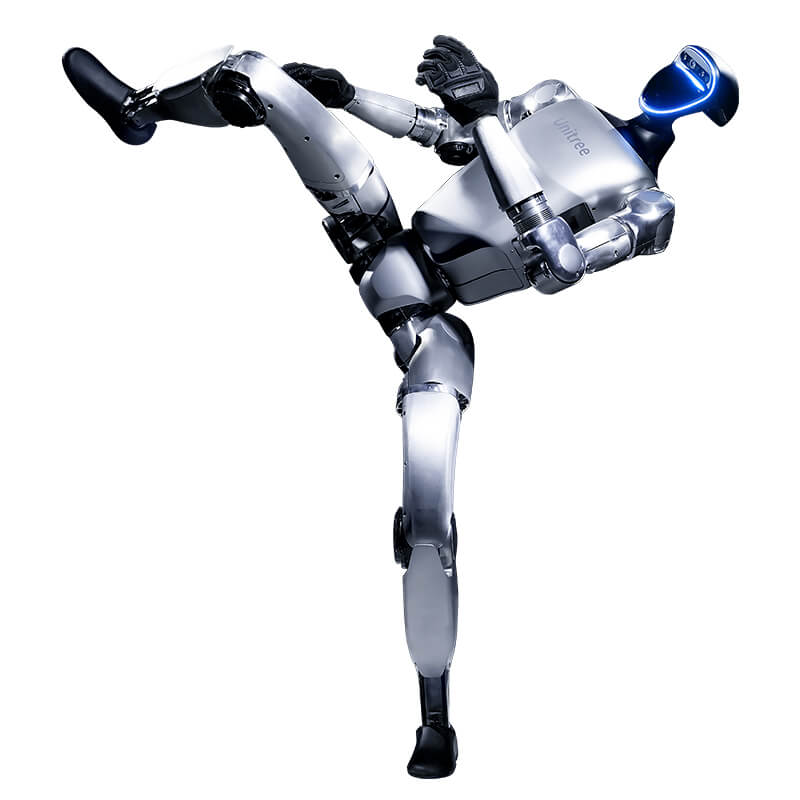
The Unitree G1 is a general-purpose humanoid robot developed by Unitree Robotics, a Chinese robotics company headquartered in Hangzhou. Standing approximately 1.32 meters tall and weighing around 35 kilograms, the G1 features 23 degrees of freedom and is capable of walking, running, recovering from falls, and performing dexterous manipulation tasks. It ships with SDK access, making it accessible to researchers and small-business operators seeking an affordable entry point into humanoid robotics. The G1 is widely regarded as one of the most competitively priced serious humanoid platforms available as of public reporting, positioning Unitree as a disruptive force in a market historically dominated by far more expensive systems. Its combination of mobility, recoverability, and open software access has attracted attention from academic institutions, robotics developers, and automation-focused startups worldwide.
387 views
 Robot
RobotQuicktron M100
The Quicktron M100 is a heavy-duty autonomous mobile robot (AMR) belonging to Quicktron Robotics' M-Series product line. It is designed for demanding material handling tasks in warehouses, distribution centers, and manufacturing environments, using an integrated lift mechanism to transport shelves and pallets autonomously across facility floors. Quicktron Robotics, a company with roots in China and a global commercial presence, positions the M100 as a high-capacity solution for operations that require moving heavier loads than lighter AMR models can accommodate. The M100 targets logistics operators and manufacturers seeking to automate goods-to-person or pallet-movement workflows at scale.
134 views
 Robot
RobotNVIDIA Jetson Orin NX
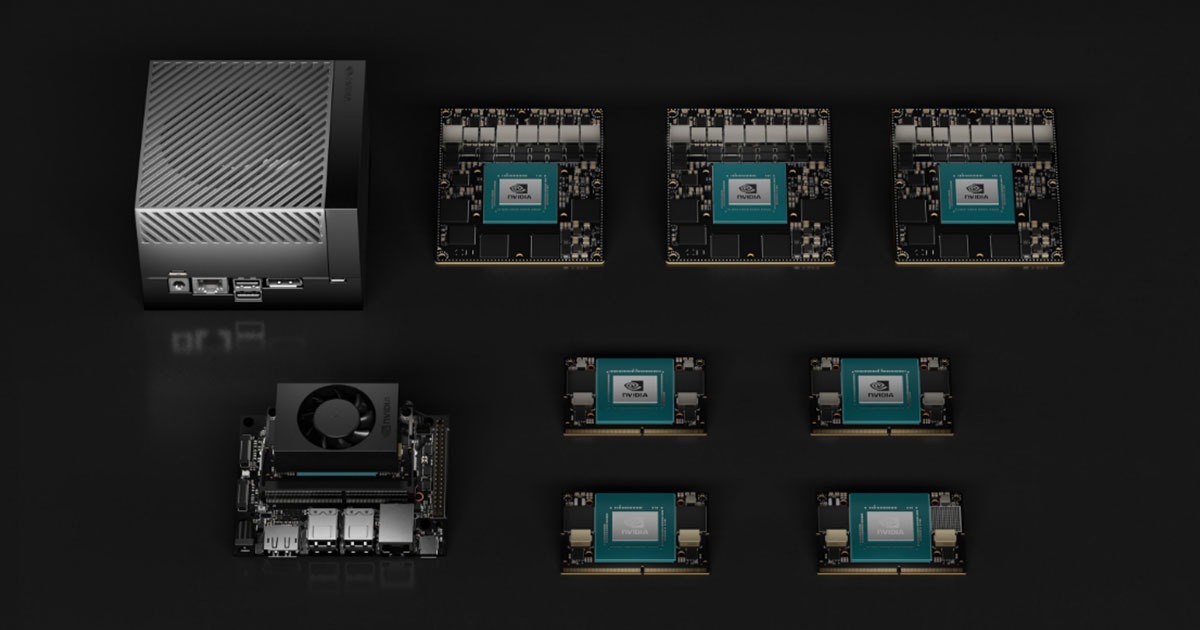
The NVIDIA Jetson Orin NX is a compact, SO-DIMM form-factor edge AI compute module designed for robotics, autonomous machines, and embedded vision applications. Manufactured by NVIDIA, it is available in 8 GB and 16 GB memory configurations and pairs an Ampere-architecture GPU with an 8-core Arm Cortex-A78AE CPU to deliver high-throughput on-device inference without relying on cloud connectivity. Positioned within NVIDIA's broader Jetson Orin family, the Orin NX targets developers and system integrators who need a balance of performance and power efficiency in a small footprint. It is commonly used in applications such as industrial inspection, autonomous mobile robots (AMRs), drone navigation, and smart edge devices where real-time AI inference is critical.
130 views
 Robot
RobotNAO 6
NAO 6 is a compact humanoid robot developed by Aldebaran, now operating under the United Robotics Group umbrella. Standing approximately 58 cm tall, it is designed primarily for education, academic research, and healthcare applications, and is reportedly one of the most widely deployed humanoid robots in university and school settings worldwide. It is programmed through the Choregraphe graphical environment and the NAOqi SDK, and supports multilingual voice interaction out of the box. The sixth-generation iteration of the long-running NAO platform refines the hardware and software of its predecessors while maintaining backward compatibility with existing NAOqi-based programs. NAO 6 features an updated processor, improved cameras, and enhanced tactile and inertial sensors compared to earlier versions. Its approachable size, robust software ecosystem, and broad community support have made it a standard fixture in robotics curricula and human-robot interaction research globally.
85 views