Let's compare
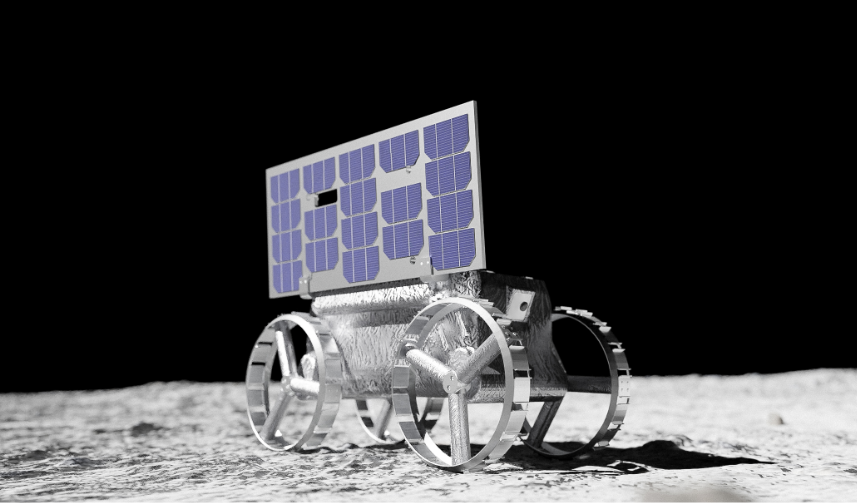
CubeRover
Astrobotic
Not yet assessed
- Height
- —
- Payload
- —
- Verified autonomy
- not assessed
- Real deployment
- not assessed
- Status
- —
- Price
- —
CubeRover
AstroboticCubeRover is a class of small, modular lunar surface rovers developed by Astrobotic Technology (Pittsburgh, PA) in partnership with Carnegie Mellon University, available in 2U/4U/6U form factors weighing as little as ~4 kg. CubeRover-1 completed its acceptance test campaign in June 2025 and is flight-ready for the Griffin Mission One (Griffin-1) launch targeting late 2026 on a SpaceX Falcon Heavy to the lunar south pole. The rover's primary navigation mode is teleoperated with autonomous safeguards, using a visual-inertial system and the Spacefarer™ Mission Control platform for real-time commanding; autonomous docking and GPS-denied navigation capabilities are under development via a NASA Tipping Point-funded Bosch partnership. The program represents 16 years of development, 37 contracts, and over $20M in funding, with the BEACON mission demonstration planned as its first lunar operational test.
Availability
Specification
- hardware_power
- 0.5 W continuous power per kg of payload; wireless charging capability under separate Tipping Point contract for lunar night endurance
- price_payload_service
- $4.5M per kg of payload delivered to the Moon via CubeRover
- griffin_lander_payload_capacity
- 625–650 kg payload capacity; aluminum isogrid structure
Price
No public price — contact the supplier for a quote.
Good · Bad · Ugly
Evidence-graded claims from the Astrobotic deep report
Voyager Technologies is acquiring Astrobotic for up to ~$300 million, with closure expected in July 2025.
Independent news outlets SpaceNews [5] and Payload Space [12], as well as local news WTAE [11], all independently report the acquisition announcement (June 2, 2025) with consistent deal terms ($162M cash/stock + $9M debt + up to $129M earnout); however, regulatory approval and actual closure remain pending as of the dossier date.
from Astrobotic deep report →
Astrobotic's landers and rovers operate autonomously — executing descent, landing, and surface operations without real-time human piloting due to lunar communication latency.
The dossier's autonomy verdict (confidence 0.72) is based on engineering rationale (lunar latency) and official claims [1][3], but Peregrine Mission One failed before completing any autonomous surface task, and Griffin Mission One has not yet flown, so full autonomous task completion has never been independently demonstrated.
from Astrobotic deep report →Astrobotic's systems incorporate ML-powered hazard detection and terrain relative navigation for autonomous lunar landing.
These capabilities are listed in official sources [1][3] and corroborated by a CMU Phase II partnership, but they are vendor-claimed and in-development features — no independent third-party test or mission has verified their performance in a real lunar landing scenario, and Peregrine Mission One failed before any landing attempt.
from Astrobotic deep report →Griffin Mission One will deliver Astrolab's FLIP rover to the lunar South Pole (Nobile Crater) by end of 2025.
Official Astrobotic sources [4] and news reporting confirm the mission configuration and target date as of February 2025, but the mission has not yet flown; given Peregrine Mission One's failure and the broader context of schedule slippage, the timeline and success remain unverified.
from Astrobotic deep report →Astrobotic holds 60+ NASA, DoD, and commercial contracts valued at over $600 million, demonstrating broad institutional validation of its lunar logistics capabilities.
The $600M+ portfolio figure is an official company claim [3], and Wikipedia [7] corroborates individual large contracts (e.g., $199.5M VIPER, $79.5M Lacus Mortis), but the aggregate total is unaudited and the $199.5M VIPER contract was cancelled [7], materially reducing the active contract base.
from Astrobotic deep report →
Astrobotic's suborbital vehicles have a heritage of 600+ flights, supporting claims of reliability for future reusable suborbital services.
The 600+ flights heritage claim appears only in official/vendor sources [3][10] with no independent corroboration identified in the dossier; the dossier explicitly flags this as a vendor-only claim (confidence note on hardware_products), making it unverifiable and potentially inflated.
from Astrobotic deep report →NASA's cancellation of the VIPER rover contract ($199.5M) due to funding constraints validates Astrobotic's role as a credible lunar delivery provider.
Official and Wikipedia sources [7][14] confirm the VIPER cancellation was driven by NASA budget risks — not by any positive validation of Astrobotic; the cancellation eliminated Astrobotic's largest single contract and, combined with Peregrine Mission One's failure, represents a significant setback rather than a credibility endorsement.
from Astrobotic deep report →
About the company
Editorial directory of real robot products from leading global manufacturers. Each entry links to the manufacturer's official page.